
Hoyle (1)
Author of The Game In Wall Street and How To Play It Successfully
For other authors named Hoyle, see the disambiguation page.
Hoyle (1) has been aliased into Edmond Hoyle.
Works by Hoyle
Works have been aliased into Edmond Hoyle.
Friday Night Poker 1 copy
North Woods : Jigsaw Puzzle 1 copy
Tagged
Common Knowledge
There is no Common Knowledge data for this author yet. You can help.
Members
Reviews

Created by Hoyle and vital to learn the games in the tags.
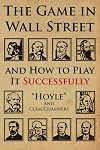
History of Financial Advice Collection. Like many other guides targeted at the investor of small means, The Game in Wall Street, and How to Play It Successfully combines abstract pontificating on the nature of the stock market and the rationale for price movements with handy rules-of-thumb for would-be speculators, such as: “After prices have been declining for four or five months and then come, comparatively speaking, to a standstill … do not be tempted to take the bear side of the show more market.” “Hoyle” (the pen name of William E. Forrest) operated a brokerage at 61 Broadway, and distributed a weekly market letter. His slim volume was one of the first to offer something approaching technical analysis, with detailed descriptions of patterns in the fluctuations of prices. The guide promises plain speaking, but hypocritically promises to protect the “lambs” at the very moment that it is trying to fleece them into playing the market.
Its claims are contradictory: on the one hand, Hoyle insists that speculation is a science, albeit because price movements are governed by the reliably predictable human nature of the greedy pools of bulls and bears battling for control of the market. On the other hand, the knowledge to be cultivated by the amateur speculator is like the knowledge of an expert card player, who understands both the rules of the game and the psychological traits of the expert players: “The game in Wall Street is a GAME OF HUMAN NATURE.” Although amateurs cannot hope to go head-to-head with the market manipulators, readers are led to believe they can nevertheless use their home-grown knowledge of human nature to turn speculation into a game of skill rather than chance. show less
Its claims are contradictory: on the one hand, Hoyle insists that speculation is a science, albeit because price movements are governed by the reliably predictable human nature of the greedy pools of bulls and bears battling for control of the market. On the other hand, the knowledge to be cultivated by the amateur speculator is like the knowledge of an expert card player, who understands both the rules of the game and the psychological traits of the expert players: “The game in Wall Street is a GAME OF HUMAN NATURE.” Although amateurs cannot hope to go head-to-head with the market manipulators, readers are led to believe they can nevertheless use their home-grown knowledge of human nature to turn speculation into a game of skill rather than chance. show less
Statistics
- Works
- 15
- Members
- 39
- Popularity
- #376,656
- Rating
- 4.0
- Reviews
- 2
- ISBNs
- 3