
Iain Banks (1) (1954–2013)
Author of The Wasp Factory
For other authors named Iain Banks, see the disambiguation page.
Iain Banks (1) has been aliased into Iain M. Banks.
Works by Iain Banks
Works have been aliased into Iain M. Banks.
Personal Effects 3 copies
Overload 1 copy
Associated Works
Works have been aliased into Iain M. Banks.
Das Science Fiction Jahr 1994. Ein Jahrbuch für den Science Fiction Leser (1994) — Contributor — 10 copies
Tagged
Common Knowledge
- Legal name
- Banks, Iain Menzies
- Other names
- Banks, Iain M.
- Birthdate
- 1954-02-16
- Date of death
- 2013-06-09
- Gender
- male
- Education
- University of Stirling (BA | English | 1975)
- Occupations
- writer
- Organizations
- National Secular Society
Humanist Society of Scotland - Awards and honors
- Guest of Honour, Eastercon, UK (1990)
Granta's Best of Young British Novelists (1993) - Relationships
- Hartley, Adele (wife)
- Cause of death
- gallbladder cancer
- Nationality
- Scotland
UK - Birthplace
- Dunfermline, Fife, Scotland, UK
- Places of residence
- North Queensferry, Fife, Scotland, UK
Edinburgh, Midlothian, Scotland, UK - Associated Place (for map)
- Scotland, UK
Members
Discussions
Group Reda, February 2022: The Crow Road in 1001 Books to read before you die (March 2022)
Group Read: The Wasp Factory by Iain Banks in 75 Books Challenge for 2013 (August 2013)
Reviews
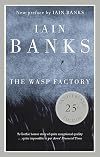
It would do this book a great injustice to say that one of my favourite parts (of my edition, anyway) is the selection of reviewers' comments in the opening pages - especially the negative ones! They are hilarious, and are followed up by a highly enjoyable, if controversial, story. Yes, it is a challenging read. But, heck, I am a total animal lover, a pacifist and totally unimaginative when it comes to human cruelty, and I love this book. Somehow, Iain Banks writes a character who regularly show more sets wasps up to kill themselves in his little "factory" (sometimes with a helping hand), and has no trouble setting alight a rabbit or a sheep, and is, yet, not a total turn-off to read (and it's written in first person!). I don't know that I would say that I could identify with Frank, but I could handle going along with him on his misadventures. And that last page makes it all worth it...You know what? I haven't read this book in YEARS... I think it may have to go back on the "to-read" list... show less
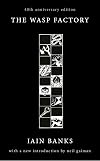
I first read The Wasp Factory in 1985, when the first paperback edition came out. It was recommended to me by a science fiction bookseller of my acquaintance whose instincts on new books was usually pretty good, and who raved over it - "You must read this! It's not science fiction, but the author is definitely One Of Us!". Little did we then know that Iain Banks was actually a wannabe science fiction author who had not succeeded in selling any science fiction novels, and so tried his hand at show more writing "mainstream" fiction. The Wasp Factory was the result.
Remarkable for publishing the uncomplimentary reviews as well as the complimentary ones (in the paperback edition), this novel very quickly became notorious for its graphic content - murder of children and torture of animals run through this novel. And yet, I find myself reminded of my early teenage years growing up in a rural part of England: Frank Cauldhame is merely me and some of my contemporaries writ (very) large. In the distant past of the 1960s, 70s and early 80s, small boys were likely to do things that involved harm to small animals and other children. After all that, the central character's misogyny hardly registers on many readers' radar; if published today, it would certainly raise eyebrows if not hackles. Banks was almost certainly doing this for impact, especially in light of the novel's ending.
Many of Banks' later mainstream novels involve families with secrets, eccentric habits, or both. This trend starts here. What also comes over is the sensibility of the writer as a science fiction reader writing a mainstream novel. Here - as well as later - we see Banks' p.o.v. character reacting to events, or entertaining thoughts, that would be more expected from a science fiction reader. For instance, at one point Frank refers to his brother Eric's mental fragmentation in terms of a hologram, which although shattered into pieces still carries in each fragment a complete image of the whole.
Elsewhere, there is a lot of 1980s colour that was just ordinary scene-setting at the time but now looks very dated to us. And it took me a while to twig that this was the sort of thing kids did (though not the torture and murder stuff, obviously) before we all had smartphones...
Frank's obsessive behaviour, his adherence to ritual, is described in loving detail and with total conviction. Only towards the end of the novel do we realise that the whole island upon which Frank lives is itself a macro version of Frank's own Wasp Factory, the eccentric machine he has built to make predictions based on the movements of wasps injected into its innards. As rational adults, we know that this is nonsense; but Banks clearly depicts the teenage personality, making massive deductions based on very little direct knowledge or experience, and self-reinforcing beliefs based around nothing more than habit.
There are some interesting foreshadowings of the writer Banks was to become; Frank's father with his eccentric beliefs (the Earth is not a globe but a Möbius strip, and human flatulence can conceal a wealth of information about the health, diet and personality of the emitter) will reappear in The Crow Road as Uncle Hamish with his eccentric personal religion and its prayers ("Please visit vexation upon those wee rascals the Khmer Rouge and especially their leader Mr. P. Pot"), and I groaned with pleasurable pain on seeing that the failed book on the nature of noxious human emissions was called The State of the Fart. And the way in which Frank's father's books have collected rejection slips now sounds very much like Banks writing what he knew from recent bitter experience. Other signs of the writer to come are less Easter Egg-like.
There is an odd aspect to the whole story: Frank experiences a life-changing revelation towards the end of the novel, and yet the novel is written in the first person in a way that does not acknowledge that life change. It may not have been possible to write the novel in a way that would satisfy this anomaly without imposing a much more restrictive diary format on the book. Instead of seeing this as a fault, it made me speculate on Frank's future story. Given the life-changing revelations he receives, what course might the adult Frank chart through the world of the 1980s and 1990s? Banks was never interested in writing direct sequels to any of his books, so my musings would never have been answered in any case, but I found them fascinating.
This anniversary edition includes a foreword from Neil Gaiman and another from Banks himself, dated 2013, which leads me to speculate that this anniversary edition may well have been planned for the book's 30th anniversary, but events most likely put that plan on long-term hold.
This book's excesses will make it not to everyone's taste, though hopefully, no-one who obsesses over the evils of "cancel culture" or loudly promotes "free speech" will be amongst that number (or at least admit to it). But Banks completists must read this to get a rounded picture of the writer and his works. The sense of place about Scotland that was a recurring feature of his mainstream novels is clearly on view here, as long as the reader can see past the Sacrifice Poles and the Bomb Circle. show less
Remarkable for publishing the uncomplimentary reviews as well as the complimentary ones (in the paperback edition), this novel very quickly became notorious for its graphic content - murder of children and torture of animals run through this novel. And yet, I find myself reminded of my early teenage years growing up in a rural part of England: Frank Cauldhame is merely me and some of my contemporaries writ (very) large. In the distant past of the 1960s, 70s and early 80s, small boys were likely to do things that involved harm to small animals and other children. After all that, the central character's misogyny hardly registers on many readers' radar; if published today, it would certainly raise eyebrows if not hackles. Banks was almost certainly doing this for impact, especially in light of the novel's ending.
Many of Banks' later mainstream novels involve families with secrets, eccentric habits, or both. This trend starts here. What also comes over is the sensibility of the writer as a science fiction reader writing a mainstream novel. Here - as well as later - we see Banks' p.o.v. character reacting to events, or entertaining thoughts, that would be more expected from a science fiction reader. For instance, at one point Frank refers to his brother Eric's mental fragmentation in terms of a hologram, which although shattered into pieces still carries in each fragment a complete image of the whole.
Elsewhere, there is a lot of 1980s colour that was just ordinary scene-setting at the time but now looks very dated to us. And it took me a while to twig that this was the sort of thing kids did (though not the torture and murder stuff, obviously) before we all had smartphones...
Frank's obsessive behaviour, his adherence to ritual, is described in loving detail and with total conviction. Only towards the end of the novel do we realise that the whole island upon which Frank lives is itself a macro version of Frank's own Wasp Factory, the eccentric machine he has built to make predictions based on the movements of wasps injected into its innards. As rational adults, we know that this is nonsense; but Banks clearly depicts the teenage personality, making massive deductions based on very little direct knowledge or experience, and self-reinforcing beliefs based around nothing more than habit.
There are some interesting foreshadowings of the writer Banks was to become; Frank's father with his eccentric beliefs (the Earth is not a globe but a Möbius strip, and human flatulence can conceal a wealth of information about the health, diet and personality of the emitter) will reappear in The Crow Road as Uncle Hamish with his eccentric personal religion and its prayers ("Please visit vexation upon those wee rascals the Khmer Rouge and especially their leader Mr. P. Pot"), and I groaned with pleasurable pain on seeing that the failed book on the nature of noxious human emissions was called The State of the Fart. And the way in which Frank's father's books have collected rejection slips now sounds very much like Banks writing what he knew from recent bitter experience. Other signs of the writer to come are less Easter Egg-like.
There is an odd aspect to the whole story: Frank experiences a life-changing revelation towards the end of the novel, and yet the novel is written in the first person in a way that does not acknowledge that life change. It may not have been possible to write the novel in a way that would satisfy this anomaly without imposing a much more restrictive diary format on the book. Instead of seeing this as a fault, it made me speculate on Frank's future story. Given the life-changing revelations he receives, what course might the adult Frank chart through the world of the 1980s and 1990s? Banks was never interested in writing direct sequels to any of his books, so my musings would never have been answered in any case, but I found them fascinating.
This anniversary edition includes a foreword from Neil Gaiman and another from Banks himself, dated 2013, which leads me to speculate that this anniversary edition may well have been planned for the book's 30th anniversary, but events most likely put that plan on long-term hold.
This book's excesses will make it not to everyone's taste, though hopefully, no-one who obsesses over the evils of "cancel culture" or loudly promotes "free speech" will be amongst that number (or at least admit to it). But Banks completists must read this to get a rounded picture of the writer and his works. The sense of place about Scotland that was a recurring feature of his mainstream novels is clearly on view here, as long as the reader can see past the Sacrifice Poles and the Bomb Circle. show less
And we're back.
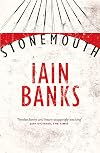
Banks's recent contemporary novels have been rather disappointing. All too often his characters became mouthpieces for his polemic and vitriol about the current state of the world. So it is with great pleasure that I can say that Stonemouth is a resounding return to form.
Banks is on familiar ground here. A Scottish town, dark secrets, family feud and things left unfinished. But while The Steep Approach to Garbadale felt forced at times, Stonemouth is more fluid and is a much show more better story. The protagonist, Stewart Gilmour, returns home after five years away in London, having been run out of Stonemouth on the eve of his wedding to the love of his life, Ellie Murston, by her brothers. He's back for the funeral of Ellie's grandfather, Joe, but is soon warned off from even looking at Ellie in the wrong way by the Murston clan.
Stewart links up with old friends and there are a series of flashbacks that fill in the back story of the various characters. His first meeting with Ellie; teenage adventures involving the Murston brothers; the fateful events at a wedding reception, the week before his own, that led to him fleeing Stonemouth. All this is told in Banks's easy to read writing style and he moves the story along nicely over the weekend of the funeral, to the point where the shocking conclusion ties up the loose ends.
The characters are well drawn and you believe in them, which is always the sign of a good novel.
All in all I'd say this is his best contemporary novel since The Crow Road and I would recommend it to anyone who loves a good story, well told. Welcome back Mr Banks. show less
Banks's recent contemporary novels have been rather disappointing. All too often his characters became mouthpieces for his polemic and vitriol about the current state of the world. So it is with great pleasure that I can say that Stonemouth is a resounding return to form.
Banks is on familiar ground here. A Scottish town, dark secrets, family feud and things left unfinished. But while The Steep Approach to Garbadale felt forced at times, Stonemouth is more fluid and is a much show more better story. The protagonist, Stewart Gilmour, returns home after five years away in London, having been run out of Stonemouth on the eve of his wedding to the love of his life, Ellie Murston, by her brothers. He's back for the funeral of Ellie's grandfather, Joe, but is soon warned off from even looking at Ellie in the wrong way by the Murston clan.
Stewart links up with old friends and there are a series of flashbacks that fill in the back story of the various characters. His first meeting with Ellie; teenage adventures involving the Murston brothers; the fateful events at a wedding reception, the week before his own, that led to him fleeing Stonemouth. All this is told in Banks's easy to read writing style and he moves the story along nicely over the weekend of the funeral, to the point where the shocking conclusion ties up the loose ends.
The characters are well drawn and you believe in them, which is always the sign of a good novel.
All in all I'd say this is his best contemporary novel since The Crow Road and I would recommend it to anyone who loves a good story, well told. Welcome back Mr Banks. show less
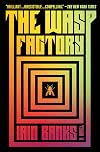
Great prose and the conceit of writing from the POV of a killer doesn't bother me, but at the same time it's about what you'd expect. Presumably this was more shocking back in 1984? It's more vivid than American Psycho, but lacks the comedic hyperbole and satiric attacks. The final reveal feels very much of its time and has aged poorly.
Perhaps Oates' book Zombie is a better choice for the disturbing confessions of a killer microgenre?
Perhaps Oates' book Zombie is a better choice for the disturbing confessions of a killer microgenre?
Lists
A Novel Cure (1)
Finished in 2020 (1)
First Novels (1)
Five star books (1)
GeoCAT 2016 (1)
BBC Big Read (1)
My TBR (2)
United Kingdom (1)
Books About Boys (1)
BitLife (1)
To Read - Horror (1)
BBC Big Read (1)
5 Best 5 Years (1)
Read in 2014 (1)
Best First Lines (1)
Jim's Bookshelf (1)
Awards


You May Also Like
Associated Authors
Statistics
- Works
- 25
- Also by
- 6
- Members
- 31,899
- Popularity
- #620
- Rating
- 3.6
- Reviews
- 601
- ISBNs
- 346
- Languages
- 22
- Favorited
- 247
