

Max (1) (1956–)
Author of Bardin the Superrealist
For other authors named Max, see the disambiguation page.
About the Author
Image credit: Francesc Capdevila aka Max
Series
Works by Max
El Capital: Dibujos de Max y Mir 2 copies
Gutwrench #1 2 copies
Terra Nostra 1 copy
El carnaval de los ciervos 1 copy
Associated Works
The Little Mermaid/La Sirenita (Bilingual Fairy Tales) (2003) — Illustrator — 107 copies, 13 reviews
La libertad segun Hannah Arendt/ Liberty According to Hannah Arendt (Filosofia Para Profanos) (Spanish Edition) (2001) — Illustrator — 11 copies
La Potencia Segun Nietzsche (Filosofia Para Profanos) (Spanish Edition) (2005) — Illustrator — 9 copies
La guerra segun Simon Weil / The war, according to Simon Weil (Spanish Edition) (1900) — Illustrator — 6 copies, 1 review
Tagged
Common Knowledge
- Canonical name
- Max
- Legal name
- Capdevila Gisbert, Francesc
- Other names
- Capdevila, Francesc
- Birthdate
- 1956-09-17
- Gender
- male
- Nationality
- Spain
- Birthplace
- Barcelona
- Places of residence
- Barcelona, Spain
Mallorca, Spain - Associated Place (for map)
- Spain
Members
Reviews
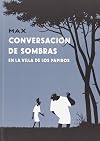
It is not very often that a graphic novel author dares to take on frontally matters of philosophical intent (Apostolos Doxiadis with his Logicomix comes to mind as a notable, recent exception), so we ought to be thankful for the brave effort in that lofty purpose that the Spanish graphic artist and storyteller Francesc Capdevila, better known as Max, has undertaken in his Conversación de sombras published in November 2013 by La Cúpula.
Max, as usual, chooses an original format for his work. show more A first part of the work is a strictly sequential narrative in images that takes place in a garden outside the place now known as the Villa of the Papyri, near Herculaneum, minutes before the eruption of Mount Vesubius in the year 79 AD. The second part reproduces the text of three letters, one written by the philosopher Epicurus to Maecenas and two others from Pliny the Younger to Tacitus.
The villa, discovered in 1750, housed hundreds of charred scrolls that were preserved by volcanic ash, making the collection the only extant library of antiquity.
The story begins with Max’s famous talkative and vehement birdlike character walking through ancient ruins. Naturally, his musings carry the reader to the two silhouetted figures, a young man and his older mentor, who are discussing the Epicurean ideas gathered in the library. The young man is troubled by his meeting an augur in nearby Herculaneum. And, as things go, the rest is history…
The textual quotations from Epicurus and Pliny the Younger, the first included in a biography of Epicurus by Carlos García Gual, and the other two, letters 16 and 20, from Pliny’s Book VI, add a solid conceptual and historical background to this innovative work of pictoliterature. An unforgettable delight for the reader. show less
Max, as usual, chooses an original format for his work. show more A first part of the work is a strictly sequential narrative in images that takes place in a garden outside the place now known as the Villa of the Papyri, near Herculaneum, minutes before the eruption of Mount Vesubius in the year 79 AD. The second part reproduces the text of three letters, one written by the philosopher Epicurus to Maecenas and two others from Pliny the Younger to Tacitus.
The villa, discovered in 1750, housed hundreds of charred scrolls that were preserved by volcanic ash, making the collection the only extant library of antiquity.
The story begins with Max’s famous talkative and vehement birdlike character walking through ancient ruins. Naturally, his musings carry the reader to the two silhouetted figures, a young man and his older mentor, who are discussing the Epicurean ideas gathered in the library. The young man is troubled by his meeting an augur in nearby Herculaneum. And, as things go, the rest is history…
The textual quotations from Epicurus and Pliny the Younger, the first included in a biography of Epicurus by Carlos García Gual, and the other two, letters 16 and 20, from Pliny’s Book VI, add a solid conceptual and historical background to this innovative work of pictoliterature. An unforgettable delight for the reader. show less
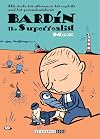
This book represents my first exposure to Max's work, but I was sold right away with his beautiful "ligne claire" drawing style. These strips, taken together, provide a highly original journey through surrealism, religion, the world of dreams, and a lot more besides. The sum is not necessarily greater than the parts with this book, but there's some gorgeous artwork here mixed up with some intriguing story ideas, and that's enough to make for a great package.
I was so happy finding this book in the Mountain View Public Library! I owe a lot to Max for his sense of humor his beautiful drawings and his connection from the Barcelona of the 80s to the Universe (or so). This book is clearly not marketed for any success, even less in the USA of superheroes comic books. As beautiful as surreal.
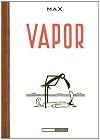
Libro existencial y extraño esta última obra de Max. Al grueso trazo minimalista, en viñetas asimétricas, en robusto blanco y negro, Max ofrece al lector su interpretación de un anacoreta empeñado en vencer las tentaciones al tiempo que encuentra sentido a la vida. Lo hace rodeado de animales que hablan, personajes humanos y etéreos, más algún que otro monstruo y accidente geográfico que sirve para señalar la escala del empeño y la magnitud del conflicto. Max es ingenioso a la show more vez que profundo; el desarrollo pictoliterario exige un recorrido cauteloso para no torcerse por el camino al tiempo que el humor macabro sorprende amablemente. ¡Una maravilla de trabajo; disfrute total! show less
Dec 16, 2012Spanish
1
Awards


You May Also Like


Associated Authors
Statistics
- Works
- 52
- Also by
- 14
- Members
- 374
- Popularity
- #64,495
- Rating
- 3.8
- Reviews
- 12
- ISBNs
- 103
- Languages
- 11
- Favorited
- 1