
Ian Sinclair (1) (1948–)
Author of Sasol Birds of Southern Africa
For other authors named Ian Sinclair, see the disambiguation page.
About the Author
Ian Sinclair is renowned for his field knowledge of birds, specialising in birds of Africa. He has written numerous popular and scientific articles and has authored or co-authored more than 15 bird books, best known of which are Sasol Birds of Southern Africa, Field Guide: Birds of Southern Africa, show more Field Guide: Birds of Africa - all comprehensive field guides to birds of the region. show less
Image credit: Ian Sinclair (bird expert)
Series
Works by Ian Sinclair
Birds of Africa South of the Sahara: A Comprehensive Illustrated Field Guide (2003) 52 copies, 2 reviews
The Larger Illustrated Guide to Birds of Southern Africa: The Most Comprehensively Illustrated Guide to the Region's Birds (1996) — Author — 35 copies, 1 review
Voëls van Suider-Afrika 1 copy
Tagged
Common Knowledge
- Other names
- Coffey, John
- Birthdate
- 1948
- Gender
- male
- Occupations
- ornithologist
- Nationality
- South Africa
- Birthplace
- Northern Ireland, UK
- Places of residence
- Durban, South Africa
- Associated Place (for map)
- South Africa
Members
Reviews
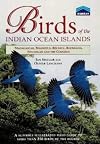
Basics: 1998, 1st edition, softcover, 184 pages, 70 color plates, 359 species, range maps
This field guide is the predecessor to the smaller photographic guide of 2006 by the same authors. This is the only complete field guide to cover these unique islands in the Indian Ocean. Fortunately, as the only guide, it is also a very good guide. The illustrations are high quality and the text is well-written to aid the birder with the more difficult groups of birds such as warblers, newtonias, and show more greenbuls.
A range map has been supplied for each of the birds. Given the high percentage of birds endemic to this area -- which is probably a key attractor for anyone birding here -- it would have been helpful to make some type of visual distinction in the map to signify if the range reflects an endemic bird or the visitation grounds of a migrant/visitor. To be fair to the authors, this information is clearly stated within the text under “Status”.
This book is invaluable – and a necessity – for birding the smaller islands around Madagascar. For a visit to only Madagascar, this book will be as equally useful as the few other field guides written for this country. show less
This field guide is the predecessor to the smaller photographic guide of 2006 by the same authors. This is the only complete field guide to cover these unique islands in the Indian Ocean. Fortunately, as the only guide, it is also a very good guide. The illustrations are high quality and the text is well-written to aid the birder with the more difficult groups of birds such as warblers, newtonias, and show more greenbuls.
A range map has been supplied for each of the birds. Given the high percentage of birds endemic to this area -- which is probably a key attractor for anyone birding here -- it would have been helpful to make some type of visual distinction in the map to signify if the range reflects an endemic bird or the visitation grounds of a migrant/visitor. To be fair to the authors, this information is clearly stated within the text under “Status”.
This book is invaluable – and a necessity – for birding the smaller islands around Madagascar. For a visit to only Madagascar, this book will be as equally useful as the few other field guides written for this country. show less
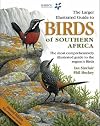
Basics: 2005, 2nd edition, softcover, 463 pages, 198 color photos, 950 species, range maps
This is a larger version (9 ½ x 7 ¾ inches) of nearly the same book by these authors. This larger version is meant to be more of an at-home reference -- unless you don't mind carrying a slightly oversized field guide in your vehicle or in your backpack.
Of the various field guides for southern Africa, this is my favorite for four reasons. One, is its excellent illustrations and their variety of poses. show more Two, are the larger illustrations due to the size of the book. Three, is the crisper color reproduction. And, four, are the small identification tips written next to the illustrations.
Like most similar guides, you’ll be able to use this in the southern six countries plus the south half of Mozambique. The range maps give good detail. However, just like other guides, I do not like the practice of creating an artificial boundary where the bird’s range crosses the border of Angola or Zambia. If the natural range advances (which many do), then show it. One last quirk of these range maps is the lack of a legend. Unlike its smaller predecessor, these maps contain white grids over parts of the range. The book makes no mention of what this signifies. Summer? Visitor? Rare? Dispersal?
As for the text, this offers good but brief identification notes. Only scant information is given for the bird’s status and calls. The back of the book contains a very nice addendum called “Identifying Problem Species”. These 13 pages focus on fourteen groups of problematic species such as large brown pipits, glossy starlings, or small migrant reed-warblers.
I highly recommend this book for your trip to southern Africa, despite its size. The slightly smaller (but thicker and same weight) version might be handier, but it lacks some of the newer plates and some additional extralimital species.
Other Related Books:
1) Illustrated Guide to the Birds of Southern Africa by Sinclair/Hockey/Tarboton
2) Roberts Bird Guide by Chittenden
3) Field Guide to the Birds of Southern Africa by Sinclair
4) Birds of Africa South of the Sahara by Sinclair/Ryan
5) Newman's Birds of Southern Africa by Newman
6) The Complete Book of Southern African Birds by Ginn/McIlleron, Milstein
7) Southern African Birds: A Photographic Guide by Sinclair/Davidson show less
This is a larger version (9 ½ x 7 ¾ inches) of nearly the same book by these authors. This larger version is meant to be more of an at-home reference -- unless you don't mind carrying a slightly oversized field guide in your vehicle or in your backpack.
Of the various field guides for southern Africa, this is my favorite for four reasons. One, is its excellent illustrations and their variety of poses. show more Two, are the larger illustrations due to the size of the book. Three, is the crisper color reproduction. And, four, are the small identification tips written next to the illustrations.
Like most similar guides, you’ll be able to use this in the southern six countries plus the south half of Mozambique. The range maps give good detail. However, just like other guides, I do not like the practice of creating an artificial boundary where the bird’s range crosses the border of Angola or Zambia. If the natural range advances (which many do), then show it. One last quirk of these range maps is the lack of a legend. Unlike its smaller predecessor, these maps contain white grids over parts of the range. The book makes no mention of what this signifies. Summer? Visitor? Rare? Dispersal?
As for the text, this offers good but brief identification notes. Only scant information is given for the bird’s status and calls. The back of the book contains a very nice addendum called “Identifying Problem Species”. These 13 pages focus on fourteen groups of problematic species such as large brown pipits, glossy starlings, or small migrant reed-warblers.
I highly recommend this book for your trip to southern Africa, despite its size. The slightly smaller (but thicker and same weight) version might be handier, but it lacks some of the newer plates and some additional extralimital species.
Other Related Books:
1) Illustrated Guide to the Birds of Southern Africa by Sinclair/Hockey/Tarboton
2) Roberts Bird Guide by Chittenden
3) Field Guide to the Birds of Southern Africa by Sinclair
4) Birds of Africa South of the Sahara by Sinclair/Ryan
5) Newman's Birds of Southern Africa by Newman
6) The Complete Book of Southern African Birds by Ginn/McIlleron, Milstein
7) Southern African Birds: A Photographic Guide by Sinclair/Davidson show less
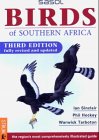
The Sasol environmental series is very good – and Birds of Southern Africa is no exception. Sturdy, well-bound, protected from the wet by a thick laminated cover, this handy A5 is an ideal field guide, small enough to fit in a bag or capacious pocket, but respectably comprehensive.
Illustrated by Peter Hayman and Norman Arlott, it calls itself ‘the region's most comprehensively illustrated guide,’ and there are indeed thousands of detailed drawings of birds – although so miniature show more only sharp young eyes will appreciate them.
Perfect for the cognoscenti, especially if armed with a magnifying glass, this is not a book for beginners: amateur twitchers trying to identify a brown bird with a yellow bill and a long tail will battle to find a name for the checklist.
The index is unsatisfactory: the Natal Spur fowl is still classified as the Natal Francolin. If the common name index collocated the names under the term Natal it would help, but with they use S and F instead, and there is no cross-reference.
But these are quibbles; serious twitchers, including many game rangers, swear by the Sasol series so, for birders in the know, this is the book to buy. show less
Illustrated by Peter Hayman and Norman Arlott, it calls itself ‘the region's most comprehensively illustrated guide,’ and there are indeed thousands of detailed drawings of birds – although so miniature show more only sharp young eyes will appreciate them.
Perfect for the cognoscenti, especially if armed with a magnifying glass, this is not a book for beginners: amateur twitchers trying to identify a brown bird with a yellow bill and a long tail will battle to find a name for the checklist.
The index is unsatisfactory: the Natal Spur fowl is still classified as the Natal Francolin. If the common name index collocated the names under the term Natal it would help, but with they use S and F instead, and there is no cross-reference.
But these are quibbles; serious twitchers, including many game rangers, swear by the Sasol series so, for birders in the know, this is the book to buy. show less
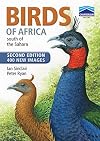
Apart from being the most comprehensive guide for twitchers in Africa, this is probably also the most user-friendly, with brief identification and geographical information directly opposite the beautiful pictures on each page. It's also the only modern guide book which includes the birds of Sudan and South Sudan, of particular interest to me.
This is a newer edition than my other copy, and is a plain paperback as opposed to the plastic covered field version.
This is a newer edition than my other copy, and is a plain paperback as opposed to the plastic covered field version.
You May Also Like


Associated Authors
Statistics
- Works
- 21
- Members
- 620
- Popularity
- #40,586
- Rating
- 4.1
- Reviews
- 14
- ISBNs
- 170
- Languages
- 3