

Charles Marsh (1) (1958–)
Author of Strange Glory: A Life of Dietrich Bonhoeffer
For other authors named Charles Marsh, see the disambiguation page.
About the Author
Charles Marsh (Ph. D., University of Virginia) is director of the Project on Lived Theology and professor of religious and theological studies at the University of Virginia. He is the author of several books, including God's Long Summer, The Last Days and The Beloved Community. John Perkins is the show more founder of Voice of Calvary Ministries in Mendenhall, Mississippi, Harambee Ministries in Pasadena, California, and the Christian Community Development Association. Historical books include Let Justice Roll Down, With Justice for Al l, A Quiet Revolution and Linking Arms, Linking Lives. show less
Image credit: Charles Marsh
Works by Charles Marsh
The Beloved Community: How Faith Shapes Social Justice, from the Civil Rights Movement to Today (2005) 198 copies
Welcoming Justice: God's Movement Toward Beloved Community (Resources for Reconciliation) (2009) 149 copies, 2 reviews
Associated Works
Bonhoeffer and King: Their Legacies and Import for Christian Social Thought (2010) — Contributor — 32 copies, 1 review
Tagged
Common Knowledge
- Legal name
- Marsh, Charles
- Birthdate
- 1958
- Gender
- male
- Education
- University of Virginia (Ph.D.)
University of Virginia (M.A.)
Harvard Divinity School (MTS)
Gordon College (BA) - Occupations
- theologian
professor - Awards and honors
- Christianity Today Book Award in History
Ellen Maria Gorrissen Fellow
John Simon Guggenheim Fellowship in the Creative Arts
Grawemeyer Award in Religion - Nationality
- USA
- Associated Place (for map)
- USA
Members
Reviews
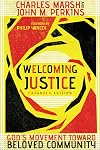
Summary: A renewed call for the church to pursue Martin Luther King, Jr.'s vision of a "beloved community" even in a day of increased white nationalism and polarization.
When this book was first published in 2009, the first African-American president had been elected. Nine years later, the vision of "beloved community" that appeared to be on the horizon, now feels like a distant memory. Charles Marsh, in his new preface acknowledges the current circumstances in the events in his home town of show more Charlottesville where Heather Heyer, simply standing in solidarity against the demonstrations of white nationalists, died when struck by a vehicle driven into the crowd by a white nationalist from Ohio.
Yet Marsh, and his co-author, John M. Perkins, a leader in Christian community development work, have not given up on the vision of Dr. King. Both believe that despite appearances, there is a movement of God afoot toward "beloved community. In alternating chapters, the two authors share why they are still hopeful, and what they believe needs to happen.
Marsh leads off with the contention that the Civil Rights movement lost its vision and cohesion as a movement when it lost its connection to a church-based and gospel based vision of "beloved community." At the same time, he sees movements, like that which Perkins has led at Voice of Calvary, continuing this gospel-based vision in its focus on relocation, redistribution, and reconciliation. Perkins, however, contends that the church, to realize such a vision, needs to give up its captivities to culture which has so divided it. He makes the fascinating observation that the neglect of outreach to a white underclass has made them open to the counterfeit community of the Klan. The challenge is to forsake the dividing lines of our captivities to reach out across those lines in the power of Christ.
Marsh then writes of the need for true conversion in our lives, a conversion that is always personal, even as it has social implications. He movingly recounts his first encounter with Perkins as a student staying with his segregationist grandmother. Perkins answer came not in an argument of what was wrong with segregation, but to send a gift of blueberries from his garden as his gift to her. Marsh in reflection writes:
"The existence of a compelling Christian witness in our time does not depend on our access to the White House, the size of our churches or the cultural relevance of our pastors. It depends, instead, on our ability to sing better songs in our lives. True conversion is always personal, but it is never sole about the individual who experiences God's love and knows the good news of salvation. True conversion is about learning to sing songs in which our life harmonizes with others'--even the lives of those least like us--and swells into a joyful and irresistible chorus" (p. 78).
Perkins responds with stories of the young men and women he has the joy of working with, and the hope this gives him for awakening. He doesn't speak of programs but of loving people, those of his own community, and those who come to learn, and then go and pursue a vision of community development across the country. Marsh in turn writes about the inner life of silent embrace of the gospel of the kingdom that sustains the practice of peace over the long haul. Perkins writes the final chapter calling for a re-building of our cities, interrupting the brokenness of our cities as churches re-assert their own love of the places and people to which they are called, forming the character of their young.
The question I had as I read this in the light of the present time is how Marsh and Perkins can be so hopeful. I think the difference between them and writers like Ta-Nehisi Coates (whose Between the World and Me I reviewed yesterday) comes down to the former's belief in the gospel of the kingdom. Perkins knows the violence against blacks as well, or perhaps even better than Coates, growing up in Mississippi. He was beaten and thrown in jail unjustly by police. Perkins has experienced the power of the love of God in his own life, and devoted a life to loving his place and pursuing reconciliation. What he and Marsh describe seems to be illustrative of the parable of the mustard seed, where small, seemingly insignificant efforts, like Perkin's work in Mendenhall, not only bring local healing and reconciliation, but spawn movements of people committed to King's vision of the beloved community. Perhaps the real question is not how Marsh and Perkins can be so hopeful, but will we forsake our cultural captivities and join them in their hope and embrace God's movement toward "beloved community?"
_____________________________________
Disclosure of Material Connection: I received this book free from the publisher. I was not required to write a positive review. The opinions I have expressed are my own. show less
When this book was first published in 2009, the first African-American president had been elected. Nine years later, the vision of "beloved community" that appeared to be on the horizon, now feels like a distant memory. Charles Marsh, in his new preface acknowledges the current circumstances in the events in his home town of show more Charlottesville where Heather Heyer, simply standing in solidarity against the demonstrations of white nationalists, died when struck by a vehicle driven into the crowd by a white nationalist from Ohio.
Yet Marsh, and his co-author, John M. Perkins, a leader in Christian community development work, have not given up on the vision of Dr. King. Both believe that despite appearances, there is a movement of God afoot toward "beloved community. In alternating chapters, the two authors share why they are still hopeful, and what they believe needs to happen.
Marsh leads off with the contention that the Civil Rights movement lost its vision and cohesion as a movement when it lost its connection to a church-based and gospel based vision of "beloved community." At the same time, he sees movements, like that which Perkins has led at Voice of Calvary, continuing this gospel-based vision in its focus on relocation, redistribution, and reconciliation. Perkins, however, contends that the church, to realize such a vision, needs to give up its captivities to culture which has so divided it. He makes the fascinating observation that the neglect of outreach to a white underclass has made them open to the counterfeit community of the Klan. The challenge is to forsake the dividing lines of our captivities to reach out across those lines in the power of Christ.
Marsh then writes of the need for true conversion in our lives, a conversion that is always personal, even as it has social implications. He movingly recounts his first encounter with Perkins as a student staying with his segregationist grandmother. Perkins answer came not in an argument of what was wrong with segregation, but to send a gift of blueberries from his garden as his gift to her. Marsh in reflection writes:
"The existence of a compelling Christian witness in our time does not depend on our access to the White House, the size of our churches or the cultural relevance of our pastors. It depends, instead, on our ability to sing better songs in our lives. True conversion is always personal, but it is never sole about the individual who experiences God's love and knows the good news of salvation. True conversion is about learning to sing songs in which our life harmonizes with others'--even the lives of those least like us--and swells into a joyful and irresistible chorus" (p. 78).
Perkins responds with stories of the young men and women he has the joy of working with, and the hope this gives him for awakening. He doesn't speak of programs but of loving people, those of his own community, and those who come to learn, and then go and pursue a vision of community development across the country. Marsh in turn writes about the inner life of silent embrace of the gospel of the kingdom that sustains the practice of peace over the long haul. Perkins writes the final chapter calling for a re-building of our cities, interrupting the brokenness of our cities as churches re-assert their own love of the places and people to which they are called, forming the character of their young.
The question I had as I read this in the light of the present time is how Marsh and Perkins can be so hopeful. I think the difference between them and writers like Ta-Nehisi Coates (whose Between the World and Me I reviewed yesterday) comes down to the former's belief in the gospel of the kingdom. Perkins knows the violence against blacks as well, or perhaps even better than Coates, growing up in Mississippi. He was beaten and thrown in jail unjustly by police. Perkins has experienced the power of the love of God in his own life, and devoted a life to loving his place and pursuing reconciliation. What he and Marsh describe seems to be illustrative of the parable of the mustard seed, where small, seemingly insignificant efforts, like Perkin's work in Mendenhall, not only bring local healing and reconciliation, but spawn movements of people committed to King's vision of the beloved community. Perhaps the real question is not how Marsh and Perkins can be so hopeful, but will we forsake our cultural captivities and join them in their hope and embrace God's movement toward "beloved community?"
_____________________________________
Disclosure of Material Connection: I received this book free from the publisher. I was not required to write a positive review. The opinions I have expressed are my own. show less

An ideal biography; there's not much more to say. Marsh is very good on almost everything, from social history to theology. The picture of Bonhoeffer moving from reactionary German to anti-Nazi saint is beautiful. Why Metaxas's awful book sells so much better than this one is a mystery even greater than that the God of Karl Barth.
I'm joking, of course. That one sells better because it helps people feel better about themselves. This one points out that, to be worthy of feeling good about show more yourself, you actually have to try to be a better person. show less
I'm joking, of course. That one sells better because it helps people feel better about themselves. This one points out that, to be worthy of feeling good about show more yourself, you actually have to try to be a better person. show less

Dietrich Bonhoeffer seems sometimes a modern-day ‘patron saint for hire.’ Famously, the Death of God movement drew on Bonhoeffer’s description of ‘religionless Christianity’ to underpin their theological claims. More recently Eric Metaxas’s biography paints Bonhoeffer in the image of a Neo-Con Crusadader. One of my professors in seminary, John G. Stackhouse, draws heavily on Bonhoeffer in developing his realist ethic in Making the Best of It. Stanley Hauerwas draws on Bonhoeffer show more in his decidedly more Idealist ethic (see Performing the Faith). Stackhouse and Hauerwas are both astute readers of Bonhoeffer but his legacy allows for divergent interpretations. This is due in part to the occasional nature of his later writings, Bonhoeffer’s moral quagmire in ‘getting involved’ in Hitler’s assassination plot, and the supposed development in his theological thought in the face of National Socialism.
Charles Marsh’s Strange Glory: A Life of Dietrich Bonhoeffer (Knopf, 2014) promises to remove the veil from Bonhoeffer’s face and show us the real person. Unlike other biographies, this is not hagiography. Marsh paints Bonhoeffer as the somewhat spoiled son of aristocracy. However Marsh isn’t trying to tarnish Bonhoeffer’s legacy either. He is simply trying to show that the ‘real’ Bonhoeffer was more complex than many earlier portraits which were each heavily dependent on Eberhard Bethge’s biography. Marsh’s Bonhoeffer is proud, preoccupied with fashion, dependent upon his parents for money (and laundry!) into his mid-thirties, enjoys leisure, and has an ambiguous relationship with Bethge. But he remains stalwart in his faith commitment and loyal and courageous to the end.
The events of Bonhoeffer’s life are a matter of public record. What makes Marsh’s biography an important and interesting contribution to the literature on Bonhoeffer is his ability to unearth and interpret Bonhoeffer’s life. So, for example, when Bonhoeffer writes home to complain about the quality of American theological education after his year at Union (1930), Marsh delves into Bonhoeffer’s relationship with fellow students and his hearing ‘the gospel preached in Negro churches,’ and his subsequent exploration of the African American experience. Marsh has written several books on the Civil Rights Movement so is great at filling in the details and showing their impact on Bonhoeffer. But he doesn’t always take young Dietrich at his word and shows how several professors at Union helped shape his later legacy (Harry Ward, Charles Webber and yes, Reinhold Neibuhr). Not only does the African American experience aid Bonhoeffer in resisting the dominant culture in Hitler’s Germany, but he gains the skills at organizing and resistance from Ward and Webber (and grows more realistic in his Ethical commitments). This will later aid him in his work with the eccumencial movement, the confessing church and Finkenwalde.
Perhaps the most controversial claim that Marsh makes is Bonhoeffer’s unrequited love for Bethge. Marsh doesn’t ascribe an awareness of homosexuality to Bonhoeffer or imply that his relationship with Bethge was ever consummated, but he does probe the fact that Bonhoeffer corresponds with Bethge in giddy, emotive language. The two lived together, had a joint bank account, signed their Christmas cards ‘Dietrich & Eberhard,’ took vacations together, and Bonhoeffer left most of his earthly belongings to Bethge. Bethge for his part, was more conservative in his expressions of mutual affection, often put off by Bonhoeffer’s over-the-top, affectionate words. I think Marsh is right to raise questions about the ambiguities here but I think he overstates his case. Male friendships can be intimate without being sexual and I am wary in pressing Bonhoeffer into the role of ‘patron saint of the LGBT community.’ As someone with strong male friendships I wonder how ‘gay’ my correspondence with friends may sound to an outside observer. Same-sex friendships can me intense and intimate, without being sexual. Marsh is trying to get behind why Bonhoeffer and Bethge communicate the way they do. It raises interesting questions, but I don’t think we can speak conclusively here. In other places, Marsh talks matter-of-factly about Barth’s affair with Charlotte von Kirschbaum (without footnote). Here again, all but the most devoted Barthian apologist would see the oddity of Barth having a live-in assistant in the Barth family home, but the nature of their relationship is not as clear and known as Marsh makes it.
But the interpretive leaps makes for an interesting biography which should generate more discussion and inquiry. I really enjoyed reading this book. I was not at all put off by Marsh’s portrait of Bonhoeffer. When Marsh shares Bonhoeffer’s letters home (about money, about wanting new clothes, or laundry), it didn’t make me think Bonhoeffer shallow. Instead I saw a man in his twenties learning to navigate the world. If Marsh wants to paint a picture of Bonhoeffer as a patron saint, perhaps Bonhoeffer is the patron saint of late adolescence. I give this book four stars. ★★★★
Notice of material connection: I received this book from Blogging for Books in exchange for my honest review. show less
Charles Marsh’s Strange Glory: A Life of Dietrich Bonhoeffer (Knopf, 2014) promises to remove the veil from Bonhoeffer’s face and show us the real person. Unlike other biographies, this is not hagiography. Marsh paints Bonhoeffer as the somewhat spoiled son of aristocracy. However Marsh isn’t trying to tarnish Bonhoeffer’s legacy either. He is simply trying to show that the ‘real’ Bonhoeffer was more complex than many earlier portraits which were each heavily dependent on Eberhard Bethge’s biography. Marsh’s Bonhoeffer is proud, preoccupied with fashion, dependent upon his parents for money (and laundry!) into his mid-thirties, enjoys leisure, and has an ambiguous relationship with Bethge. But he remains stalwart in his faith commitment and loyal and courageous to the end.
The events of Bonhoeffer’s life are a matter of public record. What makes Marsh’s biography an important and interesting contribution to the literature on Bonhoeffer is his ability to unearth and interpret Bonhoeffer’s life. So, for example, when Bonhoeffer writes home to complain about the quality of American theological education after his year at Union (1930), Marsh delves into Bonhoeffer’s relationship with fellow students and his hearing ‘the gospel preached in Negro churches,’ and his subsequent exploration of the African American experience. Marsh has written several books on the Civil Rights Movement so is great at filling in the details and showing their impact on Bonhoeffer. But he doesn’t always take young Dietrich at his word and shows how several professors at Union helped shape his later legacy (Harry Ward, Charles Webber and yes, Reinhold Neibuhr). Not only does the African American experience aid Bonhoeffer in resisting the dominant culture in Hitler’s Germany, but he gains the skills at organizing and resistance from Ward and Webber (and grows more realistic in his Ethical commitments). This will later aid him in his work with the eccumencial movement, the confessing church and Finkenwalde.
Perhaps the most controversial claim that Marsh makes is Bonhoeffer’s unrequited love for Bethge. Marsh doesn’t ascribe an awareness of homosexuality to Bonhoeffer or imply that his relationship with Bethge was ever consummated, but he does probe the fact that Bonhoeffer corresponds with Bethge in giddy, emotive language. The two lived together, had a joint bank account, signed their Christmas cards ‘Dietrich & Eberhard,’ took vacations together, and Bonhoeffer left most of his earthly belongings to Bethge. Bethge for his part, was more conservative in his expressions of mutual affection, often put off by Bonhoeffer’s over-the-top, affectionate words. I think Marsh is right to raise questions about the ambiguities here but I think he overstates his case. Male friendships can be intimate without being sexual and I am wary in pressing Bonhoeffer into the role of ‘patron saint of the LGBT community.’ As someone with strong male friendships I wonder how ‘gay’ my correspondence with friends may sound to an outside observer. Same-sex friendships can me intense and intimate, without being sexual. Marsh is trying to get behind why Bonhoeffer and Bethge communicate the way they do. It raises interesting questions, but I don’t think we can speak conclusively here. In other places, Marsh talks matter-of-factly about Barth’s affair with Charlotte von Kirschbaum (without footnote). Here again, all but the most devoted Barthian apologist would see the oddity of Barth having a live-in assistant in the Barth family home, but the nature of their relationship is not as clear and known as Marsh makes it.
But the interpretive leaps makes for an interesting biography which should generate more discussion and inquiry. I really enjoyed reading this book. I was not at all put off by Marsh’s portrait of Bonhoeffer. When Marsh shares Bonhoeffer’s letters home (about money, about wanting new clothes, or laundry), it didn’t make me think Bonhoeffer shallow. Instead I saw a man in his twenties learning to navigate the world. If Marsh wants to paint a picture of Bonhoeffer as a patron saint, perhaps Bonhoeffer is the patron saint of late adolescence. I give this book four stars. ★★★★
Notice of material connection: I received this book from Blogging for Books in exchange for my honest review. show less

A new type of Christian pervades America today- the kind who sings “God Bless America”, “Battle Hymn of the Republic”, and “Onward Christian Soldiers” with the unending patriotic zeal formally reserved for religious zealots. They wear flag pins on their lapels, bald eagles festoon their ties, and Old Glory makes a surprise appearance as a scarf about their necks. Standing to attention before the flag, they proudly proclaim America to be “one nation under God… with liberty and show more justice for all”. In his book Wayward Christian Soldiers, Charles Marsh takes a step back from the politics in Christianity and challenges his readers to think about what values, truths, and standards Christians may be giving up in their ardor towards supporting the American way.
Marsh bases his book on the assumption that American Christianity has so inundated itself in the political realm that it no longer has a proper place for true spirituality. With that viewpoint firmly implanted in his mind, Marsh asks a valid question of his readers: “how can Christians begin to rebuild the church’s shattered witness after a time of compromise and accommodation?” Marsh is purporting a cry for silence, citing Bonheoffer’s writings as an example of the kind of silent faith Christians should embody- a faith, though silent, that can still speak volumes through lifestyle and actions. More to the point, he criticizes Americans in particular with destroying the tenuous credibility of Christianity. Americans have so meshed their spirituality with their patriotism that they “have turned God into an appendage of the American way of life”. Marsh reminds his readers that to be a Christian is to lose all sense of citizenship, to the point where Americanism must find itself buried within a strong sense of citizenship in Christ’s kingdom.
Marsh is an excellent writer and rhetorician. So precisely chosen are his words that he leaves the reader in no doubt as to his opinions on not only his own thoughts, but also the thoughts of others. The benefit of such prose is a book that is highly readable and engaging, with radical ideas couched in emotional terms which the reader should have little trouble embracing. However, there is a negative aspect to his impassioned appeals. By using language that so clearly articulates Marsh’s own feelings, the reader may find it difficult to cut through the rhetoric in order to decide for himself whether the claims that the book makes are valid.
In conclusion, Wayward Christian Soldiers is worth reading for the reason that Marsh is unafraid to state his thoughts about Christians and politics, even when those thoughts do not match up with what the Christian Right and mainstream media purport them to be. The discerning reader should easily be able to carve away Marsh’s opinions in order to weigh fully facts against facts without bias. Ultimately, this book puts forth a much-needed call to Christians for righteousness, truth, holiness, and silence in a noisy, Godless world. show less
Marsh bases his book on the assumption that American Christianity has so inundated itself in the political realm that it no longer has a proper place for true spirituality. With that viewpoint firmly implanted in his mind, Marsh asks a valid question of his readers: “how can Christians begin to rebuild the church’s shattered witness after a time of compromise and accommodation?” Marsh is purporting a cry for silence, citing Bonheoffer’s writings as an example of the kind of silent faith Christians should embody- a faith, though silent, that can still speak volumes through lifestyle and actions. More to the point, he criticizes Americans in particular with destroying the tenuous credibility of Christianity. Americans have so meshed their spirituality with their patriotism that they “have turned God into an appendage of the American way of life”. Marsh reminds his readers that to be a Christian is to lose all sense of citizenship, to the point where Americanism must find itself buried within a strong sense of citizenship in Christ’s kingdom.
Marsh is an excellent writer and rhetorician. So precisely chosen are his words that he leaves the reader in no doubt as to his opinions on not only his own thoughts, but also the thoughts of others. The benefit of such prose is a book that is highly readable and engaging, with radical ideas couched in emotional terms which the reader should have little trouble embracing. However, there is a negative aspect to his impassioned appeals. By using language that so clearly articulates Marsh’s own feelings, the reader may find it difficult to cut through the rhetoric in order to decide for himself whether the claims that the book makes are valid.
In conclusion, Wayward Christian Soldiers is worth reading for the reason that Marsh is unafraid to state his thoughts about Christians and politics, even when those thoughts do not match up with what the Christian Right and mainstream media purport them to be. The discerning reader should easily be able to carve away Marsh’s opinions in order to weigh fully facts against facts without bias. Ultimately, this book puts forth a much-needed call to Christians for righteousness, truth, holiness, and silence in a noisy, Godless world. show less
Lists
Awards


You May Also Like


Associated Authors
Statistics
- Works
- 11
- Also by
- 1
- Members
- 1,077
- Popularity
- #23,870
- Rating
- 3.8
- Reviews
- 11
- ISBNs
- 80
- Languages
- 3