

Carol Berg (1) (1948–)
Author of Transformation
For other authors named Carol Berg, see the disambiguation page.
Carol Berg (1) has been aliased into Cate Glass.
Series
Works by Carol Berg
Works have been aliased into Cate Glass.
Associated Works
Works have been aliased into Cate Glass.
Blackguards: Tales of Assassins, Mercenaries, and Rogues (2015) — Contributor — 87 copies, 4 reviews
Tagged
Common Knowledge
- Other names
- Glass, Cate (pseudonym)
- Birthdate
- 1948
- Gender
- female
- Education
- Rice University
University of Colorado - Occupations
- software engineer
fantasy writer - Organizations
- Broad Universe
- Agent
- The Knight Agency
- Nationality
- USA
- Places of residence
- Colorado, USA
- Associated Place (for map)
- Colorado, USA
Members
Discussions
Standalone Group Read - August - Song of the Beast by Carol Berg in The Green Dragon (October 2015)
Reviews
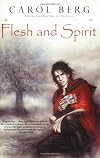
Quick Word:I adored Carol Berg’s previous novels and I have devoured every one. Yet, I spent a month attempting to read this one. The characterization and world building was decent, even solid. Yet my pleasure in a good novel must come from either brilliant plotting or enjoyable characterization. Valen was miserable to read about; he was a survivor (I’ll give him that) but he was also a compulsive liar, a drug addict, and lacking morals. There was a certain sense of… hopelessness… in show more his situation, and the land he lived in was brutal, unforgiving and crude. Unlike Seyonne, who also endured a civil war, Valen lacks a sense of humor, and this, I feel, is the first greatest flaw of the novel. As tired, troubled, angry, and frustrated Seyonne was, he always had a dry comment or keen observation to make that kept me rooting for him. Valen just cursed the world and took advantage of the kindnesses presented to him. And then there’s the fact that Seyonne was always fighting for something worthwhile: his people, his soul, his dignity, his wife, his son. These things made him a hero, that even when he was looking out for himself, he was faithful to his beliefs as he could. Valen was merely interested in saving his own skin. And then there is the situation of the villains who populate Flesh and Spirit. A credible villain can be motivated by anything from simple greed to self-preservation, from patriotism to revenge, from religious fervor to ambition to romantic love. Vallen’s nemesis (actually, all of them) were motivated by… evil? Sadism? Empty pride? Villains should be people. Not twisted figures of darkness or caricatures of ignorance and conceit. I realize that it could be argued that Valen is just human, and realistic to boot. But you know what? Who cares. Sorties aren’t good just because they are realistic, they should say something of importance too. show less
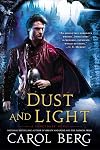
You can always count on Berg for a great fantasy tale, and this one is a top-notch entry into her bibliography.
I thought this would be a direct sequel to the 'Lighthouse Duet': 'Flesh and Spirit' and 'Breath and Bone' - but instead, it's a separate story that takes place in the same world.
The 'Lighthouse Duet' gives us an initially unlikable protagonist named Valen, an attractive young man who becomes contracted to a doubtful master, has to learn about his magical heritage, and who goes show more through all manner of trials and tribulations, meanwhile growing as a person and solving a problem larger than those that affect just his own life...
Here, we are introduced to Lucien, an initially unlikable protagonist who becomes contracted to a doubtful master, has to learn about his magical heritage, and who goes through all manner of trials and tribulations, meanwhile growing as a person and solving a problem larger than those that affect just his own life... ;-)
Yes, Carol Berg likes tortured young men. I don't mind! And the two characters are actually quite different in their specifics and personality.
The book largely reads as a murder mystery - Lucien is a professional portrait painter, whose magic, when used in conjunction with his art, has developed a tendency to reveal more than intended about the sitter. Unwittingly, he triggers the destruction of his entire family, and is cast from his position. But, the talent that was his downfall may also be his redemption.
Can't wait for the sequel! show less
I thought this would be a direct sequel to the 'Lighthouse Duet': 'Flesh and Spirit' and 'Breath and Bone' - but instead, it's a separate story that takes place in the same world.
The 'Lighthouse Duet' gives us an initially unlikable protagonist named Valen, an attractive young man who becomes contracted to a doubtful master, has to learn about his magical heritage, and who goes show more through all manner of trials and tribulations, meanwhile growing as a person and solving a problem larger than those that affect just his own life...
Here, we are introduced to Lucien, an initially unlikable protagonist who becomes contracted to a doubtful master, has to learn about his magical heritage, and who goes through all manner of trials and tribulations, meanwhile growing as a person and solving a problem larger than those that affect just his own life... ;-)
Yes, Carol Berg likes tortured young men. I don't mind! And the two characters are actually quite different in their specifics and personality.
The book largely reads as a murder mystery - Lucien is a professional portrait painter, whose magic, when used in conjunction with his art, has developed a tendency to reveal more than intended about the sitter. Unwittingly, he triggers the destruction of his entire family, and is cast from his position. But, the talent that was his downfall may also be his redemption.
Can't wait for the sequel! show less
I thought the first half of this book was four-star material. I was interested in it, I liked the characters, and I found myself thinking about the story when I wasn’t reading it and speculating what might happen next. Somewhere around the halfway point, fortunately during the weekend, this turned into a five-star book and I couldn’t put it down.
This fantasy story is told completely from the first-person perspective of Valen, a twenty-seven year old man who’s on the run for a variety show more of reasons. When the book begins, Valen is gravely wounded and his traveling companion abandons him penniless on the road, incapable of walking. He’s found by monks from a nearby abbey who take him in. The abbey seems like a convenient place to hide, but he soon finds that there are mysteries and dangers there as well. Meanwhile, the entire land is embroiled in a long-lasting war between the sons of their deceased king.
The story was interesting from the beginning, but it grew more intricate as it went and I really enjoyed that. The reader is given many questions, and at first I thought I could probably guess most of the answers, but some of my guesses were wrong and some of the questions turned out to be more complex than they originally seemed. There was a twist near the end that completely caught me by surprise, although in retrospect I think I should have seen it coming. There were plenty of hints.
The main character really grew on me as the story progressed. He often has a kind of sardonic way of describing things, and he has a kind of honor with certain lines he won’t cross, but his main concerns are for his own safety and he can be pretty roguish. At first I found some of his decisions exasperating, but I understood him better as the story progressed and his character also grew quite a bit throughout the book.
I look forward to reading the sequel. I don’t see people talk about Carol Berg’s work very often, but I’ve been really impressed with what I’ve read from her so far. I read her Rai-Kirah trilogy several years ago and I really enjoyed it. It helped me recover from the funk Robin Hobb’s Tawny Man trilogy left me in. I’ve wanted to try more of her books, but this is the first time I’ve gotten around to doing so. I’ll have to fit her books into my reading plans more frequently going forward. show less
This fantasy story is told completely from the first-person perspective of Valen, a twenty-seven year old man who’s on the run for a variety show more of reasons. When the book begins, Valen is gravely wounded and his traveling companion abandons him penniless on the road, incapable of walking. He’s found by monks from a nearby abbey who take him in. The abbey seems like a convenient place to hide, but he soon finds that there are mysteries and dangers there as well. Meanwhile, the entire land is embroiled in a long-lasting war between the sons of their deceased king.
The story was interesting from the beginning, but it grew more intricate as it went and I really enjoyed that. The reader is given many questions, and at first I thought I could probably guess most of the answers, but some of my guesses were wrong and some of the questions turned out to be more complex than they originally seemed. There was a twist near the end that completely caught me by surprise, although in retrospect I think I should have seen it coming. There were plenty of hints.
The main character really grew on me as the story progressed. He often has a kind of sardonic way of describing things, and he has a kind of honor with certain lines he won’t cross, but his main concerns are for his own safety and he can be pretty roguish. At first I found some of his decisions exasperating, but I understood him better as the story progressed and his character also grew quite a bit throughout the book.
I look forward to reading the sequel. I don’t see people talk about Carol Berg’s work very often, but I’ve been really impressed with what I’ve read from her so far. I read her Rai-Kirah trilogy several years ago and I really enjoyed it. It helped me recover from the funk Robin Hobb’s Tawny Man trilogy left me in. I’ve wanted to try more of her books, but this is the first time I’ve gotten around to doing so. I’ll have to fit her books into my reading plans more frequently going forward. show less
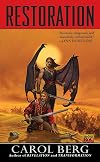
My comment to my husband as I finished this book was, "This is why I'm a reader, not a writer. I never would have thought to wrap this story up in the way that the author did."
The absolute rightness of the ending almost makes up for the parts of the book that lagged. I grieved that Seyonne sacrificed all his melydda in order to retain his humanity, but it fit, and he still hopes he may find the connection to it yet again. He has his beloved son and discovered respect and love with Elinor. show more Aleksander has fulfilled his destiny and Fiona hers as well. The only nagging loose end is the Gastai.
This trilogy of the Rai-Kirah is a fantasy quite different from anything I have read, with shape-shifters, sorcerers, demons, and gods. A relatively small cast of characters who come to life in these pages. An enthralling and thought-provoking story, well told and memorable. show less
The absolute rightness of the ending almost makes up for the parts of the book that lagged. I grieved that Seyonne sacrificed all his melydda in order to retain his humanity, but it fit, and he still hopes he may find the connection to it yet again. He has his beloved son and discovered respect and love with Elinor. show more Aleksander has fulfilled his destiny and Fiona hers as well. The only nagging loose end is the Gastai.
This trilogy of the Rai-Kirah is a fantasy quite different from anything I have read, with shape-shifters, sorcerers, demons, and gods. A relatively small cast of characters who come to life in these pages. An enthralling and thought-provoking story, well told and memorable. show less
Lists
Swashbucklers (1)
Awards


You May Also Like
Associated Authors
Statistics
- Works
- 19
- Also by
- 3
- Members
- 8,393
- Popularity
- #2,871
- Rating
- 4.0
- Reviews
- 221
- ISBNs
- 103
- Languages
- 6
- Favorited
- 52

