
Heinrich Hoffmann (1) (1809–1894)
Author of Struwwelpeter
For other authors named Heinrich Hoffmann, see the disambiguation page.
About the Author
Image credit: Wikimedia Commons
Series
Works by Heinrich Hoffmann
שוע הפרוע 2 copies
Der Struwwelpeter in seiner zweiten Gestalt : und eine Studie zur Struwwelpeter-Figur (1994) 2 copies
The Story of the Inky Boys 1 copy
The Story of Soup-Kaspar 1 copy
The Story of Fidgety Philip 1 copy
The Story of Flying Robert 1 copy
"Struwwelpeter-Hoffmann" erzählt aus seinem Leben : Lebenserinnerungen Dr. Heinrich Hoffmanns 1 copy
Handbüchlein für Wühler, oder Kurzgefaßte Anleitung, in wenigen Tagen ein Volksmann zu werden 1 copy
Das Breviarium der Ehe 1 copy
Associated Works
The Illustrated Treasury of Children's Literature, Volumes 1-2 (1955) — Contributor — 521 copies, 4 reviews
The Graphic Canon, Vol. 2: From "Kubla Khan" to the Brontë Sisters to The Picture of Dorian Gray (2012) — Contributor — 212 copies, 2 reviews
Tagged
Common Knowledge
- Canonical name
- Hoffmann, Heinrich
- Legal name
- Hoffman-Donner, Heinrich
- Other names
- Kinderlieb, Reimerich
Kinderlieb, Heinrich
Struwwel, Peter
Heulenburg, Heulalius von
Gastfenger, Polykarpus
Zwiebel - Birthdate
- 1809-06-13
- Date of death
- 1894-09-20
- Gender
- male
- Education
- Heidelberg University
- Occupations
- psychiatrist
physician
writer - Nationality
- Germany
- Birthplace
- Frankfurt am Main, Germany
- Places of residence
- Frankfurt am Main, Germany
- Place of death
- Frankfurt am Main, Germany
- Associated Place (for map)
- Frankfurt am Main, Germany
Members
Reviews
"Such fun I do not understand."
Me, I do understand. I understand naughty children who don't listen to their wise parents, in spite of many numerous warnings:
Don't lean back in your chair at the table.
Pay attention to where you are walking.
Don't play with guns.
Stop bullying other children just because they have a different skin tone.
...ad nauseum.
Written in 1845, Struwwelpeter still had the sting, the tragic results, and the bloody horrors that were once part and parcel in old tales show more written for children. It no doubt would be banned today by the usual group of public ignoramuses as too violent for society's tender little brats who often grow up to be beasts.
(Thank you to Dorothy Haynes who mentioned a little girl reading and being frightened by this very book in one of her short stories in Thou Shalt Not Suffer a Witch)
Wicked old thing that I am, I loved it. show less
Me, I do understand. I understand naughty children who don't listen to their wise parents, in spite of many numerous warnings:
Don't lean back in your chair at the table.
Pay attention to where you are walking.
Don't play with guns.
Stop bullying other children just because they have a different skin tone.
...ad nauseum.
Written in 1845, Struwwelpeter still had the sting, the tragic results, and the bloody horrors that were once part and parcel in old tales show more written for children. It no doubt would be banned today by the usual group of public ignoramuses as too violent for society's tender little brats who often grow up to be beasts.
(Thank you to Dorothy Haynes who mentioned a little girl reading and being frightened by this very book in one of her short stories in Thou Shalt Not Suffer a Witch)
Wicked old thing that I am, I loved it. show less

"The English Struwwelpeter or Pretty Stories and Funny Pictures", October 8, 2014
This review is from: Struwwelpeter in English Translation (Dover Children's Classics) (Paperback)
I was brought up on Struwwelpeter - a series of hilarious 'morality rhymes' for children from 1840s Germany. Who could forget 'Fidgety Phil' pulling the tablecloth and all its contents onto his head? ("Table oh so bare, and ah! Poor Papa and poor Mama Look quite cross, and wonder how They shall make their dinner show more now.") Or chubby Augustus who wouldn't eat his soup and met a sticky end ("He's like a little bit of thread, and on the fifth day - he was dead!")
More grotesque is the Long Red Legged Scissorman who cuts off Conrad's thumbs when he sucks them ("Mama had scarcely turned her back, the thumb was in, Alas! Alack!")
But 21st century readers may have more sympathy with the hare who runs off with the hunter's gun and turns it on him; the boys who mock a black child and are dipped in a huge bottle of ink by 'Great Agrippa', and the dog who bites Cruel Frederick, then eats his dinner.
24 utterly unforgettable pages. I would certainly disagree with reviewers who think it's too bloodthirsty for children (I adored it - I got my book aged around 8), and have just bought a copy for my granddaughter. show less
This review is from: Struwwelpeter in English Translation (Dover Children's Classics) (Paperback)
I was brought up on Struwwelpeter - a series of hilarious 'morality rhymes' for children from 1840s Germany. Who could forget 'Fidgety Phil' pulling the tablecloth and all its contents onto his head? ("Table oh so bare, and ah! Poor Papa and poor Mama Look quite cross, and wonder how They shall make their dinner show more now.") Or chubby Augustus who wouldn't eat his soup and met a sticky end ("He's like a little bit of thread, and on the fifth day - he was dead!")
More grotesque is the Long Red Legged Scissorman who cuts off Conrad's thumbs when he sucks them ("Mama had scarcely turned her back, the thumb was in, Alas! Alack!")
But 21st century readers may have more sympathy with the hare who runs off with the hunter's gun and turns it on him; the boys who mock a black child and are dipped in a huge bottle of ink by 'Great Agrippa', and the dog who bites Cruel Frederick, then eats his dinner.
24 utterly unforgettable pages. I would certainly disagree with reviewers who think it's too bloodthirsty for children (I adored it - I got my book aged around 8), and have just bought a copy for my granddaughter. show less
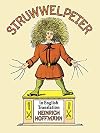
Struwwelpeter in English Translation (Dover Children's Classics) -Read for assignment by Heinrich Hoffmann
“Der Struwwelpeter” is Heinrich Hoffman's classic collection of moral fables for children. The message of the lavishly illustrated book is that children who are disobedient or display antisocial behavior will suffer a hideous fate. Children like Harriet (who plays with matches), Little Suck-a-Thumb, Fidgety Philip, and the Inky Boys ignore the sound advice of their elders and are swiftly punished or destroyed by their own behavior or by supernatural forces. It is an example of a code of show more behavior very different from modern books for kids which encourage boldness, curiosity, and individualism, and in which mistakes are forgiven and seen as a way to learn and grow. In “Der Struwwelpeter,” children are meant to learn to conform through fear and threat of injury or death.
I think this book could rpvoke some interesting discussions in middle school and up about societal norms and expectations and the methods we use to teach kids to abide by them. It's also extremely chuckle-inducing and fun to read in as serious a voice as one can maintain. show less
I think this book could rpvoke some interesting discussions in middle school and up about societal norms and expectations and the methods we use to teach kids to abide by them. It's also extremely chuckle-inducing and fun to read in as serious a voice as one can maintain. show less
This book is the antidote to Disney. It is the opposite of all those nasty, sugar-sweet versions of Cinderella, the Little Mermaid and worst of all Winnie-the-Pooh. Worst because Eeyore was, in the original, A.A. Milne version, a sarcastic, depressive real loner of a donkey, not a sweet-natured stuffed toy.
Struwwelpeter is all about children getting punished in the nastiest possible ways for their awful misdeeds. I loved this book when I was a kid. I also loved Disney, but I grew out of show more that, except for Bambi. Have to love Bambi.
My two personal favourites of the stories are firstly, Conrad, aka Little Suck-a-Thumb who was told that if he didn't stop plugging his mouth with his thumb he would get it cut off. And when he didn't and his mother was out, the nasty Scissorman came and snip snap, both thumbs gone!
Secondly is Augustus, my personal favourite, who starved himself to death rather than drink the nasty soup he was served for lunch. I had some sympathy there as more than once I had to sit at the lunch table, even missing school in the afternoon, because I wouldn't drink up the nasty chicken soup.I know that being Jewish chicken soup is supposed to be in my dna, but it just isn't and I hate the stuff, loathe it Or another time, wouldn't eat the liver casserole, cold with congealed floating grease, or lamb chops glistening with fat...
These sort of stories were much more satisfying to me as a child being delightfully shivery.
But there was something else. Children have a very highly developed sense of justice. They are forever saying, "it's not fair" about some perceived injustice. Stories like these where naughty children get their comeuppance appeal to kids, they see the fitness of a punishment, rather than the forgiveness and sugary reward and happily-ever-after od Disney that never actually comes their way when they've been very naughty little boys and girls.
You can read all the stories and see the original hand-coloured woodblock prints on the Gutenberg site. show less
Struwwelpeter is all about children getting punished in the nastiest possible ways for their awful misdeeds. I loved this book when I was a kid. I also loved Disney, but I grew out of show more that, except for Bambi. Have to love Bambi.
My two personal favourites of the stories are firstly, Conrad, aka Little Suck-a-Thumb who was told that if he didn't stop plugging his mouth with his thumb he would get it cut off. And when he didn't and his mother was out, the nasty Scissorman came and snip snap, both thumbs gone!
Secondly is Augustus, my personal favourite, who starved himself to death rather than drink the nasty soup he was served for lunch. I had some sympathy there as more than once I had to sit at the lunch table, even missing school in the afternoon, because I wouldn't drink up the nasty chicken soup.
These sort of stories were much more satisfying to me as a child being delightfully shivery.
But there was something else. Children have a very highly developed sense of justice. They are forever saying, "it's not fair" about some perceived injustice. Stories like these where naughty children get their comeuppance appeal to kids, they see the fitness of a punishment, rather than the forgiveness and sugary reward and happily-ever-after od Disney that never actually comes their way when they've been very naughty little boys and girls.
You can read all the stories and see the original hand-coloured woodblock prints on the Gutenberg site. show less
Lists
Awards


You May Also Like


Associated Authors
Statistics
- Works
- 82
- Also by
- 6
- Members
- 1,767
- Popularity
- #14,569
- Rating
- 4.0
- Reviews
- 45
- ISBNs
- 275
- Languages
- 17
- Favorited
- 2