
Wilhelm Busch (1) (1832–1908)
Author of Max and Moritz
For other authors named Wilhelm Busch, see the disambiguation page.
About the Author
Wilhelm Busch is, after Jakob and Wilhelm Grimm, by far the most popular author of books for children in the German language. His Max and Moritz (1865), a story of two naughty boys whose pranks finally bring a well-deserved retribution, is reputed to be the best-selling illustrated book in all of show more literature. Unlike many authors of books for children, Busch is almost completely without sentimentality or facile optimism. His cartoons and verses, on the contrary, contain social satire far more harsh than that usually found in books for either children or adults. He often sought out the society of animals and children, simply because he found so much corruption among his fellow men and women. But what might have been a bitter perspective is relieved considerably by the humor with which it is depicted. Busch modernized the fable, a genre that, since Gotthold Lessing, had been seldom employed in German literature. (Bowker Author Biography) show less
Image credit: Selfportrait (1894)
Series
Works by Wilhelm Busch
Max and Moritz; with many more mischief-makers more or less human or approximately animal (1962) 56 copies
Sämtliche Werke I & II: Und die Moral von der Geschicht und was Beliebt Ist Auch Erlaubt (1982) 44 copies, 1 review
Grosses Wilhelm-Busch-Buch : [seine schönsten Geschichten, Schwänke und Lausbuben-Streiche]. (1991) 19 copies
Wilhelm Busch Gesamtwerk in sechs Banden 4 (Wilhelm Busch Gesamtwerk in sechs Banden) (1997) 9 copies
Lugusid 8 copies
Gesamtwerk in drei Bänden. 3 7 copies
Dideldum! 5 copies
Dieses war der erste Streich 5 copies
Neues Wilhelm-Busch-Album : Sammlung lustiger Bildergeschichten mit 1600 Bildern — Author — 4 copies
Eins-zwei-drei im Sauseschritt 4 copies
Wilhem Busch Album 4 copies
Das schönste von Wilhelm Busch - Die schönsten Bildergeschichten auf 320 Seiten mit über 1300 farbigen Zeichnungen (1984) 4 copies
Gesamtwerk in drei Bänden. 2 4 copies
Max und Moritz in English and Deutsch: A Boys' Tale in Seven Tricks/Eine Bubengeschichte in sieben Streichen (2021) 3 copies
Wilhelm Busch's Hausapotheke - 328 Lebensweisheiten, Ratschläge und unfehlbare Rezepte (1978) 3 copies
Wilhelm Busch für Kinder 3 copies
Schnaken & Schnurren 3 copies
Beeldverhalen 3 copies
Wilhelm Busch Album: Humoristischer Hausschatz Jubilaumsausgabe Mit 1700 farbigen Bildern (1945) 3 copies
Gesamtwerk in drei Bänden. 1 3 copies
Bildgeschichten 2 copies
Gesamtausgabe in vier Bänden 2 copies
Hans Huckebein der Unglücksrabe. Das Pusterohr. Das Bad am Samstagabend. Die kühne Müllerstochter. Der Schreihals. Die Prise (1956) — Author — 2 copies
Platonische Briefe an eine Frau 2 copies
Schnurrdiburr Die Bienen 2 copies
Humoresker 1 copy
נאטל און מאטל 1 copy
Ach der Mensch... 1 copy
Wilhelm Busch : eine Auslese 1 copy
Der Virtuos 1 copy
קאפעל און די גענז 1 copy
Lustige Bildgeschichten 1 copy
The mischief book 1 copy
Pater Filucius 1 copy
Bildgeschichten 1 copy
Wilhelm Busch als Zeichner und Maler — Artist — 1 copy
100 Jahre "Comic" Wilhelm Busch. Die fromme Helene. Münchener Bilderbogen. Der Bauer und der Windmüller (Band 1) — Illustrator — 1 copy
Jan a Jíra : páté čtveráctví 1 copy
Wilhelm-Busch Album humoristischer Hausschatz : Sammlung der beliebtesten Schriften mit 1500 Bildern / von Wilhelm Busch. 1904 (2019) 1 copy
Das Wihlem Busch Hörbuch 1 copy
Die Bildergeschichten: Historisch-kritische Gesamtausgabe. Frühwerk / Reifezeit / Spätwerk (2007) 1 copy
Bd. 3. Max u. Moritz [u. a.] 1 copy
Fipps, Der Affe 1 copy
Max und Moritz. Dr Hohaloher Max un Moritz: A Lumbegschicht in siewe Straach ins Hohalohische iwwersetzt (2015) 1 copy
Mein allererster Kinderbuchschatz: Max und Moritz, Der Struwwelpeter und andere Geschichten (2019) 1 copy
Viechereien 1 copy
Katerzangen 1 copy
Wilhelm Busch für die Jugend 1 copy
Das Schönste von Wilhelm Busch. Ein heiteres Hausbuch mit einer Würdigung von Dr. Curt Elwenspoek 1 copy
LEIJAT 1 copy
Képes bohóságok 1 copy
Mit Verlaub, ich bin so frei... Des Weisen von Wiedensahl schönste Sprüche und Sentenzen (1989) 1 copy
Gesamtausgabe. Bd. 1 1 copy
Gesamtausgabe. Bd. 4 1 copy
Der Floh 1 copy
Wilhelm Busch - Ein Hausbuch 1 copy
Allotria 1 copy
Wilhelm Busch 2 1 copy
Wilhelm Busch 3 1 copy
Wilhelm Busch 4 1 copy
Spässe und Weisheiten 1 copy
Gesamtausgabe in vier Bänden 1 copy
Meiers Hinnerk -Idylle 1 copy
Wilhelm Busch 1 1 copy
Gesamtausgabe. Bd. 2 1 copy
Associated Works
German Satirical Writings: Wilhelm Busch and others (German Library) (1984) — Contributor — 14 copies
Nikolaus und Engelshaar : Weihnachten im alten Wien ; Geschichten & Bräuche zur schönsten Zeit des Jahres (2008) — Contributor — 1 copy
Tagged
Common Knowledge
- Canonical name
- Busch, Wilhelm
- Legal name
- Busch, Heinrich Christian Wilhelm
- Birthdate
- 1832-04-15
- Date of death
- 1908-01-09
- Gender
- male
- Education
- Polytechnikum Hannover
Kunstakademie Düsseldorf
Kunstakademie Antwerpen
Kunstakademie München - Occupations
- illustrator
poet
painter
pastor - Nationality
- Germany
- Birthplace
- Wiedensahl, Germany
- Places of residence
- Wiedensahl (near Stadthagen), Germany (birth)
Seesen-Mechtshausen, Germany (death)
Essen, Germany - Place of death
- Seesen-Mechtshausen, Germany
- Burial location
- Mechtshausen cemetery, Seesen-Mechtshausen, Germany
Essen, Germany - Associated Place (for map)
- Germany
Members
Reviews
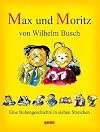
Several years ago when visiting Vienna, we attended (at my insistence) a ballet based on Wilhelm Busch’s children’s classic Max and Moritz. It’s a book I grew up with and one that was read to me from an early age. We in the audience laughed heartily at Max and Moritz’s antics and even the ballet music – Rossini - was cheerful and bubbly. I turned and saw my husband and daughter seated next to me in slack-jawed shock and horror!
Max and Moritz: A Children’s Story in Seven Parts, show more was written during the mid-19th Century and is a story, told in rhyming couplets, of two boys who play tricks on various people in the community. Eventually, they get their comeuppance, much to the satisfaction of the targets of their misdeeds. Intended to be a cautionary tale about naughty or bad behavior (in the manner of another German classic: Der Struwwelpeter), both the tricks and the punishment are over-the-top. The tricks, which include an attempted drowning and explosions, are all at the expense of very proper, upstanding members of the community who are (naturally) outraged. The eventual punishment they exact is also extreme!
What is noteworthy about this book (apart from the extreme violence) is the format of the book. Max and Moritz is the pre-cursor of the comic book complete with onomatopoeia, invented language and other language devices typically used to describe the action in comics. The language is playful and intended to be an accompaniment to the illustrations. Each character is illustrated as a caricature and in fact, I’ve always thought that the boys themselves bear a striking resemblance to Laurel and Hardy.
There is no question that the humor in this book is cruel so after the performance and after re-reading the book now, I wondered why we often are inclined to laugh at cruelty. I am thinking particularly of some types of slapstick humor - the premise of which is often to laugh at the misfortunes or even (often inflicted) pain, of others. So too, some of the cartoons we grew up watching were extremely violent and in ways, similar to Max and Moritz (didn’t Wily Coyote always get his?). Maybe this kind of hyperbole serves to underscore the purpose of the violence - retribution, ignorance, disobedience, etc. Because we understand that it's not real, we can take in the lesson without being appalled. Whatever the intentions, Max and Moritz is fascinating both for its social commentary as well as its importance in the history of the development of children’s literature and the graphic novel/cartoon. show less
Max and Moritz: A Children’s Story in Seven Parts, show more was written during the mid-19th Century and is a story, told in rhyming couplets, of two boys who play tricks on various people in the community. Eventually, they get their comeuppance, much to the satisfaction of the targets of their misdeeds. Intended to be a cautionary tale about naughty or bad behavior (in the manner of another German classic: Der Struwwelpeter), both the tricks and the punishment are over-the-top. The tricks, which include an attempted drowning and explosions, are all at the expense of very proper, upstanding members of the community who are (naturally) outraged. The eventual punishment they exact is also extreme!
What is noteworthy about this book (apart from the extreme violence) is the format of the book. Max and Moritz is the pre-cursor of the comic book complete with onomatopoeia, invented language and other language devices typically used to describe the action in comics. The language is playful and intended to be an accompaniment to the illustrations. Each character is illustrated as a caricature and in fact, I’ve always thought that the boys themselves bear a striking resemblance to Laurel and Hardy.
There is no question that the humor in this book is cruel so after the performance and after re-reading the book now, I wondered why we often are inclined to laugh at cruelty. I am thinking particularly of some types of slapstick humor - the premise of which is often to laugh at the misfortunes or even (often inflicted) pain, of others. So too, some of the cartoons we grew up watching were extremely violent and in ways, similar to Max and Moritz (didn’t Wily Coyote always get his?). Maybe this kind of hyperbole serves to underscore the purpose of the violence - retribution, ignorance, disobedience, etc. Because we understand that it's not real, we can take in the lesson without being appalled. Whatever the intentions, Max and Moritz is fascinating both for its social commentary as well as its importance in the history of the development of children’s literature and the graphic novel/cartoon. show less
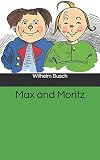
Please note this is a review of an uncorrected proof. I'm a big fan of fairy tales, lullabies, myths, legends.. ok you get the point. I am even more drawn to the creepy and obscure ones like the true Grimm Tales. Seeing the synopsis for this one immediately intrigued me. I visited Germany and adored their culture and history (especially the food) and just couldn't resist reviewing this original German literature in English translation.
This is exactly what dark children's humor is about. show more Mischievous children doing dastardly deeds and in the end paying in some horrendous way for what they have done. Of course many parents these days would abhor something like this for their precious little ones but as adults we can see the humor, hear the lesson and appreciate the history behind something of this nature.
I also appreciated the inclusion of the original German text and doubly enjoyed the explanation of the translation in the end. It was nice to see what went behind turning this piece into something I was able to appreciate.
Special thank you to the author, NetGalley and the Publisher for allowing me to review this for an honest review. show less
This is exactly what dark children's humor is about. show more Mischievous children doing dastardly deeds and in the end paying in some horrendous way for what they have done. Of course many parents these days would abhor something like this for their precious little ones but as adults we can see the humor, hear the lesson and appreciate the history behind something of this nature.
I also appreciated the inclusion of the original German text and doubly enjoyed the explanation of the translation in the end. It was nice to see what went behind turning this piece into something I was able to appreciate.
Special thank you to the author, NetGalley and the Publisher for allowing me to review this for an honest review. show less
This book of poems is my first introduction to Wilhelm Busch. The poems are light-hearted and a little odd. The illustrations have the delightful, accomplished sketchiness of someone who has drawn compulsively his whole life. The sketches and poems together present an idyllic and slow-to-change view of pastoral life. Busch evidently enjoyed sketching animals. The poems were easy enough that I could read them in Frakturschrift, which gave yet another layer to my feeling that I was reading show more something from another time. show less
One of my favorite books as a child. What does that say about me?
Lists
Awards


You May Also Like


Associated Authors
Statistics
- Works
- 325
- Also by
- 7
- Members
- 2,577
- Popularity
- #9,974
- Rating
- 3.9
- Reviews
- 22
- ISBNs
- 597
- Languages
- 23
- Favorited
- 8