
Jo Robinson (1) (1947–)
Author of Eating on the Wild Side: The Missing Link to Optimum Health
For other authors named Jo Robinson, see the disambiguation page.
About the Author
Jo Robinson is the author or coauthor of fourteen books. She lives on Vashon Island, Washington, where she grows many of the highly nutritious and delicious fruits and vegetables described in this book. Wild Nutrients: Lost and Found|p3
Image credit: Jo Robinson/from her website
Works by Jo Robinson
Unplug the Christmas Machine: A Complete Guide to Putting Love and Joy Back into the Season (1982) 339 copies
The Emotional Incest Syndrome: What to do When a Parent's Love Rules Your Life (1990) 148 copies, 1 review
The Omega Diet: The Lifesaving Nutritional Program Based on the Diet of the Island of Crete (1999) 92 copies, 1 review
When Your Body Gets the Blues: The Clinically Proven Program for Women Who Feel Tired and Stressed and Eat Too Much (2002) 84 copies, 2 reviews
Pasture Perfect: How You Can Benefit from Choosing Meat, Eggs, and Dairy Products from Grass-Fed Animals (2004) 46 copies, 2 reviews
Why Grassfed Is Best! The Surprising Benefits of Grassfed Meats, Eggs, and Dairy Products (2000) 18 copies
Unplug the Christmas Machine Workshop: Help Your Group Create a Joyful, Stress-free Holiday Leader's Guide (1991) 14 copies
The Leader's Guide to the Unplug the Christmas Machine Workshop: Help Your Group Create a Joyful, Stress-Free Holiday (1997) 13 copies
Tagged
Common Knowledge
Members
Reviews
When Your Body Gets the Blues: The Clinically Proven Program for Women Who Feel Tired and Stressed and Eat Too Much by Marie-Annette Brown
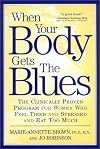
I think that the very simple actions recommended by the researcher authors of this book could have a profound, positive impact on the lives of thousands of women: get more natural light, go for twenty minutes walks five times a week, and take specific easily-obtained vitamin and mineral supplements. What makes the book even more valuable are its structure and tone.
The authors gracefully, gently, and convincingly blend their own scientific research, the findings of other researchers, the show more experiences of the participants in the LEVITY study, actionable advice, and tips and tools for helping to overcome obstacles to present a plan that I am determined to start.
On a specialist note, this is an excellent example of research translation and dissemination: taking the results of a scientific study and the peer reviewed paper that it produced (which they include in the very last section of the book!) and then writing up the results in a way that is accessible and actionable for the ordinary people who could benefit from it. show less
The authors gracefully, gently, and convincingly blend their own scientific research, the findings of other researchers, the show more experiences of the participants in the LEVITY study, actionable advice, and tips and tools for helping to overcome obstacles to present a plan that I am determined to start.
On a specialist note, this is an excellent example of research translation and dissemination: taking the results of a scientific study and the peer reviewed paper that it produced (which they include in the very last section of the book!) and then writing up the results in a way that is accessible and actionable for the ordinary people who could benefit from it. show less
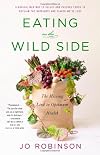
I expected this book to advocate eating dandelions and "wild" foods picked in the woods. Not so! It's actually about the nutrition in the vegetables and fruits we typically purchase and eat, and more about what you can find in the produce section of your local grocery store. Ms. Robinson discusses the nutrition in lettuce, carrots, tomatoes, apples, potatoes, oranges, broccoli, beans, etc. and tells how to pick the most nutritious varieties, how to store them, and how to cook them for the show more most nutrition. There's a heavy emphasis on bionutrients, anthocyanins, and antioxidants, which I understand is actually more controversial than the book discusses. I thought that heirloom varieties are always more nutritious, but that's not always the case - and yes, dandelions are mentioned, but she doesn't spend much time on it. And for the gardeners, nutritious varieties are listed. I borrowed the kindle version from the library but this is a book I want to own and be able to reference on a regular basis - there's just too much good information here to be able to remember it all. show less
This is a practical book on the nutrition contained in our produce. She describes how our fruit and vegetables began, the changes that have taken place either by accident or by human intervention, and whether those changes improved them nutritionally or not. She also tells us how to pick more the more nutritious food in our stores, farm markets and which to grow. This is a reference I want to keep.
In Eating on the Wild Side, nutrition researcher Jo Robinson turns the produce aisle into a medicine cabinet. She has sorted through massive quantities of food studies to reveal the fruit and vegetable superstars and how to select, store and prepare them to maximize absorption of vitamins, minerals, fiber and antioxidants.
Each fruit and vegetable is introduced with a description of its wild ancestor and a brief history of its domestication and resulting nutritional changes. Some cultivars show more have retained more of the wild nutrients than others. Robinson discusses the cultivars most available in U.S. supermarkets or farmer's markets, the relative merits of each, and when canned or frozen versions may serve as well as fresh.
I learned, for example, that purple carrots are the richest in bionutrients, and for all carrots, nutrients are more available if the carrot is cooked rather than raw. The best practice is to steam the carrots whole and slice them after. She also recommends eating them with a little oil or fat.
At the end of each chapter, Robinson provides a chart of recommended types and varieties of the fruit or vegetable for shoppers and home gardeners, as well as a good-better-best summary.
This book is highly useful. I have it out from the library but intend to purchase a copy to keep as a reference. show less
Each fruit and vegetable is introduced with a description of its wild ancestor and a brief history of its domestication and resulting nutritional changes. Some cultivars show more have retained more of the wild nutrients than others. Robinson discusses the cultivars most available in U.S. supermarkets or farmer's markets, the relative merits of each, and when canned or frozen versions may serve as well as fresh.
I learned, for example, that purple carrots are the richest in bionutrients, and for all carrots, nutrients are more available if the carrot is cooked rather than raw. The best practice is to steam the carrots whole and slice them after. She also recommends eating them with a little oil or fat.
At the end of each chapter, Robinson provides a chart of recommended types and varieties of the fruit or vegetable for shoppers and home gardeners, as well as a good-better-best summary.
This book is highly useful. I have it out from the library but intend to purchase a copy to keep as a reference. show less
Lists
Christmas Books (1)
Awards

You May Also Like


Associated Authors
Statistics
- Works
- 11
- Members
- 1,175
- Popularity
- #21,895
- Rating
- 4.1
- Reviews
- 15
- ISBNs
- 44
- Languages
- 4