

Tony Thorne (1) (1950–)
Author of Dictionary of Contemporary Slang
For other authors named Tony Thorne, see the disambiguation page.
About the Author
Tony Thorne is currently Director of the Language Centre and slang archive at King's College, London.
Works by Tony Thorne
Countess Dracula: Life and Times of Elisabeth Bathory, the Blood Countess (1997) 113 copies, 2 reviews
Tagged
Common Knowledge
- Canonical name
- Thorne, Tony
- Birthdate
- 1950
- Gender
- male
- Education
- Hampton School
University of Kent at Canterbury - Occupations
- author
lexicographer
consultant - Organizations
- King's College London
EURALEX - Agent
- Julian Alexander (Lucas Alexander Whitley)
- Short biography
- Sometime mod, hippie, punk, author and broadcaster. Traveller.
- Nationality
- UK
- Birthplace
- Cairo, Egypt
- Places of residence
- London, England, UK
Slovenia
Ankara, Turkey
Members
Reviews
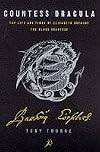
A really impeccably researched work, involving translations of many Hungarian documents from the early 1600s, and a delve into the complex politics of Hungary.
This is NOT a blood and guts vampire story. Certainly Bathory's alleged crimes make for grim reading- but Thorne goes on to consider other reasons for her arraignment.
Firstly, she was an incredibly wealthy widow- her estates could be confiscated if she were guilty- to the enrichment of her rivals.
Secondly there were political issues- show more Bathory's nephew, whom she supported, was ruling an independent Trasylvania, to the disgruntlement of the Hapsburg overlords.
And as outrageous calumnies usefully despatched Anne Boleyn (and indeed other Hungarian noblewomen- a near relative by marriage was accused of something similar.) ...and the many witchcraft trials of that time of any "strong, independent" women...Thorne argues it was a way to "neutralize" them.
Certainly the court hearings (at which the accused never appeared) seem to have glaring discrepancies...and some confessions appear to be the fervid declamations of persons being put to torture...
Nonetheless, can we dismiss all the allegations? Aristocrats were - frequently- cruel to their servants, and deaths only "counted" if the victim was of noble blood. "Home doctoring" might account for some of the events witnessed.
The reader is left with no concrete answer.... show less
This is NOT a blood and guts vampire story. Certainly Bathory's alleged crimes make for grim reading- but Thorne goes on to consider other reasons for her arraignment.
Firstly, she was an incredibly wealthy widow- her estates could be confiscated if she were guilty- to the enrichment of her rivals.
Secondly there were political issues- show more Bathory's nephew, whom she supported, was ruling an independent Trasylvania, to the disgruntlement of the Hapsburg overlords.
And as outrageous calumnies usefully despatched Anne Boleyn (and indeed other Hungarian noblewomen- a near relative by marriage was accused of something similar.) ...and the many witchcraft trials of that time of any "strong, independent" women...Thorne argues it was a way to "neutralize" them.
Certainly the court hearings (at which the accused never appeared) seem to have glaring discrepancies...and some confessions appear to be the fervid declamations of persons being put to torture...
Nonetheless, can we dismiss all the allegations? Aristocrats were - frequently- cruel to their servants, and deaths only "counted" if the victim was of noble blood. "Home doctoring" might account for some of the events witnessed.
The reader is left with no concrete answer.... show less
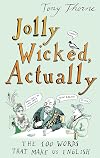
I listened to this in the car and it was perfect in that environment. It contains a sample of 100 words that, the author proposes, in some way define the English. For each word he provides a short narrative, lasting from a few minutes to 10 to 15 . This can include the derivation of the word, how it presents in other languages, how it is used and how that usage has evolved. It is quite fun hearing some words and they strike a chord. Some I was less convinced by, I'm not a "yoof" and I don't show more speak the youth dialect, meaning that some of these words I had never come across. It doesn't take itself too seriously and is not snobby about the words chosen. show less

I've put off reviewing this for awhile, simply because with books this awesome and dear to me I tend to get way too rambley.
This book is... amazing. Every other book I've read about the Countess, I've had to keep reminding myself that there is no way to know for sure that anything said about her actually happened. Which makes it hard to really dig your teeth into the book, while trying to remain logical about it at the same time.
Which is what I love so much about this book. Tony Thorne show more fully admits that none of the accusations against Countess Bathory can be proved; We will likely never know for sure what happened in her lifetime, what crimes she did or didn't commit. And this author not only admits that, but puts forth alternate suggestions, raises questions and points that bring to front all the different possibilities of what may have happened.
Toward the end of the book there are chapters dedicated to other notorious females who may well have inspired, or been inspired by, the Countess's crimes. Some of the similarities between these women, in particular Anna-Rosina Listhius... It's actually *scary* how similar her story is to Elizabeth's.
I could go on forever, but to sum it up, something I said to a friend:
It's much more factual, pays attention to details and contradictions and alternative theories, cites it's sources... It is by far the best research-type book I've seen about Elizabeth Bathory. show less
This book is... amazing. Every other book I've read about the Countess, I've had to keep reminding myself that there is no way to know for sure that anything said about her actually happened. Which makes it hard to really dig your teeth into the book, while trying to remain logical about it at the same time.
Which is what I love so much about this book. Tony Thorne show more fully admits that none of the accusations against Countess Bathory can be proved; We will likely never know for sure what happened in her lifetime, what crimes she did or didn't commit. And this author not only admits that, but puts forth alternate suggestions, raises questions and points that bring to front all the different possibilities of what may have happened.
Toward the end of the book there are chapters dedicated to other notorious females who may well have inspired, or been inspired by, the Countess's crimes. Some of the similarities between these women, in particular Anna-Rosina Listhius... It's actually *scary* how similar her story is to Elizabeth's.
I could go on forever, but to sum it up, something I said to a friend:
It's much more factual, pays attention to details and contradictions and alternative theories, cites it's sources... It is by far the best research-type book I've seen about Elizabeth Bathory. show less
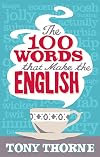
Unlike the David Crystal version, this is a book about words that relate to English people and culture.
Goes from irony to sarcasm, encompasses eccentric and quaint and nudges up against queues and jobsworths. Has some grumbling and a jolly time before reaching for the toast.
Very good, and well worth a read
Goes from irony to sarcasm, encompasses eccentric and quaint and nudges up against queues and jobsworths. Has some grumbling and a jolly time before reaching for the toast.
Very good, and well worth a read
You May Also Like


Associated Authors
Statistics
- Works
- 8
- Members
- 376
- Popularity
- #64,174
- Rating
- 3.6
- Reviews
- 7
- ISBNs
- 54
- Languages
- 4
