
Jonathon Green
Author of Chasing the Sun: Dictionary-Makers and the Dictionaries They Made
About the Author
Disambiguation Notice:
Be aware that there are several authors named Jonathan Green - the more usual spelling of this name. If you have entered a work on this page which doesn't seem to fit into Jonathon Green's oeuvre, check the forename: by correcting the name in your catalog, your book should link up with the correct author.
This page refers to Green, Jonathon, b 1948, British lexicographer of slang
Image credit: n/a
Series
Works by Jonathon Green
Getting Off at Gateshead: The Stories Behind the Dirtiest Words and Phrases in the English Language (2008) 18 copies
Your Birthday: August 7 1 copy
Your Birthday: September 12 1 copy
Your Birthday: December 23 1 copy
Your Birthday: October 7 1 copy
Your Birthday: October 5 1 copy
Your Birthday 1 copy
Your Birthday: November 13 1 copy
Your Birthday: October 30 1 copy
Associated Works
Tagged
Common Knowledge
- Birthdate
- 1948
- Gender
- male
- Education
- Bedford School
University of Oxford (Brasenose College) - Nationality
- UK
- Disambiguation notice
- Be aware that there are several authors named Jonathan Green - the more usual spelling of this name. If you have entered a work on this page which doesn't seem to fit into Jonathon Green's oeuvre, check the forename: by correcting the name in your catalog, your book should link up with the correct author.
This page refers to Green, Jonathon, b 1948, British lexicographer of slang - Associated Place (for map)
- UK
Members
Reviews
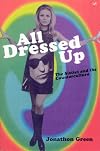
John Lennon, in his notorious 1970 interview with Jan Wenner, said that ‘nothing happened in the ‘60s except that we all dressed up’. It was classic Lennon - blatant exaggeration which undeniably contained a kernel of truth. Despite all the noise and heat of the 1960s the fundamental structure of society remained unchanged. Indeed, contemporary British society is even more unequal and socially divided than back then. Jonathon Green’s book, however, borrows Lennon’s quote for its show more title but reframes it to more positive effect. In his view, if the 1960s was a sort of glorified fancy dress party, it was a necessary and liberating one after the decades of sacrifice, austerity and conformity which preceded it.
When did the ‘60s start? Not on January 1st 1960, that’s for sure. For Green preparations for the ‘60s blowout began in the ‘50s with the Beats, Angry Young Men and the Campaign for Nuclear Disarmament (CND), and it was all over by the early ‘70s, but the festivities were in full swing from about 1965 to 1971; these were the years of the counter-culture and an analysis of the British manifestation of this forms the heart of the book.
The counter-culture or underground or alternative society was easy to recognise but difficult to define. It took its immediate inspiration from America but Green traces its lineage through the upper class rebels of Bloomsbury, Dada, Surrealism and 19th Century Romantics like Shelley. As he makes clear, it was more an attitude and style than a coherent ideology: sex, drugs, rock ‘n’ roll and ‘revolution in the head’. A cultural rather than political alternative to mainstream society it constituted a sort of psychedelic parallel universe with its own newspapers (IT and Oz), institutions (the London Free School, the Antiuniversity and the drug counselling service Release, founded in 1967 and still going strong today), and it’s own hierarchies and leaders (John Hopkins, Richard Neville and Mick Farren). If it was an alternative society it was certainly a very small one, London-centric and overwhelmingly middle class. The 1960s was essentially the revolt of privileged youth; dropping out not being an option for those who were never in to begin with. Behind the revolutionary rhetoric lay considerable entrepreneurial energy and the pioneering vegetarian restaurants, fringe theatres and arts centres of the counter-culture gradually proliferated and became mainstream.
I was fascinated by the mutual antipathy between the hippies and ‘freaks’ of the counter-culture and the more conventional politicos of the New Left. IT published articles attacking the student rebels of the London School of Economics as ‘boring’ and ‘bureaucratic’; and also, rather astonishingly in retrospect, an editorial following the anti-Vietnam War March in March 1968, denouncing the leaders of the Vietnam Solidarity Campaign (to be fair, many counter-culture figures did take part in the march). The politicos, in their turn, regarded the hippies as self-indulgent and superficial.
Freedom might have been a keyword for both sides but, for the hippies, a socialist state in which every worker was guaranteed a job in a factory was no kind of freedom at all. For them the personal was political and commitment to changing the world demonstrated by lifestyle rather than by spouting ideology. The hippies, in other words, represented a revolutionary form of libertarianism. This can be reduced to the caricature of ‘ I just want to do my own thing, man’, but in a Britain still haunted by the ghost of Queen Victoria, their concern with sexual freedom and personal liberty was by no means trivial.
Ultimately, for all their alleged self-indulgence and superficiality, the hippies were vindicated. The political revolution remained a pipe dream; the cultural and social revolution, albeit in severely compromised form, actually happened. This is where the rather unlikely hero of the book emerges - 1960s Labour Home Secretary Roy Jenkins. Certainly no hippie, he nonetheless played a pivotal role in liberalising law reforms relating to homosexuality, abortion and censorship. I was rather taken aback by Green’s description of the somewhat staid and sober Jenkins as a ‘visionary’; on reflection, given the far-reaching nature of the changes he enabled, it might well be justified. He was certainly the most liberal and progressive Home Secretary in British history.
Books about the 1960s tend to divide between cosy pop culture nostalgia and serious social history. All Dressed Up is emphatically in the latter category; impressively comprehensive it puts the events and movements of the period in a longer historical perspective. Green writes with the instinctive sympathy of the insider - he wrote for the underground press in its later years - while never oblivious to the failings of the counter-culture: its rampant sexism, frequent intellectual incoherence and banality, and infantilising wish-fulfilment.
The counter-culture may have been over by the early ‘70s but the radicalism of the previous decade continued with the Gay Liberation movement, feminism and environmentalism. Green is surely correct that the most important and enduring legacy of the 1960s is greater personal liberty; the freedom to live your own life in your own way unconstrained by an externally imposed notion of morality. 21st century Britain, if more unequal, is certainly more liberal than it was in the 1960s. So much that was marginal or considered extreme then is now accepted and part of the legislature. Not that I mean to sound complacent; the right-wing backlash against the new freedoms began almost before the freedoms themselves and is currently being pursued with great vigour.
This history of the 1960s has a curious history of its own. It was published in August 1998 - a sequel to Days in the Life, Green’s excellent oral history of the ‘60s - and promptly withdrawn two weeks later as a result of two libel actions. A paperback edition, with the litigious section dutifully excised, followed a year later but this is also now out of print. It’s a pity as All Dressed Up is one of the most perceptive books I’ve ever read on this subject; happily, secondhand copies are still easily available at sensible prices. show less
When did the ‘60s start? Not on January 1st 1960, that’s for sure. For Green preparations for the ‘60s blowout began in the ‘50s with the Beats, Angry Young Men and the Campaign for Nuclear Disarmament (CND), and it was all over by the early ‘70s, but the festivities were in full swing from about 1965 to 1971; these were the years of the counter-culture and an analysis of the British manifestation of this forms the heart of the book.
The counter-culture or underground or alternative society was easy to recognise but difficult to define. It took its immediate inspiration from America but Green traces its lineage through the upper class rebels of Bloomsbury, Dada, Surrealism and 19th Century Romantics like Shelley. As he makes clear, it was more an attitude and style than a coherent ideology: sex, drugs, rock ‘n’ roll and ‘revolution in the head’. A cultural rather than political alternative to mainstream society it constituted a sort of psychedelic parallel universe with its own newspapers (IT and Oz), institutions (the London Free School, the Antiuniversity and the drug counselling service Release, founded in 1967 and still going strong today), and it’s own hierarchies and leaders (John Hopkins, Richard Neville and Mick Farren). If it was an alternative society it was certainly a very small one, London-centric and overwhelmingly middle class. The 1960s was essentially the revolt of privileged youth; dropping out not being an option for those who were never in to begin with. Behind the revolutionary rhetoric lay considerable entrepreneurial energy and the pioneering vegetarian restaurants, fringe theatres and arts centres of the counter-culture gradually proliferated and became mainstream.
I was fascinated by the mutual antipathy between the hippies and ‘freaks’ of the counter-culture and the more conventional politicos of the New Left. IT published articles attacking the student rebels of the London School of Economics as ‘boring’ and ‘bureaucratic’; and also, rather astonishingly in retrospect, an editorial following the anti-Vietnam War March in March 1968, denouncing the leaders of the Vietnam Solidarity Campaign (to be fair, many counter-culture figures did take part in the march). The politicos, in their turn, regarded the hippies as self-indulgent and superficial.
Freedom might have been a keyword for both sides but, for the hippies, a socialist state in which every worker was guaranteed a job in a factory was no kind of freedom at all. For them the personal was political and commitment to changing the world demonstrated by lifestyle rather than by spouting ideology. The hippies, in other words, represented a revolutionary form of libertarianism. This can be reduced to the caricature of ‘ I just want to do my own thing, man’, but in a Britain still haunted by the ghost of Queen Victoria, their concern with sexual freedom and personal liberty was by no means trivial.
Ultimately, for all their alleged self-indulgence and superficiality, the hippies were vindicated. The political revolution remained a pipe dream; the cultural and social revolution, albeit in severely compromised form, actually happened. This is where the rather unlikely hero of the book emerges - 1960s Labour Home Secretary Roy Jenkins. Certainly no hippie, he nonetheless played a pivotal role in liberalising law reforms relating to homosexuality, abortion and censorship. I was rather taken aback by Green’s description of the somewhat staid and sober Jenkins as a ‘visionary’; on reflection, given the far-reaching nature of the changes he enabled, it might well be justified. He was certainly the most liberal and progressive Home Secretary in British history.
Books about the 1960s tend to divide between cosy pop culture nostalgia and serious social history. All Dressed Up is emphatically in the latter category; impressively comprehensive it puts the events and movements of the period in a longer historical perspective. Green writes with the instinctive sympathy of the insider - he wrote for the underground press in its later years - while never oblivious to the failings of the counter-culture: its rampant sexism, frequent intellectual incoherence and banality, and infantilising wish-fulfilment.
The counter-culture may have been over by the early ‘70s but the radicalism of the previous decade continued with the Gay Liberation movement, feminism and environmentalism. Green is surely correct that the most important and enduring legacy of the 1960s is greater personal liberty; the freedom to live your own life in your own way unconstrained by an externally imposed notion of morality. 21st century Britain, if more unequal, is certainly more liberal than it was in the 1960s. So much that was marginal or considered extreme then is now accepted and part of the legislature. Not that I mean to sound complacent; the right-wing backlash against the new freedoms began almost before the freedoms themselves and is currently being pursued with great vigour.
This history of the 1960s has a curious history of its own. It was published in August 1998 - a sequel to Days in the Life, Green’s excellent oral history of the ‘60s - and promptly withdrawn two weeks later as a result of two libel actions. A paperback edition, with the litigious section dutifully excised, followed a year later but this is also now out of print. It’s a pity as All Dressed Up is one of the most perceptive books I’ve ever read on this subject; happily, secondhand copies are still easily available at sensible prices. show less

Want rice and Aberdeens for dinner? Or andy mcnish--wouldn't that be apples and spice? It's rhyme time, and this witty, wildly inventive dictionary will inform you those "code words" stand for beans, fish, and nice. Amazingly detailed, it includes a history of rhyming slang, 100 categories, and over 2,500 phrases. Best of all, it takes a "bilingual" approach that lets you learn new slang while looking up the old!
Given that dictionaries are one of my favorite things EVER, I actually squealed in glee when I came across this book. I was fascinated by the beginnings, and the book pretty much held my interest nearly to the end. My enthusiasm waned a little at the very close of the book, but that was merely because the author was putting forth his opinions on the inclusion of slang/pejorative terms in modern dictionaries. While a very real and worthy debate, I already agree with him, so the last part was show more more of me impatiently saying "yes, yes, you're totally right, now where's something I don't already know?" show less
Given Jonathon Green's status in the field – his three-volume Dictionary of Slang is far and away the definitive one in English – this overview is disappointing. It's perhaps a case of being too close to the trees to see the morning wood. He spends a lot of time talking vaguely about how slang should be defined (an entire chapter on the etymology of the word ‘slang’! Which is unknown!) and where it might be going, and not enough looking at specific examples in their social context.
A show more few of his characterisations puzzled me. He describes slang as uniformly ‘racist, homophobic, and, of course, both sexist and misogynistic’, a register whose ‘male, heterosexual gaze is unflinching’. Naturally slang includes much that can be described in these terms – but everything? Is there really anything racist or sexist in describing hair as a barnet, knocking back a bevvy, or calling something awesomesauce on Twitter?
It's particularly odd when so much slang nowadays is generated through social media, which is dominated by young women – and Green refers to this, but he seems to see it as a sort of exception that proves the rule, rather than a reason to expand the whole concept of what ‘slang’ represents. (The same could be said for the way he discusses black American slang in terms of slang's ‘natural’ racism, or Polari and other gay slang vs. homophobia.)
I also wonder if more might not have been said about grammatical issues. Slang is the one register of English that regularly uses infixes – as in absofuckinglutely – which, again, Green refers to in a throwaway comment but doesn't follow up on. He doesn't mention, for example, the crazy proliferation of grammatical uses for a word such as like, which can now be intensifying (I was, like, wasted) or approximating (It cost me like twenty quid) or introductory (Like, how are you?) or any number of other things. Hella is another interesting case study which doesn't get a look-in – and that would be fine, if other case studies were used instead. But in fact, very few real examples are adduced, which leaves Green's arguments rather floating in the ether.
He is on firmer ground when it comes to summarising the history of slang lexicography, as you might expect. But even here, it would also have been nice to consider, at least briefly, the role of slang in languages other than English. It may be that some of Green's characterisations of slang (for instance, that it is primarily urban) are true only in the Anglophone world, which would raise questions of its own.
If you just want a new way to think about slang for a day or two, then this makes for a very serviceable introduction and therefore, I suppose, does what it says on the tin. But to be honest, you're probably just as well off browsing through one of the author's actual dictionaries instead – which have the added bonus of presenting the flair, the fun, the shock and the inventiveness of their subject without the intermediary theorising. show less
A show more few of his characterisations puzzled me. He describes slang as uniformly ‘racist, homophobic, and, of course, both sexist and misogynistic’, a register whose ‘male, heterosexual gaze is unflinching’. Naturally slang includes much that can be described in these terms – but everything? Is there really anything racist or sexist in describing hair as a barnet, knocking back a bevvy, or calling something awesomesauce on Twitter?
It's particularly odd when so much slang nowadays is generated through social media, which is dominated by young women – and Green refers to this, but he seems to see it as a sort of exception that proves the rule, rather than a reason to expand the whole concept of what ‘slang’ represents. (The same could be said for the way he discusses black American slang in terms of slang's ‘natural’ racism, or Polari and other gay slang vs. homophobia.)
I also wonder if more might not have been said about grammatical issues. Slang is the one register of English that regularly uses infixes – as in absofuckinglutely – which, again, Green refers to in a throwaway comment but doesn't follow up on. He doesn't mention, for example, the crazy proliferation of grammatical uses for a word such as like, which can now be intensifying (I was, like, wasted) or approximating (It cost me like twenty quid) or introductory (Like, how are you?) or any number of other things. Hella is another interesting case study which doesn't get a look-in – and that would be fine, if other case studies were used instead. But in fact, very few real examples are adduced, which leaves Green's arguments rather floating in the ether.
He is on firmer ground when it comes to summarising the history of slang lexicography, as you might expect. But even here, it would also have been nice to consider, at least briefly, the role of slang in languages other than English. It may be that some of Green's characterisations of slang (for instance, that it is primarily urban) are true only in the Anglophone world, which would raise questions of its own.
If you just want a new way to think about slang for a day or two, then this makes for a very serviceable introduction and therefore, I suppose, does what it says on the tin. But to be honest, you're probably just as well off browsing through one of the author's actual dictionaries instead – which have the added bonus of presenting the flair, the fun, the shock and the inventiveness of their subject without the intermediary theorising. show less
Lists
Awards


You May Also Like


Associated Authors
Statistics
- Works
- 63
- Also by
- 1
- Members
- 2,295
- Popularity
- #11,185
- Rating
- 3.7
- Reviews
- 22
- ISBNs
- 143
- Languages
- 4
- Favorited
- 3
