
Michael Miller (1) (1958–)
Author of The Complete Idiot's Guide to Music Theory
For other authors named Michael Miller, see the disambiguation page.
About the Author
Michael Miller is a successful writer and musician
Image credit: via Alfred Music
Works by Michael Miller
Cloud Computing: Web-Based Applications That Change the Way You Work and Collaborate Online (2008) 43 copies, 3 reviews
The Ultimate Digital Music Guide: The Best Way to Store, Organize, and Play Digital Music (2012) 15 copies
Selling Online 2.0: Migrating from eBay to Amazon, craigslist, and Your Own E-Commerce Website (2009) 14 copies
The PayPal Official Insider Guide to Growing Your Business: Make money the easy way (PayPal Press) (2011) 9 copies
The Internet of Things: How Smart TVs, Smart Cars, Smart Homes, and Smart Cities Are Changing the World (2015) 8 copies
B2B Digital Marketing: Using the Web to Market Directly to Businesses (Que Biz-Tech) (2012) 7 copies
Gmail in 10 Minutes, Sams Teach Yourself (2nd Edition) (Sams Teach Yourself -- Minutes) (2014) 5 copies
Reality 2006 2 copies
Scrivere per il web: diventare un web copywriter e catturare l'attenzione dei clienti (2013) 2 copies
The Complete Idiot's Guide to Music Theory (1st Edition) by Michael Miller (11-Jun-2002) Paperback 1 copy
Leo Laporte's Gadget Guide 1 copy
Descobrindo Bluetooth 1 copy
COMPUTER BASIC 1 copy
Tagged
Common Knowledge
Members
Reviews
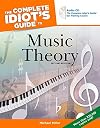
A music theory book that hits the high note '
This updated and expanded edition of *The Complete Idiot's Guide® to Music Theory* breaks down a difficult subject in a simple way'even for those who think they have no rhythm or consider themselves tone deaf. With clear, concise language, it explains everything from bass-clef basics to confusing codas. This new edition includes:
-A brand-new CD
-A comprehensive ear-training section
-Musical examples of intervals, scales, chords, and rhythms show more
-Aural exercises so readers can test their ear training and transcription skills show less
This updated and expanded edition of *The Complete Idiot's Guide® to Music Theory* breaks down a difficult subject in a simple way'even for those who think they have no rhythm or consider themselves tone deaf. With clear, concise language, it explains everything from bass-clef basics to confusing codas. This new edition includes:
-A brand-new CD
-A comprehensive ear-training section
-Musical examples of intervals, scales, chords, and rhythms show more
-Aural exercises so readers can test their ear training and transcription skills show less

I wanted a book that assumed I knew nothing, but in doing so also assumed I could understand (and am interested to know) any nuance or complication in theory -- and proceeds accordingly. This book does that. It appears also to be geared to musicians, which I respect but does not apply to me, so the exercises (which involve memorising and/or recognising scales, notes, key signatures, and so forth) are pretty useless.
What I find instead of a workbook is a systematic explanation of the basic show more framework of Western twelve-tone scales. Pretty much every page I find an "aha!" insight, such as: each minor key uses the identical notes from a major key, only the minor key begins with the 6th note of the major key's scale. Ah! -- that gives me some insight into why the minor feels different, yet retains a connection to the overall system. After all, without a system, what makes a "key"? Why not simply pick a random set of 8 (or is it 12?) ascending notes? (Answer: that would be a mode, which preceded scales and upon which scales are based.) This book helps make head and tails of such questions as these, though often I must read between the lines to get at my answer.
The accompanying CD fits in with the exercises, which is to say: not terribly useful to me. show less
What I find instead of a workbook is a systematic explanation of the basic show more framework of Western twelve-tone scales. Pretty much every page I find an "aha!" insight, such as: each minor key uses the identical notes from a major key, only the minor key begins with the 6th note of the major key's scale. Ah! -- that gives me some insight into why the minor feels different, yet retains a connection to the overall system. After all, without a system, what makes a "key"? Why not simply pick a random set of 8 (or is it 12?) ascending notes? (Answer: that would be a mode, which preceded scales and upon which scales are based.) This book helps make head and tails of such questions as these, though often I must read between the lines to get at my answer.
The accompanying CD fits in with the exercises, which is to say: not terribly useful to me. show less

The large print is one of the first things I noticed about this book and it led me to question, since this was called 'Grown-Ups' that my nearly fifty year old eyes must be failing as well as those this book is targeted at. But my eyes are not that bad for reading. Driving is another story.
Having some ideas about the publishing trade, such a tactic seems driven to also increase the size of a book, and as I looked at Mr. Miller's work I was struck that there was a great deal of padding. That show more this book really should be smaller, thinner than it turned out. That the many step by step examples were constructed often to increase the thickness of this book. And then that often those same examples, needed more diagrams, and then the explanation of what decisions you can take mean.
I have been a Facebook User for several years, so nothing that Mr. Miller revealed was new to me. That gives me a very good basis to see if he communicated whether an existing feature in FB (And they have changed some items since he wrote the material, even as he pointed out about the Privacy and Security areas) can be adopted by his readers.
Were I to give this to my mother, an even older generation of Grown-Up or my wife, they both would find it useful, were they to go through the material. I think that this book suffers from the narrative for sometimes Mr. Miller is quite helpful, guiding a new user with insight on a part of Facebook that a novice will readily want to use. Other times, he glosses over parts that a new user should be adding.
Where the biggest failing is, because of the folksy way the book has at times, is that there is no overall step-by-step guide. There are sections, for signing-up, for privacy settings, for uploading your pictures (though tagging them comes later? That should have occurred in the same place.) What there should have been, IMHO was an overall step-by-step instruction. Tell the reader about Facebook (FB) and then after all that, point out that here on your first day of use, you want to be ready to do the following things; sign-up, upload a few photos, find a few family members, friends, groups.
Without that, a new user, of a certain age, often gives up and still can not understand how FB is useful. With this book, if they are able to have the patience in their interaction with FB and thumb back and forth from chapter to chapter, they may indeed become experts. That extra star would have been awarded if Mr. Miller had added that one bit. For I believe the target market are just such people, first-time users who want to go to the site and do the things that get them immersed in it. Five to ten things to do in an uber step-by-step guide would have aided that process. show less
Having some ideas about the publishing trade, such a tactic seems driven to also increase the size of a book, and as I looked at Mr. Miller's work I was struck that there was a great deal of padding. That show more this book really should be smaller, thinner than it turned out. That the many step by step examples were constructed often to increase the thickness of this book. And then that often those same examples, needed more diagrams, and then the explanation of what decisions you can take mean.
I have been a Facebook User for several years, so nothing that Mr. Miller revealed was new to me. That gives me a very good basis to see if he communicated whether an existing feature in FB (And they have changed some items since he wrote the material, even as he pointed out about the Privacy and Security areas) can be adopted by his readers.
Were I to give this to my mother, an even older generation of Grown-Up or my wife, they both would find it useful, were they to go through the material. I think that this book suffers from the narrative for sometimes Mr. Miller is quite helpful, guiding a new user with insight on a part of Facebook that a novice will readily want to use. Other times, he glosses over parts that a new user should be adding.
Where the biggest failing is, because of the folksy way the book has at times, is that there is no overall step-by-step guide. There are sections, for signing-up, for privacy settings, for uploading your pictures (though tagging them comes later? That should have occurred in the same place.) What there should have been, IMHO was an overall step-by-step instruction. Tell the reader about Facebook (FB) and then after all that, point out that here on your first day of use, you want to be ready to do the following things; sign-up, upload a few photos, find a few family members, friends, groups.
Without that, a new user, of a certain age, often gives up and still can not understand how FB is useful. With this book, if they are able to have the patience in their interaction with FB and thumb back and forth from chapter to chapter, they may indeed become experts. That extra star would have been awarded if Mr. Miller had added that one bit. For I believe the target market are just such people, first-time users who want to go to the site and do the things that get them immersed in it. Five to ten things to do in an uber step-by-step guide would have aided that process. show less
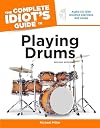
I was surprised, pleasantly, that the content of Playing Drums was so fresh. Lots of great down to earth practical advice about getting started as a drummer. Covers mainstream drum set work and the fundamentals (the 40 rudiments) extremely well. Little weak on coverage of classical percussion, but nice mentions of jazz drumming and Latin rhythms. Recommended for any new or aspiring drummer who has played less than three years.
You May Also Like


Statistics
- Works
- 144
- Members
- 1,946
- Popularity
- #13,220
- Rating
- 3.7
- Reviews
- 17
- ISBNs
- 468
- Languages
- 10
- Favorited
- 1