
Eileen Gunn (1) (1945–)
Author of Stable Strategies and Others
For other authors named Eileen Gunn, see the disambiguation page.
About the Author
Image credit: Eileen Gunn (Photo by Leslie Howle, 2004)
Works by Eileen Gunn
The WisCon Chronicles, Vol. 2: Provocative essays on feminism, race, revolution, and the future (2008) — Editor — 25 copies, 1 review
Speak, Geek — Author — 2 copies
Fellow Americans 2 copies
Up the Fire Road 2 copies
Night Shift (short story) 1 copy
One Night Stand 1 copy
Terrible Trudy On The Lam 1 copy
Flurb 11 1 copy
Contact 1 copy
Lichen And Rock 1 copy
Computer Friendly 1 copy
No Place To Raise Kids 1 copy
Coming To Terms 1 copy
Nirvana High 1 copy
Associated Works
The Best of the Best: 20 Years of the Year's Best Science Fiction (2005) — Contributor — 434 copies, 20 reviews
The Norton Book of Science Fiction: North American Science Fiction, 1960-1990 (1993) — Contributor — 344 copies, 6 reviews
Sisters of the Revolution: A Feminist Speculative Fiction Anthology (2015) — Contributor — 340 copies, 8 reviews
The Year's Best Science Fiction: Sixth Annual Collection (1989) — Contributor — 275 copies, 2 reviews
The Year's Best Fantasy and Horror 2008: 21st Annual Collection (2008) — Contributor — 177 copies, 5 reviews
The Best Science Fiction and Fantasy of the Year, Volume Four (2010) — Contributor — 139 copies, 2 reviews
The James Tiptree Award Anthology 2: Stories for Men, Women, and the Rest of Us (2006) — Contributor — 101 copies, 3 reviews
Women of Other Worlds: Excursions Through Science Fiction and Feminism (1999) — Contributor — 42 copies
Visions, Ventures, Escape Velocities: A Collection of Space Futures (2017) — Contributor — 22 copies, 1 review
The Loch Moose Monster: More Stories From Isaac Asimov's Science Fiction Magazine (1993) — Contributor — 13 copies
Talking Back: Epistolary Fantasies (Conversation Pieces, Volume 11) (2006) — Contributor — 12 copies
Isaac Asimov's Science Fiction Magazine: Vol. 15, No. 14 [December 1991] (1991) — Contributor — 11 copies
MidAmeriCon II Souvenir Book — Contributor — 1 copy
Science Fiction Eye #08, Winter 1991 — Contributor — 1 copy
Science Fiction Eye #07, August 1990 — Contributor — 1 copy
Tagged
Common Knowledge
- Legal name
- Gunn, Eileen Katherine
- Birthdate
- 1945-06-23
- Gender
- female
- Organizations
- Science Fiction and Fantasy Writers of America
Board of Directors, Clarion West - Agent
- Linn Prentis (Linn Prentis Literary Agency)
- Relationships
- Berry, John D. (partner)
- Nationality
- USA
- Birthplace
- Dorchester, Massachusetts, USA
- Places of residence
- Seattle, Washington, USA
Cambridge, Massachusetts, USA
Eugene, Oregon, USA
Los Angeles, California, USA
San Francisco, California, USA
Norwell, Massachusetts, USA (show all 7)
Quincy, Massachusetts, USA - Associated Place (for map)
- USA
Members
Reviews
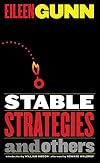
Gunn's short stories are varied, wildly imaginative, funny, scary, and a bit profound. Whether it is an alternate career for Richard Nixon, mankind's first meeting with an alien species, or people deliberately turning themselves into insects, there's something here for every taste. Don't miss it.
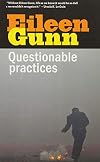
This is such an incredibly varied collection of weird and speculative fiction. Still, from stories that are more in weird fiction and literary territory on to steampunk, the collection is held together by Gunn's attention to detail and incredible concepts. The characters and world-building make a reader feel as if a whole world is being experienced within a few pages, and many of the stories have such humor that the collection stands out for that quality, as well.
I admit that a lot of these show more were more lighthearted and geared toward the humorous than what I normally enjoy--and, truthfully, I could have done entirely without the steampunk stories--but all the same, I'm thrilled to have read the collection because the stand-out stories were so very powerful. Among my favorites were: "Up the Fire Road", "Chop Wood, Carry Water", "Hive Mind Man", "Shed That Guilt! Double Your Productivity Overnight!", and "Phantom Pain". In general, I think I enjoyed the weird fiction and the more literary-leaning stories more so than the steampunk and more outright fantasy, but I'd still recommend the collection to all readers of weird fiction and SFF since I'd say it probably has something for everyone. show less
I admit that a lot of these show more were more lighthearted and geared toward the humorous than what I normally enjoy--and, truthfully, I could have done entirely without the steampunk stories--but all the same, I'm thrilled to have read the collection because the stand-out stories were so very powerful. Among my favorites were: "Up the Fire Road", "Chop Wood, Carry Water", "Hive Mind Man", "Shed That Guilt! Double Your Productivity Overnight!", and "Phantom Pain". In general, I think I enjoyed the weird fiction and the more literary-leaning stories more so than the steampunk and more outright fantasy, but I'd still recommend the collection to all readers of weird fiction and SFF since I'd say it probably has something for everyone. show less
With rare exceptions I haven't read single-author collections of short stories in one shot for decades now, because there's usually too much of a same-ness to the tales that eventually makes what could be a great story read in another context into a same-old, same-old hack; but Eileen Gunn's 2004 collection, Stable Strategies and Others, turned into one of those rare exceptions as I found I couldn't - didn't want to - put the book down before reading the next story. She's that rare writer show more who can tell convincing stories about alternate-history never-quite Presidents turned smarmy "Lie Detector" television hosts called Tricky Dick ("Fellow Americans"); an ultra-corporate world where changing into insects to get ahead is seen as a sign of ambition ("Stable Strategies for Middle Management"); the loss of a sock in a laundramat dryer results in the leg associated with the sock going haywire much to the discomfort of the person attached ("The Sock Story"); and Kurt Cobain lives as the namesake of "Nirvana High" (co-written with Leslie What), where suicidal norms and psychic "special ed" teenagers try to survive those excruciating years. And that's only a third of this volume of 12 stories, written between 1978 and 2004, each one thoroughly realized, engaging and enchanting. Usually in any anthology a reader will like one story more than others, or will dislike a few here and there, but honestly speaking, I loved every single one of these 12 stories, and found myself diving into each from the very first sentence. My only quibble has nothing to do with the writing or the stories per se; it's only that I'm reading them in 2011, and some of what was science-fictional in 1978 is ordinary or even passe now; this is a risk for all sf writers and because Eileen Gunn publishes so infrequently, in some stories the real world has caught up (almost) to her visions. But that's not a reason to not find this book and read it for yourselves; these stories are marvellous! Highly recommended. show less

Titling a collection “Questionable Practices” is just asking for it.
I, however, am a kind reviewer not given to snarky comments. I will not sacrifice accuracy for cheap sarcasm.
It is a clever title, though. Would that all the stories were clever or funny.
The two original works here, “Chop Wood, Carry Water” and “Phantom Pain”, are good. The first story is a retelling of the story of Rabbi Loew’s golem in Praha (Prague). It has gentle wit and sorrow as the golem relates his show more story, an account of the centuries since he was created, and how he hasn’t always been able to fulfill his task of protecting the local Jews. There’s no humor in the second story. It’s the sometimes clinical, but moving, account of a wounded American soldier in the Pacific Theater of World War Two. As he crawls to safety, he has visions of his future life. The pain he will experience in that life is not only from an amputated limb but lost loved ones as well.
“Up the Fire Road” is a funny, if ultimately inconsequential, story about a couple that finds a Sasquatch who casts its sexual glamour on them. “Speak, Geek” is a short-short story, one of those science fiction pieces first published in Nature. Its life in the corporate world, but some of the workers are dog-human and cat-human chimeras. It goes past “funnier than you would think” into “funny”.
I even liked “Thought Experiment” even though I generally hate it when any Baby Boomer mentions Woodstock in any way. It’s a time travel farce.
There are a lot of collaborations here, mostly with Michael Swanwick. In “’Shed That Guilt! Double Your Productivity Overnight!’”, Mr. Swanwick offers a unique service to Ms. Gunn. It’s the funniest piece in the book despite swipes at Republicans and Dick Cheney that don’t work even as coherent political satire.
A techno-hippy meets the oncoming of the Singularity in the moderately amusing “Hive Mind Man” written with Rudy Rucker. Amusing … with a creepy, ambiguous ending hiding behind the California mysticism.
But there’s a whole lot of stuff here that isn’t funny, surrealist pieces that go nowhere, weird takeoffs on tv shows that are neither interesting or funny as parodies or in any other way. “No Place to Raise Kids: A Tale of Forbidden Love” is a gender bender with a pregnant Spock – the Vulcan, not the pediatrician. Poem – and I don’t mind poetry – “To the Moon Alice” is about the old tv sitcom The Honeymooners. “Michael Swanwick and Samuel R. Delany at the Joyce Kilmer Service Area, March 2005” is a surrealistic (and fictional) dialogue between the two writers as transcribed by Gunn.
And then there is “The Steampunk Quartet”, parodies subtitled “A Different Engine”, “Day After the Cooters”, “The Perdido Street Project”, and “Internal Devices”. Yes, I recognized all the parodied titles even if I haven’t read them all. But I found none but the parody of K. W. Jeter’s Infernal Devices even a bit funny.
Not being a fan of fairy tales in general, it was to be expected that I wasn’t all that fond of the Swanwick-Gunn collaboration “The Trains That Climb the Winter Tree”. A lot of dead people here, at Christmas time, and the unconvincing claim that “understanding is stronger than truth”. Another fairy tale-like story making a stab at delivering wisdom is “The Armies of Elfland”. Here the same authors deliver an interesting violation of story clichés in a story about some nasty elves who kill off most of the world’s people, leaving only children. One, Agnes, must learn to endure the torments of the Queen of Elfland. I take it as a feminist rejection of fairy tale expectations.
Sort of striding the intersection of the fairy tale stories and the literary parodies is “Zeppelin City” from, again, Gunn and Swanwick. I loathed this story and rushed to finish it. Totally unconvincing as an alternate history despite various early 20th century figures making an appearance, dull and plodding as literary parody despite zeppelins and bottled brains and autogyroists, shaky in its transitions between scenes, and banal in its observation that new technologies don’t lead to utopias.
Gunn fans I’m sure will want this collection. The rest of you … I’m not sure. If you’re curious about the acclaimed Gunn, I’d go for the cheap Kindle edition. show less
I, however, am a kind reviewer not given to snarky comments. I will not sacrifice accuracy for cheap sarcasm.
It is a clever title, though. Would that all the stories were clever or funny.
The two original works here, “Chop Wood, Carry Water” and “Phantom Pain”, are good. The first story is a retelling of the story of Rabbi Loew’s golem in Praha (Prague). It has gentle wit and sorrow as the golem relates his show more story, an account of the centuries since he was created, and how he hasn’t always been able to fulfill his task of protecting the local Jews. There’s no humor in the second story. It’s the sometimes clinical, but moving, account of a wounded American soldier in the Pacific Theater of World War Two. As he crawls to safety, he has visions of his future life. The pain he will experience in that life is not only from an amputated limb but lost loved ones as well.
“Up the Fire Road” is a funny, if ultimately inconsequential, story about a couple that finds a Sasquatch who casts its sexual glamour on them. “Speak, Geek” is a short-short story, one of those science fiction pieces first published in Nature. Its life in the corporate world, but some of the workers are dog-human and cat-human chimeras. It goes past “funnier than you would think” into “funny”.
I even liked “Thought Experiment” even though I generally hate it when any Baby Boomer mentions Woodstock in any way. It’s a time travel farce.
There are a lot of collaborations here, mostly with Michael Swanwick. In “’Shed That Guilt! Double Your Productivity Overnight!’”, Mr. Swanwick offers a unique service to Ms. Gunn. It’s the funniest piece in the book despite swipes at Republicans and Dick Cheney that don’t work even as coherent political satire.
A techno-hippy meets the oncoming of the Singularity in the moderately amusing “Hive Mind Man” written with Rudy Rucker. Amusing … with a creepy, ambiguous ending hiding behind the California mysticism.
But there’s a whole lot of stuff here that isn’t funny, surrealist pieces that go nowhere, weird takeoffs on tv shows that are neither interesting or funny as parodies or in any other way. “No Place to Raise Kids: A Tale of Forbidden Love” is a gender bender with a pregnant Spock – the Vulcan, not the pediatrician. Poem – and I don’t mind poetry – “To the Moon Alice” is about the old tv sitcom The Honeymooners. “Michael Swanwick and Samuel R. Delany at the Joyce Kilmer Service Area, March 2005” is a surrealistic (and fictional) dialogue between the two writers as transcribed by Gunn.
And then there is “The Steampunk Quartet”, parodies subtitled “A Different Engine”, “Day After the Cooters”, “The Perdido Street Project”, and “Internal Devices”. Yes, I recognized all the parodied titles even if I haven’t read them all. But I found none but the parody of K. W. Jeter’s Infernal Devices even a bit funny.
Not being a fan of fairy tales in general, it was to be expected that I wasn’t all that fond of the Swanwick-Gunn collaboration “The Trains That Climb the Winter Tree”. A lot of dead people here, at Christmas time, and the unconvincing claim that “understanding is stronger than truth”. Another fairy tale-like story making a stab at delivering wisdom is “The Armies of Elfland”. Here the same authors deliver an interesting violation of story clichés in a story about some nasty elves who kill off most of the world’s people, leaving only children. One, Agnes, must learn to endure the torments of the Queen of Elfland. I take it as a feminist rejection of fairy tale expectations.
Sort of striding the intersection of the fairy tale stories and the literary parodies is “Zeppelin City” from, again, Gunn and Swanwick. I loathed this story and rushed to finish it. Totally unconvincing as an alternate history despite various early 20th century figures making an appearance, dull and plodding as literary parody despite zeppelins and bottled brains and autogyroists, shaky in its transitions between scenes, and banal in its observation that new technologies don’t lead to utopias.
Gunn fans I’m sure will want this collection. The rest of you … I’m not sure. If you’re curious about the acclaimed Gunn, I’d go for the cheap Kindle edition. show less
 This review was written for LibraryThing Early Reviewers.
Lists
Awards


You May Also Like


Associated Authors
Statistics
- Works
- 26
- Also by
- 49
- Members
- 391
- Popularity
- #61,940
- Rating
- 3.7
- Reviews
- 16
- ISBNs
- 13

