
Joan Smith (1) (1953–)
Author of Misogynies
For other authors named Joan Smith, see the disambiguation page.
About the Author
Author, journalist, and human rights activist Joan Smith was born in London, England on August 27, 1953. She attended the University of Reading and worked for the Sunday Times from 1979 to 1984. She has also contributed to the Guardian Weekend supplement, The Independent, the Independent on Sunday, show more and the New Statesman. She writes both nonfiction and fiction including the Loretta Lawson series. (Bowker Author Biography) show less
Series
Works by Joan Smith
Associated Works
Backlash: The Undeclared War Against American Women (1991) — Preface, some editions — 3,001 copies, 22 reviews
Shaking a Leg: Collected Journalism and Writings (1997) — Introduction, some editions — 301 copies, 4 reviews
Tagged
Common Knowledge
- Birthdate
- 1953-08-27
- Gender
- female
- Education
- University of Reading
- Occupations
- novelist
journalist
human rights activist - Relationships
- Wheen, Francis (ex-husband)
- Nationality
- UK
- Birthplace
- London, England, UK
- Places of residence
- Georgetown, Ontario, Canada
- Associated Place (for map)
- UK
Members
Reviews
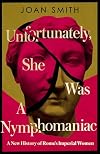
This splendid book stems from the author’s rare, perhaps unique, combination of campaigning (in writing and in deeds) against violence against women, and of appreciation of the classics. Smith gave the origin story at the Cambridge Literary Festival reading in 2025 that I attended: she has loved the culture of the classical world since doing her Latin A-level (not an option regularly promoted to girls), and her work in journalism and writing in the decades since has centred on the themes show more in her “Misogynies” collection (reviewed here recently), leading to an advisory role with public policy initiatives to counter male-on-female violence. Her knowledge of the Latin language and the classical context means she can provide translations or gloss the judgement-laden versions that have come down to us. Tacitus in particular gets taken down for jumping on bandwagons of dubious gossip. All this reminds us that our history accounts (“Annals” or whatever) are not neutral - the act of writing requires interpretation i.e. choices, and it’s hard to create a story line without some simplifying (in this case: misogyny or more kindly, lack of empathy).
The book here takes us through the fascinating but monstrous behaviour of Tiberius, Claudius, Nero (well pretty much the whole line of Julia-Claudian emperors in fact, but the British Museum’s open-minded captioning of its recent, would-be revisionist Nero exhibition was a particular spark that ignited this book). Smith leads the reader into revisionist thinking, partly by her humane treatment, but also by applying the terminology of our age to the ancients: domestic abuse, grooming, incest, femicide. Athough this committed, indeed angry, approach could easily produce a valid but turgid diatribe, Smith’s easy writing style retains the narrative drive and interest that makes the Romans’ culture and history so absorbing. show less
The book here takes us through the fascinating but monstrous behaviour of Tiberius, Claudius, Nero (well pretty much the whole line of Julia-Claudian emperors in fact, but the British Museum’s open-minded captioning of its recent, would-be revisionist Nero exhibition was a particular spark that ignited this book). Smith leads the reader into revisionist thinking, partly by her humane treatment, but also by applying the terminology of our age to the ancients: domestic abuse, grooming, incest, femicide. Athough this committed, indeed angry, approach could easily produce a valid but turgid diatribe, Smith’s easy writing style retains the narrative drive and interest that makes the Romans’ culture and history so absorbing. show less

Dr Loretta Lawson is a successful academic, teaching English literature at one of the colleges making up the University of London in the late 1980s. She is also a founding member of Fem Sap, an academic European journal that had been set up to espouse radical feminism.
In this latter capacity, as the book opens she is travelling to Paris in late summer to attend what she anticipates might be a tense meeting of the Fem Sap board, at which some of the more extreme members are expected to push show more the magazine in an increasingly radical and antagonistic direction. Loretta has arranged to pass the weekend staying in the vacant apartment jointly owned by one of her friends. Arriving at the flat far later than planned, after a traumatic journey, she is surprised to find that the larger bedroom is occupied, with a man apparently sleeping in it. She stays in the other room, and departs for the board meeting early the next morning, without seeing any further signs of the other occupant.
When she returns to the flat after the board meeting, which had been as long and contentious as she had feared, Loretta finds the flat empty. However, when she looks into the larger bedroom, she is shocked to see that the bedding and carpet are very heavily bloodstained. There are no other signs that anyone has been in the flat, apart from an early review copy of a new book of structuralist literary criticism, that seems completely out of place, and which Loretta absent-mindedly takes with her.
Returning to London, but concerned about what might have happened, she ‘recruits’ her ex-husband, an investigative journalist, to help try to discover who the unexpected other occupant of the flat might have been, and what, if anything has happened to him. She also meets up with her close friend, and fellow academic, Bridget Bennett, who is a fellow of one of the Oxford colleges. Meanwhile, it appears that Hugh Puddephat, a prominent literary scholar and fellow of another Oxford college has failed to turn up for the start of a new academic year. Having had a colourful past, and having selfdom been reluctant to air his views on prevailing public issues, his disappearance attracts more media attention that would normally have been expended on a missing academic.
As well as developing an enticing mystery, Joan Smith deftly captures the venom and disdain which adherents of the different schools of literary criticism show towards those who dare to disagree with them. She also manages to show up the ridiculousness of some of the more extreme manifestations of structuralism and deconstruction as avenues of literary criticism. show less
In this latter capacity, as the book opens she is travelling to Paris in late summer to attend what she anticipates might be a tense meeting of the Fem Sap board, at which some of the more extreme members are expected to push show more the magazine in an increasingly radical and antagonistic direction. Loretta has arranged to pass the weekend staying in the vacant apartment jointly owned by one of her friends. Arriving at the flat far later than planned, after a traumatic journey, she is surprised to find that the larger bedroom is occupied, with a man apparently sleeping in it. She stays in the other room, and departs for the board meeting early the next morning, without seeing any further signs of the other occupant.
When she returns to the flat after the board meeting, which had been as long and contentious as she had feared, Loretta finds the flat empty. However, when she looks into the larger bedroom, she is shocked to see that the bedding and carpet are very heavily bloodstained. There are no other signs that anyone has been in the flat, apart from an early review copy of a new book of structuralist literary criticism, that seems completely out of place, and which Loretta absent-mindedly takes with her.
Returning to London, but concerned about what might have happened, she ‘recruits’ her ex-husband, an investigative journalist, to help try to discover who the unexpected other occupant of the flat might have been, and what, if anything has happened to him. She also meets up with her close friend, and fellow academic, Bridget Bennett, who is a fellow of one of the Oxford colleges. Meanwhile, it appears that Hugh Puddephat, a prominent literary scholar and fellow of another Oxford college has failed to turn up for the start of a new academic year. Having had a colourful past, and having selfdom been reluctant to air his views on prevailing public issues, his disappearance attracts more media attention that would normally have been expended on a missing academic.
As well as developing an enticing mystery, Joan Smith deftly captures the venom and disdain which adherents of the different schools of literary criticism show towards those who dare to disagree with them. She also manages to show up the ridiculousness of some of the more extreme manifestations of structuralism and deconstruction as avenues of literary criticism. show less

Spirited and feminist, but no mere tract. These brief studies and essays are analytically clear and well-evidenced. “Women in Togas” is a well-informed and convincing scrutiny of the defamation and distortions of women’s lives in the standard histories of ancient Rome - a seed later to blossom into an entire book (“Unfortunately, She Was A Nymphomaniac”), for which I attended a reading at the Cambridge Book Festival in April 2025. And that attendance prompted my rereading of this show more 30-odd year old collection of the author’s essays.
Some observations from “Misogynies” have dated now, thankfully. But others still apply, as does the core analysis of a culture ready to defame and distort women’s experiences. The detailed essay on the failings of the police investigation into the Yorkshire Ripper is a distressing account, even now. Likewise some of the takedowns of prominent movies and books from that era, mostly now forgotten (Sophie’s Choice, Dressed to Kill).
Channelling Roland Barthes, Smith seeks to expose the “lies men tell about women,” as “one of the concealed well-springs of our culture, … a secret kept by men and women, because neither group wants to acknowledge what is really going on.” (p152). Bracing, stimulating writing, even decades later. show less
Some observations from “Misogynies” have dated now, thankfully. But others still apply, as does the core analysis of a culture ready to defame and distort women’s experiences. The detailed essay on the failings of the police investigation into the Yorkshire Ripper is a distressing account, even now. Likewise some of the takedowns of prominent movies and books from that era, mostly now forgotten (Sophie’s Choice, Dressed to Kill).
Channelling Roland Barthes, Smith seeks to expose the “lies men tell about women,” as “one of the concealed well-springs of our culture, … a secret kept by men and women, because neither group wants to acknowledge what is really going on.” (p152). Bracing, stimulating writing, even decades later. show less

Joan Smith, a British journalist, activist and novelist, introduces Loretta Lawson, a feminist academic, in A Masculine Ending Dr. Lawson uses the Paris flat of a fellow London University professor while she's in the city for a feminist conference. While there, Dr. Lawson comes to believe that an unknown man has been murdered in that very flat.
I don't want to give to much away by explaining why, but Dr. Lawson cannot go to the French police with her rather wispy suspicions. Instead, aided by show more her estranged husband, a journalist, and her best friend, a female professor at Oxford University, Dr. Lawson begins to investigate who the unknown man might have been and whether he has, indeed, become the victim of foul play.
The mystery won't be resolved until the last dozen pages -- and I never had the tiniest inkling of the perpetrator. Smith's clever handling of the mystery and her creation of the eminently sensible and likeable Loretta Lawson led me to immediately order Why Aren't They Screaming? so that I can follow the further adventures of Dr. Loretta Lawson.
My only gripe is that Smith only wrote five Lawson mysteries. As the last Lawson novel was released in 1995 and Smith now devotes so much of her time to PEN International, I doubt she will oblige her fans by penning any more. Ah, c'est la vie! We must take the bitter with the sweet, and, with A Masculine Ending, Smith has introduced an amateur sleuth who delivers a very sweet read indeed. show less
I don't want to give to much away by explaining why, but Dr. Lawson cannot go to the French police with her rather wispy suspicions. Instead, aided by show more her estranged husband, a journalist, and her best friend, a female professor at Oxford University, Dr. Lawson begins to investigate who the unknown man might have been and whether he has, indeed, become the victim of foul play.
The mystery won't be resolved until the last dozen pages -- and I never had the tiniest inkling of the perpetrator. Smith's clever handling of the mystery and her creation of the eminently sensible and likeable Loretta Lawson led me to immediately order Why Aren't They Screaming? so that I can follow the further adventures of Dr. Loretta Lawson.
My only gripe is that Smith only wrote five Lawson mysteries. As the last Lawson novel was released in 1995 and Smith now devotes so much of her time to PEN International, I doubt she will oblige her fans by penning any more. Ah, c'est la vie! We must take the bitter with the sweet, and, with A Masculine Ending, Smith has introduced an amateur sleuth who delivers a very sweet read indeed. show less
Lists
Awards


You May Also Like


Associated Authors
Statistics
- Works
- 15
- Also by
- 7
- Members
- 932
- Popularity
- #27,550
- Rating
- 3.9
- Reviews
- 23
- ISBNs
- 457
- Languages
- 4
- Favorited
- 3