
Margaret Barker (1) (1944–)
Author of Temple Theology: An Introduction
For other authors named Margaret Barker, see the disambiguation page.
About the Author
Margaret Barker is a former President of the Society for Old Testament Study, and author of numerous works, including The Older Testament, The Lost Prophet, The Gate of Heaven, The Great Angel. His All Holiness Bartholomew is Archbishop of Constantinople and Ecumenical Patriarch.
Image credit: Margaret Barker
Works by Margaret Barker
Associated Works
The Worlds of Joseph Smith: A Bicentennial Conference at the Library of Congress (2006) — Contributor — 30 copies
The Jewish Roots of Christological Monotheism: Papers from the St. Andrews Conference on the Historical Origins of the Worship of Jesus (Supplements to the Journal for the Study… (1999) — Contributor — 25 copies
Sacred Space, Sacred Thread: Perspectives across Time and Traditions (2019) — Contributor — 3 copies
Tagged
Common Knowledge
- Birthdate
- 1944
- Gender
- female
- Education
- University of Cambridge
- Occupations
- Methodist Preacher
- Organizations
- Society for Old Testament Study (President)
- Short biography
- Margaret Barker is a mother and grandmother, a Methodist Preacher, and has been involved, since it opened in 1977, with the work of a Women’s Refuge.
She read theology at the University of Cambridge, England, and went on to pursue her research independently.
She was elected President of the Society for Old Testament Study in 1998*, and is currently the Editor of the Society’s Monograph Series, published by Ashgate.
She has so far written 13 books, which form a sequence, later volumes building on her earlier conclusions.
Since 1997, she has been part of the symposium Religion, Science and the Environment, convened by His All Holiness Bartholomew I, the Ecumenical Patriarch. This work has led her to develop the practical implications of temple theology as the basis for a Christian environment theology.
In July 2008 Margaret Barker was awarded a DD by the Archbishop of Canterbury ‘in recognition of her work on the Jerusalem Temple and the origins of Christian Liturgy, which has made a significantly new contribution to our understanding of the New Testament and opened up important fields for research. - Nationality
- UK
- Places of residence
- UK
- Associated Place (for map)
- UK
Members
Reviews
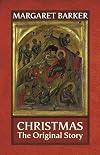
It's a really nice application of the theology of the Temple and the Lady to the nativity story – so it's great to see this superficially familiar tale reset into that deeper, more ancient context. As usual, I appreciated her use of a broader array of sources: Ugarit, NHL stuff, Infancy Gospel of James and the Quran. Very cool to see the way the Temple hypothesis provides underlying harmony to surface contradictions.
Having said all that – this is typical Barker: it's a wild ride through show more far-flung sources, many of which only scholars will know well enough to follow. There only brief pauses (although I notice her paragraphs are getting a little shorter and there are section headings! Welcome innovation. Perhaps there are editors somewhere in the publication process nowadays). Because this one is comparatively later in the bibliography, she doesn't make the case for a lot of scribal "correction" - she just points to earlier books where she's done so. That's less exhausting if you've already read some other Barker works, but if this is your first, it may not be convincing.
Lastly… well it just stops, as Dr Barker's books often do. There's no undergraduate summing up of the key points. She just says her final thing and then you're in the endnotes. I'm thinking I could write a book called "Summing Up: missing conclusions from the work of Margaret Barker" in which I just write the missing conclusions from every book. I bet it would sell!
All in all, it's not as accessible as Temple Theology or Temple Mysticism, but it's more accessible than a lot of the more academic stuff – partly because it all rotates around this much-loved narrative we all (think we) know.
So, I'd recommend it. I guarantee it will get you more curious about some new things you've never heard of. It will deepen your grasp of Temple Theology and its applications. It will clarify your understanding of the Lady and the role she plays in incarnation.
Merry Christmas! show less
Having said all that – this is typical Barker: it's a wild ride through show more far-flung sources, many of which only scholars will know well enough to follow. There only brief pauses (although I notice her paragraphs are getting a little shorter and there are section headings! Welcome innovation. Perhaps there are editors somewhere in the publication process nowadays). Because this one is comparatively later in the bibliography, she doesn't make the case for a lot of scribal "correction" - she just points to earlier books where she's done so. That's less exhausting if you've already read some other Barker works, but if this is your first, it may not be convincing.
Lastly… well it just stops, as Dr Barker's books often do. There's no undergraduate summing up of the key points. She just says her final thing and then you're in the endnotes. I'm thinking I could write a book called "Summing Up: missing conclusions from the work of Margaret Barker" in which I just write the missing conclusions from every book. I bet it would sell!
All in all, it's not as accessible as Temple Theology or Temple Mysticism, but it's more accessible than a lot of the more academic stuff – partly because it all rotates around this much-loved narrative we all (think we) know.
So, I'd recommend it. I guarantee it will get you more curious about some new things you've never heard of. It will deepen your grasp of Temple Theology and its applications. It will clarify your understanding of the Lady and the role she plays in incarnation.
Merry Christmas! show less
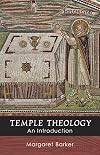
This is a fascinating little book with a very different approach to understanding the nature of temple worship during the period of the first temple in Jerusalem--Solomon's temple. Traditionally, Josiah's reforms are understood as a purging of idolatrous practices. Barker proposes that the reforms represented the death knell of the original (and true) temple worship. The author demonstrates that the early Christians had and understanding of the ancient temple worship that had been corrupted show more and replaced.
This study presents the ancient temple through the concepts of creation, covenant, atonement, and wisdom. Her association of the creation with the temple and some of her thoughts regarding Melchizedek and the High Priesthood will be of interest to LDS readers. Barker is an independent Biblical scholar and her point of view is guaranteed to sometimes resonate with sometimes irritate readers. show less
This study presents the ancient temple through the concepts of creation, covenant, atonement, and wisdom. Her association of the creation with the temple and some of her thoughts regarding Melchizedek and the High Priesthood will be of interest to LDS readers. Barker is an independent Biblical scholar and her point of view is guaranteed to sometimes resonate with sometimes irritate readers. show less
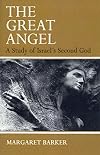
This book maintains that ancient Israel always had more than one god, and that the distinction between El and Yahweh was blurred by the Deuteronomist reformers. Barker sees vestiges of this distinction surviving in the Hebrew Bible, especially in the figure of the Angel of the Lord. She sees this distinction as informing many texts in the "intertestamental" period. She also believes that "Israel's Second God" was common among Jews of the post exilic period well into the Christian era, and show more that Philo's exposition of the second god owes more to his Jewish heritage than to interaction with Greek culture. Barker argues that the persistance of this second god helped with the acceptance of Christianity, with Jesus identified with Yahweh and the Angel and Father identified with El. show less

I read this in conjunction with Michael McGuckian's The Holy Sacrifice of the Mass. And they were serendipitously compatible. McGuckian reached back to OT temple practices to explain the Eucharist. It was a reading high experience. Barker filled in a lot of previous blanks.
You May Also Like


Associated Authors
Statistics
- Works
- 19
- Also by
- 10
- Members
- 986
- Popularity
- #26,110
- Rating
- 4.1
- Reviews
- 9
- ISBNs
- 172
- Languages
- 8