
Donald Miller (1) (1971–)
Author of Blue Like Jazz
For other authors named Donald Miller, see the disambiguation page.
About the Author
Donald Miller is a best-selling author and public speaker based in Nashville, Tennessee who focuses on Christian spirituality. Miller's first book, Prayer and the Art of Volkswagen Maintenance (Harvest House Publishers 2000), chronicled the cross-country road trip he took at age 21. It was printed show more with little fanfare, but it was republished more successfully in 2005 as Through Painted Deserts. Miller became a New York Times Bestselling Author when he published Blue Like Jazz in 2003. In 2004, Miller released Searching For God Knows What. In 2006, he added another book, To Own A Dragon. Don's next book, A Million Miles in a Thousand Years, was released in late 2009. His title Scary Close: Dropping the Act and Acquiring a Taste for True Intimacy became a New York Times bestseller in 2015. In 2009 Miller began production of All Things Converge, a series of DVDs for small groups that feature Miller interviewing prominent Christian writers and theologians. The first three DVDs in the series were released in the fourth quarter of 2009. (Bowker Author Biography) show less
Works by Donald Miller
A Million Miles in a Thousand Years: What I Learned While Editing My Life (2009) 1,476 copies, 40 reviews
Associated Works
Love Does: Discover a Secretly Incredible Life in an Ordinary World (2012) — Foreword — 2,064 copies, 42 reviews
The Love Wins Companion: A Study Guide for Those Who Want to Go Deeper (2011) — Contributor — 95 copies, 4 reviews
Tagged
Common Knowledge
- Birthdate
- 1971-08-12
- Gender
- male
- Occupations
- speaker
author - Organizations
- Burnside Writers Collective
StoryBrand - Nationality
- USA
- Places of residence
- Houston, Texas, USA
Portland, Oregon, USA
Pearland, Texas, USA
Nashville, Tennessee, USA - Associated Place (for map)
- USA
Members
Reviews
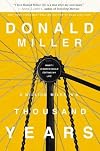
A very strange book. But it made me laugh a lot, and think about life even more. Apparently Donald Miller has another book called BLUE LIKE JAZZ which was enormously successful, and this book was inspired by his groping attempts, along with a filmmaker and cinematographer, to turn BLUE LIKE JAZZ into a movie. A journey which made him wonder about what makes writing work, and what constitutes a good story.
A MILLION MILES IN A THOUSAND YEARS, published by Thomas Nelson, is a Christian book, show more but only in the loosest sense of the word. What sets it apart from most 'Christian' books is its humor. Because Miller is a very funny guy with a very dry, self-deprecating sense of humor. He characterizes himself as this fat guy who was living his life rather aimlessly with no real sense of purpose. But he's a writer, and that early book made him famous, which got him to thinking about what he needed to do to make his life better, to give it purpose. And, in writing the screenplay - to his life, essentially - his fatherless youth came up, which caused him to find his father, who apologized for his absence and asked Donald's forgiveness. Miller admits that his dad had a few beers to make him brave enough, but he did forgive him, and they both felt better. There's a lot of rather sideways allusions to Miller's Christian faith, the importance of a few male mentors in his life from the church, but he doesn't make it the center of his story. Maybe that's why the book is as good as it is, why I liked it enough to finish it. It's not preachy or over-the-top evangelical the way so much of what we're hearing in the current Presidential election year. He keeps it light and entertaining. But it IS inspirational, the way he turns his life around, first by geeting into shape for a hike in the Andes, then a cross-country bicycle trip fundraiser, and, most of all, by founding an organization for kids in need of direction, called The Mentoring Project.
Miller never rubs religion in your face; he takes it with a grain of salt. In fact, here's what he says about Jesus -
"Growing up in church, we were taught that Jesus was the answer to all our problems. We were taught that there was a circle-shaped hole in our heart and that we had tried to fill it with the square pegs of sex, drugs and rock and roll; but only the circle peg of Jesus could fill our hole. I became a Christian based, in part, on this promise, but the hole never really went away. To be sure, I like Jesus, and I still follow him, but the idea that Jesus will make everything better is a lie. It's basically biblical theology translated into the language of infomercials ... I think Jesus can make things better, but I don't think he's going to make things perfect. Not here, and not now."
Reading this, I decided Miller had a pretty good handle on this Christianity thing, and that he and Jesus would probably be pretty good pals.
I noticed that the front cover of this paperback edition has an endorsement blurb from none other than Anne Lamott, a favorite writer of mine ever since BIRD BY BIRD. She says: "I love Donald Miller. He is a man after my own heart." Yeah. Mine too, Anne. Mine too. If you've been thinking about turning your life around; about how "to live a better story," try this book. You'll probably get some great ideas. Very highly recommended.
- Tim Bazzett, author of the memoir, BOOKLOVER. show less
A MILLION MILES IN A THOUSAND YEARS, published by Thomas Nelson, is a Christian book, show more but only in the loosest sense of the word. What sets it apart from most 'Christian' books is its humor. Because Miller is a very funny guy with a very dry, self-deprecating sense of humor. He characterizes himself as this fat guy who was living his life rather aimlessly with no real sense of purpose. But he's a writer, and that early book made him famous, which got him to thinking about what he needed to do to make his life better, to give it purpose. And, in writing the screenplay - to his life, essentially - his fatherless youth came up, which caused him to find his father, who apologized for his absence and asked Donald's forgiveness. Miller admits that his dad had a few beers to make him brave enough, but he did forgive him, and they both felt better. There's a lot of rather sideways allusions to Miller's Christian faith, the importance of a few male mentors in his life from the church, but he doesn't make it the center of his story. Maybe that's why the book is as good as it is, why I liked it enough to finish it. It's not preachy or over-the-top evangelical the way so much of what we're hearing in the current Presidential election year. He keeps it light and entertaining. But it IS inspirational, the way he turns his life around, first by geeting into shape for a hike in the Andes, then a cross-country bicycle trip fundraiser, and, most of all, by founding an organization for kids in need of direction, called The Mentoring Project.
Miller never rubs religion in your face; he takes it with a grain of salt. In fact, here's what he says about Jesus -
"Growing up in church, we were taught that Jesus was the answer to all our problems. We were taught that there was a circle-shaped hole in our heart and that we had tried to fill it with the square pegs of sex, drugs and rock and roll; but only the circle peg of Jesus could fill our hole. I became a Christian based, in part, on this promise, but the hole never really went away. To be sure, I like Jesus, and I still follow him, but the idea that Jesus will make everything better is a lie. It's basically biblical theology translated into the language of infomercials ... I think Jesus can make things better, but I don't think he's going to make things perfect. Not here, and not now."
Reading this, I decided Miller had a pretty good handle on this Christianity thing, and that he and Jesus would probably be pretty good pals.
I noticed that the front cover of this paperback edition has an endorsement blurb from none other than Anne Lamott, a favorite writer of mine ever since BIRD BY BIRD. She says: "I love Donald Miller. He is a man after my own heart." Yeah. Mine too, Anne. Mine too. If you've been thinking about turning your life around; about how "to live a better story," try this book. You'll probably get some great ideas. Very highly recommended.
- Tim Bazzett, author of the memoir, BOOKLOVER. show less

After reading A Million Miles in a Thousand Years I felt like I had to IMMEDIATELY read everything Don Miller had ever written, so this book was next on my list. I loved it.
Miller explains his view of Christianity in such simple, easy to understand (for me) verbiage, stories and examples I think I might have converted even if I were Jewish. His writing just makes sense to me. It felt like coming home.
One of the things I love about this book is that Miller never bashed other religions, or show more people who believe in Jesus or don't. He explains his views, and why he beleives what he does. He also discusses some times in his life when he had questions, he didn't go to church, he had trouble finding a church he was comfortable, and struggles some of his friends had with not believing in God and then reconciling that belief with wanting to and ultimately believing.
Miller's writing is so beautiful it's like one long, easy to understand poem. Sometimes I found myself re-reading passages just for the beautiful way he strings words together.
I think anyone would enjoy this book -- young to old, devout or curious, and even atheists might like it just for his writing style. This is another book I would give as gifts to everyone I knew. show less
Miller explains his view of Christianity in such simple, easy to understand (for me) verbiage, stories and examples I think I might have converted even if I were Jewish. His writing just makes sense to me. It felt like coming home.
One of the things I love about this book is that Miller never bashed other religions, or show more people who believe in Jesus or don't. He explains his views, and why he beleives what he does. He also discusses some times in his life when he had questions, he didn't go to church, he had trouble finding a church he was comfortable, and struggles some of his friends had with not believing in God and then reconciling that belief with wanting to and ultimately believing.
Miller's writing is so beautiful it's like one long, easy to understand poem. Sometimes I found myself re-reading passages just for the beautiful way he strings words together.
I think anyone would enjoy this book -- young to old, devout or curious, and even atheists might like it just for his writing style. This is another book I would give as gifts to everyone I knew. show less
This is a collection of essays about one man's experience with God. He has grown in spirituality and sanctification as he has struggled with difficult questions and life experiences. Rather than preach, he simply lays out his life and the lessons he's drawn from them. But he leaves the reader to draw their own conclusions.
This is a very thoughtful and intimate memoir. I appreciated the author's unvarnished relation of his spiritual conversion. It felt real and authentic instead of the show more phony/self-righteous memoirs of some Christian authors. I appreciated how honest he was about his own short comings and struggles. I found a lot to relate to. show less
This is a very thoughtful and intimate memoir. I appreciated the author's unvarnished relation of his spiritual conversion. It felt real and authentic instead of the show more phony/self-righteous memoirs of some Christian authors. I appreciated how honest he was about his own short comings and struggles. I found a lot to relate to. show less
I love the power of a personal vision, story or goal. Whether in a job or my personal life, I feel lost without one. Donald Miller comes at this idea from a perspective I’ve never seen before - by learning how to write a good story and applying that to his own life.
What could have been a dry, goal oriented book is actually a hilarious, fun, brilliantly written autobiography. I loved how Miller recognized and wrote about the littlest moments and somehow jumped around time without it show more seeming out of place.
His take on advertising was brought back to stories too:
Advertising and marketing try to sell us a story that by buying their products, OUR story will match their perfect one.
If you can live a better story, there is no reason to buy into someone else’s. Find a story you want to live and live it. show less
What could have been a dry, goal oriented book is actually a hilarious, fun, brilliantly written autobiography. I loved how Miller recognized and wrote about the littlest moments and somehow jumped around time without it show more seeming out of place.
His take on advertising was brought back to stories too:
Advertising and marketing try to sell us a story that by buying their products, OUR story will match their perfect one.
If you can live a better story, there is no reason to buy into someone else’s. Find a story you want to live and live it. show less
Lists
Awards

You May Also Like


Associated Authors
Statistics
- Works
- 34
- Also by
- 2
- Members
- 14,206
- Popularity
- #1,619
- Rating
- 3.9
- Reviews
- 210
- ISBNs
- 193
- Languages
- 14
- Favorited
- 43