
Sherry Thomas (1) (1975–)
Author of A Study in Scarlet Women
For other authors named Sherry Thomas, see the disambiguation page.
About the Author
Sherry Thomas is an American author, born in China in 1975. She writes contemporary and historical romance novels. Her work includes the series The Fitzhughs, Heart of Blade Duology, The London Trilogy, The Marsdens, and The Lady Sherlock Series. Two of her titles have won the RITA award, Not Quite show more a Husband in 2010, and His at Night in 2011. She also wrote a young adult fantasy series, The Elemental Trilogy. (Bowker Author Biography) show less
Image credit: Author Sherry Thomas at the 2019 Texas Book Festival in Austin, Texas, United States. By Larry D. Moore, CC BY-SA 4.0, https://commons.wikimedia.org/w/index.php?curid=84743891
Series
Works by Sherry Thomas
Prima 4 copies
Associated Works
Tagged
Common Knowledge
- Birthdate
- 1975
- Gender
- female
- Education
- Louisiana State University (BS - Economics, MS - Accounting)
- Awards and honors
- AAR Annual Reader Poll (Best Debut Author, 2009)
- Agent
- Kristin Nelson (Nelson Literary Agency)
- Short biography
- Sherry Thomas burst onto the romance scene with Private Arrangements, one of the most anticipated debut historical romances in recent history and a Publisher Weekly 2008 Best of the Year book. Lisa Kleypas calls her “the most powerfully original historical romance author working today.” Her books have received stellar reviews from Publishers Weekly, Library Journal, The Chicago Tribune, and Romantic Times, along with enthusiastic praises from many of the most highly trafficked romance review websites and blogs.
Her story is all the more interesting given that English is Sherry's second language--she has come a long way from the days when she made her laborious way through Rosemary Roger's Sweet Savage Love with an English-Chinese dictionary. She enjoys digging down to the emotional core of stories. And when she is not writing, she thinks about the zen and zaniness of her profession, plays computer games with her sons, and reads as many fabulous books as she can find.Sherry M. Thomas (born 1975) is an American novelist of young adult fantasy, historical romance, and contemporary romance. She has won multiple awards including the Romance Writers of America RITA Award for Best Historical Romance for Not Quite a Husband in 2010 and His at Night in 2011. In an article in The New York Times, romance author Sarah MacLean stated Thomas is known for her "lush style," and in USA Today romance author Madeline Hunter said she is "critically acclaimed as one of historical romance's best writers."
A native of China, Thomas emigrated to the United States at thirteen and learned English reading romance novels. She published her first novel in 2008, English-set Victorian romances, and in 2013, she branched into young adult fantasy. In 2014, she diverged from her traditional historical settings to publish a series set in Imperial China. Common themes in her work include unrequited love, love betrayal, and fate.Sherry Thomas writes both historical romance and young adult fantasy.
On the romance side, she is one of the most acclaimed authors working in the genre today, her books regularly receiving starred reviews and best-of-the-year honors from trade publications. She is also a two-time winner of Romance Writers of America’s prestigious RITA® Award.
On the young adult fantasy side, there isn’t much to report yet, her debut book, THE BURNING SKY, book 1 of the Elemental Trilogy, has received a starred review from Publishers Weekly and been named to the Autumn ’13 Kids’ Indie Next List.
Sherry writes in her second language. She learned English by reading romance and science fiction—every word Isaac Asimov ever wrote, in fact. She is proud to say that her son is her biggest fanboy—for the YA fantasy, not the romances. At least, not yet… - Nationality
- China (birth)
USA - Birthplace
- Qingdao, Shandong Province, China
- Places of residence
- Austin, Texas, USA
Members
Reviews
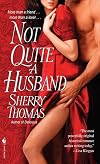
Note: Maybe don’t read this review if you’ve not read the book? Complicated, lots of quotes. Maybe spoiler. I dunno.
well hell.
A kiss that felt oddly like falling, and oddly like flying.
Despite this being one of the favorites of my book soulmate's: “Give me Bryony and Leo and I cry like a baby,” I waited to read it. I waited almost a full two years after the first historical I enjoyed. Why? Because I was scared.
And I should’ve been. Look, this book is problematic. There is show more undoubtedly a consent issue I would consider that issue spousal rape . It is painful and disturbing, and yet, I kept reading. Because there was all this groundwork. It hurt like a motherfucker. It shredded me-in both ways-and eventually an understanding dawned. No, no. Not an excuse. But a pathology. Beneath it, a painful etiology of their marital issues and all their fears-and the only way they (yes THEY) found to exorcise them. God, that was a risk. How could I want to keep reading? Why would you WANT to read?
Because it’s complex. Because it was a risk, and because somehow, Thomas made you give a damn for these characters by the time this is all revealed.
And their relationship, to this point is built on failed expectations, lack of communication, pain-so much pain-but also…and clearly, mutual respect and love. And it’s that last part that makes this book something you can believe in.
“You were the moon of my existence; your moods dictated the tides of my heart.”
The tides of her own heart surged at his words, even though his words were nothing but lies.
…”And the times of my heart only rose ever higher to crash against the levee of my self-possession. For I loved you most intemperately,”
Bryony thought he was lying, but never for a moment did the reader see it that way.
And that’s why this achingly beautiful yet painful book works. Over and over. For Leo is rejected over and over, with no understanding or knowledge of why, and he starts to believe her cold and unfeeling-every hint along the way makes it so obvious to him.
He’d gone into their marriage determined that she would never be alone again. In the end, she’d made him as alone in the world as she.
Meanwhile, Bryony is just protecting herself. She discovers him having an affair just before their wedding.
In the acknowledgments, Thomas mentions Duran’s Globe Scene (yes, it needs capitalization) from the Duke of Shadows inspiring her—and that she did it without a globe. And my goodness in heaven.
He scorned himself for giving a damn, when she didn’t give a damn about him. But it didn’t matter. He had choices, and each time he chose to accept the one invitation that placed him in the same country as her, so that help, should she need it, didn’t have to be summoned across oceans.
…
You were the moon of my existence; your moods dictated the tides of my heart.
It might have been hyperbole, but it wasn’t fiction.
They begin to know each other in earnest, yet based on the foundation of love they had from their younger, more clueless years.
There were shadows under his eyes, and the beginning of crow’s feet at the corners. And even though all about them it was green, voluptuous summer, there was a solemness to him, a quiet that made her think of snow-blanketed winter.
He’d never been further from the gilded, angel-kissed youth. And never more beautiful
Tales of relationships with baggage and forgiveness, these second chances aren’t always done to great effect. This one, this one however, shredded me. I never for once doubted Leo & Bryony’s love for one another, their fragility, their mistakes, the harm they caused each other, or their forgiveness.
“Just that I have loved you, even when I was nothing and no one to you when you didn’t know my name and barely knew my face.”
Sigh. I’ve not once read a review of this book. Now I look forward to doing just that. I’m glad I finally found the courage to see how it lived up to expectation. And I'm also relieved that I ditched the library copy on the hunch I'd need to keep these quotes and this book forever. show less
well hell.
A kiss that felt oddly like falling, and oddly like flying.
Despite this being one of the favorites of my book soulmate's: “Give me Bryony and Leo and I cry like a baby,” I waited to read it. I waited almost a full two years after the first historical I enjoyed. Why? Because I was scared.
And I should’ve been. Look, this book is problematic. There is show more undoubtedly a consent issue
Because it’s complex. Because it was a risk, and because somehow, Thomas made you give a damn for these characters by the time this is all revealed.
And their relationship, to this point is built on failed expectations, lack of communication, pain-so much pain-but also…and clearly, mutual respect and love. And it’s that last part that makes this book something you can believe in.
“You were the moon of my existence; your moods dictated the tides of my heart.”
The tides of her own heart surged at his words, even though his words were nothing but lies.
…”And the times of my heart only rose ever higher to crash against the levee of my self-possession. For I loved you most intemperately,”
Bryony thought he was lying, but never for a moment did the reader see it that way.
And that’s why this achingly beautiful yet painful book works. Over and over. For Leo is rejected over and over, with no understanding or knowledge of why, and he starts to believe her cold and unfeeling-every hint along the way makes it so obvious to him.
He’d gone into their marriage determined that she would never be alone again. In the end, she’d made him as alone in the world as she.
Meanwhile, Bryony is just protecting herself.
In the acknowledgments, Thomas mentions Duran’s Globe Scene (yes, it needs capitalization) from the Duke of Shadows inspiring her—and that she did it without a globe. And my goodness in heaven.
He scorned himself for giving a damn, when she didn’t give a damn about him. But it didn’t matter. He had choices, and each time he chose to accept the one invitation that placed him in the same country as her, so that help, should she need it, didn’t have to be summoned across oceans.
…
You were the moon of my existence; your moods dictated the tides of my heart.
It might have been hyperbole, but it wasn’t fiction.
They begin to know each other in earnest, yet based on the foundation of love they had from their younger, more clueless years.
There were shadows under his eyes, and the beginning of crow’s feet at the corners. And even though all about them it was green, voluptuous summer, there was a solemness to him, a quiet that made her think of snow-blanketed winter.
He’d never been further from the gilded, angel-kissed youth. And never more beautiful
Tales of relationships with baggage and forgiveness, these second chances aren’t always done to great effect. This one, this one however, shredded me. I never for once doubted Leo & Bryony’s love for one another, their fragility, their mistakes, the harm they caused each other, or their forgiveness.
“Just that I have loved you, even when I was nothing and no one to you when you didn’t know my name and barely knew my face.”
Sigh. I’ve not once read a review of this book. Now I look forward to doing just that. I’m glad I finally found the courage to see how it lived up to expectation. And I'm also relieved that I ditched the library copy on the hunch I'd need to keep these quotes and this book forever. show less
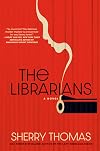
Librarians tend to be organized, but the same cannot be said for this book; the best adjective for it, I think, is chaotic.
Four staff members at a branch of the Austin Public Library are the focus in this novel. Hazel has recently moved from Singapore to Austin to begin a new life. Jonathan, a former college football player, is still pining for Ryan, a high school classmate. Astrid is nursing a broken heart after she has been ghosted. Sophie tries to lead a quiet life with her daughter show more Elise. Two patrons turn up dead after a game night at the library so the police interview all of them. Each of them has secrets they fear will become uncovered by the police investigation. Feeling threatened, they decide to trust their coworkers with their secrets and work together to get to the bottom of the deaths.
The pace is very slow and then the plot becomes convoluted and confusing. Parts are far-fetched and other parts are just weird. For example, the number of connections between various characters is unbelievable. Jonathan loves Ryan who is Conrad’s roommate. Conrad knows Perry (loved by Astrid) who knew Kit who married Hazel who is in love with Conrad?! Conrad and Hazel met in Madeira twelve years ago and now meet again in Austin, Texas? Four timid librarians turn into action heroes skilled in self-defense and the use of weapons?! One character has spent virtually her entire life living a lie and speaking with a fake Swedish accent? People have names like Heneage Pericles Bathurst and Valerian Conrad de Clausonne de Villiers? We are to accept Jeannette’s motivation for contacting Sophie? In the middle of a crisis, a character makes a list of things to do and others take copious notes?
The story of Kit’s deceptions is so complicated. We are subjected to explanations of his behaviour like, “’the reason he embezzled was to meet a margin call so that the exchange wouldn’t start liquidating his Bitcoin positions.’” Why would Kit have put a box of books in a random library in Austin before he knows that Hazel is going to move to Austin and get a job there? And in that box he includes a yearbook with a message for Hazel?! Then when the blockchain private key is found, it’s never used?!
Other things make no sense. The force of a plane crash, even in water, causes significant trauma to the human body, leading to severe injuries that can fragment a body, yet the victim of such a crash “does not look dead, but . . . restful”? One minute the murders are solved and Detective Shariati “will receive the bulk of the credit for solving the murders of Perry Bathurst, Jeannette Obermann” and then three sentences later, Detective Hagerty hopes “he can successfully pin Jeannette Obermann’s death on the quiet librarian”? Some things just stretch credibility. For instance, not just one but two copies of Shakespeare’s First Folio are found that were probably “held by criminal elements”? And Hazel needs to borrow a stack of rare books for inspiration for a book-themed tabletop game? The police would allow civilians to be so involved in a plan to entrap suspects and even allow them to carry weapons? Private investigators play key roles and always have useful friends.
The plot is not linear: there is constant switching among characters and times so it’s difficult to know who was doing what when. In other words, plot construction can only be described as clumsy and awkward. And then, once the murders are solved, the novel goes on and on and on to make certain that everyone has a happy ending.
What stands out in terms of style is the use of pop culture references: “She is as beautiful and resolute as Daenerys Targaryen, standing at the bow of her ship, sailing to Westeros – except the Khaleesi should have stayed the fuck home” and “So many emotions – in such overwhelming quantities – have besieged her, like the legions of Mordor coming to sack Minas Tirith” and “’I don’t want you to think that I was Don Draper, escaping some kind of horrible Midwestern past’” and “Nainai voguing as she slides into the camera frame, blue steeling as if she gave birth not only to a doctor and two engineers, but also Zoolander himself.”
The book relies on romance, with virtually everyone yearning for someone, a thin and contrived mystery, a convoluted plot with plot holes, and an unacceptable number of coincidences and random connections. The result is a clunky book lacking cohesion.
Note: I received an eARC from the publisher via NetGalley.
Please check out my reader's blog (https://schatjesshelves.blogspot.com/) or substack (https://doreenyakabuski.substack.com/) for over 1,200 of my book reviews. show less
Four staff members at a branch of the Austin Public Library are the focus in this novel. Hazel has recently moved from Singapore to Austin to begin a new life. Jonathan, a former college football player, is still pining for Ryan, a high school classmate. Astrid is nursing a broken heart after she has been ghosted. Sophie tries to lead a quiet life with her daughter show more Elise. Two patrons turn up dead after a game night at the library so the police interview all of them. Each of them has secrets they fear will become uncovered by the police investigation. Feeling threatened, they decide to trust their coworkers with their secrets and work together to get to the bottom of the deaths.
The pace is very slow and then the plot becomes convoluted and confusing. Parts are far-fetched and other parts are just weird. For example, the number of connections between various characters is unbelievable. Jonathan loves Ryan who is Conrad’s roommate. Conrad knows Perry (loved by Astrid) who knew Kit who married Hazel who is in love with Conrad?! Conrad and Hazel met in Madeira twelve years ago and now meet again in Austin, Texas? Four timid librarians turn into action heroes skilled in self-defense and the use of weapons?! One character has spent virtually her entire life living a lie and speaking with a fake Swedish accent? People have names like Heneage Pericles Bathurst and Valerian Conrad de Clausonne de Villiers? We are to accept Jeannette’s motivation for contacting Sophie? In the middle of a crisis, a character makes a list of things to do and others take copious notes?
The story of Kit’s deceptions is so complicated. We are subjected to explanations of his behaviour like, “’the reason he embezzled was to meet a margin call so that the exchange wouldn’t start liquidating his Bitcoin positions.’” Why would Kit have put a box of books in a random library in Austin before he knows that Hazel is going to move to Austin and get a job there? And in that box he includes a yearbook with a message for Hazel?! Then when the blockchain private key is found, it’s never used?!
Other things make no sense. The force of a plane crash, even in water, causes significant trauma to the human body, leading to severe injuries that can fragment a body, yet the victim of such a crash “does not look dead, but . . . restful”? One minute the murders are solved and Detective Shariati “will receive the bulk of the credit for solving the murders of Perry Bathurst, Jeannette Obermann” and then three sentences later, Detective Hagerty hopes “he can successfully pin Jeannette Obermann’s death on the quiet librarian”? Some things just stretch credibility. For instance, not just one but two copies of Shakespeare’s First Folio are found that were probably “held by criminal elements”? And Hazel needs to borrow a stack of rare books for inspiration for a book-themed tabletop game? The police would allow civilians to be so involved in a plan to entrap suspects and even allow them to carry weapons? Private investigators play key roles and always have useful friends.
The plot is not linear: there is constant switching among characters and times so it’s difficult to know who was doing what when. In other words, plot construction can only be described as clumsy and awkward. And then, once the murders are solved, the novel goes on and on and on to make certain that everyone has a happy ending.
What stands out in terms of style is the use of pop culture references: “She is as beautiful and resolute as Daenerys Targaryen, standing at the bow of her ship, sailing to Westeros – except the Khaleesi should have stayed the fuck home” and “So many emotions – in such overwhelming quantities – have besieged her, like the legions of Mordor coming to sack Minas Tirith” and “’I don’t want you to think that I was Don Draper, escaping some kind of horrible Midwestern past’” and “Nainai voguing as she slides into the camera frame, blue steeling as if she gave birth not only to a doctor and two engineers, but also Zoolander himself.”
The book relies on romance, with virtually everyone yearning for someone, a thin and contrived mystery, a convoluted plot with plot holes, and an unacceptable number of coincidences and random connections. The result is a clunky book lacking cohesion.
Note: I received an eARC from the publisher via NetGalley.
Please check out my reader's blog (https://schatjesshelves.blogspot.com/) or substack (https://doreenyakabuski.substack.com/) for over 1,200 of my book reviews. show less

I have been a fan of Sherry Thomas’ novels ever since reading Private Arrangements; she is one of my favourite authors of Historical Romance, even though I would classify her books as Wallpaper Historicals, as opposed to “deep” Historicals like Laura Kinsale’s. This is not due to any kind of sloppy research or glaring mistakes – while I am not an expert, I am quite confident that Sherry Thomas’ novels contain neither of those, that her research is extensive and immaculate and show more that she gets every detail right.
However, her characters never feel quite contemporary to their period to me, but rather like people from the twenty-first century placed in front of an authentic background, intricately painted down to the last, historically accurate detail into which the never really merge. Reading her novels, I’m always reminded of pop-up books for children, where when you turn a page the main actors of the scene would fold out as upright cut-out figures standing out vertically from the horizontal background. In fact, this analogy can be carried even further - in pop-up books, neither characters nor background have any real depth in thenselves, but both combined result in a kind of three-dimensional effect that is more than just the sum of its parts.
This hopefully makes clear that I’m not at all averse to Wallpaper Historicals, especially not when they are done with such irresistable charm and beauty as those by Sherry Thomas. That her characters appear more modern than Victorian (and I should probably point out, just in case that it is not already obvious, that this assessment is very much subjective, and your own mileage may vary considerably) does not keep them from being well-rounded, likeable and fascinating to read about (it might even help the “likeable” part), and Sherry Thomas’ strongest asset is not her historical accuracy but her wonderful writing – her prose style is both lush and elegant, and to watch her spin out several interrelated extended metaphors over the course of a novel is a sheer delight.
While there were recurring characters in all her previous novels, Beguiling the Beauty is much more emphatically the first part of a trilogy – there are a sister and a brother of our current heroine that are quite blatantly being set up for the sequels, and in consequence they get quite a bit of narrative attention without any of their stories coming even close to a resolution. I am not decided yet on whether I like this or not – it does give author a bigger canvas to paint on, but it also leaves parts of the picture in the dark. I suppose it won’t be until I’ve read all three volumes of the trilogies that I’ll make my mind up on that, but for now it definitely gives this novel the feeling of being unfinished even as the heroine gets her Happily Ever After, but I will just have to see how it works out in the long run.
A second minor niggle is that events in Beguiling the Beauty stretch the limits of plausibility almost to tearing point. Of course, nobody reads Romance novels for their realistic plots, but even so the strings the author pulls are getting a bit too blatantly obvious when not only the hero and heroine (with her sister and sister and law) but also London’s chief rumour-monger all come together during the same lecture in Harvard, and for added implausibility the heroine is also the hero’s childhood love which he tries to get out of his system by denouncing her at, of all times, that very lecture. But those (and some similar things later on) are effectively nothing but slight distractions in what is otherwise a highly enjoyable novel. While not quite Sherry Thomas’ best (that is to me her second novel, Delicious), Beguiling the Beauty charms with its prose and enchants with its wit, it is far enough from common Romance clichés to be fresh and entertaining but stays close enough to true and trusted formulas to not throw the reader off – it is a fine line that Sherry Thomas (like every Romance author) treads, but she treads it with illimitable grace and effortless elegance, making Beguiling the Beauty a joy to read and me look forward to the remaining two novels in the trilogy. show less
However, her characters never feel quite contemporary to their period to me, but rather like people from the twenty-first century placed in front of an authentic background, intricately painted down to the last, historically accurate detail into which the never really merge. Reading her novels, I’m always reminded of pop-up books for children, where when you turn a page the main actors of the scene would fold out as upright cut-out figures standing out vertically from the horizontal background. In fact, this analogy can be carried even further - in pop-up books, neither characters nor background have any real depth in thenselves, but both combined result in a kind of three-dimensional effect that is more than just the sum of its parts.
This hopefully makes clear that I’m not at all averse to Wallpaper Historicals, especially not when they are done with such irresistable charm and beauty as those by Sherry Thomas. That her characters appear more modern than Victorian (and I should probably point out, just in case that it is not already obvious, that this assessment is very much subjective, and your own mileage may vary considerably) does not keep them from being well-rounded, likeable and fascinating to read about (it might even help the “likeable” part), and Sherry Thomas’ strongest asset is not her historical accuracy but her wonderful writing – her prose style is both lush and elegant, and to watch her spin out several interrelated extended metaphors over the course of a novel is a sheer delight.
While there were recurring characters in all her previous novels, Beguiling the Beauty is much more emphatically the first part of a trilogy – there are a sister and a brother of our current heroine that are quite blatantly being set up for the sequels, and in consequence they get quite a bit of narrative attention without any of their stories coming even close to a resolution. I am not decided yet on whether I like this or not – it does give author a bigger canvas to paint on, but it also leaves parts of the picture in the dark. I suppose it won’t be until I’ve read all three volumes of the trilogies that I’ll make my mind up on that, but for now it definitely gives this novel the feeling of being unfinished even as the heroine gets her Happily Ever After, but I will just have to see how it works out in the long run.
A second minor niggle is that events in Beguiling the Beauty stretch the limits of plausibility almost to tearing point. Of course, nobody reads Romance novels for their realistic plots, but even so the strings the author pulls are getting a bit too blatantly obvious when not only the hero and heroine (with her sister and sister and law) but also London’s chief rumour-monger all come together during the same lecture in Harvard, and for added implausibility the heroine is also the hero’s childhood love which he tries to get out of his system by denouncing her at, of all times, that very lecture. But those (and some similar things later on) are effectively nothing but slight distractions in what is otherwise a highly enjoyable novel. While not quite Sherry Thomas’ best (that is to me her second novel, Delicious), Beguiling the Beauty charms with its prose and enchants with its wit, it is far enough from common Romance clichés to be fresh and entertaining but stays close enough to true and trusted formulas to not throw the reader off – it is a fine line that Sherry Thomas (like every Romance author) treads, but she treads it with illimitable grace and effortless elegance, making Beguiling the Beauty a joy to read and me look forward to the remaining two novels in the trilogy. show less
"Trust is a choice. I choose to trust your love . . . "
"there is no such thing as courage in the absence of cowardice. Courage is also a choice: It's what happens when one refuses to give in to fear [ . . . ] Your trust gives me courage."
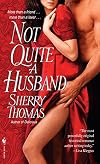
Sigh, so much heart-hurt for Bryony and Leo. Both made choices that ultimately were so harmful - to one another and to themselves. But not mistakes that I believe were unforgivable, just really difficult to navigate. Reading the MCs coming back together show more was achingly satisfying. I was always about to faint, overcome with despair, while reading Not Quite a Husband. It was so good and I feel that the pain has - a mystical way that only novels are capable of - enriched my life as a reader and I am better for having read it.
I keep thinking back to a scene where, in the present, Leo is remembering The Day Bryony Asked for an Annulment, and how he had brought a telescope home for her - unknowing that his wife was about to request an annulment - and as Bryony lays out her reasoning for why she is asking for The Annulment, he thinks to himself how she was no longer worth any effort he could possibly make. And it hurt so much to read someone reach that point. And it was made especially painful because the readers knows WHY Bryony has been so miserable their entire marriage, but Leo does not.
Some things did take me out of my reading experience, though. For one, the age of the two MCs during the "present" timeline. Leo is 28ish and Bryony is 32ish . . . which felt still too young to believe they've had so much more life experience AND maturity in only 3 years. However, their ages during the "past" timeline worked for me - they really were so young (23 and 27ish) and it made sense that they just did not have the tools to communicate with one another about their hopes, fears, disappointments, etc. . . and when they reconnect just a few years after the annulment, I'd rather have seen a "10 years later" situation.
I also felt the sex with a sleeping person just seemed a bit kookie? The first book in this series, Delicious, had some magical realism with the food and so I wonder if the somnophilia was, like, the magical realism in this book? It felt like Thomas was unable to commit to it - and maybe it would have been too Cronenberg-esque to expect an author to really flollow-thru with that kink. Finally, the English colonists in India during an uprising wasn't great. show less
"there is no such thing as courage in the absence of cowardice. Courage is also a choice: It's what happens when one refuses to give in to fear [ . . . ] Your trust gives me courage."
Sigh, so much heart-hurt for Bryony and Leo. Both made choices that ultimately were so harmful - to one another and to themselves. But not mistakes that I believe were unforgivable, just really difficult to navigate. Reading the MCs coming back together show more was achingly satisfying. I was always about to faint, overcome with despair, while reading Not Quite a Husband. It was so good and I feel that the pain has - a mystical way that only novels are capable of - enriched my life as a reader and I am better for having read it.
I keep thinking back to a scene where, in the present, Leo is remembering The Day Bryony Asked for an Annulment, and how he had brought a telescope home for her - unknowing that his wife was about to request an annulment - and as Bryony lays out her reasoning for why she is asking for The Annulment, he thinks to himself how she was no longer worth any effort he could possibly make. And it hurt so much to read someone reach that point. And it was made especially painful because the readers knows WHY Bryony has been so miserable their entire marriage, but Leo does not.
Some things did take me out of my reading experience, though. For one, the age of the two MCs during the "present" timeline. Leo is 28ish and Bryony is 32ish . . . which felt still too young to believe they've had so much more life experience AND maturity in only 3 years. However, their ages during the "past" timeline worked for me - they really were so young (23 and 27ish) and it made sense that they just did not have the tools to communicate with one another about their hopes, fears, disappointments, etc. . . and when they reconnect just a few years after the annulment, I'd rather have seen a "10 years later" situation.
I also felt the sex with a sleeping person just seemed a bit kookie? The first book in this series, Delicious, had some magical realism with the food and so I wonder if the somnophilia was, like, the magical realism in this book? It felt like Thomas was unable to commit to it - and maybe it would have been too Cronenberg-esque to expect an author to really flollow-thru with that kink. Finally, the English colonists in India during an uprising wasn't great. show less
Lists
Awards


You May Also Like


Associated Authors
Statistics
- Works
- 33
- Also by
- 2
- Members
- 10,107
- Popularity
- #2,349
- Rating
- 3.9
- Reviews
- 572
- ISBNs
- 254
- Languages
- 7
- Favorited
- 22


