
Gary Kelley (1) (1945–2026)
Author of Abe's Honest Words: The Life of Abraham Lincoln
For other authors named Gary Kelley, see the disambiguation page.
Works by Gary Kelley
Associated Works
The Legend of Sleepy Hollow [short story] (1819) — Illustrator, some editions — 5,034 copies, 144 reviews
The Emperor's New Clothes : An All-Star Retelling of the Classic Fairy Tale (with Audio CD) (1998) — Illustrator — 259 copies, 6 reviews
Brother's Blood: A Heartland Cain and Abel (2011) — Cover artist, some editions — 14 copies, 1 review
Tagged
Common Knowledge
- Other names
- Kelley, Gary Russell
- Birthdate
- 1945-02-06
- Date of death
- 2026-04-12
- Gender
- male
- Occupations
- graphic designer
art director
illustrator
art teacher
muralist - Organizations
- Society of Illustrators
North American Review (editor) - Awards and honors
- Society of Illustrators Hall of Fame
University of Northern Iowa Athletics Hall of Fame - Agent
- Richard Solomon
- Nationality
- USA
- Birthplace
- Algona, Iowa, USA
- Places of residence
- Cedar Falls, Iowa, USA
- Associated Place (for map)
- Iowa, USA
Members
Reviews

B&W depiction of the time when white settlers arrive in Iowa, based on the autobiography of Abigail Gardner Sharp. It does not quite meet its stated goal of presenting "two sides to every story". It makes no mention of whether the settlers came to territory that had been ceded by treaty. It appears they were moving onto land still used by the Dakota peoples. There is blatant racism in the lack of justice for the murder of a Dakota family and the display of their remains. Abigail's family is show more presented in an idyllic light, full of love of nature and respect for the original inhabitants. The story ends with her 'rescue' with only vague reference to the situation of the Dakotas. Hints at a spirit presence in the lake.
The closing section states 'the Dakota come and go' and 'the white man comes and stays' yet, given the hundreds of years of Dakota presence compared to the briefer presence of the whites in the 1800s, it is too soon to say whether the white man can actually stay. With the current presence of luxury homes and amusement park, tho, it does seem certain that the special qualities of this place have been disturbed.
Chapter headings sometimes reference months, to provide a time frame; in those cases, the months are written also as moon reference names of an unstated tribe.
Book closes with list of sources show less
The closing section states 'the Dakota come and go' and 'the white man comes and stays' yet, given the hundreds of years of Dakota presence compared to the briefer presence of the whites in the 1800s, it is too soon to say whether the white man can actually stay. With the current presence of luxury homes and amusement park, tho, it does seem certain that the special qualities of this place have been disturbed.
Chapter headings sometimes reference months, to provide a time frame; in those cases, the months are written also as moon reference names of an unstated tribe.
Book closes with list of sources show less
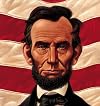
I thoroughly enjoyed the detailed and colorful illustration of this book. It did a fair job of summarizing the main events of Lincoln's life and I feel it would be appropriate to read aloud to a classroom aged audience. I believe this book would prove to be useful supplementary reading when studying subjects such as the civil war or civil rights. I consider the author's success at portraying Honest Abe as a relatable character proved to be a strong significant part of this book.
From the front cover to the back cover and every page in between, it is easy for the reader to get caught up in the beauty of the artwork. Every page is rich with texture, feeling and expression. The picture of the chained slaves evoked so much emotion from me when I first saw it, that it took me several minutes before I could turn the page. I felt like I had been swallowed by the picture.
The text provides two different stories. The first story is Abraham Lincoln's biography, providing facts show more and details about his life as a young boy, a young statesman and finally as the President of the United States. The italic text appear to be Lincoln's written or spoken words, but I was unsure of that. I would've liked to see a citation about where the italic text came from, i.e., journals, letters, etc. Of course some of the italic text is easy to identify: "Four score and seven years ago...."
If the author and the illustrator had not collaborated, I don't think the book would've been nearly as effective. It's the combination of the two that bring this book to life. I highly recommend this book for 1st - 8th graders. While that is a big span of age ranges, I believe that the younger kids will understand the story and enjoy the pictures, and the older kids will be engaged from the moment they see the cover. show less
The text provides two different stories. The first story is Abraham Lincoln's biography, providing facts show more and details about his life as a young boy, a young statesman and finally as the President of the United States. The italic text appear to be Lincoln's written or spoken words, but I was unsure of that. I would've liked to see a citation about where the italic text came from, i.e., journals, letters, etc. Of course some of the italic text is easy to identify: "Four score and seven years ago...."
If the author and the illustrator had not collaborated, I don't think the book would've been nearly as effective. It's the combination of the two that bring this book to life. I highly recommend this book for 1st - 8th graders. While that is a big span of age ranges, I believe that the younger kids will understand the story and enjoy the pictures, and the older kids will be engaged from the moment they see the cover. show less

I thought this was a good book. The first reason why I liked the book was because the author included Lincoln’s point of view. On many of the pages the author included actual quotes of Lincoln’s words to go along with what was happening in his life or history. For example, wherever, whatever he always had a book in his hand. Then the quote below said, “Upon the subject of education, I view it as the most important subject which we as a people can be engaged in.” I liked how the show more author included Lincoln’s words because it gave me a perspective on how he felt and his opinions. I felt like the author choosing to include this element in her writing enhanced the story. Through reading Lincoln’s quotes I was able to envision him actually saying his words so many years ago. The second reason why I liked the book was because it made me think about tough issues. For example the book included a lot of information about slavery during Lincoln’s time. For example it stated, “Nearly four million black men, women, and children were enslaved in southern states.” This really made me stop and think, “how awful life must have been for African American?” “What were they feeling during this terrible time?” Through reading this book I was forced to visualize that this type of treatment occurred to African Americans during that time in history. The main message of the book was to remember Lincoln’s life and his words. Also what occurred during his early life before he became president, and what occurred while he was president. show less
Lists
Awards


You May Also Like


Associated Authors
Statistics
- Works
- 7
- Also by
- 10
- Members
- 811
- Popularity
- #31,468
- Rating
- 3.7
- Reviews
- 27
- ISBNs
- 22
- Languages
- 2
- Favorited
- 1