
John Thorne (1)
Author of Pot on the Fire: Further Exploits of a Renegade Cook
For other authors named John Thorne, see the disambiguation page.
About the Author
John Thorne lives in Northampton, Massachusetts, where he publishes the bimonthly food newsletter Simple Cooking. (Bowker Author Biography)
Image credit: KELLOGG, HUBER, HANSEN, TODD, EVANS & FIGEL, P.L.L.C.
Works by John Thorne
Just another bowl of Texas red: Chili con carne : the myth and the makings (1985) 6 copies, 1 review
THE ENGLISH MUFFIN. Its origins, preparation & accompaniments; scones and crumpets; thoughts on toast; a perfect breakfast 2 copies, 1 review
Simple Cooking, Issues 23-42 1 copy
Associated Works
Honey from a Weed: Fasting and Feasting in Tuscany, Catalonia, the Cyclades, and Apulia (1987) — Foreword, some editions — 318 copies, 5 reviews
Lulu's Provencal Table: The Exuberant Food and Wine from Domaine Tempier Vineyard (1994) — Introduction — 202 copies
Tagged
Common Knowledge
- Gender
- male
- Education
- Amherst College
- Birthplace
- Quincy, Massachusetts, USA
- Places of residence
- Castine, Maine, USA
- Associated Place (for map)
- USA
Members
Reviews
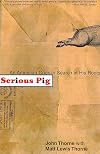
I am loving this book.
I had made it partway through another Thorne book, "Outloow Cook" I think, so I picked this one up at the book store. I ended up reading it in the aisle for about twenty minutes and promptly brought it home.
It's a mix of talk about food in the author's youthful age & place, Maine. He writes about family recipes and local recipes and the summer house where they lived and the house he rented later and where he & Matt live now and potatos and berries and beans and crab -- show more and always about the food. Each chapter is a single subject, and ends with a recipe or two, but they're very much subordinate to the text that wends and winds around the topic.
The gingerbread chapter, for instance, is only a few pages long but it includes the tale of a great gingerbread recipe, an account of tracking down the orignial author of a recipe quoted third-hand in an old cookbook, and details of Thoreau's travels and dining among Maine logging camps. (Wha..?)
Weird and wonderful, warm and homey and inspiring. show less
I had made it partway through another Thorne book, "Outloow Cook" I think, so I picked this one up at the book store. I ended up reading it in the aisle for about twenty minutes and promptly brought it home.
It's a mix of talk about food in the author's youthful age & place, Maine. He writes about family recipes and local recipes and the summer house where they lived and the house he rented later and where he & Matt live now and potatos and berries and beans and crab -- show more and always about the food. Each chapter is a single subject, and ends with a recipe or two, but they're very much subordinate to the text that wends and winds around the topic.
The gingerbread chapter, for instance, is only a few pages long but it includes the tale of a great gingerbread recipe, an account of tracking down the orignial author of a recipe quoted third-hand in an old cookbook, and details of Thoreau's travels and dining among Maine logging camps. (Wha..?)
Weird and wonderful, warm and homey and inspiring. show less
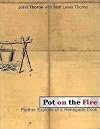
John Thorne has written five books, Simple Cooking, Outlaw Cook, Serious Pig, Pot on the Fire, & Mouth Wide Open, each of which is a compilation of essays about food, cooking, and cookbooks. In one sense, these five books are among the best written, best tested, and best tasting cookbooks available today. He approaches a wide variety of classic recipes or food item (Chowder, Pasta with Anchovies, French Toast) like a proverbial blood hound. Initially, he circles around the recipe, describing show more its origins, historical variations, and analyzing its tastes and flavors. Then he zeroes in for the kill; first deconstructing and then reconstructing it until he has perfected the recipe to his tastes.
However, these five books are far more than just recipes. Food and cooking are just Thorne's gateways to writings and reflections about the human condition. He takes simple, home-based, everyday events and items and unearths surprisingly savory qualities. By exploring a specific food's or recipe's history and context, Thorne reveals larger truths about the relationship between the food we eat and the values we share. All of his books are worth reading, cook or no cook.
See my full review of John Thorne's books. show less
However, these five books are far more than just recipes. Food and cooking are just Thorne's gateways to writings and reflections about the human condition. He takes simple, home-based, everyday events and items and unearths surprisingly savory qualities. By exploring a specific food's or recipe's history and context, Thorne reveals larger truths about the relationship between the food we eat and the values we share. All of his books are worth reading, cook or no cook.
See my full review of John Thorne's books. show less
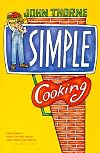
John Thorne has written five books, Simple Cooking, Outlaw Cook, Serious Pig, Pot on the Fire, & Mouth Wide Open, each of which is a compilation of essays about food, cooking, and cookbooks. In one sense, these five books are among the best written, best tested, and best tasting cookbooks available today. He approaches a wide variety of classic recipes or food item (Chowder, Pasta with Anchovies, French Toast) like a proverbial blood hound. Initially, he circles around the recipe, describing show more its origins, historical variations, and analyzing its tastes and flavors. Then he zeroes in for the kill; first deconstructing and then reconstructing it until he has perfected the recipe to his tastes.
However, these five books are far more than just recipes. Food and cooking are just Thorne's gateways to writings and reflections about the human condition. He takes simple, home-based, everyday events and items and unearths surprisingly savory qualities. By exploring a specific food's or recipe's history and context, Thorne reveals larger truths about the relationship between the food we eat and the values we share. All of his books are worth reading, cook or no cook.
See my full review of John Thorne's books. show less
However, these five books are far more than just recipes. Food and cooking are just Thorne's gateways to writings and reflections about the human condition. He takes simple, home-based, everyday events and items and unearths surprisingly savory qualities. By exploring a specific food's or recipe's history and context, Thorne reveals larger truths about the relationship between the food we eat and the values we share. All of his books are worth reading, cook or no cook.
See my full review of John Thorne's books. show less
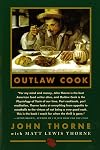
In an age when “cooking” seems to be the sole domain of dieticians or celebrity chefs, when food is all about either the calorie counts or the rarefied tastes of expensive and obscure dishes, John Thorne is an oddity—a man who rejects food fads but revels in unusual tastes, who finds Martha Stewart too bland, Paula Wolfert too snobby and Rachel Ray rather silly. He produces a hard-to-find newsletter called “Simple Cooking” and every five years or so Farrar Straus Giroux collects show more his essays into a book. My first exposure to Thorne’s idea of food writing was in his book, The Outlaw Cook, which opens with a rather lengthy quote from The Tin Drum about making spaghetti sauce in a frying pan:
Klepp rolled over on one side and silently, with the assured movements of a somnambulist, attended to his cookery. When the spaghetti was done, he drained off the water into a large empty can, then, without noticeably altering the position of his body, reached under the bed and produced a plate encrusted with grease and tomato paste. After what seemed like a moment’s hesitation, he reached again under the bed, fished out a wad of newspaper, wiped the plate with it, and tossed the paper back under the bed . . . After providing me with a fork and spoon so greasy they stuck to my fingers, he piled an immense portion of spaghetti on my plate; upon it, with another of his noble gestures, he squeezed a long worm of tomato paste to which, by deft movements of the tube, he succeeded in lending an ornamental line; finally, he poured on a plentiful portion of oil from the can. He himself ate out of the pot. He served himself oil and tomato paste, sprinkled pepper on both helpings, mixed up his share, and motioned to me to do likewise . . . Strange to say, I enjoyed that spaghetti. In fact, Klepp's spaghetti became for me a culinary ideal, by which from that day on I have measured every menu that is set before me.
I was instantly both captivated and horrified by the passage, but “captivated” won out when later on in the essay that Thorne calls “The Outlaw Cook” he says how Gunter Grass made him “aware, against the force of all my upbringing, of a denied appetite, of a repressed and forbidden hunger.” Thorne, in turn, brought home to me in the most vivid way that you can’t write about food without writing about EATING—and next to sex, eating is one of the moments when we are at our most primal, most basic, operating on sheer instinct. I am suspicious of food served as if these instincts do not exist, and tend to revel in the kinds of foods that tempt us to indulge in them.. . read more show less
Klepp rolled over on one side and silently, with the assured movements of a somnambulist, attended to his cookery. When the spaghetti was done, he drained off the water into a large empty can, then, without noticeably altering the position of his body, reached under the bed and produced a plate encrusted with grease and tomato paste. After what seemed like a moment’s hesitation, he reached again under the bed, fished out a wad of newspaper, wiped the plate with it, and tossed the paper back under the bed . . . After providing me with a fork and spoon so greasy they stuck to my fingers, he piled an immense portion of spaghetti on my plate; upon it, with another of his noble gestures, he squeezed a long worm of tomato paste to which, by deft movements of the tube, he succeeded in lending an ornamental line; finally, he poured on a plentiful portion of oil from the can. He himself ate out of the pot. He served himself oil and tomato paste, sprinkled pepper on both helpings, mixed up his share, and motioned to me to do likewise . . . Strange to say, I enjoyed that spaghetti. In fact, Klepp's spaghetti became for me a culinary ideal, by which from that day on I have measured every menu that is set before me.
I was instantly both captivated and horrified by the passage, but “captivated” won out when later on in the essay that Thorne calls “The Outlaw Cook” he says how Gunter Grass made him “aware, against the force of all my upbringing, of a denied appetite, of a repressed and forbidden hunger.” Thorne, in turn, brought home to me in the most vivid way that you can’t write about food without writing about EATING—and next to sex, eating is one of the moments when we are at our most primal, most basic, operating on sheer instinct. I am suspicious of food served as if these instincts do not exist, and tend to revel in the kinds of foods that tempt us to indulge in them.. . read more show less
Lists
You May Also Like


Associated Authors
Statistics
- Works
- 20
- Also by
- 13
- Members
- 783
- Popularity
- #32,505
- Rating
- 4.0
- Reviews
- 25
- ISBNs
- 30
- Favorited
- 3
