
John Bennett (1) (1865–1956)
Author of Master Skylark
For other authors named John Bennett, see the disambiguation page.
About the Author
He is a Professor, Department of Construction Management & Engineering, The University of Reading. 050
Works by John Bennett
The Doctor to the Dead: Grotesque Legends and Folk Tales of Old Charleston (1995) 87 copies, 4 reviews
Associated Works
The Reviewer, Volume III, Numbers 1-12 (April 1922-July 1923) — Contributor — 1 copy
Wychwood — Illustrator, some editions — 1 copy
Tagged
Common Knowledge
- Birthdate
- 1865-05-14
- Date of death
- 1956-12-28
- Gender
- male
- Nationality
- USA
- Associated Place (for map)
- USA
Members
Reviews

One of six titles chosen as a Newbery Honor book in 1929, The Pigtail of Ah Lee Ben Loo - a collection of seventeen poems and short stories - is an example of what I like to think of as a "Wonder Book," in honor of Nathaniel Hawthorne's 1852 retelling of the classical myths, A Wonder Book for Girls and Boys. Quite popular in the nineteenth and early twentieth centuries, these collections often presented fantastic stories, as well as both traditional and original fairy-tales - the latter show more often set in an imaginary Far and Middle East - as light-hearted bedtime fare. Such is certainly the case here, with selections set in China (the titular poem, The Pigtail of Ah Lee Ben Loo), and the imaginary Persian city of Chunder-abad-dad (The Astonishing Story of the Caliph’s Clock and The Persian Columbus) - apparently first (?) invented by Elizabeth Gaskell, in her nineteenth-century novel, Cranford.
These selections would undoubtedly fall under the rubric of "Orientalism," as conceived by scholar Edward Said, as they rely on a heavily stereotyped view of Asian and Persian peoples, although it must be said that, with a few notable exceptions, the characters found in the more "western" tales are no less silly. Indeed, these tales, and the two hundred "comical silhouettes" that accompany them, are obviously intended as humorous nonsense. The Caliph, in The Astonishing Story of the Caliph’s Clock, attempts to remake time with a western clock, forbidding the use of more traditional methods, while the king in The Barber of Sari-Ann, outlaws all shaving, after he himself has an accident.
But although Bennett's intent is clear enough, I found myself mostly unamused by, and uninterested in his poems and tales. They struck me as either vaguely racist - albeit more in the manner of unconscious condenscension than overt prejudice - or tired and overdone. His poems didn't read very well, and his language in general was larded with purposefully anachronist vocabulary (lots of "Ye Olde" this and that) which I found rather irritating. The only selection I found genuinely enjoyable was the poem, A Jest of Little John, in which Little John of Sherwood entertains the young daughter of the Sheriff of Nottingham one May day, but then, I've always had a weakness for anything Robin Hood related.
Despite this notable exception, my overall reaction to the text of The Pigtail of Ah Lee Ben Loo was less than enthusiastic, and I cannot imagine it will have much interest, other than to the children's literature scholar or Newbery completist. Judged on this basis alone, I probably would have awarded it two stars. What saved the experience for me, were the many delightful silhouettes, which were genuinely entertaining. Fans of this style of art might want to track this one down, as it contains many fine examples. show less
These selections would undoubtedly fall under the rubric of "Orientalism," as conceived by scholar Edward Said, as they rely on a heavily stereotyped view of Asian and Persian peoples, although it must be said that, with a few notable exceptions, the characters found in the more "western" tales are no less silly. Indeed, these tales, and the two hundred "comical silhouettes" that accompany them, are obviously intended as humorous nonsense. The Caliph, in The Astonishing Story of the Caliph’s Clock, attempts to remake time with a western clock, forbidding the use of more traditional methods, while the king in The Barber of Sari-Ann, outlaws all shaving, after he himself has an accident.
But although Bennett's intent is clear enough, I found myself mostly unamused by, and uninterested in his poems and tales. They struck me as either vaguely racist - albeit more in the manner of unconscious condenscension than overt prejudice - or tired and overdone. His poems didn't read very well, and his language in general was larded with purposefully anachronist vocabulary (lots of "Ye Olde" this and that) which I found rather irritating. The only selection I found genuinely enjoyable was the poem, A Jest of Little John, in which Little John of Sherwood entertains the young daughter of the Sheriff of Nottingham one May day, but then, I've always had a weakness for anything Robin Hood related.
Despite this notable exception, my overall reaction to the text of The Pigtail of Ah Lee Ben Loo was less than enthusiastic, and I cannot imagine it will have much interest, other than to the children's literature scholar or Newbery completist. Judged on this basis alone, I probably would have awarded it two stars. What saved the experience for me, were the many delightful silhouettes, which were genuinely entertaining. Fans of this style of art might want to track this one down, as it contains many fine examples. show less
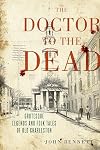
A chilling 240-page book that consists of supernatural stories that probably have been told countless times on a dark night by a campfire, or anywhere that there was a willing audience wishing for a good ghost story that leaves the question open as to is it real or is it fiction? They originate primarily from the Negro folk stories of old southern heritage from Charleston, South Carolina. These stories are tales of death...of mystery...and of bizarre incredibility's. It's composed of four show more long narratives, and eighteen short sketches, that range from diabolic influence, to demanding unrelenting ghosts...buried treasure...enchantments...miracles...visitations...and the dead that are dead but certainly not entirely dead. The tales are said to be based on a leading Charleston physician who falls in love with the ghost of a woman long since dead and buried. He becomes so obsessed with the condition of the dead in general that he ostracizes the conventional medical community and devotes the rest of his life to their care. They're not your average ghost stories in spite of the description, but anyone that loves history, especially southern history with a huge ghostly twist, will find this book fascinating. I found that the dialogue in which the stories were told to be a bit tedious to follow, and I was born and raised in the south.... hence the 4-star rating. show less

I quite liked this one. It was nonsensical fairy tales in all the right ways. A decent number of lines were laugh-worthy, and I loved the roundabout logic that most of the characters used. (For example, if a clock is THAT expensive, CLEARLY it must tell proper time. Case closed.) The stories alternated between using poetry and not. I was able to enjoy the poetry as well (I'm not a poetry person), but it was nice to get breaks. I do think the stories were where the author really shined in show more wit. I'm very fond of that kind of whimsy. show less
A collection of Southern gothic tales, mostly from the Gullah tradition around Charleston. My favorite stories are the ones where the (stubborn) dead refuse to believe they are dead. And the Devil-trained fiddler. Overall it's an excellent collection of tales & definitely recommended if you're into local Southern folklore with a macabre twist.
Lists
Newbery Adjacent (1)
Awards

You May Also Like


Associated Authors
Statistics
- Works
- 7
- Also by
- 6
- Members
- 354
- Popularity
- #67,647
- Rating
- 3.7
- Reviews
- 10
- ISBNs
- 149
- Languages
- 6