
George Stevens (1) (1904–1975)
Author of The Greatest Story Ever Told [1965 film]
For other authors named George Stevens, see the disambiguation page.
About the Author
Image credit: George Stevens 1904-1975
Works by George Stevens
The Complete James Dean Collection: East of Eden / Giant / Rebel Without a Cause (2011) — Director — 23 copies
AMC Movies: Cary Grant Hollywood Classics — Director — 17 copies
His Girl Friday [and] Penny Serenade (Double Feature Video) — Director — 16 copies
Astaire & Rogers Collection: Volume 1: Top Hat / Swing Time / Follow the Fleet / Shall We Dance / The Barkleys of Broadway (2005) — Director — 12 copies
A Place in the Sun / Roman Holiday / To Catch a Thief — Director — 5 copies
Silver Screen Series: 2 Feature Films: Cary Grant [The Amazing Adventure / Penny Serenade] (2005) — Director — 4 copies
3 Full Length Features: Something to Sing About / Royal Wedding / Penny Serenade — Director — 3 copies
Penny Serenade [and] Andy Hardy's Private Secretary (Double Feature Video) — Director — 2 copies
Cary Grant Film Library (Charade, His Girl Friday, Penny Serenade) — Director — 2 copies
Icons: 4 Film Collection: Fred Astaire — Director — 2 copies
True Grit / Once Upon a Time in the West / Shane (Triple Feature Video) — Director — 2 copies
Hollywood Legends: Cary Grant 4 Movie Collection: Once Upon a Time / Penny Serenade / His Girl Friday / The Amazing Adventure (2015) — Director — 1 copy
Penny Serenade / The Amazing Adventure / The Last Time I Saw Paris / Father's Little Dividend (2009) — Director — 1 copy
Meet John Doe / The James Dean Story / Penny Serenade — Director; Director — 1 copy
Classics Collection: Charade / Penny Serenade / It's A Wonderful Life / The Last Time I Saw Paris — Director — 1 copy
The Elizabeth Taylor Collection — Director — 1 copy
Associated Works
Tagged
Common Knowledge
- Canonical name
- Stevens, George
- Legal name
- Stevens, George Cooper, Sr.
- Birthdate
- 1904-12-18
- Date of death
- 1975-03-08
- Gender
- male
- Occupations
- film director
screenwriter
producer
cinematographer - Relationships
- Stevens, George, Jr. (son)
- Nationality
- USA
- Birthplace
- Oakland, California, USA
- Place of death
- Lancaster, California, USA
- Associated Place (for map)
- California, USA
Members
Reviews
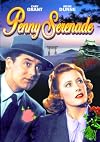
George Stevens framed this entire film using flashbacks, an old phonograph playing the songs from various stages in the lives of two people who fall in love and are nearly torn apart by tragedy. The screenplay of Morrie Ryskind, based on a story by Martha Cheavens, is sentimental and heart-wrenching. Cary Grant and Irene Dunne make it all seem real and director Stevens gives the film a romantic glow which makes this one of the most fondly remembered films of the 1940s.
The story opens as show more Julie (Dunne) is getting ready to leave Roger (Grant) because of the pain caused by a tragedy in their lives that he can’t even bring himself to talk about, so they can begin to heal as a couple. When she finds an old stack of records she begins to trace the various stages of their love through the memories recalled by each song. It is through the records that we see how it all began, and how it ended up here, in a wonderful framing device for the romantic and heart-breaking narrative.
Roger sees Julie through the window of the record store where she works, and though he doesn’t even own a phonograph player, he ends up buying a big package of songs just so he can spend time with her. He pretends he is going her way after work and it isn't long before she becomes “his funny little redhead.” There are some wonderful scenes such as Julie and Roger sitting in a cabana by the beach reading fortune cookies which gives the story a very romantic atmosphere.
When Roger, who is a reporter, has a chance to go to Tokyo for a few years, the two get married and have a truncated honeymoon on a train which results in them becoming prospective parents. An earthquake, an inheritance, a small town paper in the States, all combine to form a warm, sweet, and sadly moving story that lets the viewer in on how everything got so broken, leaving Julie standing at the phonograph, recalling their lives together before she leaves.
Whether their love and marriage can be saved is only resolved in the last few moments of this beautiful film. Edgar Buchanan as Apple Jack is absolutely wonderful as he lends both support and humor to this true screen classic. Beulah Bondi is also memorable as the kind Miss Oliver, going out of her way to create a family for two people who love each other. A warm and sentimental film every classic film fan will cherish. show less
The story opens as show more Julie (Dunne) is getting ready to leave Roger (Grant) because of the pain caused by a tragedy in their lives that he can’t even bring himself to talk about, so they can begin to heal as a couple. When she finds an old stack of records she begins to trace the various stages of their love through the memories recalled by each song. It is through the records that we see how it all began, and how it ended up here, in a wonderful framing device for the romantic and heart-breaking narrative.
Roger sees Julie through the window of the record store where she works, and though he doesn’t even own a phonograph player, he ends up buying a big package of songs just so he can spend time with her. He pretends he is going her way after work and it isn't long before she becomes “his funny little redhead.” There are some wonderful scenes such as Julie and Roger sitting in a cabana by the beach reading fortune cookies which gives the story a very romantic atmosphere.
When Roger, who is a reporter, has a chance to go to Tokyo for a few years, the two get married and have a truncated honeymoon on a train which results in them becoming prospective parents. An earthquake, an inheritance, a small town paper in the States, all combine to form a warm, sweet, and sadly moving story that lets the viewer in on how everything got so broken, leaving Julie standing at the phonograph, recalling their lives together before she leaves.
Whether their love and marriage can be saved is only resolved in the last few moments of this beautiful film. Edgar Buchanan as Apple Jack is absolutely wonderful as he lends both support and humor to this true screen classic. Beulah Bondi is also memorable as the kind Miss Oliver, going out of her way to create a family for two people who love each other. A warm and sentimental film every classic film fan will cherish. show less
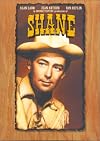
Does Shane die in the end?
Possible "spoilers" for those who have not seen the film, nor read the book
I read this book not too long ago (after watching the 1953 film).
The film's ending imagery suggests that the character "Shane" dies in the end of the film. The final few seconds of the film show the title character slumped in his saddle, about to fall off, as he rides through a cemetery towards a bright light in an otherwise dark, midnight sky . The night is almost pitch-dark, there is no show more moon, just this heavenly-bright stretch of sky.
Shane is riding directly towards this light, indicating his spirit is about to enter heaven.
Final image of the film (look quickly, it is only a second or two) shows Shane and his horse *descending* into the ground, between two of the tombstones in the cemetery, until both are lost from view.
Shane's mortal body is being returned to the earth.
Pretty unmistakable what is happening here, for those who care to look carefully and think about it a bit.
The book ends differently.
In the book, we know from Bob's description that Shane has been shot in the torso, as he rides away into the dark, soon lost from view. The book doesn't end there, though, but goes on to state that when Bob's father, Joe, finds out that Shane is still alive after the gunfight, he (Joe) is surprised and happy at this news.
And yet. . . and yet. . .
Although Joe, Bob's father, having been informed that Shane has been critically injured in the gunfight - most likely fatally - Joe never bothers to go out to look for Shane, not to help him, not even to, perhaps, find his body to bury him. A man in those days - any days, really - with a gunshot to the torso would not be able to ride a horse very far at all.
Joe does not go to find Shane, even though Shane, by his selfless act, has saved Joe, Joe's family, Joe's homestead and likely the entire homesteader community at large. Whew!
The whole of the story is extremely well written, but this last bit to me seems illogical, and at odds with the previous body of the work. True, Joe and Shane have just engaged in fisticuffs, but considering the kind of man Joe has been portrayed as throughout the book, I don't think this would have stopped him from going to search for his friend Shane.
It seems to me like a betrayal - of both Shane and of Bob - that he does not do so.
This has been bothering me quite a bit, and I would be very interested to know how other readers look at how the book ends.¬¬¬¬¬¬¬¬¬¬- show less
Possible "spoilers" for those who have not seen the film, nor read the book
I read this book not too long ago (after watching the 1953 film).
The film's ending imagery suggests that the character "Shane" dies in the end of the film. The final few seconds of the film show the title character slumped in his saddle, about to fall off, as he rides through a cemetery towards a bright light in an otherwise dark, midnight sky . The night is almost pitch-dark, there is no show more moon, just this heavenly-bright stretch of sky.
Shane is riding directly towards this light, indicating his spirit is about to enter heaven.
Final image of the film (look quickly, it is only a second or two) shows Shane and his horse *descending* into the ground, between two of the tombstones in the cemetery, until both are lost from view.
Shane's mortal body is being returned to the earth.
Pretty unmistakable what is happening here, for those who care to look carefully and think about it a bit.
The book ends differently.
In the book, we know from Bob's description that Shane has been shot in the torso, as he rides away into the dark, soon lost from view. The book doesn't end there, though, but goes on to state that when Bob's father, Joe, finds out that Shane is still alive after the gunfight, he (Joe) is surprised and happy at this news.
And yet. . . and yet. . .
Although Joe, Bob's father, having been informed that Shane has been critically injured in the gunfight - most likely fatally - Joe never bothers to go out to look for Shane, not to help him, not even to, perhaps, find his body to bury him. A man in those days - any days, really - with a gunshot to the torso would not be able to ride a horse very far at all.
Joe does not go to find Shane, even though Shane, by his selfless act, has saved Joe, Joe's family, Joe's homestead and likely the entire homesteader community at large. Whew!
The whole of the story is extremely well written, but this last bit to me seems illogical, and at odds with the previous body of the work. True, Joe and Shane have just engaged in fisticuffs, but considering the kind of man Joe has been portrayed as throughout the book, I don't think this would have stopped him from going to search for his friend Shane.
It seems to me like a betrayal - of both Shane and of Bob - that he does not do so.
This has been bothering me quite a bit, and I would be very interested to know how other readers look at how the book ends.¬¬¬¬¬¬¬¬¬¬- show less
Does Shane die in the end?
May be spoilers below for those who have not seen the film or read the book
I read this book not too long ago (after watching the 1953 film).
The film's ending imagery suggests that the character "Shane" dies in the end of the film. The final few seconds of the film show the title character slumped in his saddle, about to fall off, as he rides through a cemetery towards a bright light in an otherwise dark, midnight sky . The night is almost pitch-dark, there is no show more moon, just this heavenly-bright stretch of sky.
Shane is riding directly towards this light, indicating his spirit is about to enter heaven.
Final image of the film (look quickly, it is only a second or two) shows Shane and his horse *descending* into the ground, between two of the tombstones in the cemetery, until both are lost from view.
Shane's mortal body is being returned to the earth.
Pretty unmistakable what is happening here, for those who care to look carefully and think about it a bit.
The book ends differently.
In the book, we know from Bob's description that Shane has been shot in the torso, as he rides away into the dark, soon lost from view. The book doesn't end there, though, but goes on to state that when Bob's father, Joe, finds out that Shane is still alive after the gunfight, he (Joe) is surprised and happy at this news.
And yet. . . and yet. . .
Although Joe, Bob's father, having been informed that Shane has been critically injured in the gunfight - most likely fatally - Joe never bothers to go out to look for Shane, not to help him, not even to, perhaps, find his body to bury him. A man in those days - any days, really - with a gunshot to the torso would not be able to ride a horse very far at all.
Joe does not go to find Shane, even though Shane, by his selfless act, has saved Joe, Joe's family, Joe's homestead and likely the entire homesteader community at large. Whew!
The whole of the story is extremely well written, but this last bit to me seems illogical, and at odds with the previous body of the work. True, Joe and Shane have just engaged in fisticuffs, but considering the kind of man Joe has been portrayed as throughout the book, I don't think this would have stopped him from going to search for his friend Shane.
It seems to me like a betrayal - of both Shane and of Bob - that he does not do so.
This has been bothering me quite a bit, and I would be very interested to know how other readers look at how the book ends. show less
May be spoilers below for those who have not seen the film or read the book
I read this book not too long ago (after watching the 1953 film).
The film's ending imagery suggests that the character "Shane" dies in the end of the film. The final few seconds of the film show the title character slumped in his saddle, about to fall off, as he rides through a cemetery towards a bright light in an otherwise dark, midnight sky . The night is almost pitch-dark, there is no show more moon, just this heavenly-bright stretch of sky.
Shane is riding directly towards this light, indicating his spirit is about to enter heaven.
Final image of the film (look quickly, it is only a second or two) shows Shane and his horse *descending* into the ground, between two of the tombstones in the cemetery, until both are lost from view.
Shane's mortal body is being returned to the earth.
Pretty unmistakable what is happening here, for those who care to look carefully and think about it a bit.
The book ends differently.
In the book, we know from Bob's description that Shane has been shot in the torso, as he rides away into the dark, soon lost from view. The book doesn't end there, though, but goes on to state that when Bob's father, Joe, finds out that Shane is still alive after the gunfight, he (Joe) is surprised and happy at this news.
And yet. . . and yet. . .
Although Joe, Bob's father, having been informed that Shane has been critically injured in the gunfight - most likely fatally - Joe never bothers to go out to look for Shane, not to help him, not even to, perhaps, find his body to bury him. A man in those days - any days, really - with a gunshot to the torso would not be able to ride a horse very far at all.
Joe does not go to find Shane, even though Shane, by his selfless act, has saved Joe, Joe's family, Joe's homestead and likely the entire homesteader community at large. Whew!
The whole of the story is extremely well written, but this last bit to me seems illogical, and at odds with the previous body of the work. True, Joe and Shane have just engaged in fisticuffs, but considering the kind of man Joe has been portrayed as throughout the book, I don't think this would have stopped him from going to search for his friend Shane.
It seems to me like a betrayal - of both Shane and of Bob - that he does not do so.
This has been bothering me quite a bit, and I would be very interested to know how other readers look at how the book ends. show less

A girl's aunt tries to arrange her marriage while misunderstandings get a movie star involved.
3/4 (Good).
I love Joan Fontaine, but she is disastrously wrong as a Fred Astaire love interest, even aside from the fact that she can't sing or dance. Gracie Allen steals the show; not all her jokes land, but she's always fun.
(Apr. 2022)
3/4 (Good).
I love Joan Fontaine, but she is disastrously wrong as a Fred Astaire love interest, even aside from the fact that she can't sing or dance. Gracie Allen steals the show; not all her jokes land, but she's always fun.
(Apr. 2022)
Lists
Awards


You May Also Like


Associated Authors
Statistics
- Works
- 57
- Also by
- 2
- Members
- 1,765
- Popularity
- #14,582
- Rating
- 4.1
- Reviews
- 48
- ISBNs
- 103
- Languages
- 4