
Robert Gottlieb (1) (1931–2023)
Author of Avid Reader
For other authors named Robert Gottlieb, see the disambiguation page.
About the Author
Image credit: Michael Lionstar
Works by Robert Gottlieb
Reading Jazz: A Gathering of Autobiography, Reportage, and Criticism from 1919 to Now (1996) — Editor — 227 copies, 4 reviews
Reading Dance: A Gathering of Memoirs, Reportage, Criticism, Profiles, Interviews, and Some Uncategorizable Extras (2008) — Editor — 56 copies, 1 review
Associated Works
The Art of Making Magazines: On Being an Editor and Other Views from the Industry (2012) — Contributor — 35 copies, 2 reviews
Tagged
Common Knowledge
- Legal name
- Gottlieb, Robert Adams
- Birthdate
- 1931-04-29
- Date of death
- 2023-06-14
- Gender
- male
- Education
- Columbia University (AB|1952)
- Occupations
- book editor
magazine editor
dance critic - Organizations
- Simon & Schuster
Alfred A. Knopf
The New Yorker
The New York Observer - Cause of death
- natural causes
- Nationality
- USA
- Birthplace
- Manhattan, New York, USA
- Places of residence
- New York, New York, USA
- Associated Place (for map)
- New York, USA
Members
Reviews
This book is both interesting and frustrating. I didn't learn much about editing, nor about the many remarkable writers whom Gottlieb edited, not even about Gottlieb himself. The book is in fact remarkably unrevelatory and impersonal. But it's worthwhile as a chronicle of a slice of publishing history.
It turns out that Gottlieb had a hand in many of the great books of my formative reading years, in addition to spending five years at The New Yorker. Unfortunately, you have to read between the show more lines as to why it was Gottlieb who ended up in this position. The book succeeds as a chronicle of the works he published, but Gottlieb seems to have no gift for characterization, not of others and not of himself. Motive is always a black hole, other people are ciphers, and he's a detached and impersonal Zelig. Most frustratingly, Gottlieb evinces no genuine desire to share or educate with the book, just to recount his life and business triumphs. As a result, the story seems empty at its heart.
But still, much as I could never warm up to him personally, his career proved fun to read about. I suppose explains as much as anything why this apparently detached and cold person has so many so-called dear friends -- it's interesting watching him grind his way to triumph, many bodies accumulating by the side of the road, but those he needs being carried with him. show less
It turns out that Gottlieb had a hand in many of the great books of my formative reading years, in addition to spending five years at The New Yorker. Unfortunately, you have to read between the show more lines as to why it was Gottlieb who ended up in this position. The book succeeds as a chronicle of the works he published, but Gottlieb seems to have no gift for characterization, not of others and not of himself. Motive is always a black hole, other people are ciphers, and he's a detached and impersonal Zelig. Most frustratingly, Gottlieb evinces no genuine desire to share or educate with the book, just to recount his life and business triumphs. As a result, the story seems empty at its heart.
But still, much as I could never warm up to him personally, his career proved fun to read about. I suppose explains as much as anything why this apparently detached and cold person has so many so-called dear friends -- it's interesting watching him grind his way to triumph, many bodies accumulating by the side of the road, but those he needs being carried with him. show less
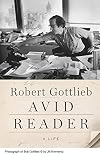
I loved almost all of this book. AVID READER is a nearly perfect read for old book nerds like me. In the cover photo, Gottlieb looks a lot like a young Woody Allen, which is completely irrelevant, but I thought this every time I picked the book up, so ... just sayin'.
Gottlieb is probably one of the most well-read authors I have ever read. An only child of two avid readers, he learned to read by age four from his maternal grandfather reading to him, and his love affair with books continues show more to this day, and he is 86.
After his graduation from Columbia, Gottlieb got on at Simon & Schuster and progressed to editor. Then he took over at the very prestigious Knopf, and then to editorship of the New Yorker, then back to Knopf, where he has been ever since, now semi-retired. Along the way he has worked with some of the brightest literary lights of the past sixty years - Joseph Heller, Toni Morrison, John Cheever, Barbara Tuchman, Harold Brodkey, LeCarre, Alice Munro, and on and on, as well as a host of lesser-known writers, many of whom I have read. There is, of course, a veritable deluge of name-dropping in a memoir like this, and by God, I loved it! I felt like I was walking through a library of books I've read and loved from childhood into old age. (Gottlieb was an Albert Payson Terhune fan as a kid too.)
I could gush on about all the associations Gottlieb's stories brought back, but I won't. I just kinda wish I could sit and talk books and authors with this old guy. The only part I skimmed here was the chapter on his fascination and association with ballet. I'm probably just too dumb to appreciate that. But the books! The authors! LOVED all of that. And in his reflecting back on all of it in the final chapter, "Living," he comes up with a perfect closing line -
"And, yes, the end may very well be hard, but perhaps fate will be kind, and at least let me keep on reading for a while."
Perfect. Very highly recommended, especially for book lovers.
- Tim Bazzett, author of the memoir, BOOKLOVER show less
Gottlieb is probably one of the most well-read authors I have ever read. An only child of two avid readers, he learned to read by age four from his maternal grandfather reading to him, and his love affair with books continues show more to this day, and he is 86.
After his graduation from Columbia, Gottlieb got on at Simon & Schuster and progressed to editor. Then he took over at the very prestigious Knopf, and then to editorship of the New Yorker, then back to Knopf, where he has been ever since, now semi-retired. Along the way he has worked with some of the brightest literary lights of the past sixty years - Joseph Heller, Toni Morrison, John Cheever, Barbara Tuchman, Harold Brodkey, LeCarre, Alice Munro, and on and on, as well as a host of lesser-known writers, many of whom I have read. There is, of course, a veritable deluge of name-dropping in a memoir like this, and by God, I loved it! I felt like I was walking through a library of books I've read and loved from childhood into old age. (Gottlieb was an Albert Payson Terhune fan as a kid too.)
I could gush on about all the associations Gottlieb's stories brought back, but I won't. I just kinda wish I could sit and talk books and authors with this old guy. The only part I skimmed here was the chapter on his fascination and association with ballet. I'm probably just too dumb to appreciate that. But the books! The authors! LOVED all of that. And in his reflecting back on all of it in the final chapter, "Living," he comes up with a perfect closing line -
"And, yes, the end may very well be hard, but perhaps fate will be kind, and at least let me keep on reading for a while."
Perfect. Very highly recommended, especially for book lovers.
- Tim Bazzett, author of the memoir, BOOKLOVER show less
There's probably a good book in here somewhere, but it really (and quite ironically) needed a better editor. Even editors aren't good at editing their own books. Gottlieb's narrative is far too much of a "first I did this with this person and then I did this with that person," without getting into any depth about anything, really. A shame.
If you have a father as famous and as domineering as Charles Dickens was in his time, you can't help but turn out a little odd.
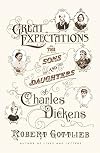
Robert Gottlieb's Great Expectations describes what it was like to grow up with Charles Dickens as a father. The literary icon's ten sons and daughters worshipped him, and he was a doting father to them when they were little. When they got older, however, he didn't know what to do with them, and his affection gave way to disappointment. Dickens particularly show more disapproved of his sons because, having grown up in luxury rather than in the poor house like their father did, they lacked his ambition and drive. He couldn't wait to ship the boys off to far-flung parts of the world as soon as they were old enough to leave the family home. For example, Dickens's fifth son, Frank, died in Moline, Illinois after lackluster stints in the Bengal and Canadian Mounted Police. His father wrote of him, "A good steady fellow, but not at all brilliant" (p. 89).
This book is oddly structured. In part one there is a chapter about each child's life before Dickens's death, then in part two there is a chapter about each child's life after Dickens's death, as if the sudden passing of their father in 1870 was the key turning point in each of their lives. This structure makes some repetition inevitable.
Gottlieb quotes Dickens's daughter Katey's letter to George Bernard Shaw: "If you could make the public understand that my father was not a joyous, jocund gentleman walking around the world with a plum pudding and a bowl of punch, you would greatly oblige me." (p. 171). Gottlieb succeeds in doing this as well. show less
Robert Gottlieb's Great Expectations describes what it was like to grow up with Charles Dickens as a father. The literary icon's ten sons and daughters worshipped him, and he was a doting father to them when they were little. When they got older, however, he didn't know what to do with them, and his affection gave way to disappointment. Dickens particularly show more disapproved of his sons because, having grown up in luxury rather than in the poor house like their father did, they lacked his ambition and drive. He couldn't wait to ship the boys off to far-flung parts of the world as soon as they were old enough to leave the family home. For example, Dickens's fifth son, Frank, died in Moline, Illinois after lackluster stints in the Bengal and Canadian Mounted Police. His father wrote of him, "A good steady fellow, but not at all brilliant" (p. 89).
This book is oddly structured. In part one there is a chapter about each child's life before Dickens's death, then in part two there is a chapter about each child's life after Dickens's death, as if the sudden passing of their father in 1870 was the key turning point in each of their lives. This structure makes some repetition inevitable.
Gottlieb quotes Dickens's daughter Katey's letter to George Bernard Shaw: "If you could make the public understand that my father was not a joyous, jocund gentleman walking around the world with a plum pudding and a bowl of punch, you would greatly oblige me." (p. 171). Gottlieb succeeds in doing this as well. show less
Lists
Awards


You May Also Like


Associated Authors
Statistics
- Works
- 11
- Also by
- 1
- Members
- 1,160
- Popularity
- #22,146
- Rating
- 3.9
- Reviews
- 33
- ISBNs
- 84
- Languages
- 2
- Favorited
- 1