
Michael Mann (1) (1942–)
Author of A History of Power from the Beginning to AD 1760
For other authors named Michael Mann, see the disambiguation page.
About the Author
Michael Mann is Professor of Sociology at the University of California, Los Angeles.
Series
Works by Michael Mann
Geschichte der Macht: Erster Band. Von den Anfängen bis zur griechischen Antike: BD 1 (Theorie und Gesellschaft) (1994) 3 copies
Geschichte der Macht, 3 Bde. in 4 Tl-Bdn., Bd.3/2, Die Entstehung von Klassen und Nationalstaaten (2001) 2 copies
Wiring the Nation: Telecommunication, Newspaper-Reportage, and Nation Building in British India, 1850-1930 (2017) 2 copies
Geschichte der Macht, 3 Bde. in 4 Tl-Bdn., Bd.3/1, Die Entstehung von Klassen und Nationalstaaten (1998) 2 copies
Geschichte der Macht, 3 Bde. in 4 Tl-Bdn., Bd.2, Vom Römischen Reich bis zum Vorabend der Industrialisierung (1994) 2 copies
The sources of social power 1 copy
Associated Works
Tagged
Common Knowledge
- Birthdate
- 1942-08-18
- Gender
- male
- Education
- University of Oxford (DPhil)
- Occupations
- sociologist
university professor emeritus - Organizations
- University of California, Los Angeles
- Awards and honors
- Fellow of the British Academy (2015)
American Academy of Arts and Sciences (2015) - Nationality
- UK
USA (dual citizenship) - Places of residence
- USA
London, England, UK
Members
Reviews
The Sources of Social Power: Volume 2, The Rise of Classes and Nation States 1760-1914: The Rise of Classes and Nation States 1760-1914 Vol 2 by Michael Mann

Between the lines I got the impression that the author sees himself as a successor to Marx and Weber. That ambition is not misplaced, and someone might say it is not unwarranted, either. This four-volume series in historical sociology is clearly intended to be a work for the ages. I can't even imagine how much time it must have taken to read through, or even browse, all the references cited in this book. It takes a unique mindset and great determination to attempt macrohistorical analysis on show more this scale, and we might have to wait a hundred years until another work with comparable scope is published. So if you're collecting modern books that might one day become true classics, placing a bet on this series might not be the worst idea.
But there's one problem: this book is really dull. When I read volume one I classified it as a difficult book because I got the feeling that I lacked the necessary background knowledge to appreciate the author's theorizing. But now, having read selected parts of this second volume, I realize that there's also something lacking in his writing. I can't exactly put my finger on what it is but I noticed that his theoretical framework is distressingly unclear. For example, he repeatedly refers to different state "crystallizations" without ever explaining what this physical metaphor is supposed to signify. He also relies heavily on Marxist class terminology such as "petite bourgeoisie". I'm sure Marxists could make the argument that it is a correct term for a certain social class in 19th century Europe, but it still becomes annoying when used over and over again. And I didn't know where to look up what a "sectional-segmental" organization is supposed to be, either. These are just a few examples of unclear terminology - I could give at least twenty more.
But in addition to the fact that the so-called "theories" presented in this book are to some extent just empty wordplay, the author also does not possess any particular talent for lucid presentation. His erudition is undeniable and he may have had a clear train of thought in his own mind when he wrote this book, but he failed to transfer it to the text. I constantly found my thoughts drifting away due to sheer boredom and I skipped some sections because I could see just by browsing that I wouldn't find them interesting. You really need a very clear overall plan if you're going to write an argument which is more than 800 pages long. I'm not sure what the plan for this book was, other than "I'm going to describe how economics, politics, ideology and war influenced societies in 19th century Europe". That is not clear enough.
The explanatory value of the author's conclusions is in my opinion not particularly high because so many of them are embedded in his flawed terminology of "crystallizations". But other readers might certainly enjoy his style more than I did. To be fair, I did like a couple of sections, for example the ones on taxation and revenue (p. 381-389), reasons why socialism did not succeed in the United States (p. 644-654) and the sociological analysis of the decisions that led to World War I which concludes the book. But in conclusion, while I salute the author for completing this ambitious project, I have no intention of ever reading volumes three and four. show less
But there's one problem: this book is really dull. When I read volume one I classified it as a difficult book because I got the feeling that I lacked the necessary background knowledge to appreciate the author's theorizing. But now, having read selected parts of this second volume, I realize that there's also something lacking in his writing. I can't exactly put my finger on what it is but I noticed that his theoretical framework is distressingly unclear. For example, he repeatedly refers to different state "crystallizations" without ever explaining what this physical metaphor is supposed to signify. He also relies heavily on Marxist class terminology such as "petite bourgeoisie". I'm sure Marxists could make the argument that it is a correct term for a certain social class in 19th century Europe, but it still becomes annoying when used over and over again. And I didn't know where to look up what a "sectional-segmental" organization is supposed to be, either. These are just a few examples of unclear terminology - I could give at least twenty more.
But in addition to the fact that the so-called "theories" presented in this book are to some extent just empty wordplay, the author also does not possess any particular talent for lucid presentation. His erudition is undeniable and he may have had a clear train of thought in his own mind when he wrote this book, but he failed to transfer it to the text. I constantly found my thoughts drifting away due to sheer boredom and I skipped some sections because I could see just by browsing that I wouldn't find them interesting. You really need a very clear overall plan if you're going to write an argument which is more than 800 pages long. I'm not sure what the plan for this book was, other than "I'm going to describe how economics, politics, ideology and war influenced societies in 19th century Europe". That is not clear enough.
The explanatory value of the author's conclusions is in my opinion not particularly high because so many of them are embedded in his flawed terminology of "crystallizations". But other readers might certainly enjoy his style more than I did. To be fair, I did like a couple of sections, for example the ones on taxation and revenue (p. 381-389), reasons why socialism did not succeed in the United States (p. 644-654) and the sociological analysis of the decisions that led to World War I which concludes the book. But in conclusion, while I salute the author for completing this ambitious project, I have no intention of ever reading volumes three and four. show less
The Sources of Social Power, Vol. 2: The Rise of Classes and Nation States, 1760-1914 by Michael Mann
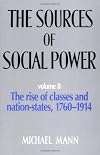
I nominate this as best ever historical sociology. It is far better than volume 1. The final chapter applies the preceding 750 pages to a case study of the run up to WW1, which is extremely important to us now.
The Sources of Social Power: Volume 1, A History of Power from the Beginning to AD 1760 by Michael Mann
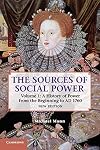
This is an impressive work for the ages, no doubt about that. The author presents a meticulous sociological analysis of power, where ancient agrarian civilizations (with a particular focus on Mesopotamia) form the first focal point. The second part of the book deals with European developments (with a particular focus on England) from the middle ages to about 1760. This is not a universal history of power, but the delimitations are well justified and clearly sufficient for the author's show more theoretical arguments.
The author argues that there are four kinds of organized power networks: economic, military, ideological and political. As far as agrarian civilizations were concerned I thought this division worked well and the first half of the book was very interesting. However, I must admit that I failed to keep up in the second half. The author goes into a lot more detail in discussing Europe and England, which makes his analysis quite hard to read and understand. It's not made any easier by his style, which often tends to move deeper and deeper into the subject without pausing for any intermediate summaries. Even the summary at the end of the book seemed diffuse to me.
For the above reasons this seems like a book for professionals in historical sociology (for generations to come). To me it was a bit too difficult. If you want to actually benefit from reading this work, you should study thoroughly in European political, economic and religious history (about 1000-1800) before tackling it. In other words, it's a challenge but certainly worth the effort if you can put some work into it. show less
The author argues that there are four kinds of organized power networks: economic, military, ideological and political. As far as agrarian civilizations were concerned I thought this division worked well and the first half of the book was very interesting. However, I must admit that I failed to keep up in the second half. The author goes into a lot more detail in discussing Europe and England, which makes his analysis quite hard to read and understand. It's not made any easier by his style, which often tends to move deeper and deeper into the subject without pausing for any intermediate summaries. Even the summary at the end of the book seemed diffuse to me.
For the above reasons this seems like a book for professionals in historical sociology (for generations to come). To me it was a bit too difficult. If you want to actually benefit from reading this work, you should study thoroughly in European political, economic and religious history (about 1000-1800) before tackling it. In other words, it's a challenge but certainly worth the effort if you can put some work into it. show less
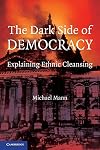
Well researched study of 4 genocides in the 20th century (Armenian, Nazi Germany, Balka, Rwanda). With an interesting political-theoretical approach as to why genocides happen (or do jot happen).
Lists
Awards


You May Also Like


Associated Authors
Statistics
- Works
- 24
- Also by
- 1
- Members
- 954
- Popularity
- #26,999
- Rating
- 3.9
- Reviews
- 9
- ISBNs
- 269
- Languages
- 12
- Favorited
- 1
