
Susan Butler (2)
Author of Lonely Planet : Phrasebook : Australian : 1998 : language survival kit
For other authors named Susan Butler, see the disambiguation page.
Works by Susan Butler
Tagged
Common Knowledge
- Gender
- female
Members
Reviews

The Aitch Factor by Susan Butler, a long-time editor of the Australian Macquarie Dictionary, contains a series of short essays about language, its history, development and idiosyncrasies.
Butler begins with the Haitch vs Aitch debate (my maternal grandmother in particular would have been horrified had I ever pronounced the letter H as ‘Haitch’) and goes on to explore other topics like Capitalisation, Internet gibberish, The attraction of slang and How do words get into the show more dictionary?
Butler is not without a sense of humour which these essays also reflect with subjects that include, Should man boobs be in the dictionary?, The mystery of the bogan, and her recommendation that we adopt Canadian spelling as an international standard over British or American English.
I was most impressed, and feel somewhat vindicated, to learn that Butler considers (and history proves) the apostrophe to be ‘an artifice of writing, a grammarian’s flourish’ and actually advocates that we forgo it entirely given it is possible to do so without any effect on our comprehension of written language. Ive often thought its true, and shes right, isnt she?
An ideal gift for language lovers, or pedantics, grammar Nazi’s or wordsmiths, The Aitch Factor is an entertaining and illuminating treatise on the ever evolving landscape of language. show less
Butler begins with the Haitch vs Aitch debate (my maternal grandmother in particular would have been horrified had I ever pronounced the letter H as ‘Haitch’) and goes on to explore other topics like Capitalisation, Internet gibberish, The attraction of slang and How do words get into the show more dictionary?
Butler is not without a sense of humour which these essays also reflect with subjects that include, Should man boobs be in the dictionary?, The mystery of the bogan, and her recommendation that we adopt Canadian spelling as an international standard over British or American English.
I was most impressed, and feel somewhat vindicated, to learn that Butler considers (and history proves) the apostrophe to be ‘an artifice of writing, a grammarian’s flourish’ and actually advocates that we forgo it entirely given it is possible to do so without any effect on our comprehension of written language. Ive often thought its true, and shes right, isnt she?
An ideal gift for language lovers, or pedantics, grammar Nazi’s or wordsmiths, The Aitch Factor is an entertaining and illuminating treatise on the ever evolving landscape of language. show less
If you've ever been interested in the history of words and phrases in Australian modern English (as well as the development of new ones), then The Aitch Factor by Susan Butler is the book for you.
Susan Butler began working at the Macquarie Dictionary as a Research Assistant in 1970 and is the current Editor; being uniquely situated to offer decades of experience on all manner of topics relating to the English language as it is spoken here in Australia.
I found myself laughing at some of the show more entries and observations, and Butler's sense of humour definitely shines throughout on almost every page.
She discusses the subtle differences in language between the states and territories, as well as touching on regional words and slang, which I found very entertaining.
One of Butler's roles at Macquarie is to collect new words (like firescape*), and determine when they should be added to the dictionary. Words like binge-watching, dental-tourism and facepalm seem self-explanatory and clever constructs and indicate an ever changing use of slang and buzz words.
What I found most shocking though, was Butler's stance on the apostrophe. I agree that the humble apostrophe is largely misused these days, but she believes we can do without it completely. I'd hate to see this happen, but what do you think?
The Aitch Factor is a great read for word lovers and trivia buffs the world over.
* Firescape means: to arrange the features of a garden (or other area of land) in a way that inhibits the spread of fire. Who knew? show less
Susan Butler began working at the Macquarie Dictionary as a Research Assistant in 1970 and is the current Editor; being uniquely situated to offer decades of experience on all manner of topics relating to the English language as it is spoken here in Australia.
I found myself laughing at some of the show more entries and observations, and Butler's sense of humour definitely shines throughout on almost every page.
She discusses the subtle differences in language between the states and territories, as well as touching on regional words and slang, which I found very entertaining.
One of Butler's roles at Macquarie is to collect new words (like firescape*), and determine when they should be added to the dictionary. Words like binge-watching, dental-tourism and facepalm seem self-explanatory and clever constructs and indicate an ever changing use of slang and buzz words.
What I found most shocking though, was Butler's stance on the apostrophe. I agree that the humble apostrophe is largely misused these days, but she believes we can do without it completely. I'd hate to see this happen, but what do you think?
The Aitch Factor is a great read for word lovers and trivia buffs the world over.
* Firescape means: to arrange the features of a garden (or other area of land) in a way that inhibits the spread of fire. Who knew? show less
This book series has very little in the way of photos and maps but instead focuses on the society of NZ. It tells about the almost side by side English/Maori culture here, the feelings towards nearby Aussies, work, leisure and even table manners. At first I missed having lots of color photos, as NZ is a very green country, but the info on what the people are like gives more of an idea about a country.
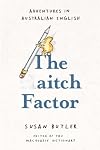
Some very interesting reading here, written by the editor of the Macquarie Dictionary. All about words and how we use them. Words we use everyday, words some of us would never use, some words we've forgotten others we would cringe at using. She gives us the details of why some words make it into the Dictionary and others don't, is sometimes funny, always interesting and Susan Butler left me wanting more.
You May Also Like


Associated Authors
Statistics
- Works
- 9
- Members
- 191
- Popularity
- #114,254
- Rating
- 3.6
- Reviews
- 5
- ISBNs
- 75
- Languages
- 5