
Charlotte Greig (1954–2014)
Author of Serial Killers & Psychopaths: True Life Cases that Shocked the World
About the Author
Charlotte Greig is a well-established music writer and performer. She writes regularly on a wide range of popular music for newspapers and magazines. She recently released her debut solo album, which received critical acclaim.
Image credit: Courtesy of Serpent's Tail Press
Works by Charlotte Greig
Learn to Play Like the Guitar Greats: The Essential Guide to Chords, Equipment, and Techniques (2005) 29 copies
The Guitar Book: The Ultimate Guide to Playing Like the Greats (Blues - Jazz - Rock - Pop - Country) (2010) 24 copies
The Encyclopedia of True Crime: The Pick of History's Worst Criminals from Fraudsters and Mobsters to Thrill Killers and Psychopaths (2008) 7 copies
Die unglaublichsten Verschwörungen der Welt: Von den Illuminaten bis 9/11. Von Diana bis Trump (2018) 3 copies
Aprende a tocar como los grandes guitarristas/ Learn to Play Like the Guitar Greats (Spanish Edition) (2007) 1 copy
World's Worst Crimes 1 copy
Tagged
Common Knowledge
- Other names
- Williams, Charlotte
- Birthdate
- 1954-10-08
- Date of death
- 2014-06-19
- Gender
- female
- Occupations
- singer
author - Places of residence
- Cardiff, Wales
- Associated Place (for map)
- Cardiff, Wales
Members
Reviews
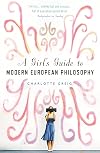
In my head I've been wandering about, wondering if my academic career spent in the sciences has left a gaping hole in the philosophical and historical realm. It's true, it has, and I feel as if, now, I am running behind myself, trying to catch up.
So the title of this book enticed me, despite the thickly written back cover (which I still haven't read in its entirety) - very off-putting. And the start of the book is slowish- but I got completely pulled in by Susannah, a woman who screams show more herself awake, who dreams in multicoloured dreams where she has lengthy conversations with the philosophers she is studying. She is so real, and I'd love to have coffee with her.
She has a great inner debate in this book, as she comes to terms with what she wants in life and in those around her. Her father's death has crippled both her and her mother and she is struggling to resurface. As she does, she turns to the great philosophers and, while doing it, brings many of their teachings to life in a modern way.
I, of course, having wasted my education, have no idea if she is doing this properly. But it's enchanting and I buy it and now I actually want to read Kierkegaard. Especially after reading this quote about the Virgin Mary, which comes near the end of the book, "Yet what woman was done greater indignity than Mary, and isn't it true here that those whom God blesses he damns in the same breath?" (from Fear and Trembling)
A thoughtful, funny, wistful and truthful coming of age story, with an enticing smattering of philosophy. show less
So the title of this book enticed me, despite the thickly written back cover (which I still haven't read in its entirety) - very off-putting. And the start of the book is slowish- but I got completely pulled in by Susannah, a woman who screams show more herself awake, who dreams in multicoloured dreams where she has lengthy conversations with the philosophers she is studying. She is so real, and I'd love to have coffee with her.
She has a great inner debate in this book, as she comes to terms with what she wants in life and in those around her. Her father's death has crippled both her and her mother and she is struggling to resurface. As she does, she turns to the great philosophers and, while doing it, brings many of their teachings to life in a modern way.
I, of course, having wasted my education, have no idea if she is doing this properly. But it's enchanting and I buy it and now I actually want to read Kierkegaard. Especially after reading this quote about the Virgin Mary, which comes near the end of the book, "Yet what woman was done greater indignity than Mary, and isn't it true here that those whom God blesses he damns in the same breath?" (from Fear and Trembling)
A thoughtful, funny, wistful and truthful coming of age story, with an enticing smattering of philosophy. show less

Susannah is a philosophy student at Sussex University in the 1970's and she feels quite content with her antique dealer 'grown up' boyfriend. Except, of course, that she has to wake herself up by screaming her head off every morning. Things become more complicated when Susannah starts an affair with her tutorial partner Rob and even worse when she discovers her unexpected pregnancy. To sort out her dilemma, Susannah turns to Kierkegaard and Heidegger (among others) to help her.
I'm not a huge show more fan of philosophy, so it was with a bit of trepidation that I picked up Girl's Guide to Modern European Philosophy. I needn't have worried. Ms. Greig clearly loves philosophy - as does her main character, but Susannah grapples with it in the context of her everyday life.
Really, this isn't as much a novel about philosophy so much as a novel about a girl looking for help wherever she can find it. When doctors, professors and friends can't grant her the kind of insight or assistance she's looking for, Susannah turns to philosophy - and more importantly to herself. Over the course of the novel, Susannah learns to rely on herself and to make her own decisions rather than simply accepting what others have in store for her [in that way, this reminded me a bit of the Julia Roberts movie Runaway Bride]. Far from taking the easy route (either way), she makes the brave choice of actually considering the options available to her and ultimately coming to the difficult decision. And her thought process really had me glued to the page.
More at my blog.
FTC Disclosure: I received a free review copy from the publisher. show less
I'm not a huge show more fan of philosophy, so it was with a bit of trepidation that I picked up Girl's Guide to Modern European Philosophy. I needn't have worried. Ms. Greig clearly loves philosophy - as does her main character, but Susannah grapples with it in the context of her everyday life.
Really, this isn't as much a novel about philosophy so much as a novel about a girl looking for help wherever she can find it. When doctors, professors and friends can't grant her the kind of insight or assistance she's looking for, Susannah turns to philosophy - and more importantly to herself. Over the course of the novel, Susannah learns to rely on herself and to make her own decisions rather than simply accepting what others have in store for her [in that way, this reminded me a bit of the Julia Roberts movie Runaway Bride]. Far from taking the easy route (either way), she makes the brave choice of actually considering the options available to her and ultimately coming to the difficult decision. And her thought process really had me glued to the page.
More at my blog.
FTC Disclosure: I received a free review copy from the publisher. show less
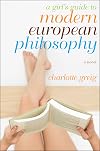
Susannah, a college co-ed studying philosophy at the University of Sussex in the 1970s, is living in a nice flat with her boyfriend Jason, an almost 30 antiques dealer. Although everything was fine at first and she enjoyed the luxury of not having to live in campus housing, things with Jason have been distant of late. Their sex life has all but dried up and it certainly doesn’t have any fire. She feels unappreciated. When Rob, a fellow philosophy student, asks her to go to a concert, she show more agrees. Eventually, Susannah and Rob end up in bed, although Susannah’s conscience is never quite okay with that arrangement. When violent nightmares finally require her to see the campus doctor, she learns that she has a real problem: She is pregnant. She isn’t sure who the father is. She doesn’t know if she wants to have the baby either way.
I read this novel incredibly fast. For something as weighty as philosophy and abortion, I would have anticipated this being a much slower read. The truth is that I couldn’t put it down after Susannah discovered that she was pregnant. I had to go on that journey with her. I wanted to. She is a smart woman, but as she learns first hand, she is a woman deeply connected to the natural world. The question is, what do you do with that? Susannah makes the brave choice to fully think through her circumstance and her options. She doesn’t blindly fall into step with any political opinion. Instead, she turns to the philosophers she is studying to help her make sense of who she is. Only then will she be able to fully embrace her ultimate decision. After all, her biggest mistake was not being as thoughtful and decisive about her entanglements with Jason and Rob before things got out of hand. She owed it to herself to do so now before piling on any more regrets.
A Girl’s Guide to Modern European Philosophy was a wonderful novel. From the first I was drawn in to Susannah’s world and her interest in philosophy. This novel delves deeper into its subject matter than a simple skim of the surface, but my inexperience with philosophy, especially Nietzsche, Heidegger, and Kierkegaard, was in no way an impediment to my readingexperience. In a way, Susannah and I were going through their works together. The way in which the philosophical texts were interwoven into the novel and Susannah’s life was compelling. Susannah takes responsibility for her mistakes and refuses to suffer the rhetoric of those who tidy abortion or parenting up for long. Instead, she turns to philosophy to provide unbiased guidance on a journey she wished she didn’t have to make, but one that would define the rest of her life.
Don’t let the chick lit-ish cover fool you. A Girl’s Guide to Modern European Philosophy is a novel that takes on one of the most loaded topics of our generation head on with honesty and integrity. As such, this was the first such novel I absolutely enjoyed reading. I loved Susannah and I embraced her in her struggles to do what was right and made sense. In her characters, Greig painted an authentic portrait of what happens when college students are forced to come to terms with the realities and responsibilities of adulthood. There are no easy answers to an unexpected pregnancy. This novel does not disrespect it readers by presenting one.
http://literatehousewife.com/2009/06/172-a-girls-guide-to-modern-european-philos... show less
I read this novel incredibly fast. For something as weighty as philosophy and abortion, I would have anticipated this being a much slower read. The truth is that I couldn’t put it down after Susannah discovered that she was pregnant. I had to go on that journey with her. I wanted to. She is a smart woman, but as she learns first hand, she is a woman deeply connected to the natural world. The question is, what do you do with that? Susannah makes the brave choice to fully think through her circumstance and her options. She doesn’t blindly fall into step with any political opinion. Instead, she turns to the philosophers she is studying to help her make sense of who she is. Only then will she be able to fully embrace her ultimate decision. After all, her biggest mistake was not being as thoughtful and decisive about her entanglements with Jason and Rob before things got out of hand. She owed it to herself to do so now before piling on any more regrets.
A Girl’s Guide to Modern European Philosophy was a wonderful novel. From the first I was drawn in to Susannah’s world and her interest in philosophy. This novel delves deeper into its subject matter than a simple skim of the surface, but my inexperience with philosophy, especially Nietzsche, Heidegger, and Kierkegaard, was in no way an impediment to my readingexperience. In a way, Susannah and I were going through their works together. The way in which the philosophical texts were interwoven into the novel and Susannah’s life was compelling. Susannah takes responsibility for her mistakes and refuses to suffer the rhetoric of those who tidy abortion or parenting up for long. Instead, she turns to philosophy to provide unbiased guidance on a journey she wished she didn’t have to make, but one that would define the rest of her life.
Don’t let the chick lit-ish cover fool you. A Girl’s Guide to Modern European Philosophy is a novel that takes on one of the most loaded topics of our generation head on with honesty and integrity. As such, this was the first such novel I absolutely enjoyed reading. I loved Susannah and I embraced her in her struggles to do what was right and made sense. In her characters, Greig painted an authentic portrait of what happens when college students are forced to come to terms with the realities and responsibilities of adulthood. There are no easy answers to an unexpected pregnancy. This novel does not disrespect it readers by presenting one.
http://literatehousewife.com/2009/06/172-a-girls-guide-to-modern-european-philos... show less
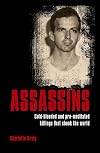
Assassins by Charlotte Greig and Nigel Cawthorne is an enjoyable read but falls short of the lofty goals it sets for itself, let alone any expectations a reader might bring.
The Introduction sets a very high bar that the reader almost immediately knows can't be reached in the number of pages in the book. It lists all of the victims they will cover, then also the assassins, and the near misses, and profiles of all of the above, plus they even say they will go into detail on the events and the show more implications. This book is simply too short to do all of what they promise.
If they had not created such sweeping expectations it would have allowed a reader to just enjoy the short overviews of these events and gone in search of more detail on the ones of most interest. A reader can still do these things, I certainly did, but there is still a sense of being mislead by the Introduction.
If you approach this book with reasonable expectations for a book of this length you will enjoy being reminded of assassinations as well perhaps gaining some new information about ones you either didn't know about or only heard about in passing. It makes for a quick read and, as I mentioned before, will pique curiosity in at least a few of the lesser known assassinations and attempts.
I would recommend this with the understanding that this is an overview of many cases and not an in-depth study of any one of them or of the psychological profile of "typical" assassins. With the proper expectations this is an enjoyable read.
Reviewed from a copy made available by the publisher via NetGalley. show less
The Introduction sets a very high bar that the reader almost immediately knows can't be reached in the number of pages in the book. It lists all of the victims they will cover, then also the assassins, and the near misses, and profiles of all of the above, plus they even say they will go into detail on the events and the show more implications. This book is simply too short to do all of what they promise.
If they had not created such sweeping expectations it would have allowed a reader to just enjoy the short overviews of these events and gone in search of more detail on the ones of most interest. A reader can still do these things, I certainly did, but there is still a sense of being mislead by the Introduction.
If you approach this book with reasonable expectations for a book of this length you will enjoy being reminded of assassinations as well perhaps gaining some new information about ones you either didn't know about or only heard about in passing. It makes for a quick read and, as I mentioned before, will pique curiosity in at least a few of the lesser known assassinations and attempts.
I would recommend this with the understanding that this is an overview of many cases and not an in-depth study of any one of them or of the psychological profile of "typical" assassins. With the proper expectations this is an enjoyable read.
Reviewed from a copy made available by the publisher via NetGalley. show less
Lists
You May Also Like


Statistics
- Works
- 45
- Members
- 1,288
- Popularity
- #19,903
- Rating
- 3.4
- Reviews
- 32
- ISBNs
- 187
- Languages
- 9