
Michael Jacobs (5) (1952–2014)
Author of The Most Beautiful Villages of Provence
For other authors named Michael Jacobs, see the disambiguation page.
About the Author
Michael Jacobs is the author of several travel books, including The Factory of Light: Tales from my Andalucian Village, which was shortlisted for the 2004 Thomas Cook Travel Book Award. He lives in Spain and London.
Series
Works by Michael Jacobs
The Face of Spain 1 copy
Colour in Portrait Painting 1 copy
Associated Works
Tagged
Common Knowledge
- Birthdate
- 1952-10-15
- Date of death
- 2014-01-11
- Gender
- male
- Education
- Courtauld Institute of Art
- Occupations
- art historian
travel writer - Relationships
- Blunt, Anthony (tutor)
- Nationality
- Italy (birth)
UK - Birthplace
- Genoa, Italy
- Places of residence
- Frailes, Andalucia, Spain
- Place of death
- St. Batholomew's Hospital, London, UK
Members
Reviews
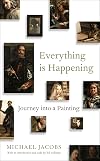
The story of a friendship is the frame for a dying man's life-lusting memoir, nested into his last traveling adventure in search of meaning inside a painting.
The narration of a life-long obsession becomes a mystery investigation, truncated by death and touchingly completed by the author's best friend, and at the same time reaches to the worlds of the political and philosophy, through the recalling of the Civil War in Spain, through loving memories of Anthony Blunt as a great teacher and as a show more scapegoat of philistine nationalism, and through an attempt at defining the nature of art as life, far from the "sunless" arid interpretations of the academic currents Jacobs encountered during his studies as art historian. By the way, his brief treatment of the way his peers have misunderstood Foucault is a pearl of concision and hilarious in its own way.
A book bursting with love - for art, for friends, for freedom of thought and interpretation, for Spain, Italy and South America, for people. I guess it will stay with me more than I thought it would.
EDIT: I left out the book's many shortcomings, such as the self-consciously embarrassed elitism of the Oxbridge alumni condemning the mass tourism that is nothing else than a side effect of accessibility of art, well, you know, to the masses; or the incredible provincialism of the British intellectual élites in the way they still live the Mediterranean as exotic dreamland without ever really engaging with it. There is a description of the crisis, the corruption scandals in Spain and of the Indignados protests that may look as politically conscious, but betrays a substantial hauteur, with Jacobs shaking his head at the plight of the protesting masses before proceeding to a luxurious cocktail on a rooftop bar with a curator quite on the aristocratic side of Spanish society. And Vulliamy's remark, in the coda, that his liberally Marxist friend brought the rage of the protesting masses with him inside the museum for a while, well, that would be comical if it were not infuriating.
However grating, though, these shortcomings don't subtract to the general tone of honesty of the book; instead, seem to contribute to it. Imperfect as everybody else, these two men are not afraid to expose themselves for whom they truly are in the interest of a better understanding of art and of its meaning, and appreciated that more than I would have a rigorously correct analysis devoided of interior truth. show less
The narration of a life-long obsession becomes a mystery investigation, truncated by death and touchingly completed by the author's best friend, and at the same time reaches to the worlds of the political and philosophy, through the recalling of the Civil War in Spain, through loving memories of Anthony Blunt as a great teacher and as a show more scapegoat of philistine nationalism, and through an attempt at defining the nature of art as life, far from the "sunless" arid interpretations of the academic currents Jacobs encountered during his studies as art historian. By the way, his brief treatment of the way his peers have misunderstood Foucault is a pearl of concision and hilarious in its own way.
A book bursting with love - for art, for friends, for freedom of thought and interpretation, for Spain, Italy and South America, for people. I guess it will stay with me more than I thought it would.
EDIT: I left out the book's many shortcomings, such as the self-consciously embarrassed elitism of the Oxbridge alumni condemning the mass tourism that is nothing else than a side effect of accessibility of art, well, you know, to the masses; or the incredible provincialism of the British intellectual élites in the way they still live the Mediterranean as exotic dreamland without ever really engaging with it. There is a description of the crisis, the corruption scandals in Spain and of the Indignados protests that may look as politically conscious, but betrays a substantial hauteur, with Jacobs shaking his head at the plight of the protesting masses before proceeding to a luxurious cocktail on a rooftop bar with a curator quite on the aristocratic side of Spanish society. And Vulliamy's remark, in the coda, that his liberally Marxist friend brought the rage of the protesting masses with him inside the museum for a while, well, that would be comical if it were not infuriating.
However grating, though, these shortcomings don't subtract to the general tone of honesty of the book; instead, seem to contribute to it. Imperfect as everybody else, these two men are not afraid to expose themselves for whom they truly are in the interest of a better understanding of art and of its meaning, and appreciated that more than I would have a rigorously correct analysis devoided of interior truth. show less
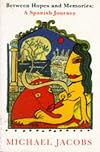
Jacobs doesn't so much travel across the length and breadth of Spain, as strip mine it. He visits (in many cases revisits) places that figured at some time in the history of just about every figure of note (real or imagined) in Spanish literature. In the process he is immersed (courtesy of old friends and his dogged pursuit of monuments and memories) in the local culture of hundreds of town and cities which he goes on to describe with an eye that is both sympathetic and critical. There is a show more serviceable index included, which is handy when you want to put your finger once more onto the reference to Graham Greene or Mussolini's sister. This wouldn't figure high on the list of recommended guides to your casual visitor to Spain; but if you have a literary bent and are travelling in that direction it would work very well for you. It is a creditable guide to Spanish (and Gallician and Catalan and ...) culture and issues in the 1990's, and an interesting follow-up and reflection on the Spanish writings of Gerald Brennan or Laurie Lee. show less
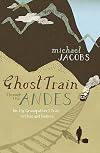
Picked while travelling in that area last year, but only just got round to reading it. Jacobs follows his grandfather's travels with the railway in Bolivia and Chile through the letters to his then fiancée.
Jacobs takes up the trail left by his grandfather, a trail which opens up Latin America to him. He meets interesting people who help along the way, despite bureaucracy and landslides. While looking for traces of his grandfather, Jacobs hears of another Engineer Jacobs, still remembered.
I show more really enjoyed this, especially as he passed through some of the places I went through with my brother. It's just a pity that so few of the routes are still open. show less
Jacobs takes up the trail left by his grandfather, a trail which opens up Latin America to him. He meets interesting people who help along the way, despite bureaucracy and landslides. While looking for traces of his grandfather, Jacobs hears of another Engineer Jacobs, still remembered.
I show more really enjoyed this, especially as he passed through some of the places I went through with my brother. It's just a pity that so few of the routes are still open. show less
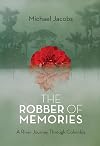
Read for Booktube-a-thon 2018 for the challenge "read a book about something you want to do", since I want to travel in Spanish-speaking parts of South America.
I generally enjoy travel literature, and I enjoyed reading about the landscape, people, history and politics of Colombia, but the highlights for me were the author's discussions of Alzheimer's, his father's diaries and his mother's dementia. This book was much sadder than I expected, but still a pleasure to read.
I generally enjoy travel literature, and I enjoyed reading about the landscape, people, history and politics of Colombia, but the highlights for me were the author's discussions of Alzheimer's, his father's diaries and his mother's dementia. This book was much sadder than I expected, but still a pleasure to read.
Lists
TLL Reading List (1)
Awards


You May Also Like


Associated Authors
Statistics
- Works
- 39
- Also by
- 1
- Members
- 855
- Popularity
- #29,931
- Rating
- 3.5
- Reviews
- 13
- ISBNs
- 194
- Languages
- 8