
Gareth Williams (6) (1969–)
Author of Vikings: Life and Legend
For other authors named Gareth Williams, see the disambiguation page.
About the Author
Gareth Williams is the owner of one of the most extensive collections of chess memorabilia in Europe, a collection that includes sets, boards, clocks, cards, prints, photos, ceramics, and more. He is author of The Amazing Book of Chess and is also a regular contributor to Chess Monthly and The show more Chess Collector magazines. show less
Works by Gareth Williams
Tagged
Common Knowledge
- Legal name
- Williams, Daniel Gareth Edmund
- Birthdate
- 1969
- Gender
- male
- Occupations
- museum curator
numismatist - Organizations
- British Museum
- Nationality
- UK
- Associated Place (for map)
- UK
Members
Reviews
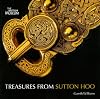
Reading "The Dig" by John Preston provided the perfect opportunity to finally dig out (haha!) a book I bought ten years ago on a trip to London. On that trip, I visited the British Museum for the very first time and headed straight to the exhibition of the Sutton Hoo finds. I had first seen the famous helmet on the cover of an edition of Beowulf that I read as a teenager and was fascinated by it. When I became aware that I would be able to see that very helmet in London I was overjoyed.
The show more exhibition totally blew me away and I spent ages gazing at the beautiful golden objects, the intricate patterns, the strange decorations. I had never seen anything like it before.
So of course, I bought a souvenir book about this treasure.
Gareth Williams, the author of this book, is a curator of the British Museum. The book has 48 pages, so it is really only a short introduction to the Sutton Hoo finds, gathering the most important information. You could find all of this info by yourself online, but here it is neatly presented and for me it serves as a nice memento of my memorable first visit to the British Museum.
The book starts with a chapter on the discovery and excavation of Sutton Hoo and then gives a short introduction to the kingdom of the East Angles and the historical background. The next chapter presents the most important artifacts, such as the famous helmet, a large shield, and beautiful buckles. The descriptions lead to the question of who was buried there, which apparently cannot really be answered, although the most probable assumption is that it is the burial place of Rædwald, who was over-king of large parts of England and died around 625AD. The book concludes with an overview of similar excavations in England and a small description of the site as it is today.
As said above, this is a short introduction for readers who have not heard about Sutton Hoo before or who have little knowledge of the Anglo-Saxons. I liked this concise read to refresh my memory and I enjoyed the beautiful pictures of the objects, but I still wished for more. Even this short book could have included some more depth. Some of the pictures are very large and I would have preferred it if these would have been smaller to allow more pictures to be printed. The pictures could also have been explained a little more to add more detail. show less
The show more exhibition totally blew me away and I spent ages gazing at the beautiful golden objects, the intricate patterns, the strange decorations. I had never seen anything like it before.
So of course, I bought a souvenir book about this treasure.
Gareth Williams, the author of this book, is a curator of the British Museum. The book has 48 pages, so it is really only a short introduction to the Sutton Hoo finds, gathering the most important information. You could find all of this info by yourself online, but here it is neatly presented and for me it serves as a nice memento of my memorable first visit to the British Museum.
The book starts with a chapter on the discovery and excavation of Sutton Hoo and then gives a short introduction to the kingdom of the East Angles and the historical background. The next chapter presents the most important artifacts, such as the famous helmet, a large shield, and beautiful buckles. The descriptions lead to the question of who was buried there, which apparently cannot really be answered, although the most probable assumption is that it is the burial place of Rædwald, who was over-king of large parts of England and died around 625AD. The book concludes with an overview of similar excavations in England and a small description of the site as it is today.
As said above, this is a short introduction for readers who have not heard about Sutton Hoo before or who have little knowledge of the Anglo-Saxons. I liked this concise read to refresh my memory and I enjoyed the beautiful pictures of the objects, but I still wished for more. Even this short book could have included some more depth. Some of the pictures are very large and I would have preferred it if these would have been smaller to allow more pictures to be printed. The pictures could also have been explained a little more to add more detail. show less
Head and shoulders above most glossy tabletop history books. It was published in conjunction with an exhibition at the British Museum, so there you go.
This book does a fabulous job exploring the Vikings' place in the greater cultural landscape of 8th–11th c. Europe and providing access to archaeological findings (and using the later written sources with a heaping tablespoon of salt).
This book does a fabulous job exploring the Vikings' place in the greater cultural landscape of 8th–11th c. Europe and providing access to archaeological findings (and using the later written sources with a heaping tablespoon of salt).
You May Also Like


Associated Authors
Statistics
- Works
- 12
- Members
- 429
- Popularity
- #56,933
- Rating
- 4.1
- Reviews
- 5
- ISBNs
- 177
- Languages
- 5