
David Gilmour (2) (1952–)
Author of The Pursuit of Italy: A History of a Land, Its Regions, and Their Peoples
For other authors named David Gilmour, see the disambiguation page.
About the Author
David Gilmour's wonderfully readable exploration or Italian life over the centuries is filled with provocative anecdotes as well as personal observations, and is peopled with the great figures of the Italian past-from Cicero and Virgil to Dante and the Medicis, from Garibaldi and Cavour to the show more controversial politicians of the twentieth century. Gilmour's wise account of the Risorgimento, the pivotal epoch in modern Italian history, debunks the nationalistic myths that surround it, though he paints a sympathetic portrait of Giuseppe Verdi, a beloved hero of the era. Gilmour shows that the glory of Italy has always lain in its regions, with their distinctive art, civic cultures, identities, and cuisines. Italy's inhabitants identified themselves not as Italians but as Tuscans and Venetians, Sicilians and Lombards, Neapolitans and Genoese. The country's strength and culture still come from its regions rather than from its misconceived, mishandled notion of a unified nation. show less
Works by David Gilmour
The Pursuit of Italy: A History of a Land, Its Regions, and Their Peoples (2011) 484 copies, 13 reviews
Associated Works
Tagged
Common Knowledge
- Legal name
- Gilmour, The Honourable Sir David Robert Gilmour, 4th Baronet
- Other names
- Gilmour, David Robert
- Birthdate
- 1952-11-14
- Gender
- male
- Education
- Eton College
Balliol College, Oxford - Occupations
- author
historical writer
biographer - Organizations
- St. Antony's College, Oxford
Balliol College, Oxford - Awards and honors
- Royal Society of Literature (Fellow)
- Relationships
- Gilmour, Ian (father)
- Short biography
- [from Slightly Foxed website]
David Gilmour is a writer. He has lived in Beirut, Cairo and Paris, and specialised in the Middle East as a journalist. He has written on countries including Lebanon, Spain and Italy, and biographies on Sicilian writer Giuseppe Tomasi di Lampedusa, Lord Curzon and Rudyard Kipling. He has also written reviews for various publications including the New York Review of Books, the Spectator, the TLS, the Financial Times and the Independent on Sunday. David Gilmour is a Fellow of the Royal Society of Literature and a former Research Fellow of Oxford University. - Nationality
- UK
- Associated Place (for map)
- UK
Members
Reviews
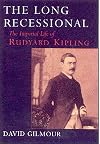
It's well known that Kipling was a drum beat for the British Empire. Since this book is dedicated to his "Imperial Life" that is, his political journey in light of his time, I therefore expected to see his opinions regarding British Imperialism and the racism underpinning it being, at the very least, questioned somehow. Were they the norm among his contemporaries and Kipling the outspoken voice of widespread and common views among English people back then? Or, on the contrary, was he a show more radical, way off the mark even for his time; a man those ethos was as repellent then as it is to us now? Well, tough luck but David Gilmour fails to deliver on that score -and fails spectacularly at that!
The problem here is not the research nor the reckoning made about Kipling. Gilmour perfectly recognises that Kipling was an anti-Semitic and a racist; a man full of hatred for whole groups of people (races as much as nations) and whose opinions can only revolt us now. The problem is that he excuses them away, not by arguing that they were typical of his time (if they were at all) but by excusing away British Imperialism itself. How so?
They are people, even still to this day, who genuinely think that European Imperialism was a civilising endeavour; that Westerners were better (morally, technologically, politically) than non-Westerners; that, despite all its shortcomings and the crimes which were committed in its name colonialism should therefore be seen, in the end, has having proven more beneficial than bad to those having suffered under its yoke. Completely blind to the brutal racism and White Supremacy which had in fact motivated what was nothing but a violent system of exploitation, those people genuinely believe, then, that the whole period was on the contrary motivated by a necessary moral duty, an ethical imperative. David Gilmour, sadly, is one of those people. For instance, here's how he interprets the brutal conquering and subjugating of the colonised, the fate of the dehumanised and plundered for the benefits of European nations:
In a world without Oxfam and the United Nations, it was the responsibility of the richest and most civilized nations to help the poorest, not for reasons of vanity or self-aggrandizement, but because it was their duty to keep the peace, to bring justice and education, to protect minorities, to prevent people from dying of disease and starvation.
Elsewhere, he wants us to believe that such entitled attitude over others could only be "natural", since European's history had been so "relatively peaceful" in comparison that it could only give Britain and its people an "innate" superiority:
at that time the British were more capable of performing certain tasks than the Indians. And that seemed entirely natural: after all, they possessed the experience and self-confidence innate in citizens of a prosperous country with a large empire and a long and relatively peaceful history of political development.
Now, of course, to anyone knowing better when it comes to history (the history of the people concerned as much as that of Europe) such stances will smack as being nothing but historical revisionism, gobsmacking enough as it is. The issue, though, is the impact that such wishy-washy about the true nature of British Imperialism has upon his interpretation of Kipling's work as a defender for such regime. How so?
If you think, here, that the statements quoted above are as ignorant as they are shocking, then you need to brace yourself. David Gilmour goes on indeed to try and argue that the line lesser breeds without the law in the poem Recessional ought not to be interpreted as xenophobic arrogance (let alone a racial slur) but a Biblical warning against the English nation should it fail to serve its civilising mission; that the term White Man in The White Man's Burden is no reference to skin colour at all but, on the contrary, to whiteness as a Biblical symbol of goodness and purity, as opposed to darkness symbolising evil! You get the gist: to justify his ignorant historical views, David Gilmour doesn't hesitate to completely white-wash even bluntly expressed racism. Needless to say, it makes -at time- for a stomach-churning read. But is it all that bad?
If there is anything that the author gets right is his reckoning that Kipling, for all his despicable views, was, nevertheless, a prophet of sort. He had foreseen the decline and ultimate end to come of the Empire. He had foreseen that the fate of South Africa under the Boers would be far worse for the Black Africans that what it was under the British. He had foreseen the dangerous militarism of Germany, hence a war to be inevitable. He had foreseen that allowing India to be independent would lead to a bloodbath between some of its Hindu and Muslim factions. The problem is that David Gilmour fails to foresee how such predictions don't make for British Imperialism to be perceived as being better somehow, hence for Kipling's views on colonialism to be acceptable even by the standard of his time (e.g. he was mocked as a jingoist for a reason; the fact that no one from the literary establishment then turned up at his funeral being telling enough...). David Gilmour himself, in fact (and despite all of his wiggling around otherwise) has no choice but to reckon that Kipling embodied ideas prevalent in his youth, but that times were then changing also and that he didn't change with them as he grew old. That's fair enough.
All in all, a political biography of Kipling definitely ought to be more than welcome. His opinions were repulsive for sure, but then again so were the behaviours and attitudes of many of his contemporaries. Was Kipling, then, a typical voice of his era? Or was he, on the contrary, a rad-Tory and ridicule flag-weaver whom even most of his contemporaries found unsufferable? The question remains open, although the author acknowledges (again) that Kipling was far too inflexible to shift with the then moving zeitgeist of Britain when it came to such issues (e.g. racism, colonialism, foreign policies). The bottom line, though, is that the personal views of the author on Imperialism itself (or, at least, on what truly motivated it) were far too repellent to me personally for me to give any credence to his points. I preferred, and by far, reading Rudyard Kipling: A Life. show less
The problem here is not the research nor the reckoning made about Kipling. Gilmour perfectly recognises that Kipling was an anti-Semitic and a racist; a man full of hatred for whole groups of people (races as much as nations) and whose opinions can only revolt us now. The problem is that he excuses them away, not by arguing that they were typical of his time (if they were at all) but by excusing away British Imperialism itself. How so?
They are people, even still to this day, who genuinely think that European Imperialism was a civilising endeavour; that Westerners were better (morally, technologically, politically) than non-Westerners; that, despite all its shortcomings and the crimes which were committed in its name colonialism should therefore be seen, in the end, has having proven more beneficial than bad to those having suffered under its yoke. Completely blind to the brutal racism and White Supremacy which had in fact motivated what was nothing but a violent system of exploitation, those people genuinely believe, then, that the whole period was on the contrary motivated by a necessary moral duty, an ethical imperative. David Gilmour, sadly, is one of those people. For instance, here's how he interprets the brutal conquering and subjugating of the colonised, the fate of the dehumanised and plundered for the benefits of European nations:
In a world without Oxfam and the United Nations, it was the responsibility of the richest and most civilized nations to help the poorest, not for reasons of vanity or self-aggrandizement, but because it was their duty to keep the peace, to bring justice and education, to protect minorities, to prevent people from dying of disease and starvation.
Elsewhere, he wants us to believe that such entitled attitude over others could only be "natural", since European's history had been so "relatively peaceful" in comparison that it could only give Britain and its people an "innate" superiority:
at that time the British were more capable of performing certain tasks than the Indians. And that seemed entirely natural: after all, they possessed the experience and self-confidence innate in citizens of a prosperous country with a large empire and a long and relatively peaceful history of political development.
Now, of course, to anyone knowing better when it comes to history (the history of the people concerned as much as that of Europe) such stances will smack as being nothing but historical revisionism, gobsmacking enough as it is. The issue, though, is the impact that such wishy-washy about the true nature of British Imperialism has upon his interpretation of Kipling's work as a defender for such regime. How so?
If you think, here, that the statements quoted above are as ignorant as they are shocking, then you need to brace yourself. David Gilmour goes on indeed to try and argue that the line lesser breeds without the law in the poem Recessional ought not to be interpreted as xenophobic arrogance (let alone a racial slur) but a Biblical warning against the English nation should it fail to serve its civilising mission; that the term White Man in The White Man's Burden is no reference to skin colour at all but, on the contrary, to whiteness as a Biblical symbol of goodness and purity, as opposed to darkness symbolising evil! You get the gist: to justify his ignorant historical views, David Gilmour doesn't hesitate to completely white-wash even bluntly expressed racism. Needless to say, it makes -at time- for a stomach-churning read. But is it all that bad?
If there is anything that the author gets right is his reckoning that Kipling, for all his despicable views, was, nevertheless, a prophet of sort. He had foreseen the decline and ultimate end to come of the Empire. He had foreseen that the fate of South Africa under the Boers would be far worse for the Black Africans that what it was under the British. He had foreseen the dangerous militarism of Germany, hence a war to be inevitable. He had foreseen that allowing India to be independent would lead to a bloodbath between some of its Hindu and Muslim factions. The problem is that David Gilmour fails to foresee how such predictions don't make for British Imperialism to be perceived as being better somehow, hence for Kipling's views on colonialism to be acceptable even by the standard of his time (e.g. he was mocked as a jingoist for a reason; the fact that no one from the literary establishment then turned up at his funeral being telling enough...). David Gilmour himself, in fact (and despite all of his wiggling around otherwise) has no choice but to reckon that Kipling embodied ideas prevalent in his youth, but that times were then changing also and that he didn't change with them as he grew old. That's fair enough.
All in all, a political biography of Kipling definitely ought to be more than welcome. His opinions were repulsive for sure, but then again so were the behaviours and attitudes of many of his contemporaries. Was Kipling, then, a typical voice of his era? Or was he, on the contrary, a rad-Tory and ridicule flag-weaver whom even most of his contemporaries found unsufferable? The question remains open, although the author acknowledges (again) that Kipling was far too inflexible to shift with the then moving zeitgeist of Britain when it came to such issues (e.g. racism, colonialism, foreign policies). The bottom line, though, is that the personal views of the author on Imperialism itself (or, at least, on what truly motivated it) were far too repellent to me personally for me to give any credence to his points. I preferred, and by far, reading Rudyard Kipling: A Life. show less
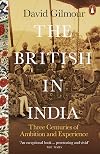
A massive book, over 500 pages of body text in small print, and another 100 pages of notes and references, it tells the personal stories of a number of British administrators, soldiers, professionals, missionaries, adventurers, writers and travellers, and others in the Indian subcontinent. Through their stories, one gets a glimpse into the complex and variegated motivations and ideas of these persons, their different ways of relating to a new culture and people, and how all this has show more contributed to the state of the subcontinent today. Perhaps the most poignant are the stories of those who came to see this land as their own home, and the dilemmas of those left stranded between two worlds as empire gave way to the era of independence. A huge and absorbing tale (which has taken me a correspondingly substantial time to get through!), ably recounted by one of the best writers of the genre. show less
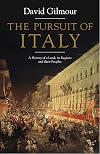
This is a great book on Italy. I think it is worth reading by Italians themselves too. A historical book as it should be. It is a very balanced account of country’s history and a very fair assessment of its key figures and events. Nor is his book a collection of iconoclastic provocations. You see real people, not lacquered and embellished saints or demonized beastly villains. He calls events and processes precisely by their correct names and not just recites glorious titles. A certain show more character could be a hero though, but that doesn’t necessarily imply you should worship him or that he lived a flawless life of conviction. It’s not a typical book of fables fed to adult kids, it’s a serious conversation that invites you to think. I wish the author wrote similar books on histories of other controversial states like mine (Russia), where so much glazing was put on so many historical figures that they actually sainted XVIII century admiral Feodor Ushakov as recently as in 2000s, never mind his actual temporal achievements. Especially poignant are his chapters on Risorgimento and Mussolini years. You’ll see how trivial skirmishes and untalented commanders are raised on marble pedestals and positioned in the central places of cities and kids’ textbooks.
It was never easy to go against the grain as this excerpt below shows:
“Italian soldiers used to enjoy the reputation of being brava gente, good fellows, ‘the good soldier Gino’ who remained good even in uniform. Italians claimed they were not like the nazis. Nor were their generals, whose decency is supposed to have been certified later by the fact that none of them faced a trial like the leading nazis at Nuremberg. Yet in recent decades an Italian historian, Angelo del Boca, has gone through the colonial records and painstakingly compiled, in volume after volume, evidence that the generals committed horrific atrocities in Africa and later the Balkans and that ‘the good soldier Gino’ is a myth: the brava gente were as adept at massacring as anyone else. The Italian army reacted by trying to have Del Boca prosecuted for ‘vilifying the Italian soldier’.”
- but I am sure you and me are grown ups enough to decide for ourselves what to make out of competing historical narrations, rather than uncritically bow to Legend, created with many different intentions, not all of which were benign. show less
It was never easy to go against the grain as this excerpt below shows:
“Italian soldiers used to enjoy the reputation of being brava gente, good fellows, ‘the good soldier Gino’ who remained good even in uniform. Italians claimed they were not like the nazis. Nor were their generals, whose decency is supposed to have been certified later by the fact that none of them faced a trial like the leading nazis at Nuremberg. Yet in recent decades an Italian historian, Angelo del Boca, has gone through the colonial records and painstakingly compiled, in volume after volume, evidence that the generals committed horrific atrocities in Africa and later the Balkans and that ‘the good soldier Gino’ is a myth: the brava gente were as adept at massacring as anyone else. The Italian army reacted by trying to have Del Boca prosecuted for ‘vilifying the Italian soldier’.”
- but I am sure you and me are grown ups enough to decide for ourselves what to make out of competing historical narrations, rather than uncritically bow to Legend, created with many different intentions, not all of which were benign. show less
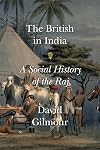
At times, it was unputdownable, and at times, it was a stretch, but only because it has so many subjects that a few might not be able to grab attention when you are in a particular mood.
In any case, it was a spectacular idea to model a work of history as a camera with an open shutter. With so many diverse stories of so many men and women, Gilmour has devised a really ingenious way of capturing the complexity of the social life of colonial agents in British India. It isn't an oral history show more but a social history written as snippets with real cast.
The structure of the book invites a lot of reflection as you finish the book and find yourself awestruck by its sheer expanse. show less
In any case, it was a spectacular idea to model a work of history as a camera with an open shutter. With so many diverse stories of so many men and women, Gilmour has devised a really ingenious way of capturing the complexity of the social life of colonial agents in British India. It isn't an oral history show more but a social history written as snippets with real cast.
The structure of the book invites a lot of reflection as you finish the book and find yourself awestruck by its sheer expanse. show less
Lists
Awards


You May Also Like


Associated Authors
Statistics
- Works
- 13
- Also by
- 9
- Members
- 1,556
- Popularity
- #16,556
- Rating
- 4.1
- Reviews
- 30
- ISBNs
- 177
- Languages
- 12
- Favorited
- 1