
David Stevens (2) (1940–2018)
Author of Alex Haley's Queen: The Story of an American Family
For other authors named David Stevens, see the disambiguation page.
Works by David Stevens
Mama Flora's Family [1998 TV mini series] — Screenwriter — 6 copies
The Clinic [1982 film] — Director — 1 copy
Always Afternoon [1988 TV mini series] — Director — 1 copy
Crime and Punishment [1998 TV movie] — Screenwriter — 1 copy
Associated Works
Tagged
Common Knowledge
- Legal name
- Stevens, David
- Birthdate
- 1940-12-22
- Date of death
- 2018-07-17
- Gender
- male
- Occupations
- screenwriter
playwright
film diretor - Nationality
- Australia
- Birthplace
- Tiberias, Palestine
- Place of death
- Whangarei, Northland, Nouvelle-Zélande
Members
Reviews

Researching one's family history and relaying the stories that one finds can be a complex task, one that is both daunting and rewarding. Alex Haley once again tackles this subject, this time shifting his focus to the paternal side of his family (a feat that has been very difficult for many African-Americans). "Queen" traces Haley's ancestors from Europe to Africa to the United States, highlighting the way that lineage and histories were altered by the slave system. Although she technically show more makes her appearance near the middle of the novel, Haley tells his story through the viewpoint of Queen, his grandmother, and her unique life experiences as a mixed-race African-American woman.
While not my favorite of Haley's works, I truly enjoyed reading this book. It is a long read, and it does take a while to get into the story. But once the reader is drawn in, the result is more than satisfying. There is no doubt that Haley was a great writer. He does an excellent job of establishing everyone's backstory and character motivations, and the events flow well from one period to the next. As mentioned in the description, Haley died before the work was completed, so David Stevens, who worked closely with him, stepped in to finish the rest of the book. Naturally, the book exhibits some differences between the work that Haley did alone (there are less scenes with dialogue, for example), but the changes are not as glaring or distracting as some might think. I also appreciated the unique viewpoint of this book. The stories and situations of mixed-race slaves, are historical narratives that still bear further research and analysis.
There is one major drawback to the book, which prevented me from giving it the full five stars. This problem lies within the character of Queen herself. She never acknowledges the wrong and humiliation of the system which allows people like her, who are mixed-race, to operate in a position of privilege, while leaving "unmixed" Blacks on the bottom rung. She doesn't even realize the disdain that she has for those who are darker than she is; she even favors her son Simon, Alex Haley's father, because he is lighter-skinned. The reason why she is able to have aspirations and some degree of ambition is because of the racist and colorist system that ascribes benefits based on skin color. For example, whenever Queen lashes out at a white person who has mistreated her, her argument is almost always "I'm as white as you are," (a reference to her fair appearance) or "you can't tell that I'm Black just by looking at me." On the one hand, this does expose the hypocrisy and ridiculousness of racial and color discrimination. However, what she's really saying is that whites have no call to discriminate against her because she too is half white and could pass for a member of their families. This is extremely problematic. Not only does is suggest that whiteness makes one better, but it also suggests that discrimination against unmixed African-Americans is okay. Her argument should be that racial discrimination against Blacks is wrong, period, regardless of their parentage or complexion. She's not railing against the racial system, only against the suffering that she has had to endure because of her place in that system. Even if they were to listen to Queen and stop mistreating all the mixed-race slaves, by her justification, this would still leave a large portion of the African-American population open to abuse.
While I'm not defending any of the horrible things that were perpetrated against Queen in her lifetime, many of her problems were caused by her implicit trust in white people, even after previous mistreatment at their hands. Throughout the book, other Blacks would often offer to help Queen, but she would either turn them away or take their advice up until a white person offered her "help", which she would then accept. Of course, one could argue that Haley is trying to show the psychological damage of such a system that divides Blacks by turning them against one another. But the problem is that this realization NEVER crosses Queen's mind, even in her old age, which makes the book unsatisfying. More importantly, it is this particular lack of character growth in Queen which causes other African-Americans to resent her. At one point in the book, Queen muses on her distance from, and negative feelings towards, the field hands on her father/owner's plantation; they in turn see her as having a sense of entitlement and superiority. Haley says that the two "didn't understand one another", and as Queen gets older, she encounters Blacks whom she sees as hostile towards her. However, it seems that the attitudes of these African-Americans stem from anger at being rejected by Queen and people like her (at one point in the book she actually tries to pass for white) rather than sheer jealousy or hatred. They are cold to her because she was initially cold to them, not the other way around. One wonders how differently her life path may have been had she embraced her Black heritage at an earlier age, instead of trying so hard to run away from it. show less
While not my favorite of Haley's works, I truly enjoyed reading this book. It is a long read, and it does take a while to get into the story. But once the reader is drawn in, the result is more than satisfying. There is no doubt that Haley was a great writer. He does an excellent job of establishing everyone's backstory and character motivations, and the events flow well from one period to the next. As mentioned in the description, Haley died before the work was completed, so David Stevens, who worked closely with him, stepped in to finish the rest of the book. Naturally, the book exhibits some differences between the work that Haley did alone (there are less scenes with dialogue, for example), but the changes are not as glaring or distracting as some might think. I also appreciated the unique viewpoint of this book. The stories and situations of mixed-race slaves, are historical narratives that still bear further research and analysis.
There is one major drawback to the book, which prevented me from giving it the full five stars. This problem lies within the character of Queen herself. She never acknowledges the wrong and humiliation of the system which allows people like her, who are mixed-race, to operate in a position of privilege, while leaving "unmixed" Blacks on the bottom rung. She doesn't even realize the disdain that she has for those who are darker than she is; she even favors her son Simon, Alex Haley's father, because he is lighter-skinned. The reason why she is able to have aspirations and some degree of ambition is because of the racist and colorist system that ascribes benefits based on skin color. For example, whenever Queen lashes out at a white person who has mistreated her, her argument is almost always "I'm as white as you are," (a reference to her fair appearance) or "you can't tell that I'm Black just by looking at me." On the one hand, this does expose the hypocrisy and ridiculousness of racial and color discrimination. However, what she's really saying is that whites have no call to discriminate against her because she too is half white and could pass for a member of their families. This is extremely problematic. Not only does is suggest that whiteness makes one better, but it also suggests that discrimination against unmixed African-Americans is okay. Her argument should be that racial discrimination against Blacks is wrong, period, regardless of their parentage or complexion. She's not railing against the racial system, only against the suffering that she has had to endure because of her place in that system. Even if they were to listen to Queen and stop mistreating all the mixed-race slaves, by her justification, this would still leave a large portion of the African-American population open to abuse.
While I'm not defending any of the horrible things that were perpetrated against Queen in her lifetime, many of her problems were caused by her implicit trust in white people, even after previous mistreatment at their hands. Throughout the book, other Blacks would often offer to help Queen, but she would either turn them away or take their advice up until a white person offered her "help", which she would then accept. Of course, one could argue that Haley is trying to show the psychological damage of such a system that divides Blacks by turning them against one another. But the problem is that this realization NEVER crosses Queen's mind, even in her old age, which makes the book unsatisfying. More importantly, it is this particular lack of character growth in Queen which causes other African-Americans to resent her. At one point in the book, Queen muses on her distance from, and negative feelings towards, the field hands on her father/owner's plantation; they in turn see her as having a sense of entitlement and superiority. Haley says that the two "didn't understand one another", and as Queen gets older, she encounters Blacks whom she sees as hostile towards her. However, it seems that the attitudes of these African-Americans stem from anger at being rejected by Queen and people like her (at one point in the book she actually tries to pass for white) rather than sheer jealousy or hatred. They are cold to her because she was initially cold to them, not the other way around. One wonders how differently her life path may have been had she embraced her Black heritage at an earlier age, instead of trying so hard to run away from it. show less
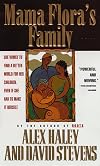
Affirming story of an African American woman's experience of the journey from emancipation to integration over three generations. The characterisation is warmly sympathetic while communicating the injustice of so much of African American experience.
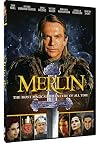
The legend of King Arthur , this time, from the perspective of the King's Wizard, Merlin. Merlin is a creature born of pagan magic, living in a world converting to Christianity. Merlin is beside Arthur as he gains Excalibur, builds Camelot, and is betrayed by his wife, Guinevere. Merlin and Arthur are menaced by the plots of Morgan Le Fey, her son by Arthur, Mordred, and their cohorts. Through it all, Merlin tries to keep Arthur from the destructive path set by fate.
Not Rated however show more consider PG for moderate violence and language. show less
Not Rated however show more consider PG for moderate violence and language. show less
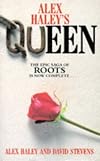
I randomly picked this up off my mum's shelf because it was a thick book. Loved it. I hadn't actually read Roots before so I can't compare, but this is my favourite book that I've read (perhaps 5 times)
Awards


You May Also Like


Associated Authors
Statistics
- Works
- 17
- Also by
- 2
- Members
- 1,327
- Popularity
- #19,380
- Rating
- 4.0
- Reviews
- 16
- ISBNs
- 225
- Languages
- 8
