

Brendan Behan (1923–1964)
Author of Borstal Boy
About the Author
Brendan Behan was born in Dublin, Ireland, in 1923. He came from a family of rebels. His father was in prison because of IRA activities when Behan was born, and his uncle Peadar Kearney was the author of A Soldiers Song, the song of rebellion that was to become the country's national anthem. Not show more surprisingly, Behan became a rebel himself, joining Fianna Eirann, a youth organization that he referred to as the Republican Boy Scouts, at the age of 9 and transferring to the IRA when he was just fourteen. When he was 16, Behan was arrested for the possession of explosives while in Liverpool, England. Apparently he had been sent there as part of a plot to blow up the battleship King George V. Behan spent 3 years in an English reform school, an experience that later became the basis for the autobiographical novel Borstal Boy. When he was released in 1942, Behan was sent back to Ireland, where he rejoined the IRA and, in less than a year found himself under arrest again. This time the charge was firing at two police officers, for which he was sentenced to 14 years in prison. He was released, however, in 1946 as part of a general amnesty. Upon leaving prison, Behan worked as a house painter and a seaman. He also began writing, initially as a freelance journalist and later as a playwright. His best-known works are his plays The Quare Fellow and The Hostage, comedy-dramas that deal with the subjects Behan knew best-Dublin and the IRA. Behan also wrote Brendan Behan's Ireland: An Irish Sketchbook, Brendan Behan's New York, The Scarperer, Confessions of an Irish Rebel, Richard's Cork Leg, and After the Wake. Behan died in 1964, at age 41, of a combination of alcoholism, jaundice, and diabetes. After Behan's death, Borstal Boy was adapted for the theatre by Frank McMahon. The resulting production won a Tony award and a New York Drama Critics Circle Award for the best play of 1969-70 season. (Bowker Author Biography) show less
Works by Brendan Behan
The Big House 5 copies
A Garden Party 3 copies
Moving Out 3 copies
Evergreen Review Volume 5 Number 20 2 copies
An Giall ; The hostage 1 copy
Best-in-Books: A Day in the Life of President Kennedy / French Bride / Scarperer / Little Kingdom (1964) — Contributor — 1 copy
Brendan Behan: Borstal Boy, The Quare Fellow and The Hostage: Three BBC Radio Full-Cast Productions 1 copy
The hostage 1 copy
The "Short Play" Series 1 copy
Den dödsdömde 1 copy
The Quare Fellow 1 copy
The Confirmation Suit 1 copy
Associated Works
Great Irish Writing: The Best from The Bell (Classic Irish Fiction) (1978) — Contributor — 23 copies
Five Modern Plays — Author — 1 copy
Tagged
Common Knowledge
- Other names
- Street, Emmet, (pseudonym)
- Birthdate
- 1923-02-09
- Date of death
- 1964-03-20
- Gender
- male
- Occupations
- house painter
playwright
novelist
author
writer
revolutionary - Organizations
- Irish Republican Army (IRA)
- Relationships
- Machlin, Milt (college roommate)
Behan, Brian (brother)
Behan, Dominic (brother) - Cause of death
- alcoholism
- Nationality
- Ireland
- Birthplace
- Dublin, Ireland
- Places of residence
- Paris, France
Borstal Prison, Borstal, Kent, England, UK
Strangeways Prison, Manchester, England, UK
New York, New York, USA
Dublin, Ireland - Place of death
- Dublin, Ireland
- Burial location
- Glasnevin Cemetery, Dublin, Ireland
- Associated Place (for map)
- Dublin, Ireland
Members
Reviews
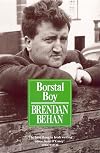
Brendan Behan’s 1958 account of his three years in Borstal, the name for the detention center for minors in the United Kingdom. He had been arrested at the age of 16 with explosives in Liverpool, intending to plant a bomb as part of the IRA.
While such an act is morally difficult at best, Behan comes across as anything but a deranged and violent man, finding friends amongst his fellow prisoners, behaving respectfully, and holding his opinions confidently within. He is understanding of show more others, both for their viewpoints even if differing from his own, and for their weaknesses, for “every cripple has his own way of walking”. If ever there was a spokesman for terrorism, it would be him. And it’s amazing how easily accepted he is, which at one point he explains as being because “I had the same rearing as most of them; Dublin, Liverpool, Manchester, Glasgow, London. All our mothers had done the pawn – pledging on Monday, releasing on Saturday. We all knew the chip shop and the picture house and the fourpenny rush of a Saturday afternoon, and the summer swimming in the canal and being chased along the railway by the cops.”
The writing is true to Behan’s voice and he does have a natural gift. He is funny in his ‘inner voice’:
“‘You know, Pad, I’d have messed that Geordie about today. I’d ‘ave done ‘im good and proper.’
You would, Charlie, if he was tied hand and foot, and under ether.”
He is honest, admitting to avoiding a fight at one point and commenting “there’s a fearless rebel for you”.
And he has the soul of a poet, observing on his first night in prison: “As I stood, waiting over the lavatory, I heard a church bell peal in the frosty night, in some other part of the city. Cold and lonely it sounded, like the dreariest noise that ever defiled the ear of man. If you could call it a noise. It made misery mark time.”
And this later, after eating fruit in a field on work detail: “’Shan’t be sorry to get some kip,’ said a sleepy voice from the next row. It was 538 Jones, and he was yawning, half asleep already. The whole field was tired and silent, and their faces round their bushes, in the soft and gathering dark, reposed and innocent.”
The reason for downgrading my rating a bit is because the book focuses too much on the events within the detention center for my taste, which drag on. I would have loved more on his life growing up, how he joined the IRA, what it was like to be in the ranks, and the events leading up to his arrest.
Quotes:
On the IRA:
“You facquing bestud, how would you like to see a woman cut in two by a plate-glass window?
I would have answered him on the same level – Bloody Sunday, when the Black and Tans attacked a football crowd in our street; the massacre at Cork; Balbriggan; Amritsar; the RAF raids on Indian villages.”
On religion:
“…from my point of view I was as comic as I was pathetic and as comic as I was sinister; for such is the condition of man in this world (and we better put up with it, such as it is, for I never saw much hurry on parish priests in getting to the next one, nor on parsons or rabbis, for the matter of that; and as they are all supposed to be the experts on the next world, we can take it that they have heard something very unpleasant about it which makes them prefer to stick it out in this one for as long as they can).”
“…when I got over it, my expulsion from religion, it was like being pushed outside a prison and told not to come back. If I was willing to serve Mass, it was in memory of my ancestors standing around a rock, in a lonely glen, for fear of the landlords and their yeomen, or sneaking through a back-lane in Dublin, and giving the pass-word, to hear Mass in a slum public-house, when a priest’s head was worth five pounds and an Irish Catholic had no existence in law.” show less
While such an act is morally difficult at best, Behan comes across as anything but a deranged and violent man, finding friends amongst his fellow prisoners, behaving respectfully, and holding his opinions confidently within. He is understanding of show more others, both for their viewpoints even if differing from his own, and for their weaknesses, for “every cripple has his own way of walking”. If ever there was a spokesman for terrorism, it would be him. And it’s amazing how easily accepted he is, which at one point he explains as being because “I had the same rearing as most of them; Dublin, Liverpool, Manchester, Glasgow, London. All our mothers had done the pawn – pledging on Monday, releasing on Saturday. We all knew the chip shop and the picture house and the fourpenny rush of a Saturday afternoon, and the summer swimming in the canal and being chased along the railway by the cops.”
The writing is true to Behan’s voice and he does have a natural gift. He is funny in his ‘inner voice’:
“‘You know, Pad, I’d have messed that Geordie about today. I’d ‘ave done ‘im good and proper.’
You would, Charlie, if he was tied hand and foot, and under ether.”
He is honest, admitting to avoiding a fight at one point and commenting “there’s a fearless rebel for you”.
And he has the soul of a poet, observing on his first night in prison: “As I stood, waiting over the lavatory, I heard a church bell peal in the frosty night, in some other part of the city. Cold and lonely it sounded, like the dreariest noise that ever defiled the ear of man. If you could call it a noise. It made misery mark time.”
And this later, after eating fruit in a field on work detail: “’Shan’t be sorry to get some kip,’ said a sleepy voice from the next row. It was 538 Jones, and he was yawning, half asleep already. The whole field was tired and silent, and their faces round their bushes, in the soft and gathering dark, reposed and innocent.”
The reason for downgrading my rating a bit is because the book focuses too much on the events within the detention center for my taste, which drag on. I would have loved more on his life growing up, how he joined the IRA, what it was like to be in the ranks, and the events leading up to his arrest.
Quotes:
On the IRA:
“You facquing bestud, how would you like to see a woman cut in two by a plate-glass window?
I would have answered him on the same level – Bloody Sunday, when the Black and Tans attacked a football crowd in our street; the massacre at Cork; Balbriggan; Amritsar; the RAF raids on Indian villages.”
On religion:
“…from my point of view I was as comic as I was pathetic and as comic as I was sinister; for such is the condition of man in this world (and we better put up with it, such as it is, for I never saw much hurry on parish priests in getting to the next one, nor on parsons or rabbis, for the matter of that; and as they are all supposed to be the experts on the next world, we can take it that they have heard something very unpleasant about it which makes them prefer to stick it out in this one for as long as they can).”
“…when I got over it, my expulsion from religion, it was like being pushed outside a prison and told not to come back. If I was willing to serve Mass, it was in memory of my ancestors standing around a rock, in a lonely glen, for fear of the landlords and their yeomen, or sneaking through a back-lane in Dublin, and giving the pass-word, to hear Mass in a slum public-house, when a priest’s head was worth five pounds and an Irish Catholic had no existence in law.” show less

The quare fellow, a condemned murderer who butchered his brother like a pig, is due to be hanged in the morning. Does he deserve the death penalty? Behan doesn't bring him on stage, so we aren't required to vilify or sympathise with him directly. What we are shown is the brutalising effect of capital punishment on those most closely involved in carrying out the sentence. Behan shows (not without humour) how we are all degraded by state murder.

Brendan Behan’s account of his days in jail and a youth detention facility in England after being arrested at 16 with bomb-making material. The early days of his incarceration are rough, due to his IRA affiliation and penchant for talking back. “I was never short of an answer, historically informed and obscene.”
After he is sentenced and sent to a youth borstal his situation is improved. Behan relishes in the companionship of other young men, some in for serious crimes, and seems to get show more along with even the staff. Reading is a balm for Behan throughout his incarceration.
Borstal Boy is an extremely well-written book, full of energy and personality. show less
After he is sentenced and sent to a youth borstal his situation is improved. Behan relishes in the companionship of other young men, some in for serious crimes, and seems to get show more along with even the staff. Reading is a balm for Behan throughout his incarceration.
Borstal Boy is an extremely well-written book, full of energy and personality. show less

There were three [a:Brendan Behan|41348|Brendan Behan|https://d.gr-assets.com/authors/1286716301p2/41348.jpg]s. There was the Republican, whose activities as a member of the IRA and consequent jailing were the basis for his autobiography [b:Borstal Boy|1668852|Borstal Boy.|Brendan Behan|https://s.gr-assets.com/assets/nophoto/book/50x75-a91bf249278a81aabab721ef782c4a74.png|2579470]. There was the dramatist, whose plays [b:The Quare Fellow|1223748|The Quare Fellow|Brendan show more Behan|https://d.gr-assets.com/books/1401480598s/1223748.jpg|1212251] and [b:The Hostage|75240|The Hostage|Brendan Behan|https://d.gr-assets.com/books/1347636993s/75240.jpg|2910896] are among the highlights of Irish drama. And there was the anthropologist, observing and recording humankind in the habitat of drinking establishments from Dublin to New York via London, Paris, and many places besides.
It was this last role that claimed his life at the early age of 41, his liver running up the white flag after a decades long onslaught. The results of Behan's anthropological studies come largely from this period. Like Dutch Schultz, a dying Behan, perhaps not always consciously, largely dictated books like [b:Confessions of an Irish Rebel|1161560|Confessions of an Irish Rebel|Brendan Behan|https://d.gr-assets.com/books/1356459679s/1161560.jpg|1149179] and [b:Brendan Behan's Island|2569493|Brendan Behan's Island An Irish Sketchbook|Brendan Behan|https://s.gr-assets.com/assets/nophoto/book/50x75-a91bf249278a81aabab721ef782c4a74.png|2579464] on his death bed and they often read like it. This collection of articles from 1954 to 1956, however, stems from a period before booze ravaged Behan's ability to communicate his findings.
The most striking feature of these pieces, as [a:Anthony Cronin|30519|Anthony Cronin|https://s.gr-assets.com/assets/nophoto/user/m_50x66-82093808bca726cb3249a493fbd3bd0f.png] notes in a perceptive introduction, is how British they are. Of course, Behan was an occasionally violent Republican, but, as Cronin notes, the Dublin of his youth was only a few years removed from being a British city. These stories are full of veterans and stories of the Crimea, the Boer War, and the First World War. By showing how thoroughly similar even a nationalist Irishmen can be to the average Englishman you are lead to ponder the question; why all the bloodshed? show less
It was this last role that claimed his life at the early age of 41, his liver running up the white flag after a decades long onslaught. The results of Behan's anthropological studies come largely from this period. Like Dutch Schultz, a dying Behan, perhaps not always consciously, largely dictated books like [b:Confessions of an Irish Rebel|1161560|Confessions of an Irish Rebel|Brendan Behan|https://d.gr-assets.com/books/1356459679s/1161560.jpg|1149179] and [b:Brendan Behan's Island|2569493|Brendan Behan's Island An Irish Sketchbook|Brendan Behan|https://s.gr-assets.com/assets/nophoto/book/50x75-a91bf249278a81aabab721ef782c4a74.png|2579464] on his death bed and they often read like it. This collection of articles from 1954 to 1956, however, stems from a period before booze ravaged Behan's ability to communicate his findings.
The most striking feature of these pieces, as [a:Anthony Cronin|30519|Anthony Cronin|https://s.gr-assets.com/assets/nophoto/user/m_50x66-82093808bca726cb3249a493fbd3bd0f.png] notes in a perceptive introduction, is how British they are. Of course, Behan was an occasionally violent Republican, but, as Cronin notes, the Dublin of his youth was only a few years removed from being a British city. These stories are full of veterans and stories of the Crimea, the Boer War, and the First World War. By showing how thoroughly similar even a nationalist Irishmen can be to the average Englishman you are lead to ponder the question; why all the bloodshed? show less
Lists
Awards


You May Also Like


Associated Authors
Statistics
- Works
- 43
- Also by
- 9
- Members
- 2,569
- Popularity
- #9,998
- Rating
- 3.8
- Reviews
- 35
- ISBNs
- 112
- Languages
- 9
- Favorited
- 5

