
Katharine Hull (1921–1977)
Author of The Far-Distant Oxus
About the Author
Disambiguation Notice:
The only books Katharine Hull ever wrote were in combination with Pamela Whitlock, Pamela Whitlock went on to write and edit other things.
Series
Works by Katharine Hull
Tagged
Common Knowledge
- Legal name
- Hull, Katharine (1921-1950)
Buxton, Katharine (1950-1977) - Birthdate
- 1921-07-18
- Date of death
- 1977-11
- Gender
- female
- Education
- St Mary’s School, Ascot
- Relationships
- Hull, Hubert (father)
Buxton, Paul William Jex (husband) - Nationality
- UK
- Birthplace
- London, England
- Disambiguation notice
- The only books Katharine Hull ever wrote were in combination with Pamela Whitlock, Pamela Whitlock went on to write and edit other things.
- Associated Place (for map)
- London, England
Members
Reviews

Four cousins playing hide and seek at a Christmas party find themselves transported to a storybook kingdom where they are kings and queens. Siblings Rob and Eliza follow fairly conventional routes, he taking on the responsibilities and gravitas of a king, while she prefers more feminine pursuits, eventually discovering talents for nurturing and nursing care. The other children's trajectories are quite extraordinary, the bossy, dominant Charlotte emerging as an intrepid hunter, explorer and show more wartime leader, while introspective Andrew explores the wilderness as a hermit. When the game ends, the dream ends, forcing the children to return to comfortable and privileged but also stuffy and overprotected lives, having gained a measure of self-knowledge and hope for a future in which each will have the freedom to chart a course in life. The desperation of the two outsiders is well-expressed and the authors do not hold back from describing the dangers and losses experienced by those who would break away from the known path. Disturbing portraits of cannibals, with heavy emphasis on ethnic stereotypes date an otherwise engaging story. show less

I only just this year discovered that one of my favorite childhood books, 'The Far-Distant Oxus,' had two sequels. Of course, I immediately requested both of them through interlibrary loan.
In this, the third book featuring the Hunterly siblings and their enigmatic friend Maurice (the Clevertons only make an appearance at the very end) we find the children still riding ponies and getting into imaginative adventures on the Exmoor moors.
The events are almost episodic, and include rescuing a show more wild foal, entering a sheep-herding contest, attending an estate auction, participating (well, sort-of) in a scavenger hunt, and more. The writing is vivid and engaging.
However, I'm rating this one lower than the other two, because: a. We never find out anything about Maurice! At all! And b. The book ends in medias res. I mean, it just stops. Just as all the kids are about to do something. I wondered if I was actually missing pages, but after checking carefully, I don't think so. I'm guessing the authors wanted to give an impression of continuing action after the book stops, a kind of 'endless summer'... but it was just too abrupt and disconcerting. show less
In this, the third book featuring the Hunterly siblings and their enigmatic friend Maurice (the Clevertons only make an appearance at the very end) we find the children still riding ponies and getting into imaginative adventures on the Exmoor moors.
The events are almost episodic, and include rescuing a show more wild foal, entering a sheep-herding contest, attending an estate auction, participating (well, sort-of) in a scavenger hunt, and more. The writing is vivid and engaging.
However, I'm rating this one lower than the other two, because: a. We never find out anything about Maurice! At all! And b. The book ends in medias res. I mean, it just stops. Just as all the kids are about to do something. I wondered if I was actually missing pages, but after checking carefully, I don't think so. I'm guessing the authors wanted to give an impression of continuing action after the book stops, a kind of 'endless summer'... but it was just too abrupt and disconcerting. show less
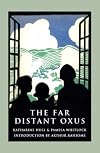
As a kid, this was one of my very favorite books. I read and re-read it. I don't think I was aware how old it was at the time. It was published in 1937. It was written by two girls, ages 14 and 15, who submitted their manuscript to their favorite author, Arthur Ransome.
I've just finished reading his 'Swallows and Amazons,' which made me think of this book. Having now read both, it's very very clear how blatantly influenced by that book Hull and Whitlock were. This story is an homage to show more Ransome: a version of his story with their own ideal vacation, drawing on their own summer experiences.
Here, the young people are spending their holiday on the moors - with ponies for them to ride and explore. Inspired by the poetry they're read, they transpose an exotic imaginary landscape onto the English countryside, imbuing everything they see with magic.
Unlike in Ransome's book, there's a hint of innocent romance here (involving a tall, dark stranger, of course) - which, yes, I appreciated as a girl. But mostly it's memorable for its perfect description of how the love of reading can add richness to everything one experiences on a daily basis. And of course, there're the ponies.
There are two sequels to this book, which I've never had the opportunity to read. I'll give interlibrary loan a shot... show less
I've just finished reading his 'Swallows and Amazons,' which made me think of this book. Having now read both, it's very very clear how blatantly influenced by that book Hull and Whitlock were. This story is an homage to show more Ransome: a version of his story with their own ideal vacation, drawing on their own summer experiences.
Here, the young people are spending their holiday on the moors - with ponies for them to ride and explore. Inspired by the poetry they're read, they transpose an exotic imaginary landscape onto the English countryside, imbuing everything they see with magic.
Unlike in Ransome's book, there's a hint of innocent romance here (involving a tall, dark stranger, of course) - which, yes, I appreciated as a girl. But mostly it's memorable for its perfect description of how the love of reading can add richness to everything one experiences on a daily basis. And of course, there're the ponies.
There are two sequels to this book, which I've never had the opportunity to read. I'll give interlibrary loan a shot... show less

This was written and illustrated by two teenage girls in the 1930s. They sent their manuscript to Swallows & Amazons author Arthur Ransome, who helped them get it published. I remember reading it when I was about 11, and how much I enjoyed it. I had almost forgotten it and was delighted to find a reissued edition many years later. For some reason the children in it pretend to be Persian and worship Ahura Mazda, naming their Somerset surroundings after parts of Afghanistan and northern India. show more There's a lovely open-air feel to the book, and the children's spirited independence and imagination was quite stirring to me as a child. I never liked Arthur Ransome though! And I positively hated Enid Blyton. show less
Lists
Awards


You May Also Like


Associated Authors
Statistics
- Works
- 4
- Members
- 168
- Popularity
- #126,678
- Rating
- 4.0
- Reviews
- 14
- ISBNs
- 4