
Bill Gunston (1927–2013)
Author of Jane's Fighting Aircraft of World War II
About the Author
Bill Gunston was born in London. He was educated at the University of Durham -- under the auspices of the Royal Air Force -- and at London University. During his RAF service 1945-48, he piloted 93 types of aircraft. In 1951, he joined the staff of Flight International and became the magazine's show more technical editor in 1955. In 1970, Gunston "retired" and began writing. Since then, he has written 362 books, countless reports, and several thousand magazine articles. He also contributes to video, movie, and television scripts, and has acted as an expert witness in a celebrated U.S. aviation manufacturing dispute. He is currently editor of Jane's Aero-Engines, a renowned guide dedicated to every gas-turbine engine used for manned aircraft. Gunston is a Fellow of the Royal Aeronautical Society and, in 1995, was awarded the Order of the British Empire (OBE) for services to aviation writing. show less
Series
Works by Bill Gunston
Modern Air Combat: The Aircraft, Tactics and Weapons Employed in Aerial Warfare Today (1983) 178 copies
Illustrated Encyclopedia of Combat Aircraft of World War II: A technical directory of the warplanes of 1939-1945 (1978) 100 copies, 2 reviews
The Development of Piston Aero Engines: From the Wrights to Microlights : A Century of Evolution and Still a Power to Be Reckoned With (1993) 48 copies, 5 reviews
An Illustrated Guide to Future Fighters and Combat Aircraft (Illustrated Guides Series) (1984) 44 copies, 1 review
The Air Traveler's Handbook: The Complete Guide to Air Travel, Airplanes, and Airports (1978) 38 copies
Warplanes Of The Future: The Most Exciting Combat Aircraft Being Designed Today To Face The Threat Of Wars Tomorrow (1985) 35 copies
Aircraft of the Soviet Union: The encyclopaedia of Soviet aircraft since 1917 (1983) 29 copies, 1 review
World Encyclopaedia of Aircraft Manufacturers: From the Pioneers to the Present Day (1993) 26 copies, 2 reviews
Jet Bombers: From the Messerschmitt Me 262 to the Stealth B-2 (Osprey modern military) (1993) 21 copies
Fedden - the Life of Sir Roy Fedden (Rolls-Royce Heritage Trust Historic Series No. 26) (1998) 15 copies
El Tercer Reich: Luftwaffe, Goering y la fuerza excepcional de los Stuka, Messerschmitt, Heinkel... (1901) 3 copies
Guía ilustrada de los cazas y aviones de ataque aliados de la segunda guerra mundial (II) (1995) 3 copies
Fighters 1914-1939 3 copies
Les Fusées et missiles d'aujourd'hui (Grande encyclopédie visuelle de l'aéronautique.) (1979) 3 copies
Caças do Eixo da II Guerra Mundial 2 copies
Histoire de l'aviation militaire 2 copies
Bombardeiros da II Guerra Mundial 2 copies
Military Aircraft 2 copies
Guía ilustrada de los cazas y aviones de ataque aliados de la segunda guerra mundial (I) (1995) 2 copies
Caças e aviões de ataque modernos 2 copies
Moderne jagers en aanvalsvliegtuigen 2 copies
Guía ilustrada de Cazas y Aviones de Ataque, Italianos y Japoneses de la Segunda Guerra Mundial (1986) 2 copies
Visual Science- Water 1 copy
Ciência Visual - Água 1 copy
Helicopters in oorlogstijd 1 copy
Fighters of World War II 1 copy
Korszerű vadász- és csapásmérő repülőgépek alapinformációk napjaink 53 harcirepülőgép-típusáról (1994) 1 copy
MÍSSEIS AR-AR E ANTITANQUE 1 copy
Combat aerien moderne 1 copy
Warplanes 1 copy
Caccia e aerei d'attacco moderni : I 60 più moderni e interessanti aerei militari di tutto il mondo 1 copy
Lotnictwo; Pierwsze 100 LAT 1 copy
Jet and Turbine Aero Engines 1 copy
A korszerű harci repülőgépek enciklopédiája [ A rendszerben lévő katonai repülőgépek fejlesztése és adatai ] (1998) 1 copy
Die Geschichte der Luftfahrt 1 copy
CAÇAS DA OTAN 1 copy
Combat Aircraft 1 copy
Associated Works
MiG-21 'Fishbed': The World's Most Widely Used Supersonic Fighter (Aerofax) (1996) — Author — 26 copies, 1 review
Tagged
Common Knowledge
- Legal name
- Gunston, William Tudor
- Other names
- Gunston, W.T.
- Birthdate
- 1927-03-01
- Date of death
- 2013-06-01
- Gender
- male
- Education
- Pinner County Grammar School
University of Durham
University of London - Occupations
- author
flying instructor
editor - Organizations
- Royal Air Force
Flight International Magazine
Circle of Aviation Writers
Royal Aeronautical Society
Jane's - Awards and honors
- Order of the British Empire (Officer, 1996)
- Nationality
- UK
- Birthplace
- London, Middlesex, England, UK
- Map Location
- England, UK
Members
Reviews
The Development of Piston Aero Engines: From the Wrights to Microlights : A Century of Evolution and Still a Power to Be Reckoned With by Bill Gunston
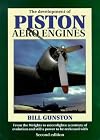
This 1993 book is written by Bill Gunston, noted aviation writer and former Royal Air Force pilot. The topic is a daunting one where the author is challenged to chart the history of a technology yet make that history legible to readers who may not be technically oriented. Let's see how Gunston approaches that ideal.
This is a slim volume for the topic--a mere 222 pages. Gunston starts with an introduction that broadly outlines his topic, following that with two sections of text. Section I is show more the shorter of the two at 93 pages wherein Gunston explains how a piston aircraft engine works and is different from other types of internal combustion engines. There are four chapters in this section: Basic Principles; Engine Cycles; Engine Design I; and Engine Design II. Each chapter includes historical examples to highlight the author's discussion. Section I is where some readers' eyes may gloss over because of the scientific and engineering fundamentals are discussed, but this section is important to understand what is coming in Section II.
Sectin II is the history part of this book organized into another four chapters arranged chronologically: The Dawn of Powered Flight; Between the World Wars; The Big-engine Peak; and Piston Engines Today and Tomorrow. That last chapter also includes a contemporary (early 1990's) listing of general aircraft engines and manufacturers/designers, the last stronghold of the aircraft piston engine. Gunston follows Section II with a list of piston engine aircraft speed records, an appendix of abbreviations, a brief bibliography, and an index. The author is a noted writer of the old school who did not believe in footnotes/endnotess; however, Gunston's reputation is such that those appendages are not really needed.
This is a useful and needed primer for readers interested in this admittedly narrow-scoped topic. I wish I had read this book prior to my reading Whitney's "Vees for Victory", as what Gunston discusses would have clarified at least some of what Whitney was trying to say in his book. My Gunston schooling has already come in handy on my current read, Calum Douglas' "The Secret Horsepower Race". Gunston's work shows how the intricate interplay between mechanical engineering, materials science, fuels chemistry, and economics can make or break a particular concept, engine, or company. This book is profusely illustrated, which aids the reader in understandng the concepts and history in Gunston's text.
Overall this book is a must read for those with an interest in the history of technology and desires a basic understanding of aircraft internal combustion engines before embarking on deeper dives in more specialized aircraft engine books. show less
This is a slim volume for the topic--a mere 222 pages. Gunston starts with an introduction that broadly outlines his topic, following that with two sections of text. Section I is show more the shorter of the two at 93 pages wherein Gunston explains how a piston aircraft engine works and is different from other types of internal combustion engines. There are four chapters in this section: Basic Principles; Engine Cycles; Engine Design I; and Engine Design II. Each chapter includes historical examples to highlight the author's discussion. Section I is where some readers' eyes may gloss over because of the scientific and engineering fundamentals are discussed, but this section is important to understand what is coming in Section II.
Sectin II is the history part of this book organized into another four chapters arranged chronologically: The Dawn of Powered Flight; Between the World Wars; The Big-engine Peak; and Piston Engines Today and Tomorrow. That last chapter also includes a contemporary (early 1990's) listing of general aircraft engines and manufacturers/designers, the last stronghold of the aircraft piston engine. Gunston follows Section II with a list of piston engine aircraft speed records, an appendix of abbreviations, a brief bibliography, and an index. The author is a noted writer of the old school who did not believe in footnotes/endnotess; however, Gunston's reputation is such that those appendages are not really needed.
This is a useful and needed primer for readers interested in this admittedly narrow-scoped topic. I wish I had read this book prior to my reading Whitney's "Vees for Victory", as what Gunston discusses would have clarified at least some of what Whitney was trying to say in his book. My Gunston schooling has already come in handy on my current read, Calum Douglas' "The Secret Horsepower Race". Gunston's work shows how the intricate interplay between mechanical engineering, materials science, fuels chemistry, and economics can make or break a particular concept, engine, or company. This book is profusely illustrated, which aids the reader in understandng the concepts and history in Gunston's text.
Overall this book is a must read for those with an interest in the history of technology and desires a basic understanding of aircraft internal combustion engines before embarking on deeper dives in more specialized aircraft engine books. show less
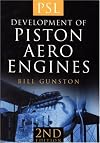
Nice historical overview of the evolution of piston engines. It explains the details pertaining to piston engine mechanics, in a physical perspective, and their evolution. One gets the feeling maybe some areas could be a bit more explored but it is, anyway, a very good overview of history and a good starting point to further investigate on this subject.

I've been a Bill Gunston fan for decades but only this year (2010) came across this book which was written in 1969. It does cover in detail not only the subject vehicles, but also the theory and practical uses. The final part of the book projects eventual uses and sadly after forty years, almost none of his visions have come to past. I want my atomic powered ocean going hovercraft! Recommend for the enthusiast only.
An Illustrated Guide to Future Fighters and Combat Aircraft (Illustrated Guides Series) by Bill Gunston

End of 1980s and mid 1990s were times where high technology applications to the aerospace industry in particular where awed at and people wrote about it (information was much more available I have a feeling than it is case today, or there was no information overload like today that IMHO has somewhat blocking nature). From introduction of fully digital cockpit demonstrators (today called full glass cockpits), concepts of FBW flight concts, to concepts of machines that can fly almost in space, show more VTOLs and tiltrotors and various multipurpose light fighters used for attack and air supremacy roles, like Tigershark and Mitsubishi CCV. Who can forget EPA and later competing French designs that at the end gave birth to Typhoon, revolutionary Grumman X29 or various Sikorsky prototypes of hi speed choppers. This was also time when Russian combat aircraft started becoming more known in the West, from air superiority fighters to heavy bombers and helicopters.
Excellent overview of technologies that are still in operational use and get ever improved.
Very informative little book. Highly recommended to all fans of aerospace technology. show less
Excellent overview of technologies that are still in operational use and get ever improved.
Very informative little book. Highly recommended to all fans of aerospace technology. show less
You May Also Like


Associated Authors
Statistics
- Works
- 254
- Also by
- 1
- Members
- 5,387
- Popularity
- #4,625
- Rating
- 3.7
- Reviews
- 41
- ISBNs
- 479
- Languages
- 10
- Favorited
- 4