
About the Author
Image credit: Photograph by Ellen Datlow
Series
Works by Ysabeau S. Wilce
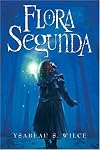
Flora Segunda: Being the Magickal Mishaps of a Girl of Spirit, Her Glass-Gazing Sidekick, Two Ominous Butlers (One Blue), a House with Eleven Thousand Rooms, and a Red Dog (2007) 906 copies, 61 reviews
Flora's Dare: How a Girl of Spirit Gambles All to Expand Her Vocabulary, Confront a Bouncing Boy Terror, and Try to Save Califa from a Shaky Doom (Despite Being Confined to Her… (2008) 323 copies, 20 reviews
Flora's Fury: How a Girl of Spirit and a Red Dog Confound Their Friends, Astound Their Enemies, and Learn the Importance of Packing Light (2012) 181 copies, 16 reviews
Metal More Attractive 2 copies
One Last, Great Adventure 1 copy
Quartermaster Returns 1 copy
Associated Works
Steampunk! An Anthology of Fantastically Rich and Strange Stories (2011) — Contributor — 759 copies, 26 reviews
The Year's Best Fantasy & Horror 2007: 20th Annual Collection (2007) — Contributor — 222 copies, 3 reviews
Mad Hatters and March Hares: All-New Stories from the World of Lewis Carroll's Alice in Wonderland (2017) — Contributor — 144 copies, 11 reviews
Tagged
Common Knowledge
- Birthdate
- 20th Century
- Gender
- female
- Education
- Clarion West (2002)
- Occupations
- military historian
- Nationality
- USA
- Places of residence
- Chicago, Illinois, USA
- Associated Place (for map)
- Illinois, USA
Members
Reviews

Flora Nemain Fydraaca ov Fydraaca was the second Flora - Flora Segunda - born to her illustrious family, one of the most powerful in the city of Califa. The legacy of that other, earlier Flora - the one whose loss in the War had driven her father, Poppy, mad - hung over the great Fydraaca household, Crackpot Hall, with its eleven thousand rooms, all falling into disrepair in the absence of its magical Butler. As Flora (Segunda) reluctantly prepares for her upcoming Catorcena, or fourteenth show more birthday celebration, after which she will be considered an adult, and sent off to the Barracks, where all the Fydraacas - being a military family - are trained, she finds herself being drawn into the mystery of Valefor, the magical denizen of Crackpot and her family's banished Butler, as well as an adventure involving the Dainty Pirate - aka Boy Hansgen, the sidekick of Flora's own personal hero, Nini Mo, erstwhile leader of Califa's Rangers. Can Flora, together with her best friend Udo, triumph in her efforts to free both Valefor and Boy Hansgen, or will this new connection to Valefor drag her into Nothingness, and the Abyss...?
Despite its undeniable virtues - its highly original (and convincing) world-building, its fascinating use of language - I was convinced for approximately 90% of my read that Flora Segunda was going to be no more than a solid, enjoyable three-star title for me. I did appreciate the aforementioned world-building, of course - the alternate Californian/Mexican setting, with Califa being dominated by the Aztec-like Huitzils - as well as the mixture of Spanish, Italian(?) and Icelandic language, in the vocabulary of Califa. As someone who's studied Icelandic, I was thrilled to see that the eð - the Icelandic letter ð, pronounced with a voiced "th" sound, as in the beginning of the English word them, and distinguished from the unvoiced "th" sound, as in the English word thorn, which is represented by the letter þ - kept appearing, in names like Landaðon and Haðraaða!
I also appreciated the fact that this was a world of true gender equality, in which women held the same rank as men (Flora's mother is the Warlord's general), and was delighted to learn, through our discussion of the book, over in the Children's Fiction Club which I run on another site, that the idea of "Califa" is actually taken from the work of fifteenth-century Spanish author Garci Rodríguez de Montalvo, who wrote a series of adventure stories about the explorer Esplandián, and his encounters with Queen Califia, of the island of California (thanks, Bun!). I think I may have to track down some of these stories...
But despite these undeniable virtues, and my interest in the city of Califa, its customs and history, I couldn't say that I was emotionally involved with the characters, to any great extent, until the final section of the book. It was only when Flora met the earlier incarnation of Poppy, while fleeing through Bilskinir House, that I suddenly found myself gripped with any sense of urgency, or concern for the fate of the heroine. Then, on the very last page of the book, when Flore reflects upon the fact that, despite the challenges still ahead, and the failures behind, she had escaped from the worst fate of all - that of Nothingness - it all snapped into place for me, and my appreciation for the book rose dramatically. It suddenly seemed to me that this was the story of a common teenage experience - feeling as if one were a "nothing," being afraid that one would never be anything but a "nothing" - clothed in an appealingly fantastic shell. I've no idea if that was the author's intention, but it lent the entire story an emotional significance, for me, that it hadn't previously had, and convinced me that I needed to read the next installment, Flora's Dare!
I don't know that others will interpret the story as I did, but I think that all fantasy lovers - particularly those who relish intricate and entirely unfamiliar worlds - will enjoy it. show less
Despite its undeniable virtues - its highly original (and convincing) world-building, its fascinating use of language - I was convinced for approximately 90% of my read that Flora Segunda was going to be no more than a solid, enjoyable three-star title for me. I did appreciate the aforementioned world-building, of course - the alternate Californian/Mexican setting, with Califa being dominated by the Aztec-like Huitzils - as well as the mixture of Spanish, Italian(?) and Icelandic language, in the vocabulary of Califa. As someone who's studied Icelandic, I was thrilled to see that the eð - the Icelandic letter ð, pronounced with a voiced "th" sound, as in the beginning of the English word them, and distinguished from the unvoiced "th" sound, as in the English word thorn, which is represented by the letter þ - kept appearing, in names like Landaðon and Haðraaða!
I also appreciated the fact that this was a world of true gender equality, in which women held the same rank as men (Flora's mother is the Warlord's general), and was delighted to learn, through our discussion of the book, over in the Children's Fiction Club which I run on another site, that the idea of "Califa" is actually taken from the work of fifteenth-century Spanish author Garci Rodríguez de Montalvo, who wrote a series of adventure stories about the explorer Esplandián, and his encounters with Queen Califia, of the island of California (thanks, Bun!). I think I may have to track down some of these stories...
But despite these undeniable virtues, and my interest in the city of Califa, its customs and history, I couldn't say that I was emotionally involved with the characters, to any great extent, until the final section of the book. It was only when Flora met the earlier incarnation of Poppy, while fleeing through Bilskinir House, that I suddenly found myself gripped with any sense of urgency, or concern for the fate of the heroine. Then, on the very last page of the book, when Flore reflects upon the fact that, despite the challenges still ahead, and the failures behind, she had escaped from the worst fate of all - that of Nothingness - it all snapped into place for me, and my appreciation for the book rose dramatically. It suddenly seemed to me that this was the story of a common teenage experience - feeling as if one were a "nothing," being afraid that one would never be anything but a "nothing" - clothed in an appealingly fantastic shell. I've no idea if that was the author's intention, but it lent the entire story an emotional significance, for me, that it hadn't previously had, and convinced me that I needed to read the next installment, Flora's Dare!
I don't know that others will interpret the story as I did, but I think that all fantasy lovers - particularly those who relish intricate and entirely unfamiliar worlds - will enjoy it. show less
Flora Segunda : Being the magickal mishaps of a girl of spirit, her glass-gazing sidekick, two ominous butlers (one blue), a house with eleven thousand rooms, and a red dog by Ysabeau S. Wilce

Wow. This first book about Flora Fyrdraaca Segunda is amazing. I just hate-read a whole bunch of pretty awful, terrible books with very poor world-building, so it was completely refreshing to start Flora Segunda and be delighted by the fun, quirky elements of the setting. And then the book proved to be truly good and enjoyable, even without the reading it as a bad-book-chaser!
What I love most about Flora Segunda is the world-building. It's really fabulous with a lot of little details that show more many authors don't bother with, but which really made the book a joy to read — even when I got to the scary parts in the middle. I loved that not only do we get a well-fleshed world for the characters (though we don't see much of it in this book), but it extends to the type of language the characters use, how they dress, the things they value, and so on. It's all just very wonderful, and I don't think I've ever seen a setting quite like this one. It's very interesting in that it reminds me of Baja California, perhaps, because of Spanish-language influence, and the enemies of Flora and her family being inspired by the Aztecs (apparently?), but there are also a lot of elements that made me think of inspiration from the British Isles or Latin and Rome.
The Aztec-inspired enemes are the Huitzels, and they were at war with Flora's home country, until a generation or two ago, when they captured Califa, the city where she lives. These Huitzels are terrifying, because of their use of birds as totems and even their resemblance to the creatures (thus the derogatory nickname "Birdies"). And throughout the book, I did find them to be quite scary! I was never entirely sure what to expect from them when they appeared, and I found myself investing a lot in Flora, because she's such a strong character.
But though Flora is a strong character, she's not necessarily a strong person. I should say that she's very realistic for a thirteen year old - a little bit rebellious against her family, a little bit grumpy and lazy when it comes to doing homework or tidying the house, and with huge dreams. Unfortunately for her, the Fyrdraaca family traditionally enters the military at age 14, so older sister Idden is away with her unit, and Mamma is the general in charge of the army, so is away from home often. Flora is left to take care of the huge-enormous house all by herself - including watching after her father, who has taken a bit of a bad turn after being captured by the Huitzels when Flora was very young. (Besides which, Flora is Segunda because there was another Flora who died in childhood, and our Flora Segunda is acutely aware of being "the second".)
The story is about the days leading up to the Catorcena celebration - a huge party for Flora's fourteenth birthday, which is especially big and important because the Fyrdraaca family is so old and her Mamma is the general (maybe the second most important person in all of Califa!). Left to her own devices, Flora hasn't got on very well at sewing her dress, sending the invitations, or writing her speech. If only the Fyrdraaca house, called Crackpot, still had its magical denizen to help with the upkeep, so that Flora wouldn't have to spend so much time cleaning up after Poppy or maybe the denizen could even help with the preparations...
Naturally, one thing happens and then another and Flora is caught in a magical problem (and her stern, commanding mother has specifically banned all magic when it comes to the family!), the house denizen Valefor is in trouble, and Poppy does keep making a mess of the kitchen! Plus, Flora and her best friend Udo's hero the Dainty Pirate has been captured and sentenced to death, and they have to save him.
As I mentioned earlier, some sections of the book were really scary! It was hard to watch as Flora took certain actions or failed to take actions for various reasons, but which I knew were going to be more trouble - and then just as it seemed that wouldn't be the case, and everything would be all right, I was proven correct in my suspicions, and it was all worse. This was very exciting to read, nail-biting even, but fun.
A lot of the suspense in the book is broken up by absolutely lush and gorgeous descriptions, fun slang that develops the setting further, and also Udo. I loved Udo. He wants to be just like the Dainty Pirate, and so he is obsessed with flamboyant fashion and manners - he loves nothing more than a big hat with an even bigger feather, if I understand correctly, and best of all when it's a garish color. He often bickers with Flora or gives her a bit of help, as a good best friend / sidekick does. I was also impressed that his mother married an entire set of identical triplets. I'm not at all sure how they managed it, but it was another of the great quirky little characteristics and stage-setting elements that make Flora Segunda so wonderful.
This book is a must read, and I'm so very grateful that the author of another of my favorite books of this type ("Kat, Incorrible") mentioned that Flora Segunda was a Kindle Daily Deal so that I finally, finally acquired it after years of it being on my TBR list! show less
What I love most about Flora Segunda is the world-building. It's really fabulous with a lot of little details that show more many authors don't bother with, but which really made the book a joy to read — even when I got to the scary parts in the middle. I loved that not only do we get a well-fleshed world for the characters (though we don't see much of it in this book), but it extends to the type of language the characters use, how they dress, the things they value, and so on. It's all just very wonderful, and I don't think I've ever seen a setting quite like this one. It's very interesting in that it reminds me of Baja California, perhaps, because of Spanish-language influence, and the enemies of Flora and her family being inspired by the Aztecs (apparently?), but there are also a lot of elements that made me think of inspiration from the British Isles or Latin and Rome.
The Aztec-inspired enemes are the Huitzels, and they were at war with Flora's home country, until a generation or two ago, when they captured Califa, the city where she lives. These Huitzels are terrifying, because of their use of birds as totems and even their resemblance to the creatures (thus the derogatory nickname "Birdies"). And throughout the book, I did find them to be quite scary! I was never entirely sure what to expect from them when they appeared, and I found myself investing a lot in Flora, because she's such a strong character.
But though Flora is a strong character, she's not necessarily a strong person. I should say that she's very realistic for a thirteen year old - a little bit rebellious against her family, a little bit grumpy and lazy when it comes to doing homework or tidying the house, and with huge dreams. Unfortunately for her, the Fyrdraaca family traditionally enters the military at age 14, so older sister Idden is away with her unit, and Mamma is the general in charge of the army, so is away from home often. Flora is left to take care of the huge-enormous house all by herself - including watching after her father, who has taken a bit of a bad turn after being captured by the Huitzels when Flora was very young. (Besides which, Flora is Segunda because there was another Flora who died in childhood, and our Flora Segunda is acutely aware of being "the second".)
The story is about the days leading up to the Catorcena celebration - a huge party for Flora's fourteenth birthday, which is especially big and important because the Fyrdraaca family is so old and her Mamma is the general (maybe the second most important person in all of Califa!). Left to her own devices, Flora hasn't got on very well at sewing her dress, sending the invitations, or writing her speech. If only the Fyrdraaca house, called Crackpot, still had its magical denizen to help with the upkeep, so that Flora wouldn't have to spend so much time cleaning up after Poppy or maybe the denizen could even help with the preparations...
Naturally, one thing happens and then another and Flora is caught in a magical problem (and her stern, commanding mother has specifically banned all magic when it comes to the family!), the house denizen Valefor is in trouble, and Poppy does keep making a mess of the kitchen! Plus, Flora and her best friend Udo's hero the Dainty Pirate has been captured and sentenced to death, and they have to save him.
As I mentioned earlier, some sections of the book were really scary! It was hard to watch as Flora took certain actions or failed to take actions for various reasons, but which I knew were going to be more trouble - and then just as it seemed that wouldn't be the case, and everything would be all right, I was proven correct in my suspicions, and it was all worse. This was very exciting to read, nail-biting even, but fun.
A lot of the suspense in the book is broken up by absolutely lush and gorgeous descriptions, fun slang that develops the setting further, and also Udo. I loved Udo. He wants to be just like the Dainty Pirate, and so he is obsessed with flamboyant fashion and manners - he loves nothing more than a big hat with an even bigger feather, if I understand correctly, and best of all when it's a garish color. He often bickers with Flora or gives her a bit of help, as a good best friend / sidekick does. I was also impressed that his mother married an entire set of identical triplets. I'm not at all sure how they managed it, but it was another of the great quirky little characteristics and stage-setting elements that make Flora Segunda so wonderful.
This book is a must read, and I'm so very grateful that the author of another of my favorite books of this type ("Kat, Incorrible") mentioned that Flora Segunda was a Kindle Daily Deal so that I finally, finally acquired it after years of it being on my TBR list! show less
Flora's Fury: How a Girl of Spirit and a Red Dog Confound Their Friends, Astound Their Enemies, and Learn the Importance of Packing Light by Ysabeau S. Wilce

Flora's Fury: How a Girl of Spirit and a Red Dog Confound Their Friends, Astound Their Enemies, and Learn the Importance of Packing Light by Ysabeau Wilce is a worthy continuation to an excellent series.
In this book, Flora is a cadet at the Barracks, having put aside her childhood dreams of being a Ranger (at least for a while). She's on assignment as a clerk in the General's office, so her duties are limited to errands, paperwork, and baby-minding. Her long-time friendship with Udo is show more strained, she's unsatisfied with her work, and she has certain plans of her own. She knows she shouldn't be mucking around in the Current, but there are a few things she just has to know -- and to find them out, she will need to use magic. Her spell-casting attempt is interrupted by a mysterious stranger, and shortly thereafter, she finds herself on a voyage that will take her over sea and land, to places she's barely even heard of, and she will learn much more than just the answers to her questions. She'll also learn a few hard lessons about actions and consequences . . . and maybe a little bit about romance, as well.
Flora's high-spirited hijinks will be familiar to fans of the series. I was particularly impressed how, in this book, Flora really seems to mature. By the end of the book, she's making decisions on her own -- not to please or spite her parents, and not thoughtlessly following her whims, but weighing consequences and choosing the course of action that she deems best. She also gives up something precious at one point in the story (I'm trying to avoid spoilers, so sorry if this is getting really vague), and the results of that were poignant and hinted, I hope, at things to come in future volumes. Flora will always be fiery and temperamental, but I feel that she's developing into a truly strong woman, and becoming someone I'd actually like to know.
Some reviews I have read have speculated that this is the end of the series for Flora, but I think that can hardly be the case -- there are too many loose ends, and all of Califa is poised on the brink of conflict. Here's hoping that we'll see a lot more of Flora in the not-too-distant future! show less
In this book, Flora is a cadet at the Barracks, having put aside her childhood dreams of being a Ranger (at least for a while). She's on assignment as a clerk in the General's office, so her duties are limited to errands, paperwork, and baby-minding. Her long-time friendship with Udo is show more strained, she's unsatisfied with her work, and she has certain plans of her own. She knows she shouldn't be mucking around in the Current, but there are a few things she just has to know -- and to find them out, she will need to use magic. Her spell-casting attempt is interrupted by a mysterious stranger, and shortly thereafter, she finds herself on a voyage that will take her over sea and land, to places she's barely even heard of, and she will learn much more than just the answers to her questions. She'll also learn a few hard lessons about actions and consequences . . . and maybe a little bit about romance, as well.
Flora's high-spirited hijinks will be familiar to fans of the series. I was particularly impressed how, in this book, Flora really seems to mature. By the end of the book, she's making decisions on her own -- not to please or spite her parents, and not thoughtlessly following her whims, but weighing consequences and choosing the course of action that she deems best. She also gives up something precious at one point in the story (I'm trying to avoid spoilers, so sorry if this is getting really vague), and the results of that were poignant and hinted, I hope, at things to come in future volumes. Flora will always be fiery and temperamental, but I feel that she's developing into a truly strong woman, and becoming someone I'd actually like to know.
Some reviews I have read have speculated that this is the end of the series for Flora, but I think that can hardly be the case -- there are too many loose ends, and all of Califa is poised on the brink of conflict. Here's hoping that we'll see a lot more of Flora in the not-too-distant future! show less
Flora Segunda: Being the Magickal Mishaps of a Girl of Spirit, her Glass-Gazing Sidekick, Two Ominous Butlers One Blue, a House with Eleven Thousand Rooms, and a Red Dog by Ysabeau S. Wilce
This book has such potential to be a fun, magical story for young adults, but the racism and ableism really ruined the experience for me.
Book content warnings:
ableism!
racism
Flora's world is a parallel universe set in what's probably California, USA (Califa). World building relies heavily on the author's past training as a military historian, and although that's very admirable, I'm still a bit side-eying the decision to fill a fictional world, where an author has total power over, with show more cultures based on war. Especially given what's going on in our world today.
Anyway, Flora Segunda is the daughter of the famous General, basically one of the most powerful people in Califa--second only to the Warlord himself. She's expected to train at the Barracks when she's older (replacing college in this universe, I believe), though what she really wants to do is become a Ranger and study the outlawed Magick like her idol, Nini Mo.
But she also has to deal with the powerful and banished Butler of her house, who begs to be restored and, to do it, may have to connect himself to Flora in a way she could come to regret later.
The plot line becomes a little busy, and halfway through, I wasn't quite sure what was the overall plot. Flora's situation with her magickal Butler? Or what was happening with the Rangers? When the story went off to explore one of these plots, it would completely forget about the other one. It felt like two ministories smashed together.
But okay, to what made me dislike the novel. Flora's father, Poppy, is a man portrayed as having mental illness. Specifically, PTSD and perhaps others as well. He was a prisoner of war, he lost people he loved, etc. He experiences mood swings, periods where he is not himself, doesn't remember who Flora is, etc. And yet Flora's opinion of him is unchangingly: "people go through tough stuff all the time; why is Poppy special?" As an author trained as a military historian, I would expect Ysabeau S. Wilce to be more sympathetic to people with PTSD.
Not only does Flora think this about her father, she also hates "taking care of him so much" that she thinks he's an unbearable burden (thanks for reminding me also--a person with mental and physical disabilities--that I'm a burden to my family and loved ones). If this were only her thoughts at the beginning of the book, and if they were later challenged and corrected, it wouldn't be so bad. But this never happens. Instead, she has a nice "talk" with him, and it's his responsibility to correct his behavior, and basically "overcome his mental illness" to take care of his family better. Bullshit. Pure and utter bullshit.
There's also the very racist world building here. Califa seems mostly populated by white latin@s. Or at least, the main characters are all white latin@s. Is this in itself a problem? No, of course not. But the problem lies when the "villains" of the story are all based on Aztec culture, called the Huitzils (the "Huitzil Overlords"). This culture is filled with the most absolute bloodthirsty and vile people. Flora even fears they've flavored her hot chocolate with blood. It's just . . . tiring. Sure, the Aztecs had many rituals long ago that were far different from our own, but to like . . . present their culture in the same time/universe our own in a similar universe and write only about their savagery and none of their wisdom . . . seems incredibly racist.
So overall, what could've been a great adventure was spoiled by some nasty ableism and racism. It could've been easily avoided, so I don't know what possessed this author to add it in. show less
Book content warnings:
ableism!
racism
Flora's world is a parallel universe set in what's probably California, USA (Califa). World building relies heavily on the author's past training as a military historian, and although that's very admirable, I'm still a bit side-eying the decision to fill a fictional world, where an author has total power over, with show more cultures based on war. Especially given what's going on in our world today.
Anyway, Flora Segunda is the daughter of the famous General, basically one of the most powerful people in Califa--second only to the Warlord himself. She's expected to train at the Barracks when she's older (replacing college in this universe, I believe), though what she really wants to do is become a Ranger and study the outlawed Magick like her idol, Nini Mo.
But she also has to deal with the powerful and banished Butler of her house, who begs to be restored and, to do it, may have to connect himself to Flora in a way she could come to regret later.
The plot line becomes a little busy, and halfway through, I wasn't quite sure what was the overall plot. Flora's situation with her magickal Butler? Or what was happening with the Rangers? When the story went off to explore one of these plots, it would completely forget about the other one. It felt like two ministories smashed together.
But okay, to what made me dislike the novel. Flora's father, Poppy, is a man portrayed as having mental illness. Specifically, PTSD and perhaps others as well. He was a prisoner of war, he lost people he loved, etc. He experiences mood swings, periods where he is not himself, doesn't remember who Flora is, etc. And yet Flora's opinion of him is unchangingly: "people go through tough stuff all the time; why is Poppy special?" As an author trained as a military historian, I would expect Ysabeau S. Wilce to be more sympathetic to people with PTSD.
Not only does Flora think this about her father, she also hates "taking care of him so much" that she thinks he's an unbearable burden (thanks for reminding me also--a person with mental and physical disabilities--that I'm a burden to my family and loved ones). If this were only her thoughts at the beginning of the book, and if they were later challenged and corrected, it wouldn't be so bad. But this never happens. Instead, she has a nice "talk" with him, and it's his responsibility to correct his behavior, and basically "overcome his mental illness" to take care of his family better. Bullshit. Pure and utter bullshit.
There's also the very racist world building here. Califa seems mostly populated by white latin@s. Or at least, the main characters are all white latin@s. Is this in itself a problem? No, of course not. But the problem lies when the "villains" of the story are all based on Aztec culture, called the Huitzils (the "Huitzil Overlords"). This culture is filled with the most absolute bloodthirsty and vile people. Flora even fears they've flavored her hot chocolate with blood. It's just . . . tiring. Sure, the Aztecs had many rituals long ago that were far different from our own, but to like . . . present their culture in the same time/universe our own in a similar universe and write only about their savagery and none of their wisdom . . . seems incredibly racist.
So overall, what could've been a great adventure was spoiled by some nasty ableism and racism. It could've been easily avoided, so I don't know what possessed this author to add it in. show less
Lists
Awards


You May Also Like


Associated Authors
Statistics
- Works
- 10
- Also by
- 13
- Members
- 1,562
- Popularity
- #16,507
- Rating
- 3.8
- Reviews
- 101
- ISBNs
- 24
- Languages
- 2
- Favorited
- 9