
Gerald R. Allen
Author of Reef Fish Identification - Tropical Pacific
About the Author
Dr. Gerald R. Allen is the author of more than 400 scientific articles and 35 books. He served as senior curator of fishes at the Western Australian Museum (1974-1997) and is an international authority on coral reef fishes and freshwater fishes of Australia and New Guinea. Since leaving the museum show more he has served as a private consultant for Conservation International. He is also the recipient of several prestigious international awards for lifelong contributions to science-including the Kay Radway Allen Award (Australia), Bleeker Award (Japan), Robert K. Johnson Award (USA), and NOGI Award (USA). show less
Works by Gerald R. Allen
Reef Fishes of the Indian Ocean: A Pictorial Guide to the Common Reef Fishes of the Indian Ocean (Pacific Marine Fishes) (1987) 3 copies
A Rapid Marine Biodiversity Assessment of Milne Bay Province, Papua New Guinea--Survey II (2000): RAP Series No. 29 (2003) 1 copy
A Rapid Biodiversity Assessment of the Coral Reefs of Milne Bay, Papua New Guinea Series No. 11 (1998) 1 copy
Cockatiel handbook 1 copy
Tagged
Common Knowledge
- Legal name
- Allen, Gerald Robert
- Birthdate
- 1942
- Gender
- male
- Education
- University of Hawaii (PhD|Marine zoology)
- Occupations
- museum curator
scientist
author
ichthyologist
conservationist - Organizations
- Conservation International
Australian Society for Fish Biology
American Society of Ichthyology and Herpetology - Awards and honors
- K. Radway Allen Award for Outstanding Contributions to Australian Ichthyological Science
- Nationality
- USA (birth)
Australia - Birthplace
- Los Angeles, California, USA
- Places of residence
- Hawaii, USA
Sydney, New South Wales, Australia
Perth, Western Australia, Australia - Associated Place (for map)
- USA
Members
Reviews
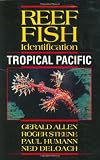
Before we found Kuiter’s 7 Tonozuka’s Indonesian Reef Fishes book, this Reef Fish Identification Tropical Pacific by Allen et al was our favourite. It is very comprehensive, and unlike many other books we had before this one has not only photos but proper text explaining the specific feature to identify each fish. This is important as many fishes, indeed many marine creatures, have similar look. Photographs alone are not enough to help novices like us to get the correct species.
The show more authors are all well known underwater photographers with photos featured in many books and magazines. They also authored similar reef creature books for other areas.
Martin still uses this book more than the Kuiter-Tonozuka one because he’s been using this as his fish bible for a while, hence is more familiar with it. One thing that is sometimes a bit annoying is because the common names used in the book are sometimes so bizarre it confuses us. These names are often so different from those found in other identification book. Of course the Latin names are still the same but common names are what people familiar with.
However considering this paperback is more affordable than the other one, it’s well worth it to include in one’s bookshelf, if one likes fishes, that is :) show less
The show more authors are all well known underwater photographers with photos featured in many books and magazines. They also authored similar reef creature books for other areas.
Martin still uses this book more than the Kuiter-Tonozuka one because he’s been using this as his fish bible for a while, hence is more familiar with it. One thing that is sometimes a bit annoying is because the common names used in the book are sometimes so bizarre it confuses us. These names are often so different from those found in other identification book. Of course the Latin names are still the same but common names are what people familiar with.
However considering this paperback is more affordable than the other one, it’s well worth it to include in one’s bookshelf, if one likes fishes, that is :) show less
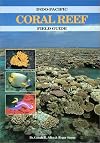
This was the first marine creature identification book that I ever bought. It is well worn, with pages sticky here and there from getting wet. Yes, this book has accompanied my dive trips. And even though I do not use it as much nowadays, I still consider it the best candidate for the first identification book.
It is good because it is very extensive, covering all sorts of plant and animals found in and near the sea. The book is organised into 25 chapters, each dedicated for a group of show more creatures. The subjects of the chapters are as follows: marine plants, foraminiferida, sponges, jellyfish, hydrozoans, sea anemones, corals, soft corals and sea fans, marine worms, crustaceans, sea shells, nudibranch and sea slugs, cephalopods, bryozoans, sea stars, brittle starts, feather stars, sea urchins, holothurians, ascidians, fishes, sea snakes, turtles, sea birds and mammals.
Covering as wide ranging subjects the 378 pages paperback only manages to touch briefly the subjects. Many of the creatures we found during a dive may not be found here, although most would. One other disadvantage of this book is the absence of text, which in the case of two similar creatures could prove unhelpful in distinguishing them. Still, if we don’t think the place we’re going to would have identification books, this would be a perfect book to bring. Also because this book has some marine creature group not dealt with in other books, we still consult it from time to time. show less
It is good because it is very extensive, covering all sorts of plant and animals found in and near the sea. The book is organised into 25 chapters, each dedicated for a group of show more creatures. The subjects of the chapters are as follows: marine plants, foraminiferida, sponges, jellyfish, hydrozoans, sea anemones, corals, soft corals and sea fans, marine worms, crustaceans, sea shells, nudibranch and sea slugs, cephalopods, bryozoans, sea stars, brittle starts, feather stars, sea urchins, holothurians, ascidians, fishes, sea snakes, turtles, sea birds and mammals.
Covering as wide ranging subjects the 378 pages paperback only manages to touch briefly the subjects. Many of the creatures we found during a dive may not be found here, although most would. One other disadvantage of this book is the absence of text, which in the case of two similar creatures could prove unhelpful in distinguishing them. Still, if we don’t think the place we’re going to would have identification books, this would be a perfect book to bring. Also because this book has some marine creature group not dealt with in other books, we still consult it from time to time. show less

Excellent guide to freshwater fish of Australia. Written for the enthusiastic hobbyist who would like to expand his or his options beyond just rainbowfish (although there are a lot of nice rainbowfish).
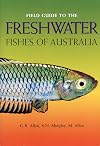
Includes secions on Primary freshwater families; Estuarine-freshwater families; Introduced families;
You May Also Like


Statistics
- Works
- 47
- Members
- 297
- Popularity
- #78,941
- Rating
- 4.2
- Reviews
- 5
- ISBNs
- 51
- Languages
- 3