
Ted Widmer
Author of Lincoln on the Verge: Thirteen Days to Washington
About the Author
Ted Widmer is a Distinguished Lecturer at Macaulay Honors College of the City University of New York. He writes actively about American history in The Washington Post, The New Yorker, and The New York Times, where he helped create the Disunion feature about the Civil War.
Image credit: Credit: Larry D. Moore, Texas Book Festival, Austin, TX, Nov. 1, 2008
Series
Works by Ted Widmer
American Speeches: Political Oratory from the Revolution to the Civil War (2006) — Editor — 236 copies
American Speeches: Political Oratory from Abraham Lincoln to Bill Clinton (Library of America) (2006) 228 copies, 1 review
New York Times: Disunion: Modern Historians Revisit and Reconsider the Civil War from Lincoln's Election to the Emancipation Proclamation (2013) — Editor — 108 copies
American Speeches: Political Oratory from Patrick Henry to Barack Obama: A Library of America Paperback Classic (2011) 19 copies
Lincoln As A Literary Genius 1 copy
Tagged
Common Knowledge
- Legal name
- Widmer, Edward Ladd
- Birthdate
- 1963
- Gender
- male
- Nationality
- USA
- Associated Place (for map)
- USA
Members
Reviews
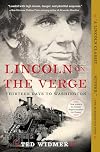
A wonderfully written account of the trip Lincoln took from Springfield, Illinois to Washington, DC, in February of 1861 to take the oath of office. Full of details and interesting side characters. It reads like a suspense novel, because we quickly come to understand the fraught times of the early 1860s, with a country beginning to separate and passions running high. Lincoln has received numerous death threats, and this trip involves a number of spies who go out and get a feel for the show more people, then report back their findings to Lincoln's party. Particularly treacherous is the trip through Baltimore, part of the Confederacy, where many are determined to keep him from Washington DC. Interestingly enough, the pro-Lincoln crowds were almost as dangerous, as they crowded around him relentlessly. Loved this book. show less
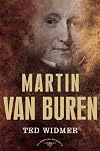
This is not a very long biography, but I have to say, its brevity is a feature, not a bug. Its very detailed and the author writes in a very compelling style and I feel like you get a very complete picture of Martin Van Buren, despite it not being an 800 page tome detailing every single aspect of Van Buren's life.
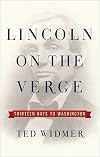
Although tagged as a Biography, this very readable account of Lincoln only covers 13 days of his life. On February 11, 1861 Lincoln began his journey to the Presidency in Springfield, Illinois aboard a train they called "The Special".
The train traveled 1,900, as Lincoln attempted to gather support from the industrial North. These States were vital to the war that Lincoln knew would come.
Lincoln was following Buchannan into the Oval Office. Buchannan's time
as President, known as the worst in show more history, was filled with corruption and cronyism with the Southern plantations. It was an eye-opener to see how our current political strife parallels what was happening in 1861 :
...the most depressing problem was the one that struck countless Europeans as the central paradox of American democracy. The ideals of the Declaration were hardly self-evident..
...even if Southern militias did not surround the Capitol, there was another way Lincoln's election could be turned back, striking for simplicity. On February 13th two boxes would be taken into the House chambers where they would be opened and the votes counted. But anything could happen in a city that that had effectively ceased to play by any rules. Perhaps the certificates had not been signed and sealed properly? Lincoln's enemies might declare a miscount, throwing the election into the House. Or leading Southerner's might just ask the Vice-President to become an "acting president"...
Before Lincoln left for Washington, Allan Pinkerton (Pinkerton Security) was hired to root out any trouble. Pinkerton uncovered several assassination plots along the route. The South was determined that Lincoln would never reach Washington.
As you read and travel the route with Lincoln, you watch a meek, "homely" man become an orator, who begins to emphasize the world ALL. As in "All men are created equal". While Lincoln was shouting for unity, Jefferson Davis was sworn in as the new President of The Confederacy. Every delay in Lincoln's arrival, for his inauguration, brought the Union closer to dissolution and war. Those who supported Lincoln came in droves to watch his train pass. Democracy was fraying at the seams...Lincoln helped Americans to feel that they were taking back their country from a cabal that was destroying its very purpose.
An excellent look at history-highly recommended
I received this book as a GR's Give Away-Thank you goodreads and thank you Simon and Schuster show less
The train traveled 1,900, as Lincoln attempted to gather support from the industrial North. These States were vital to the war that Lincoln knew would come.
Lincoln was following Buchannan into the Oval Office. Buchannan's time
as President, known as the worst in show more history, was filled with corruption and cronyism with the Southern plantations. It was an eye-opener to see how our current political strife parallels what was happening in 1861 :
...the most depressing problem was the one that struck countless Europeans as the central paradox of American democracy. The ideals of the Declaration were hardly self-evident..
...even if Southern militias did not surround the Capitol, there was another way Lincoln's election could be turned back, striking for simplicity. On February 13th two boxes would be taken into the House chambers where they would be opened and the votes counted. But anything could happen in a city that that had effectively ceased to play by any rules. Perhaps the certificates had not been signed and sealed properly? Lincoln's enemies might declare a miscount, throwing the election into the House. Or leading Southerner's might just ask the Vice-President to become an "acting president"...
Before Lincoln left for Washington, Allan Pinkerton (Pinkerton Security) was hired to root out any trouble. Pinkerton uncovered several assassination plots along the route. The South was determined that Lincoln would never reach Washington.
As you read and travel the route with Lincoln, you watch a meek, "homely" man become an orator, who begins to emphasize the world ALL. As in "All men are created equal". While Lincoln was shouting for unity, Jefferson Davis was sworn in as the new President of The Confederacy. Every delay in Lincoln's arrival, for his inauguration, brought the Union closer to dissolution and war. Those who supported Lincoln came in droves to watch his train pass. Democracy was fraying at the seams...Lincoln helped Americans to feel that they were taking back their country from a cabal that was destroying its very purpose.
An excellent look at history-highly recommended
I received this book as a GR's Give Away-Thank you goodreads and thank you Simon and Schuster show less
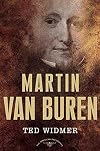
This biography of Martin Van Buren, our 8th President, reminded me of Tom Stoppard's play Rosencrantz & Guildenstern Are Dead, in which Shakespeare's Hamlet is seen through the eyes of two minor characters. In Stoppard's case, the result is very funny, although it helps to know the main story to start with. Here, Van Buren's story, which would seem to be the main topic, is seen only in glimpses sprinkled through a history of the times. For a President so little known to modern readers, the show more result is frustration.
I'm not sure this is the author's fault, given his subject. Most of Van Buren's career was dedicated to forging a new political party, accomplished by years of backroom (and therefore hidden, even to historians) political maneuvering, which often found him promoting a middle ground between opponents he was trying to woo. In many instances he was thought to have no strong views himself, and, unlike his predecessors, he left no reams of correspondence or voluminous diaries to give us a peak at his inner turmoil. (He did leave an autobiography written only late in life.)
Van Buren was the first of a lesser-known group to hold the Presidency between Jackson and Lincoln. It was a difficult time for the nation, as the addition of territory brought to a head the oft-sidetracked issue of slavery. Sectional divisions strengthened, and, like others, Van Buren foresaw the Civil War, but it was only in the late 1840s that he could bring himself to publicly criticize slavery and call for its end, after many years of letting the issue slide as he courted Southerners. Although his presidency was expected to be at least somewhat successful, the economic policies of previous years came to a head within weeks of his inauguration, and the Panic of 1837 was only the beginning of the downswing which led to Van Buren's defeat in 1840. Born near the end of the Revolution, he lived to see the beginning of the Civil War, having survived most of his political contemporaries.
Two quotes of note:
p. 69. To this day we still do not know how close young Andrew Jackson came to throwing his lot in with Burr's efforts to create an American empire outside the jurisdiction of the United States. (OK, that's not a thread I recall from the bio of Jackson I just read.)
p. 16. His failures showed how difficult it was to assemble a democratic coalition in the face of withering pressure from economic chaos, regional discord, and the conservative enemies who never gave him a moment's peace. (Doesn't that sound familiar?)
And I was surprised to read that Davy Crockett wrote a (very negative) biography of him leading up to the election of 1836. (RIP Fess Parker, who died this week.)
For all its brevity and lack of detail on a personal level, this entry in Arthur M. Schlesinger Jr.'s The American Presidents Series is a very readable introduction. I would have liked more information on Van Buren's home life and children, and sometimes the author's style is off-putting, as when he refers to Van Buren by all the cute/sarcastic/nasty nicknames employed by his adversaries. But I found myself drawn in and interested till the end. show less
I'm not sure this is the author's fault, given his subject. Most of Van Buren's career was dedicated to forging a new political party, accomplished by years of backroom (and therefore hidden, even to historians) political maneuvering, which often found him promoting a middle ground between opponents he was trying to woo. In many instances he was thought to have no strong views himself, and, unlike his predecessors, he left no reams of correspondence or voluminous diaries to give us a peak at his inner turmoil. (He did leave an autobiography written only late in life.)
Van Buren was the first of a lesser-known group to hold the Presidency between Jackson and Lincoln. It was a difficult time for the nation, as the addition of territory brought to a head the oft-sidetracked issue of slavery. Sectional divisions strengthened, and, like others, Van Buren foresaw the Civil War, but it was only in the late 1840s that he could bring himself to publicly criticize slavery and call for its end, after many years of letting the issue slide as he courted Southerners. Although his presidency was expected to be at least somewhat successful, the economic policies of previous years came to a head within weeks of his inauguration, and the Panic of 1837 was only the beginning of the downswing which led to Van Buren's defeat in 1840. Born near the end of the Revolution, he lived to see the beginning of the Civil War, having survived most of his political contemporaries.
Two quotes of note:
p. 69. To this day we still do not know how close young Andrew Jackson came to throwing his lot in with Burr's efforts to create an American empire outside the jurisdiction of the United States. (OK, that's not a thread I recall from the bio of Jackson I just read.)
p. 16. His failures showed how difficult it was to assemble a democratic coalition in the face of withering pressure from economic chaos, regional discord, and the conservative enemies who never gave him a moment's peace. (Doesn't that sound familiar?)
And I was surprised to read that Davy Crockett wrote a (very negative) biography of him leading up to the election of 1836. (RIP Fess Parker, who died this week.)
For all its brevity and lack of detail on a personal level, this entry in Arthur M. Schlesinger Jr.'s The American Presidents Series is a very readable introduction. I would have liked more information on Van Buren's home life and children, and sometimes the author's style is off-putting, as when he refers to Van Buren by all the cute/sarcastic/nasty nicknames employed by his adversaries. But I found myself drawn in and interested till the end. show less
Lists
Awards

You May Also Like


Associated Authors
Statistics
- Works
- 16
- Members
- 1,455
- Popularity
- #17,659
- Rating
- 3.7
- Reviews
- 16
- ISBNs
- 37