
Theodore Roosevelt (1) (1858–1919)
Author of The Rough Riders
For other authors named Theodore Roosevelt, see the disambiguation page.
About the Author
Periodically throughout his extraordinary career, Theodore Roosevelt turned to the writing of history. Energetic about everything he did, he imbued his writing with verve and a strong sense of drama that continues to attract readers today. Born in New York City and educated at Harvard University, show more he immersed himself in public affairs long before he became President of the United States. A man of many talents, he was, among other things, police commissioner, mayoral candidate, rancher, hunter, explorer, soldier, and governor. His strong sense of history probably influenced his actions more times than not, and certainly he brought to the White House in 1901 an awareness of how much the past conditions the present and informs the future. Roosevelt made history, influenced history, and wrote history. (Bowker Author Biography) show less
Series
Works by Theodore Roosevelt
African Game Trails: An Account of the African Wanderings of an American Hunter-Naturalist (Capstick Adventure Library) (1910) 237 copies, 2 reviews
Theodore Roosevelt's History of the United States: His Own Words, Selected and Arranged by Daniel Ruddy (2010) 133 copies
The Winning of the West, Volume 1: From the Alleghanies to the Mississippi, 1769-1776 (1995) 67 copies
Hunting Trips of a Ranchman: Sketches of Sport on the Northern Cattle Plains (2004) 45 copies, 1 review
The Winning of the West, Volume 3: The Founding of the Trans-Alleghany Commonwealths, 1784-1790 (1995) 37 copies
The Winning of the West, Volume 2: From the Alleghanies to the Mississippi, 1777-1783 (1995) 35 copies
The Boyhood Diary of Theodore Roosevelt, 1869-1870: Early Travels of the 26th U.S. President (Diaries, Letters and Memoirs) (2001) 26 copies, 1 review
Theodore Roosevelt's America : selections from the writings of the Oyster Bay naturalist (1962) 15 copies
Strategy Six Pack 2 - Cleopatra, De Re Militari, Alexander the Great, Military Maxims, Napoleon and The Rough Riders (Illustrated) (2015) 12 copies
African Game Trails Volume II: An Account of the African Wanderings of an American Hunter-Naturalist (1924) 9 copies
The Works of Theodore Roosevelt, National Edition, Volume XIX: the Foes of Our Own Household; the Great Adventure; Letters to His Children (1926) 9 copies
Theodore Roosevelt on Bravery: Lessons from the Most Courageous Leader of the Twentieth Century (2015) 7 copies
The Roosevelt policy; speeches, letters and state papers, relating to corporate wealth and closely allied topics (2004) 7 copies
Selections from the correspondence of Theodore Roosevelt and Henry Cabot Lodge, 1884-1918 (1971) 7 copies
The Works of Theodore Roosevelt in Fourteen Volumes, Presidential Addresses and State Papers, Part Two (1901) 6 copies
California Addresses 4 copies
Greatest Presidential Speeches Of The 20th Century (The Literate Listener Series Presents) (2001) 4 copies
Presidential addresses and state papers of Theodore Roosevelt, part 3, with portrait frontispiece (2017) 4 copies
Compilation of the Messages and Papers of the Presidents Section 2 (of 2) of Supplemental Volume: Theodore Roosevelt, Supplement (2011) 4 copies
The real Roosevelt : His forceful and fearless utterances on various subjects (The Classics of Liberty Library) (1999) 4 copies, 1 review
The Letters of Theodore Roosevelt: The Days of Armageddon, 1909-1919, Vol. 8: 1914-1919 (1954) 3 copies
True Americanism; Being Four Essays Selected from the Collection Entitled "American Ideals" (Ariel Booklets, #70) (2010) 3 copies
The Works of Theodore Roosevelt National Edition, Volume XI: The Rough Riders; Men of Action (with DJ) (1926) 2 copies
Hero Tales from American History, Oliver Cromwell New York (The Works of Theodore Roosevelt, National Edition, Volume X) (1926) 2 copies
Americanism and preparedness 2 copies
The Writings of Theodore Roosevelt 2 copies
Hunting adventures in the West 2 copies
The Roosevelt Policy Vol. 3 2 copies
The Roosevelt Policy Vol. 4 2 copies
Letters 1 copy
The Works of Theodore Roosevelt National Edition, Volume XIII: American Ideals; The Strenuous Life (with DJ) (1926) 1 copy
State Papers as Governor and President 1899-1909. Works of Theodore Roosevelt Volume XV. National Edition (1926) 1 copy
Theodore Roosevelt: His Life Meaning and Messages. Volume three of four: Newer Roosevelt Messages. (1919) 1 copy
Jungle Peace 1 copy
Prize stories from Collier's, 5 volumes — Editor — 1 copy
The Roosevelt Policy Vol. 1 1 copy
Presidential Addresses and State Papers and European Addresses: December 8, 1908 to June 7, 1910 (2006) 1 copy
No Political Influence Will Help You in the Least: Letters of Theodore Roosevelt, Civil Service Commissioner, 1889-1895 (1958) 1 copy
State of the Union Addresses 1 copy
Big Game Hunting 1 copy
America and Japan 1 copy
“In God We Trust” letter 1 copy
Nobel Lecture 1 copy
Associated Works
The North American Indian: The Complete Portfolios (1997) — Foreword, some editions — 638 copies, 8 reviews
World War I and America: Told by the Americans Who Lived It (1918) — Contributor — 226 copies, 1 review
Ants, Indians, and Little Dinosaurs: A Celebration of Man & Nature for the 75th Anniversary of Natural History Magazine (1975) — Contributor — 203 copies, 1 review
The Mark Twain Anthology: Great Writers on His Life and Work (2010) — Contributor — 160 copies, 1 review
An American Album: One Hundred and Fifty Years of Harper's Magazine (2000) — Contributor — 146 copies, 1 review
Worlds to Explore: Classic Tales of Travel and Adventure from National Geographic (2006) — Contributor — 118 copies, 1 review
Major Problems in the History of the American West: Documents and Essays (1989) — Contributor — 67 copies
Language Loyalties: A Source Book on the Official English Controversy (1992) — Contributor — 24 copies
Bully! Colonel Theodore Roosevelt, The Rough Riders and Camp Wikoff - Montauk, New York, 1898 (1998) — Contributor — 5 copies
America's Great Wilderness: In the words of Henry David Thoreau, John Muir, John Burroughs, Theodore Roosevelt, Stewart (1976) — Contributor — 5 copies
Theodore Roosevelt; a biographical sketch, and excerpts from his writings and addresses — Contributor — 3 copies
A Compilation of the Messages and Papers of the Presidents, Lincoln to T. Roosevelt complete, with active table of contents — Contributor — 1 copy
The life and sayings of Theodore Roosevelt, the twenty-sixth president of the United States — Contributor — 1 copy
Americanism. Addresses by Woodrow Wilson .. May 10, 1915; Franklin K. Lane ... January 11, 1919; Theodore Roosevelt ... (1950) — Contributor — 1 copy
Tagged
Common Knowledge
- Canonical name
- Roosevelt, Theodore
- Legal name
- Roosevelt, Theodore, Jr.
- Other names
- Roosevelt, Teddy
T.R. - Birthdate
- 1858-10-27
- Date of death
- 1919-01-06
- Gender
- male
- Education
- Harvard University (AB|1880)
Columbia Law School - Occupations
- Governor of New York (1899-1900|Republican)
Vice President of the United States (1901-1901|Republican)
President of the United States (1901-1909|Republican)
rancher
Police Commissioner (New York City)
Member of the New York State Assembly (1882-1884|Republican) (show all 13)
historian
Commander, Rough Riders (Spanish American War)
United States Assistant Secretary of the Navy (1897-1898)
Nominee for Vice President of the United States (1900|Republican)
nominee for President of the United States (1904|Republican)
military officer (United States Army|colonel)
nominee for President of the United States (1912|Progressive) - Organizations
- American Historical Association (1912)
Republican Party
Progressive Party - Awards and honors
- Nobel Peace Prize (1906)
Congressional Medal of Honor (2001)
Phi Beta Kappa
American Academy of Arts and Letters (1898) - Relationships
- Roosevelt, Theodore, III (son)
Roosevelt, Theodore, IV (grandson)
Roosevelt, Eleanor (niece)
Roosevelt, Franklin D. (cousin)
Longworth, Alice Lee Roosevelt (daughter)
James, William (teacher) (show all 7)
Riis, Jacob (friend) - Cause of death
- pulmonary embolism
- Nationality
- USA
- Birthplace
- New York, New York, USA
- Places of residence
- New York, New York, USA
Albany, New York, USA
Boston, Massachusetts, USA
Washington, D.C., USA
Sagamore Hill, Oyster Bay, Long Island, New York, USA
Medora, North Dakota, USA - Place of death
- Oyster Bay, New York, USA
- Burial location
- Sagamore Hill, Oyster Bay, New York, USA
- Associated Place (for map)
- New York, USA
Members
Discussions
Memorial Edition: Works of Theodore Roosevelt (Vol. 21) ~ Hermann Hagedorn (editor) in Quote Keepers (June 2025)
26 - Theodore Roosevelt in US Presidents Challenge (USPC) (November 2022)
Theodore Roosevelt in Legacy Libraries (February 2014)
Teddy Roosevelt in Legacy Libraries (August 2013)
Reviews

I looked forward to this book, but now that I have finished, it might well have been about the Trump brothers. Two elites who epitomized the term ugly Americans, the Roosevelt brothers managed to take advantage of everyone they came in contact with. Their idea of a fair trade was a mechanical flashlight in exchange for priceless religious artifacts such as important illuminated manuscripts. They usually bullied the natives into trading even when they didn't want to. Here is a particularly show more painful example:
"A pathetic incident of our day at Muping was a visit from the widow of the Tibetan prince from Tatsienlu. She came with her daughter, a girl of eleven. The woman was plain, middle-aged and rather stupid looking. The purpose of their visit was to ask us to intercede for them with the Chengtu government. They were afraid that the government might have them executed. I am persuaded that their fear was groundless, but it was very real to them. They brought us gifts of dried meat. We gave them in return a silk scarf. On leaving us they stopped at our kitchen to beg an empty tin can from the cook."
End of that story, on to the hunting. This tone ran throughout the book. show less
"A pathetic incident of our day at Muping was a visit from the widow of the Tibetan prince from Tatsienlu. She came with her daughter, a girl of eleven. The woman was plain, middle-aged and rather stupid looking. The purpose of their visit was to ask us to intercede for them with the Chengtu government. They were afraid that the government might have them executed. I am persuaded that their fear was groundless, but it was very real to them. They brought us gifts of dried meat. We gave them in return a silk scarf. On leaving us they stopped at our kitchen to beg an empty tin can from the cook."
End of that story, on to the hunting. This tone ran throughout the book. show less
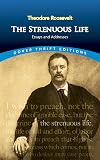
Roosevelt's speeches read like a great apologia for the Protestant work ethic. I could not help but think that we have failed to capitalise on his progressive zeal. At times, I found Roosevelt's words to be rousing, at others, antiquated in their institutionalised view of women and "others", yet inclusive and accepting of diversity. Nationalism underpins much of Roosevelt's rhetoric, not empty, but nevertheless of his time. There is much wisdom in his ideal of the strenuous life, and much show more warning of the over-strenuous. I am cautious about the applicability of his lessons to present times, not so much because of his words but because of the way history has played out in spite of them. The ideas of manliness resonate from time to time, but I could not help but feel a distinct "foreignness" in the underpinning idealism. Although Roosevelt has been built into an icon, his words convey a measured tenacity and ability to rise to the occasion in the face of adversity. Herein, for me at least, lies the greatest lesson. If we strip away the legend, and look to the man (as Roosevelt may well have agreed), we can see an ordinary human being who became extraordinary through great effort and an ability to be great despite living with many of the ailments suffered by fellow mortals. If I were to sum up the man? No-nonsense, progressive pragmatism. I suppose what perplexes me is the historical baggage. Much like reading and admiring Hemingway's work, one must constantly forgive the context. Upon finishing the works, the "Whose motorcycle is this?" scene from Pulp Fiction comes to mind. show less
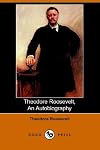
Not only the memoirs of a great man, but also a valuable insight into the operations of political machinery.
Roosevelt may be faulted for being overly defensive of his actions and decisions, but his reasoning demonstrates a concern for the citizens of his country, and an anticipation of the future.
Roosevelt may be faulted for being overly defensive of his actions and decisions, but his reasoning demonstrates a concern for the citizens of his country, and an anticipation of the future.

An interesting and exciting read from back when US presidents weren’t all wimps. Teddy hasn’t got any Secret Service detachment as he risks life and limb to explore the largely uncharted River of Doubt in Brazil (this was after being president). Roosevelt generally understates the situation as the party undergoes hardship after hardship (drowning, murder, disease, rain, insects, starvation, rapids). There is also a tendency towards repetition.
A bully good read!
A bully good read!
Lists
Espistolary (1)
Awards


You May Also Like


Associated Authors
Statistics
- Works
- 226
- Also by
- 31
- Members
- 6,459
- Popularity
- #3,805
- Rating
- 3.9
- Reviews
- 56
- ISBNs
- 740
- Languages
- 6
- Favorited
- 7


