
Bono
Author of Surrender: 40 Songs, One Story
About the Author
Disambiguation Notice:
Bono (b. 1960), Irish singer and member of U2; real name is Paul David Hewson
Works by Bono
The Million Dollar Hotel: Music From The Motion Picture (2000) — Artist; Executive Producer — 10 copies
U2's Beautiful Day 1 copy
Associated Works
The End of Poverty: Economic Possibilities for Our Time (2005) — Foreword, some editions — 2,619 copies, 28 reviews
The Rolling Stone Book of the Beats: The Beat Generation and American Culture (1999) — Contributor — 181 copies, 2 reviews
Rogue’s Gallery: Pirate Ballads, Sea Songs & Chanteys [sound recording] (2006) — Contributor — 10 copies
Sun City — Contributor — 8 copies
Tagged
Common Knowledge
- Canonical name
- Bono
- Legal name
- Hewson, Paul David
- Birthdate
- 1960-05-10
- Gender
- male
- Education
- Glasnevin National School
Mount Temple Comprehensive School - Occupations
- singer
songwriter
philanthropist - Organizations
- U2
- Awards and honors
- TED Prize (2005)
- Relationships
- U2 (member)
Hewson, Eve (daughter) - Nationality
- Ireland
- Birthplace
- Dublin, Ireland
- Places of residence
- Dublin, Ireland
- Disambiguation notice
- Bono (b. 1960), Irish singer and member of U2; real name is Paul David Hewson
- Associated Place (for map)
- Dublin, Ireland
Members
Reviews
You know those scenes in Ted Lasso when Ted's walking down the street and people just randomly stop him and call him a wanker? I sometimes imagine that's Bono's life in Dublin. He's one of the most legendary and celebrated rock frontmen, and also one of the most derided. For some, U2 is peerless, for others, they're a punchline. Bono knows this. He gets it. He struggles with it and chuckles at it.
In this excellent memoir, Bono opens up about his personal life - the death of his mom when he show more was young, the ensuing thorny relationship with his dad, his lifelong love for his wife Ali, the fears he had about becoming a parent, his regrets, and his recent health scares. Professionally, he gives sincere credit to The Edge, Larry Mullen Jr, and Adam Clayton (and manager Paul McGuinness) for their contributions, collaboration, and their endless patience with his political projects.
Along the way, we also learn about his experiences with President Bill Clinton, Prince, the Dalai Lama, the Pope, Quincy Jones, Johnny & June Carter Cash, Senator Jesse Helms, Presidents George W and George H.W. Bush, Bob Dylan, Michael Hutchence, Bob Geldof, and many more. (And yes, on the audiobook, he attempts to impersonate many of these people. Excepting Bill Clinton, he does a pretty excellent job.)
Bono is more humble than many imagine, aware of his place in the pop culture pantheon, and that it is really only currency to help him make music with his friends and use his influence to do what good he can in the world. I truly believe he's sincere with his campaigns, such as Drop the Debt and One. He's the real deal...but he also recognizes the artifice of celebrity.
The book is broken into 40 chapters, each aligned with a U2 song that serves as a touchstone or thematic thread. On its face, the book is chronological, but he does a fine job of upending the predictable "I was born, then this, then that" formula by shifting the narrative around songs, places, tours, or ideas that spark a worthy anecdote.
If you select the audiobook, you get two bonuses: Bono's narration is splendid. His Irish accent is so lovely to listen to, and his delivery is as if he is simply telling these stories instead of reading them. One of the best celebrity narrators I've heard. Secondly, U2 re-recorded 40 of their songs during COVID with new arrangements. While these songs will be released in 2023, you get a lovely sneak peak of them on the audiobook, as excerpts are played during almost every chapter.
And finally, there are the songs. I love hearing artists explain what inspired a song, an album, or an idea. There's plenty of that here, and maybe - once and for all - people will understand the band's need to drift away from their 80's sound to the experimental sonic shift they took in the 90's. He talks about the backlash and the crowdpleasers. He talks about the iTunes fiasco and the "Rattle and Hum" and "Pop" disappointments. He wrestles with whether the band have overstayed their welcome and when the proper time is to stop doing something you've loved doing for decades. What's the expiration date on passion? And what does an artist owe to his family who have waited patiently while he's toured (and at times attempted to save) the world? He holds nothing back here, and the result is like having a pint at the pub with a guy who wears his heart on this sleeve, and loves to talk about music, politics, and yes, himself.
Suffice to say, if you're a U2 fan who opts to pick up Bono's bio, you may have found precisely what you're looking for. show less
In this excellent memoir, Bono opens up about his personal life - the death of his mom when he show more was young, the ensuing thorny relationship with his dad, his lifelong love for his wife Ali, the fears he had about becoming a parent, his regrets, and his recent health scares. Professionally, he gives sincere credit to The Edge, Larry Mullen Jr, and Adam Clayton (and manager Paul McGuinness) for their contributions, collaboration, and their endless patience with his political projects.
Along the way, we also learn about his experiences with President Bill Clinton, Prince, the Dalai Lama, the Pope, Quincy Jones, Johnny & June Carter Cash, Senator Jesse Helms, Presidents George W and George H.W. Bush, Bob Dylan, Michael Hutchence, Bob Geldof, and many more. (And yes, on the audiobook, he attempts to impersonate many of these people. Excepting Bill Clinton, he does a pretty excellent job.)
Bono is more humble than many imagine, aware of his place in the pop culture pantheon, and that it is really only currency to help him make music with his friends and use his influence to do what good he can in the world. I truly believe he's sincere with his campaigns, such as Drop the Debt and One. He's the real deal...but he also recognizes the artifice of celebrity.
The book is broken into 40 chapters, each aligned with a U2 song that serves as a touchstone or thematic thread. On its face, the book is chronological, but he does a fine job of upending the predictable "I was born, then this, then that" formula by shifting the narrative around songs, places, tours, or ideas that spark a worthy anecdote.
If you select the audiobook, you get two bonuses: Bono's narration is splendid. His Irish accent is so lovely to listen to, and his delivery is as if he is simply telling these stories instead of reading them. One of the best celebrity narrators I've heard. Secondly, U2 re-recorded 40 of their songs during COVID with new arrangements. While these songs will be released in 2023, you get a lovely sneak peak of them on the audiobook, as excerpts are played during almost every chapter.
And finally, there are the songs. I love hearing artists explain what inspired a song, an album, or an idea. There's plenty of that here, and maybe - once and for all - people will understand the band's need to drift away from their 80's sound to the experimental sonic shift they took in the 90's. He talks about the backlash and the crowdpleasers. He talks about the iTunes fiasco and the "Rattle and Hum" and "Pop" disappointments. He wrestles with whether the band have overstayed their welcome and when the proper time is to stop doing something you've loved doing for decades. What's the expiration date on passion? And what does an artist owe to his family who have waited patiently while he's toured (and at times attempted to save) the world? He holds nothing back here, and the result is like having a pint at the pub with a guy who wears his heart on this sleeve, and loves to talk about music, politics, and yes, himself.
Suffice to say, if you're a U2 fan who opts to pick up Bono's bio, you may have found precisely what you're looking for. show less
I found this book amazing. Bono and I are close to the same age and music and the world events that he wrote about were part of my history as well. He is a lyricist and at times he was ‘wordy’ but not enough to put me off. BUT . . I ended up listening to most of the book in the audio format. Bono was telling his story in his voice and his words. All of that came through as he read the book. Almost never have I preferred an audio version of a book but in this case there was no contest. show more The written version didn’t carry the genuineness that I experienced with the audio. Each chapter was developed around a U2 song. In the audio edition each chapter began with the Bono singing that song. I enjoyed it so much. show less
I was looking forward to reading this, as I had read an excerpt that was both interesting and moving, about Bono’s early childhood and the loss of his mother. And I enjoy his music. Sorry to report that the excerpt was the only portion I found worth spending time on after reading 60 pages of this 576 page much-anticipated memoir.
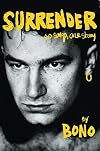
Bono is a songwriter and singer but not a writer. At least not the kind of writer who could keep me turning the pages. The book is described as episodic, and that show more could be considered a euphemism for scattered, unorganized, and rambling. And don’t get me started on the promised photos. Apparently, Bono also considers himself a collage artist. He has taken various family and friends’ snapshots and arranged them, collage-style, with captions written in his scribbled handwriting. Frustrating and disappointing. A good example of this “arty” style can be found on the outside back cover jacket of the book.
It's true that a memoir is usually written by the subject and is all about that subject. But this book (or at least the portion I read) had nothing to say. Too bad he didn’t use a ghostwriter as there could be a story in there somewhere. But as it is, I didn’t finish it and I can’t recommend it. show less
Bono is a songwriter and singer but not a writer. At least not the kind of writer who could keep me turning the pages. The book is described as episodic, and that show more could be considered a euphemism for scattered, unorganized, and rambling. And don’t get me started on the promised photos. Apparently, Bono also considers himself a collage artist. He has taken various family and friends’ snapshots and arranged them, collage-style, with captions written in his scribbled handwriting. Frustrating and disappointing. A good example of this “arty” style can be found on the outside back cover jacket of the book.
It's true that a memoir is usually written by the subject and is all about that subject. But this book (or at least the portion I read) had nothing to say. Too bad he didn’t use a ghostwriter as there could be a story in there somewhere. But as it is, I didn’t finish it and I can’t recommend it. show less
When you think about, only Bono could have dreamt up a book that is playlist, history, memoir, theology, sketchbook, scribble and more. Paul Kelly’s “How to make gravy” is, perhaps, in a similar genre. Bono has gone further.
Each of the 40 chapters begins with a U2 song. I chose to put the headphones on and enjoy the music first, then follow with the text. I wanted it to never end. At the end, I felt I really knew the man, his heart, his values, his family, his mates in U2. Fantastic show more achievement! show less
Each of the 40 chapters begins with a U2 song. I chose to put the headphones on and enjoy the music first, then follow with the text. I wanted it to never end. At the end, I felt I really knew the man, his heart, his values, his family, his mates in U2. Fantastic show more achievement! show less
Lists
Awards


You May Also Like


Associated Authors
Statistics
- Works
- 20
- Also by
- 35
- Members
- 905
- Popularity
- #28,348
- Rating
- 3.9
- Reviews
- 21
- ISBNs
- 42
- Languages
- 9
- Favorited
- 1


