
Wolfgang Pauli (1900–1958)
Author of Theory of Relativity
About the Author
Born in Switzerland, Wolfgang Pauli was the son of a professor of physical chemistry at the University of Vienna and godson of Ernst Mach. He was a child prodigy, writing an outstanding paper on the theory of relativity at age 19, and receiving his Ph.D. from the University of Munich in 1922. After show more further study with Niels Bohr and Max Born, Pauli taught at the Federal Institute of Technology in Zurich, where he remained until his death in 1958. His discovery of the exclusion principle enabled Pauli to explain the structure of the periodic table of elements, formulate fundamental theories of electrical conductivity in metal, and investigate magnetic properties of matter. For this discovery, Pauli received the Nobel Prize in 1945. Pauli's second great accomplishment was resolving the "problem" of beta decay. In 1930 he addressed this question of the "missing energy" of electrons by suggesting that an emitted electron was accompanied by a neutral particle carrying an excess of energy. Pauli's intellectual ability was not matched by his manual dexterity; his colleagues laughed at the so-called Pauli effect, whereby accidents seemed to happen whenever he worked in the laboratory. (Bowker Author Biography) show less
Image credit: Photo © ÖNB/Wien
Series
Works by Wolfgang Pauli
Statistical Mechanics: Volume 4 of Pauli Lectures on Physics (Dover Books on Physics) (1973) 46 copies
Thermodynamics and the Kinetic Theory of Gases: Volume 3 of Pauli Lectures on Physics (Dover Books on Physics) (1973) 42 copies
Optics and the Theory of Electrons: Volume 2 of Pauli Lectures on Physics (Dover Books on Physics) (1973) 41 copies
Selected Topics in Field Quantization: Volume 6 of Pauli Lectures on Physics (Volume 6) (Dover Books on Physics) (1973) 34 copies
Wolfang Pauli y Carl G. Jung/ Wolfang Pauli and Carl G. Jung: Un Intercambio Epistolar 1932-1958 (Spanish Edition) (1996) 4 copies
Niels Bohr and the Development of Physics: Essays Dedicated to Niels Bohr on the Occasion of His Seventieth Birthday (1955) 4 copies
Die Allgemeinen Prinzipien der Wellenmechanik ( Reprinted from Handbuch der Physik, 2. Aufl., Band 24., 1. Teil ) (1946) 3 copies
Труды по квантовой теории: Квантовая теория. Общие принципы волновой механики. Статьи 1920-1928 1 copy
The Interpretation of Nature and the Psyche: The Influence of Archetypal Ideas on the Scientific Theories of Kepler 1 copy, 1 review
Aufsätze und Vorträge über Physik und Erkenntnistheorie (Die Wissenschaft, 115) (German Edition) (1961) 1 copy
Colloid Chemistry of the Proteins, Vol. 1: With 27 Diagrams and Numerous Tables (Classic Reprint) (2017) 1 copy
Atom and Archetype 1 copy
Wolfgang Pauli 1 copy
Теория относительности 1 copy
Tagged
Common Knowledge
- Canonical name
- Pauli, Wolfgang
- Other names
- Паули, Вольфганг
Pauli, Wolfgang Ernst (birth name) - Birthdate
- 1900-04-25
- Date of death
- 1958-12-15
- Gender
- male
- Education
- Döblinger-Gymnasium
University of Munich - Occupations
- physicist
university professor - Organizations
- University of Göttingen
Institute for Theoretical Physics, Copenhagen, Denmark
University of Hamburg
ETH Zurich
Institute for Advanced Study - Awards and honors
- Lorentz Medal (1931)
Nobel Prize (Physics, 1945)
Matteucci Medal (1956)
Max Planck Medal (1958) - Relationships
- Pauli, Hertha Ernestine (sister)
Born, Max (teacher)
Villars, Felix (student)
Kemmer, Nicholas (student)
Zienau, Sigurd (student)
Fierz, Markus (student) (show all 7)
Sommerfeld, Arnold (student) - Nationality
- Austria (birth)
Switzerland - Birthplace
- Vienna, Austria
- Place of death
- Zurich, Switzerland
- Associated Place (for map)
- Vienna, Austria
Members
Reviews
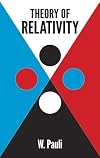
Wolfgang Pauli was a brilliant theoretical physicist responsible for positing the Pauli Exclusion Principle and the winner of the 1945 Nobel Prize in Physics. However, at the first printing of this book, Pauli was a young man of 21. I really admire that sort of thing, to be able to publish something like this at that age. The book acknowledges that there are issues with its contents since it was printed in 1921, but this book does a fine job of showing off relativity as it was known at that show more time.
Theory of Relativity is split into five major parts. They are as follows.
In part I, Pauli begins by defining the History of the Special Theory of Relativity. You know, the one that states that the speed of light is constant in all reference frames and that the laws of physics are the same for all inertial systems. This section of the book also discusses the consequences of that idea, the Lorentz Contraction and time dilation. Although this part of the book does have some equations that use curl and div, not many of them are shown.
With part II, we are introduced to some mathematical tools to help us on our journey to understand relativity. This section introduces the idea of "space-time," a four-dimensional manifold that is our reality. So Pauli starts to talk about transformation groups and using tensor calculus for affine transformations. Pauli demonstrates the basic ideas of tensor algebra and how to use them to anticipate the final results we are trying to find and the ideas of Riemannian Geometry to account for space-time curvature.
Part III elaborates on the Special theory a little bit more, taking care to discuss Kinematics, Electrodynamics Mechanics, and Thermodynamics in a relativistic manner.
Part IV discusses the General Theory in all its glory.
Part V is called Theories on the Nature of Charged Elementary Particles.
In total, Theory of Relativity contains 499 equations, some of them with those old-timey German Script letters that I believe to relate to a field. It also contains a ton of notes which are further discussed at the end of the book. show less
Theory of Relativity is split into five major parts. They are as follows.
In part I, Pauli begins by defining the History of the Special Theory of Relativity. You know, the one that states that the speed of light is constant in all reference frames and that the laws of physics are the same for all inertial systems. This section of the book also discusses the consequences of that idea, the Lorentz Contraction and time dilation. Although this part of the book does have some equations that use curl and div, not many of them are shown.
With part II, we are introduced to some mathematical tools to help us on our journey to understand relativity. This section introduces the idea of "space-time," a four-dimensional manifold that is our reality. So Pauli starts to talk about transformation groups and using tensor calculus for affine transformations. Pauli demonstrates the basic ideas of tensor algebra and how to use them to anticipate the final results we are trying to find and the ideas of Riemannian Geometry to account for space-time curvature.
Part III elaborates on the Special theory a little bit more, taking care to discuss Kinematics, Electrodynamics Mechanics, and Thermodynamics in a relativistic manner.
Part IV discusses the General Theory in all its glory.
Part V is called Theories on the Nature of Charged Elementary Particles.
In total, Theory of Relativity contains 499 equations, some of them with those old-timey German Script letters that I believe to relate to a field. It also contains a ton of notes which are further discussed at the end of the book. show less
The Interpretation of Nature and the Psyche: The Influence of Archetypal Ideas on the Scientific Theories of Kepler by W. Pauli

Bound w/ Jung, Synchronicity; price in pounds
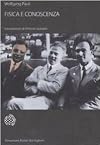
Questo libro, curato da Pauli poco prima della morte, raccoglie un insieme di saggi che ben testimoniano la consapevolezza, che egli sempre ebbe vivissima, del significato più generale di ogni ricerca scientifica, valida non solo per il risultato singolo ma per il contributo più ampio al sapere. I saggi, percorsi dal tema comune del valore e dei limiti della conoscenza umana, possono essere distinti in due categorie: la prima puntualizza i personali apporti dell'autore e di altri grandi show more fisici alla scienza contemporanea; la seconda è dedicata a riflessioni sul potere del pensiero e alla validità di alcuni concetti fondamentali della teoria dell'evoluzione biologica e della psicologia dell'inconscio. Lo stile asciutto e rigoroso è animato dal ricordo personale di uomini ed episodi che fanno oggi parte della leggenda della fisica e, più in generale, della conoscenza umana. show less
Jul 1, 2015Italian
Lists
You May Also Like


Associated Authors
Statistics
- Works
- 41
- Members
- 544
- Popularity
- #45,826
- Rating
- 4.4
- Reviews
- 3
- ISBNs
- 68
- Languages
- 4
- Favorited
- 2
