
P. A. M. Dirac (1902–1984)
Author of The Principles of Quantum Mechanics
About the Author
Paul Dirac, a British theoretical physicist, was a central figure in the development of quantum electrodynamics. For example, he introduced important concepts, such as magnetic monopole and electron spin, and predicted the existence of antiparticles. Dirac was well known for his creativity as a show more graduate student in the 1920s. After reading Werner Heisenberg's first paper on relativity in 1925, for example, he promptly devised a more general form of the theory. The next year, he formulated Wolfgang Pauli's exclusion principle in terms of quantum mechanics. Specifically, he formulated useful statistical rules for particles that obey the Pauli exclusion principle. He received his Ph.D. in physics from Cambridge University in 1926. Dirac's most important contribution occurred in 1928, when he joined special relativity to quantum theory. His theory of the electron permitted scientists to calculate its spin and magnetic moment and to predict the existence of positively charged electrons, or positrons. (Positrons were observed in 1932.) In 1933 Dirac shared the Nobel Prize in physics with Erwin Schrodinger for his theory of the electron and prediction of the positron. Dirac's theoretical considerations in predicting the positron were sufficiently general to apply to all particles. This constituted an argument for the existence of antimatter. In later years, Dirac worked on "large-number coincidences," or relationships that appear to exist between some cosmological constants. He also taught mathematics at Cambridge University from 1932 until 1969. From 1968, when he retired from Cambridge, until his death in 1984, Dirac was a professor at the University of Florida in Tallahassee. (Bowker Author Biography) show less
Disambiguation Notice:
(yid) VIAF:17350683
Image credit: http://en.wikipedia.org/wiki/File:Dirac.gif
Series
Works by P. A. M. Dirac
Associated Works
Tagged
Common Knowledge
- Legal name
- Dirac, Paul Adrien Maurice
- Other names
- Dirac, Paul
- Birthdate
- 1902-08-08
- Date of death
- 1984-10-20
- Gender
- male
- Education
- University of Bristol
University of Cambridge (St. John's College) - Occupations
- theoretical physicist
professor
mathematician - Awards and honors
- Lucasian Professorship of Mathematics, Cambridge
Nobel Prize (Physics ∙ 1933)
James Scott Prize Lectureship (1933-1938) - Nationality
- UK
- Birthplace
- Bristol, Gloucestershire, England, UK
- Places of residence
- Bristol, Gloucestershire, England, UK
Cambridge, Cambridgeshire, England, UK
Tallahassee, Florida, USA - Place of death
- Tallahassee, Florida, USA
- Burial location
- Tallahassee, Florida, USA
- Associated Place (for map)
- England, UK
Members
Reviews
The Principles of Quantum Mechanics (International Series of Monographs on Physics) by P. A. M. Dirac
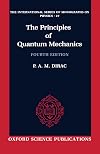
Dirac had a knack of explaining quite complicated things in a simple and understandable way. This is of course an old book, and it is very elementary, but I still remember the joyful feeling of being exposed to something that beautiful and clear. The old guy really made it possible for me to understand a bit of the underlying logic. Suddenly quantum mechanics didn't seem half as freaky as it used to. Great teacher.
The Principles of Quantum Mechanics (International Series of Monographs on Physics) by P. A. M. Dirac
Paul A M Dirac, the man, the myth, the legend, discusses Quantum Mechanics and its results from the first principles. Starting with the idea of a state, Dirac goes on to mention Eigenvalues and Eigenvectors and Eigenstates, continuing the discussion with some very advanced mathematics. This treatise builds on itself, deriving solutions from previous examples and ideas. The book is even a good length. My only real complaint is that the edition of this I found is from 1930 and I thought the show more paper would be damaged by my touching it. However, it seems that this notion of mine was unfounded, the thing I really needed to worry about was the binding.
In any case, this book was quite well done. My impasse came about at around a quarter of the way through the book, when it became necessary to have differential equations and Linear Algebra under your belt. I would like to find a book that explains this sort of thing in a manner that I can understand. Perhaps I shall reach out for that sort of thing. show less
In any case, this book was quite well done. My impasse came about at around a quarter of the way through the book, when it became necessary to have differential equations and Linear Algebra under your belt. I would like to find a book that explains this sort of thing in a manner that I can understand. Perhaps I shall reach out for that sort of thing. show less

This is a classic book, not being a physicist I have no idea how widely read it is any more (certainly it has no value as a beginning textbook). Good introduction for mathematics students, though - only a little knowledge of linear algebra and some functional analysis is needed.
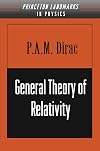
Short, sometimes terse. Certainly not for a first study of GR, only as a supplement. Despite this, a rather good reference, from a (possibly THE) great of 20th Century theoretical physics.
Lists
You May Also Like


Associated Authors
Statistics
- Works
- 26
- Also by
- 1
- Members
- 839
- Popularity
- #30,460
- Rating
- 4.2
- Reviews
- 7
- ISBNs
- 30
- Languages
- 4
- Favorited
- 3