
Richard Delgado
Author of Critical Race Theory: An Introduction
About the Author
Richard Delgado is University Distinguished Professor and Derrick Bell Fellow at the University of Pittsburgh School of Law.
Image credit: University of Pittsburgh
Works by Richard Delgado
Words That Wound: Critical Race Theory, Assaultive Speech, and the First Amendment (1993) 82 copies, 1 review
The Price We Pay: The Case Against Racist Speech, Hate Propaganda, and Pornography (1995) — Editor — 14 copies
No Mercy: How Conservative Think Tanks and Foundations Changed America's Social Agenda (1996) 11 copies
The coming race war? : and other apocalyptic tales of America after affirmative action and welfare (1996) 8 copies
Associated Works
Critical Race Theory: The Key Writings That Formed the Movement (1995) — Contributor — 472 copies, 1 review
Tagged
Common Knowledge
- Gender
- male
- Education
- University of California, Berkeley (JD)
University of Washington (AB) - Occupations
- professor (law)
- Organizations
- Seattle University (University Professor)
University of Colorado (law professor) - Nationality
- USA
- Associated Place (for map)
- USA
Members
Reviews
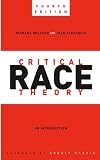
Not a meaty overview, but does hit the highlights on a range of relevant topics. Includes class exercises, so it's not really meant to give a scholarly treatment, but rather something accessible to younger students. Still, if all you need is some familiarity with what's behind a catchphrase that makes the MAGAs froth at the mouth, this will more than suffice. But don't be hesitant to follow up on the bibliography at the end of each chapter for some of the key primary texts.
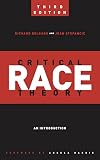
With critical race theory (CRT) being a hot topic in 2021, and having seen and heard many descriptions of it, I read "Critical Race Theory: An Introduction" in hopes of learning more about it. I was particularly interested in material that had been published several years ago, in an effort to find information untainted by some of what is being presented currently. The first edition of this book was published in 2001; this third edition, in 2017. I believe my expectations have been met, and I show more have learned more from a source that paints a truer picture of CRT than what is presented by many, many contemporary sources.
The authors define CRT as "...studying and transforming the relationship among race, racism, and power." They have done an excellent job of presenting material, backed by case examples, that support many of the key aspects of CRT. I liked that the book's chapters include questions and scenarios that can challenge the reader to think more deeply about CRT, and these could be very good points for discussion in a community or academic setting.
One of the key points noted in the book is that race is a social construct, created by people to categorize fellow humans into various buckets; race is not a scientifically rigorous thing, in the way that live birth is one determinant of a creature being a mammal. Another important CRT idea is that, while we try as we might to define people by race, any one person is really the merger of multiple things besides race, such as gender, politics, sexuality, and the list goes on. I believe that many of the issues of racial tensions can be attributed to these two points, these two human-created situations. If humans create problems through these, we should also be able to overcome the problems created by them.
I've heard descriptions of CRT which claimed that it was everything from a "communist manifesto" to a mandate that all white people should apologize for what their ancestors did. Unless I missed something, I did not find either of those two examples to be the case. What I found was a logical, thoughtful presentation of very real issues, issues which can be addressed for the betterment of all of us. show less
The authors define CRT as "...studying and transforming the relationship among race, racism, and power." They have done an excellent job of presenting material, backed by case examples, that support many of the key aspects of CRT. I liked that the book's chapters include questions and scenarios that can challenge the reader to think more deeply about CRT, and these could be very good points for discussion in a community or academic setting.
One of the key points noted in the book is that race is a social construct, created by people to categorize fellow humans into various buckets; race is not a scientifically rigorous thing, in the way that live birth is one determinant of a creature being a mammal. Another important CRT idea is that, while we try as we might to define people by race, any one person is really the merger of multiple things besides race, such as gender, politics, sexuality, and the list goes on. I believe that many of the issues of racial tensions can be attributed to these two points, these two human-created situations. If humans create problems through these, we should also be able to overcome the problems created by them.
I've heard descriptions of CRT which claimed that it was everything from a "communist manifesto" to a mandate that all white people should apologize for what their ancestors did. Unless I missed something, I did not find either of those two examples to be the case. What I found was a logical, thoughtful presentation of very real issues, issues which can be addressed for the betterment of all of us. show less
Whenever critical race theory (CRT) comes up in a news story, my local paper--whether in wire service or local reportage--stops to define CRT as a rarified academic theory that is limited to the law. Just last month they gave this definition: "critical race theory, an academic framework that examines the role of law in furthering racial inequities."
But proponents of CRT are not so modest. Richard Delgado, one of the founders of CRT, and coauthor Jean Stefancic, in their book "Critical Race show more Theory: An Introduction," write, "Although CRT began as a movement in the law, it has rapidly spread beyond that discipline. Today, many scholars in the field of education consider themselves critical race theorists" [page 7]. The authors go on to say, "Unlike some academic disciplines, critical race theory contains an activist dimension. It tries not only to understand our social situation but to change it" [page 8].
I call that getting information from the horse's mouth. The narrative in the press is that maybe those nutty conservatives think that university level courses in CRT are being taught in grade school. But actually, as this book shows, CRT is an ideology and a commitment with wide applications and implications. Its advocates are trying to use CRT's analysis to make radical change by acting throughout society.
While I cannot say that I enjoyed reading this book, I will say that it is very clear and instructive. Having read it, I know what CRT is and what it is not. As this book's title suggests, this is a way into the subject unmediated by criticism (or critical thought). I would compare it to reading Saul Alinsky's "Rules for Radicals" though not as much fun. show less
But proponents of CRT are not so modest. Richard Delgado, one of the founders of CRT, and coauthor Jean Stefancic, in their book "Critical Race show more Theory: An Introduction," write, "Although CRT began as a movement in the law, it has rapidly spread beyond that discipline. Today, many scholars in the field of education consider themselves critical race theorists" [page 7]. The authors go on to say, "Unlike some academic disciplines, critical race theory contains an activist dimension. It tries not only to understand our social situation but to change it" [page 8].
I call that getting information from the horse's mouth. The narrative in the press is that maybe those nutty conservatives think that university level courses in CRT are being taught in grade school. But actually, as this book shows, CRT is an ideology and a commitment with wide applications and implications. Its advocates are trying to use CRT's analysis to make radical change by acting throughout society.
While I cannot say that I enjoyed reading this book, I will say that it is very clear and instructive. Having read it, I know what CRT is and what it is not. As this book's title suggests, this is a way into the subject unmediated by criticism (or critical thought). I would compare it to reading Saul Alinsky's "Rules for Radicals" though not as much fun. show less
I'm not sure I'm 100% on-board with CRT, though I find that I agree with... 40%? 50%? But I'm the "mainstream liberal" who believes in "Enlightenment philosophy", so that is not surprising: CRT is both a reaction against and a building upon "old" liberalism.
That isn't why I give two stars though. (Maybe that gives it three stars...?) This book is just too little. It covers everything at a very high level, with very little to no expansion on the ideas introduced. While each chapter lists show more 'suggested readings', these are not e.g. end-noted within the text, so whether you agree or disagree (or merely are suspicious of, or 'merely' interested in) something, you kind of have to guess what you should follow up on. So the 'suggested readings' are less immediately helpful than they might otherwise be. The authors are themselves CRT practitioners/proponents/etc. but they are unable (or unwilling, or whatever) to shelve this; I come from the physical sciences so the complete and utter lack of anything even remotely like an unbiased presentation was continually distracting. The chapter on critiques was hardly a chapter at all, and a bit of hand-waving around the existence of 'internal' debate isn't helpful in the least. The fact that there is even such a closed of 'internal' debate is somewhat disturbing, again as someone coming from the physical sciences, used to operating where in an environment where not playing with all your cards on the table is considered the ultimate crime.
That said... it's a CliffsNotes for CRT. Which is useful. But I would prefer a much denser treatment, even in 'An Introduction.' show less
That isn't why I give two stars though. (Maybe that gives it three stars...?) This book is just too little. It covers everything at a very high level, with very little to no expansion on the ideas introduced. While each chapter lists show more 'suggested readings', these are not e.g. end-noted within the text, so whether you agree or disagree (or merely are suspicious of, or 'merely' interested in) something, you kind of have to guess what you should follow up on. So the 'suggested readings' are less immediately helpful than they might otherwise be. The authors are themselves CRT practitioners/proponents/etc. but they are unable (or unwilling, or whatever) to shelve this; I come from the physical sciences so the complete and utter lack of anything even remotely like an unbiased presentation was continually distracting. The chapter on critiques was hardly a chapter at all, and a bit of hand-waving around the existence of 'internal' debate isn't helpful in the least. The fact that there is even such a closed of 'internal' debate is somewhat disturbing, again as someone coming from the physical sciences, used to operating where in an environment where not playing with all your cards on the table is considered the ultimate crime.
That said... it's a CliffsNotes for CRT. Which is useful. But I would prefer a much denser treatment, even in 'An Introduction.' show less
Lists
Awards

You May Also Like


Associated Authors
Statistics
- Works
- 24
- Also by
- 4
- Members
- 1,129
- Popularity
- #22,742
- Rating
- 3.7
- Reviews
- 11
- ISBNs
- 88
- Languages
- 1
- Favorited
- 1