

Kimberlé Crenshaw
Author of Critical Race Theory: The Key Writings That Formed the Movement
About the Author
Works by Kimberlé Crenshaw
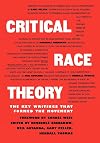
Critical Race Theory: The Key Writings That Formed the Movement (1995) — Editor; Contributor — 473 copies, 1 review
Words That Wound: Critical Race Theory, Assaultive Speech, and the First Amendment (1993) 82 copies, 1 review
Mapping the Margins: Intersectionality, Identity Politics, and Violence against Women of Color 10 copies, 1 review
Under the Blacklight: The Intersectional Vulnerabilities That the Twin Pandemics Lay Bare (2022) — Editor — 2 copies
Associated Works
Race-ing Justice, En-Gendering Power: Essays on Anita Hill, Clarence Thomas, and the Construction of Social Reality (1992) — Contributor — 355 copies, 1 review
Birth of a Nation'hood: Gaze, Script, and Spectacle in the O. J. Simpson Case (1997) — Contributor — 79 copies
I Still Believe Anita Hill: Three Generations Discuss the Legacies of Speaking Truth to Power (2012) — Contributor — 23 copies, 1 review
Tagged
Common Knowledge
- Canonical name
- Crenshaw, Kimberlé
- Gender
- female
- Education
- Cornell University (BA), Harvard University (JD), University of Wisconsin (LLM)
- Occupations
- law professor
- Organizations
- University of California, Los Angeles
Members
Reviews
i am outside of history.
i wish i had some peanuts,
it looks hungry there in its cage.
i am inside of history.
its hungrier than i thot.* — Ishmael Reed
Whole lot of heavy hitters here. Generally, we are proceeding from a "Deconstructivist" Critical Legal Studies to an "Interventionist" theory (which might be called "Critical Race Theory," though not necessarily), on the basis of a materialist legal scholarship which makes explicit the tension between Plaintiff and Counsel, and also show more tensions between the Subaltern non-Plaintiff and the at-present edifice of the Juridical System.
Early Sections: good, technical pieces by Derrick A Bell Jr. (introduction on interests of legal orgs vs plaintiffs in school integration cases with a taste of aporia) also has an excellent piece on "racial realism" (vs legal formalism) in part IV ("Reflections on Justice Thomas"); Alan David Freeman (inventive); Kimberlé Crenshaw (clear-sighted sangfroid). Also contains the some polemical essais, such as Gary Peller's fraught embrace of black nationalism as a means-to-an-end (against integration-ism).
Later Sections: Duncan Kennedy demonstrating strong fundamentals and humor in, "A Pluralist Case for Affirmative Action." Gerald Torres and Kathryn Milun doing a good exegesis in: "Translating 'Yonnondio' by Precedent and Evidence: The Mashpee Indian Case" (--> "The baked and the half-baked.") Charles R Lawrence III's Approach from Psychoanalysis in, "The Id, the Ego, and Equal Protection," requires an anatomy of the subaltern undercurrents of racial animus very difficult if not impossible to pull off, and also possibly dangerous in that it can be used against itself, but also one of the rare conceivable means of advancement against an immovable object. Cheryl I. Harris: finally the fabled text on, "Whiteness as Property" (i.e. whiteness as a category of inalienable property (e.g. the degree of Juris Doctor) legitimated by a corresponding institutional recognition/reputation).
On deconstructed dichotomies, "Rights Talk," and turning the empty promise against itself. Kimberlé Crenshaw on Mark Tushnet:
Tushnet: (1) Once one identifies what counts as a right in a specific setting, it invariably turns out that the right is unstable; significant but relatively small changes in the social setting can make it difficult to sustain the claim that a right remains implicated. (2) The claim that a right is implicated in some settings produces no determinate consequences. (3) The concept of rights falsely converts into an empty abstraction (reifies) real experiences that we ought to value for their own sake. (4) The use of rights in contemporary discourse impedes advances by progressive social forces . . ."
Crenshaw: "The commitment of CLS scholars to trashing is premised on a notion that people are mystified by liberal legal ideology and consequently cannot remake their world until they see how contingent such ideology is. However, this version of domination by consent does not present a realistic picture of racial domination. Coercion explains much more about racial domination than does ideologically induced consent.”
-->In addition to exaggerating the role of liberal legal consciousness and underestimating that of coercion, CLS scholars also disregard the transformative potential that liberalism offers
-->" Civil rights protestors, articulating their formal demands through legal rights ideology, exposed a series of contradictions, the most important being the promised privileges of American citizenship and the practice of absolute racial subordination. Rather than using the contradictions to suggest that American citizenship was itself illegitimate or false, civil rights protestors proceeded as if American citizenship were real and demanded to exercise the “rights” that citizenship entailed. By seeking to restructure reality to reflect American mythology, blacks relied upon and ultimately benefited from politically inspired efforts to resolve the contradictions by granting formal right"
-->" On the other hand, Peter Gabel may well be right in observing that the reforms which come from such demands are likely to transform a given situation only to the extent necessary to legitimate those elements of the situation that “must” remain unchanged. Thus, it might just be the case that oppression means “being between a rock and a hard place’—in other words, that there are risks and dangers involved both in engaging in the dominant discourse and in failing to do so"
ASIDE
From Derrida: "Western thought [...] has always been structured in terms of dichotomies or polarities: good vs. evil, being vs. nothingness, identity vs. difference, mind vs. matter, man vs. woman, nature vs. culture, speech vs. writing. These polar opposites do not, however, stand as independent and equal entities. The second term in each pair is considered the negative, corrupt, un-dersirable version of the first, a fall away from it. . . . The two terms are not simply opposed in their meanings, but are arranged in a hierarchical order which gives the first term priority . . . "show less
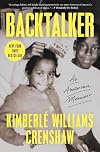
"To love ourselves and the bonds that tie us together, we have to be willing to do what it takes to stand up for ourselves. And sometimes that means talking back to the ones we love."
This is the lesson our author learned at a young age, and she never forgot it. It reminds me of John Lewis and his mother teaching him all about getting in "good trouble," a phrase I think sums up his involvement in civil rights, which I greatly admired.
I can't say that I understand what Ms. Crenshaw went show more through during her life, but after reading this memoir, I feel like I'm closer than I was before. She was able to take a complex issue and break it down in a way that makes you feel like you're walking through her life with her while she explains it to you. This was a very well written book, very personal, which made it a joy to read. Her experiences and her reactions to them shaped her life. She let her tribulations drive her ever forward, and woe be anybody who tried to stand in her way. I know that I'm not doing this book justice, but I feel in my heart like I've been changed just from reading it.
All in all, I just really enjoyed this book and highly recommend it.
5/5 stars
*** I would like to thank NetGalley, Kimberlé Crenshaw, and Simon and Schuster for the opportunity to read and review this book. show less
This is the lesson our author learned at a young age, and she never forgot it. It reminds me of John Lewis and his mother teaching him all about getting in "good trouble," a phrase I think sums up his involvement in civil rights, which I greatly admired.
I can't say that I understand what Ms. Crenshaw went show more through during her life, but after reading this memoir, I feel like I'm closer than I was before. She was able to take a complex issue and break it down in a way that makes you feel like you're walking through her life with her while she explains it to you. This was a very well written book, very personal, which made it a joy to read. Her experiences and her reactions to them shaped her life. She let her tribulations drive her ever forward, and woe be anybody who tried to stand in her way. I know that I'm not doing this book justice, but I feel in my heart like I've been changed just from reading it.
All in all, I just really enjoyed this book and highly recommend it.
5/5 stars
*** I would like to thank NetGalley, Kimberlé Crenshaw, and Simon and Schuster for the opportunity to read and review this book. show less
Kimberlé Williams Crenshaw grew up in Canton, Ohio. When she was in kindergarten, everyday the teacher had the children perform a fairytale. The children played different roles: fairy godmother, King and Queen, a handsome prince, horses, pigs, and mice, and Princess Thorn Rosa who was locked in the castle by a wicked witch. A song was sung about her by the other children stating she was a pretty child five times. Every girl wanted to play her. As the school year went by, Kimberlé played show more mostly the animals, and was especially good as the witch. But try she might, she was never asked to be Thorn Rosa.
As the school year ended, asked the teacher if she would be Thorn Rosa. The teacher would say “tomorrow.” The very last day as the children were collecting their belongings to take home, Kimberlé reminded the teacher. The teacher said it was very late, but yes, let’s do it. The group gathered and started only to have the bell ring. Everyone ran to get their stuff and go outside. The teacher took them into the yard and as they gathered to sing the song their mothers called their child to go home. Kimberly learned about prejudice against Blacks.
She told her mother. As she was getting ready to go to sleep that night, there was a knock on the door. Her teacher came in and apologized. They both learned a lesson.
Many of the chapters are about Kimberlé’s family, experiences while she was growing up and then going to college included the reaction to the death of Martin Luther King. In high school she was selected for the Girls and Boys State in Columbus and got to speak with the governor. A major issue she brought up was Urban Renewal and Highway Development and its effects on the impacted neighborhoods on property destruction and population displacement. The destruction of forced the previous residents to sell their property at lower than their value and then find other homes, often in more expensive locations. The governor ignored her concerns.
After high school, she went to Cornell University and then to Harvard Law School. She chose Harvard because of Professor Derrick Bell’s class on Constitutional Law and Minority Issues. When she got there, the professor was no longer on the staff and the course had been canceled. Professor Bill was replaced by a white man. When she asked the Dean about offering it again with a Black professor, he replied “Wouldn’t you prefer an excellent white professor over mediocre Black one?”
Kimberlé became very involved with issues involving Blacks on campus and in society. Eventually, that interest expanded to include discrimination against lacks in their schools, neighborhoods, and the justice system. Segregated schools were illegal, but de facto segregation was widespread.
She discusses issues like Clarence Thomas versus Thurgood Marshall, the response to Treyvon Martin murder by George Zimmerman, the Black Lives Matter movement,
In one chapter, she spoke about an experiment with a group. She asked them all to stand up well she did while she read a list of names.When they heard a name they recognized, they sat down. Most people recognized the first names. Very few recognize the later ones. After no one was left
standing, she pointed out to the first group of names were Black males killed by police. The later, mostly unknown names were Black females.
She sharply criticized My Brother’s Keeper, a program started by President Obama to help boys of color in today’s society. There was no comparable program for the girls who faced many of the same problems.
Kimberlé Williams Crenshaw strongly believed we need to be extremely active in helping both Blacks and girls in America. She served in many organization, taught Columbia Law School and introduced the terms “ Critical Race Theory” and “Intersectionality” into our vocabulary.
BACKTALKER is the autobiography of a woman who made a big difference in the treatment of people in the United States. It is definitely worth reading and learning. show less
As the school year ended, asked the teacher if she would be Thorn Rosa. The teacher would say “tomorrow.” The very last day as the children were collecting their belongings to take home, Kimberlé reminded the teacher. The teacher said it was very late, but yes, let’s do it. The group gathered and started only to have the bell ring. Everyone ran to get their stuff and go outside. The teacher took them into the yard and as they gathered to sing the song their mothers called their child to go home. Kimberly learned about prejudice against Blacks.
She told her mother. As she was getting ready to go to sleep that night, there was a knock on the door. Her teacher came in and apologized. They both learned a lesson.
Many of the chapters are about Kimberlé’s family, experiences while she was growing up and then going to college included the reaction to the death of Martin Luther King. In high school she was selected for the Girls and Boys State in Columbus and got to speak with the governor. A major issue she brought up was Urban Renewal and Highway Development and its effects on the impacted neighborhoods on property destruction and population displacement. The destruction of forced the previous residents to sell their property at lower than their value and then find other homes, often in more expensive locations. The governor ignored her concerns.
After high school, she went to Cornell University and then to Harvard Law School. She chose Harvard because of Professor Derrick Bell’s class on Constitutional Law and Minority Issues. When she got there, the professor was no longer on the staff and the course had been canceled. Professor Bill was replaced by a white man. When she asked the Dean about offering it again with a Black professor, he replied “Wouldn’t you prefer an excellent white professor over mediocre Black one?”
Kimberlé became very involved with issues involving Blacks on campus and in society. Eventually, that interest expanded to include discrimination against lacks in their schools, neighborhoods, and the justice system. Segregated schools were illegal, but de facto segregation was widespread.
She discusses issues like Clarence Thomas versus Thurgood Marshall, the response to Treyvon Martin murder by George Zimmerman, the Black Lives Matter movement,
In one chapter, she spoke about an experiment with a group. She asked them all to stand up well she did while she read a list of names.When they heard a name they recognized, they sat down. Most people recognized the first names. Very few recognize the later ones. After no one was left
standing, she pointed out to the first group of names were Black males killed by police. The later, mostly unknown names were Black females.
She sharply criticized My Brother’s Keeper, a program started by President Obama to help boys of color in today’s society. There was no comparable program for the girls who faced many of the same problems.
Kimberlé Williams Crenshaw strongly believed we need to be extremely active in helping both Blacks and girls in America. She served in many organization, taught Columbia Law School and introduced the terms “ Critical Race Theory” and “Intersectionality” into our vocabulary.
BACKTALKER is the autobiography of a woman who made a big difference in the treatment of people in the United States. It is definitely worth reading and learning. show less
Words That Wound: Critical Race Theory, Assaultive Speech, And The First Amendment (New Perspectives on Law, Culture, and Society) by Mari J. Matsuda
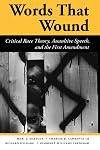
A fantastic study of racial slurs that rather effectively argues for legal consequences for racist acts and words.
Lists
Awards

You May Also Like


Associated Authors
Statistics
- Works
- 13
- Also by
- 8
- Members
- 785
- Popularity
- #32,426
- Rating
- 4.2
- Reviews
- 7
- ISBNs
- 23
- Languages
- 1