
Matthew Hollis
Author of Now All Roads Lead to France: The Last Years of Edward Thomas
Works by Matthew Hollis
Stones 4 copies
Leaves 2 copies
Associated Works
Tagged
Common Knowledge
- Birthdate
- 1971
- Gender
- male
- Occupations
- author
editor
professor
poet - Relationships
- Hollis, Patricia (mother)
- Nationality
- UK
- Birthplace
- Norwich, Norfolk, England, UK
- Places of residence
- London, England, UK
- Associated Place (for map)
- England, UK
Members
Reviews
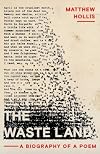
I haven't enjoyed a book this much in quite a while--I had trouble putting it down at night and going to sleep!
I was a little surprised, especially given the author's pains to center the contributions of women, that it included so little information on Jessie Weston, especially considering the very large credit Eliot gives her in his own notes to the poem. Hollis mentions her once, I think, and I don't know if that's due to lack of evidence that her book really did influence the book to the show more extent Eliot claimed, or perhaps because her influence has been dealt with elsewhere. Hollis credits her with possibly suggesting the title, but even there he gives Tennyson equal standing as a possible source.
The author was in places suddenly quite preachy. For example, he doesn't just point out places where Eliot's poems are anti-semitic, but he has to write that Eliot was "shameful" in writing that way. I agree that it was shameful, but in this book it's an unusual interjection of authorial judgment, as though he doesn't trust his readers to draw the conclusion that anti-semitism is shameful. show less
I was a little surprised, especially given the author's pains to center the contributions of women, that it included so little information on Jessie Weston, especially considering the very large credit Eliot gives her in his own notes to the poem. Hollis mentions her once, I think, and I don't know if that's due to lack of evidence that her book really did influence the book to the show more extent Eliot claimed, or perhaps because her influence has been dealt with elsewhere. Hollis credits her with possibly suggesting the title, but even there he gives Tennyson equal standing as a possible source.
The author was in places suddenly quite preachy. For example, he doesn't just point out places where Eliot's poems are anti-semitic, but he has to write that Eliot was "shameful" in writing that way. I agree that it was shameful, but in this book it's an unusual interjection of authorial judgment, as though he doesn't trust his readers to draw the conclusion that anti-semitism is shameful. show less
3 1/2 stars. Fairly uneven. I would even say that the first third is a disorganized mess, but the essential project is sound: to provide societal, social, and personal context for "The Waste Land." And it mostly does that job. My main quibbles are about disability -- physical and psychiatric -- that Hollis mostly ignores. He's incredibly sympathetic to Tom's recurring physical illnesses and his anxiety and depression while remaining largely unsympathetic to Vivien's, despite presenting some show more pretty clear symptomology of bi-polar disorder on her part. I'm not saying a literary critic should engage in armchair psychology or medicine, but the undertone of scorn when discussing Vivien is ableist as hell. She was gauche, sure, but she was coping as well as she could entirely without resources or treatment and the patriarchy hated everything she represented: a woman who was loud, brash, dramatic, prone to histrionics, rude, prone to affairs, and not remotely stoic about her ailments.
As far as the litcrit, that's the strength of the book. I cared less about the gossipy social history and far more about the societal context -- which could have been stronger, esp regarding wartime and interwar travel through Europe and how they were affected by the global recession. The political is also very personal, and it seems like a necessary connection that was missed here.
Anyway, not a bad book. The photos were very telling and appreciated. The credit to Ezra Pound and Vivien for being beta-readers extraordinaire was a lovely surprise that I didn't get in college lit courses, although Hollis' evident amazement at what a good beta does -- including crossing out large swathes of text that don't suit the work -- is either precious or naive, I'm not sure which. I hope it isn't evidence of the state of academic editing but it probably is. God knows the printing of "The Waste Land" at the end could have used translations of the Latin and Greek.
The best thing about this book, though, is that it demystifies T.S. Eliot so much. I have a clear picture of him as a nerdy banker who was desperate to please his unpleaseable parents and clung to Ezra Pound as a kind of surrogate authority figure, at least until they switched places. Tom was a mess and it explains a lot. Now I'm torn between seeking out a more detailed biography and focusing on the literature. show less
As far as the litcrit, that's the strength of the book. I cared less about the gossipy social history and far more about the societal context -- which could have been stronger, esp regarding wartime and interwar travel through Europe and how they were affected by the global recession. The political is also very personal, and it seems like a necessary connection that was missed here.
Anyway, not a bad book. The photos were very telling and appreciated. The credit to Ezra Pound and Vivien for being beta-readers extraordinaire was a lovely surprise that I didn't get in college lit courses, although Hollis' evident amazement at what a good beta does -- including crossing out large swathes of text that don't suit the work -- is either precious or naive, I'm not sure which. I hope it isn't evidence of the state of academic editing but it probably is. God knows the printing of "The Waste Land" at the end could have used translations of the Latin and Greek.
The best thing about this book, though, is that it demystifies T.S. Eliot so much. I have a clear picture of him as a nerdy banker who was desperate to please his unpleaseable parents and clung to Ezra Pound as a kind of surrogate authority figure, at least until they switched places. Tom was a mess and it explains a lot. Now I'm torn between seeking out a more detailed biography and focusing on the literature. show less
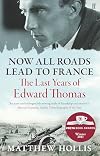
‘Now all roads lead to France’ is a beautifully written and rather unique biography of the poet Edward Thomas.
Thomas was a rather difficult and diffident man, albeit one plagued with insecurities and uncertainties. His peaceable calm in the countryside was offset by his need to sustain his family on a meagre writer’s income. But it was not until 1914 that Thomas – who would die at the Battle of Arras in 1917 – began to write poetry, encouraged by his friend and mentor, Robert show more Frost.
It is an amazing feat that Thomas emerged as a brilliant and mature poet in a matter of months. Certainly he’d written before that time; prose criticism, reviews, and other odd commissions, but there was always a sense that Thomas was ‘better than this’. Frost was right when he pointed out to Thomas that really his prose, evocative of spring and nature, was really very poetical and quite complex. Thomas’ prose – including travelogues of the Icknield way – were peppered with poetical observations and dogged by the ghostly figure of an Other man – Thomas’ alter ego.
Thomas would undergo what we’d now call cognitive psychotherapy. He was an alienated and dissatisfied man, whose unhappiness only deepened when he projected his inner pain onto his nearest and dearest. His long-suffering wife, Helen, loved him all the same, even encouraged, or attempted to temper, his infatuations with other women (which would never become adulterous).
Hollis’ biography is clever in that it is about Thomas’ emergence as a poet, and so charts really the final five or so years before his death in France. Sure it casts an eye back to his earlier life, his childhood and time at Oxford, but it is really a story of a developing creativity. Hollis does some masterful comparisons, taking selections of Thomas’ prose and showing how poems, as it were, sprouted out of them. We’re almost sitting there looking over Thomas’ shoulder, the bare bushes of Old Man and empty, brown trees of the Hampshire countryside framed by the study window.
Hollis is careful and attentive; but he is also playful. While Thomas was a difficult man, he was also loving and calm. Hollis paints a picture of him that draws in the major players in his life. At the same time, Hollis has to be commended for his brilliant mini-essays on the contemporary poetic scene; Imagism and Georgian poetry are put in their combative context, and Georgian poetry emerges as more than the trite tripe that it is often dismissed as.
Overall, this is a thoroughly intimate and successful study of a poet and the poet’s becoming.
If you want to see a bit of Thomas’ Hampshire, then Matthew Hollis serves as an excellent guide in this video: http://www.guardian.co.uk/books/video/2012/mar/01/poet-edward-thomas-hampshire-v... show less
Thomas was a rather difficult and diffident man, albeit one plagued with insecurities and uncertainties. His peaceable calm in the countryside was offset by his need to sustain his family on a meagre writer’s income. But it was not until 1914 that Thomas – who would die at the Battle of Arras in 1917 – began to write poetry, encouraged by his friend and mentor, Robert show more Frost.
It is an amazing feat that Thomas emerged as a brilliant and mature poet in a matter of months. Certainly he’d written before that time; prose criticism, reviews, and other odd commissions, but there was always a sense that Thomas was ‘better than this’. Frost was right when he pointed out to Thomas that really his prose, evocative of spring and nature, was really very poetical and quite complex. Thomas’ prose – including travelogues of the Icknield way – were peppered with poetical observations and dogged by the ghostly figure of an Other man – Thomas’ alter ego.
Thomas would undergo what we’d now call cognitive psychotherapy. He was an alienated and dissatisfied man, whose unhappiness only deepened when he projected his inner pain onto his nearest and dearest. His long-suffering wife, Helen, loved him all the same, even encouraged, or attempted to temper, his infatuations with other women (which would never become adulterous).
Hollis’ biography is clever in that it is about Thomas’ emergence as a poet, and so charts really the final five or so years before his death in France. Sure it casts an eye back to his earlier life, his childhood and time at Oxford, but it is really a story of a developing creativity. Hollis does some masterful comparisons, taking selections of Thomas’ prose and showing how poems, as it were, sprouted out of them. We’re almost sitting there looking over Thomas’ shoulder, the bare bushes of Old Man and empty, brown trees of the Hampshire countryside framed by the study window.
Hollis is careful and attentive; but he is also playful. While Thomas was a difficult man, he was also loving and calm. Hollis paints a picture of him that draws in the major players in his life. At the same time, Hollis has to be commended for his brilliant mini-essays on the contemporary poetic scene; Imagism and Georgian poetry are put in their combative context, and Georgian poetry emerges as more than the trite tripe that it is often dismissed as.
Overall, this is a thoroughly intimate and successful study of a poet and the poet’s becoming.
If you want to see a bit of Thomas’ Hampshire, then Matthew Hollis serves as an excellent guide in this video: http://www.guardian.co.uk/books/video/2012/mar/01/poet-edward-thomas-hampshire-v... show less
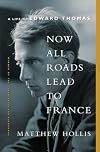
I don't know that I came away from this book with any transformative insights. I am interested in Thomas as a walker and a cyclist and as he writes about his experiences moving through the English landscape. This book certainly helped me get to know Thomas a lot better.
The core of the book is the relationship between Thomas and Robert Frost. That relationship was key for both Thomas and Frost. This book helped me to understand how the poetry of Frost and Thomas related to some of the other show more directions of poetry at the time, the Georgians and the Imagists.
I am not a big reader of poetry. This book gave me some good tools for reading poetry and for seeing how it can work. show less
The core of the book is the relationship between Thomas and Robert Frost. That relationship was key for both Thomas and Frost. This book helped me to understand how the poetry of Frost and Thomas related to some of the other show more directions of poetry at the time, the Georgians and the Imagists.
I am not a big reader of poetry. This book gave me some good tools for reading poetry and for seeing how it can work. show less
Lists
Awards


You May Also Like


Associated Authors
Statistics
- Works
- 11
- Also by
- 4
- Members
- 510
- Popularity
- #48,630
- Rating
- 4.0
- Reviews
- 5
- ISBNs
- 23