
Cheryl Lu-lien Tan
Author of A Tiger in the Kitchen: A Memoir of Food and Family
About the Author
Works by Cheryl Lu-lien Tan
Tagged
Common Knowledge
- Gender
- female
- Occupations
- journalist
- Birthplace
- Singapore
- Map Location
- Singapore
Members
Reviews
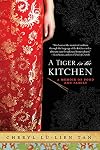
I enjoyed this book more for the insight into the Singaporean culture than the descriptions of the food, even though those descriptions were richly detailed. Food has such a strong emotional pull in families of any culture and can bring out so many memories, good and bad. The stories of Tan's family and their lives in Singapore were what bound the work like the 5 spice blend present in many of the recipes. It was heartwarming to see how Tan's quest to learn how to make the foods that filled show more her memories of childhood and her culture brought together her entire family even though there were some difficult estrangements.
The author included many of the recipes in the back of the book for those brave souls who feel up to the challenge, I am not among that group as I have far too many books to read to have time for cooking- It's much less mess to read about cooking than to actually do it. ;) My hat is off to Ms. Tan for her great efforts and accomplishment in learning the complex skills required for these deceptively simple dishes and executing them in her tiny New York kitchen. show less
The author included many of the recipes in the back of the book for those brave souls who feel up to the challenge, I am not among that group as I have far too many books to read to have time for cooking- It's much less mess to read about cooking than to actually do it. ;) My hat is off to Ms. Tan for her great efforts and accomplishment in learning the complex skills required for these deceptively simple dishes and executing them in her tiny New York kitchen. show less
 This review was written for LibraryThing Early Reviewers.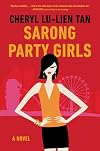
Books set in Singapore are a rarity – before Crazy Rich Asians, the only books I could find were by local authors. Sarong Party Girls continues (at least initially) in the same vein as Crazy Rich Asians, but without the dizzying displays of wealth. Oh, it’s still there but this is much more of a heartland kind of book with a normal heroine. At the start, I thought this would be all party party party (and drink drink drink) but as the story continues, our heroine Jazzy finds the darker show more side of the club scene.
Cheryl Lu-Lien Tan writes this book in Singlish, the local patois of Singapore. If you’ve been to Singapore, you may be familiar with the some of the expressions (such as lah to end a sentence, aiyoh as an exclamation and ang moh for a foreigner). If not, you will get an idea of what they mean as you read. But if you want to brush up on your Singlish and make sure you’re not talking cock, I recommend http://www.singlishdictionary.com/. I promise you that the book is easy to read and guniang here was pretty much fluent at the end.
The premise of the story is pretty simple on the surface – Jazzy and her friends are getting old (nearly 27!) and need to find themselves rich expat husbands to have beautiful Eurasian babies. This needs to be done quickly so they set themselves a deadline of 1 year. Jazzy’s former best friend is already off the table – Sher has disgraced the team by marrying an Ah Beng (local) man. Imo and Fann take up the challenge, but it’s really only Jazzy who takes this super-seriously. She plots and plans how to find a rich husband and gets herself entangled in the shadier sides of the club/expat scene where women are nothing but pieces of meat. By day, Jazzy is worried about her job as her boss makes noises about trading her in for a younger model and the deterioration of her friendship with Jazz. Will this sweet social climber find true love or the ang moh of her dreams?
Jazzy is a simple girl who gets caught up in all sorts of odd stuff at night. Initially, she’s happy to be there looking shiok, making the boys steam for free drinks and VIP areas. So what if she’s not always comfortable with the way the men are acting? It’s a small price to pay. But her eyes begin to open at a Chinese club where the girls are the entertainment for the men and how the women are treated as sex objects at a KTV lounge. And when people she thought she trusted begin to act like she’s nothing but a plaything…will Jazzy accept things or will she revolt? She’s a strong character with an iron will but not always in the right direction. I came to love Jazzy as the book went on as she faced up to some facts she had carefully been ignoring.
I liked how Sarong Party Girls started off like a big party life then went on to explore the dangers of excess (drinking, money and the like), rebellion against tradition and the marginalisation of women. The reactions of the different women were interesting and sometimes astounding in my opinion. It’s still a fun read though and I’d recommend it for those looking for a fun read that also comments on issues below the seemingly perfect surface.
Thanks to SocialBookCo for the copy of this book. My review is honest.
http://samstillreading.wordpress.com show less
Cheryl Lu-Lien Tan writes this book in Singlish, the local patois of Singapore. If you’ve been to Singapore, you may be familiar with the some of the expressions (such as lah to end a sentence, aiyoh as an exclamation and ang moh for a foreigner). If not, you will get an idea of what they mean as you read. But if you want to brush up on your Singlish and make sure you’re not talking cock, I recommend http://www.singlishdictionary.com/. I promise you that the book is easy to read and guniang here was pretty much fluent at the end.
The premise of the story is pretty simple on the surface – Jazzy and her friends are getting old (nearly 27!) and need to find themselves rich expat husbands to have beautiful Eurasian babies. This needs to be done quickly so they set themselves a deadline of 1 year. Jazzy’s former best friend is already off the table – Sher has disgraced the team by marrying an Ah Beng (local) man. Imo and Fann take up the challenge, but it’s really only Jazzy who takes this super-seriously. She plots and plans how to find a rich husband and gets herself entangled in the shadier sides of the club/expat scene where women are nothing but pieces of meat. By day, Jazzy is worried about her job as her boss makes noises about trading her in for a younger model and the deterioration of her friendship with Jazz. Will this sweet social climber find true love or the ang moh of her dreams?
Jazzy is a simple girl who gets caught up in all sorts of odd stuff at night. Initially, she’s happy to be there looking shiok, making the boys steam for free drinks and VIP areas. So what if she’s not always comfortable with the way the men are acting? It’s a small price to pay. But her eyes begin to open at a Chinese club where the girls are the entertainment for the men and how the women are treated as sex objects at a KTV lounge. And when people she thought she trusted begin to act like she’s nothing but a plaything…will Jazzy accept things or will she revolt? She’s a strong character with an iron will but not always in the right direction. I came to love Jazzy as the book went on as she faced up to some facts she had carefully been ignoring.
I liked how Sarong Party Girls started off like a big party life then went on to explore the dangers of excess (drinking, money and the like), rebellion against tradition and the marginalisation of women. The reactions of the different women were interesting and sometimes astounding in my opinion. It’s still a fun read though and I’d recommend it for those looking for a fun read that also comments on issues below the seemingly perfect surface.
Thanks to SocialBookCo for the copy of this book. My review is honest.
http://samstillreading.wordpress.com show less

I seem to have an issue with most of the non-USA based Akashic Noir books - either my expectations are a bit too high or something is really off.
Most of the stories can fit into the Noir definition as per the previous anthologies but yet again most of the stories could happen anywhere in the world - Signapore does not shine through; there is nothing that makes Singapore special. Which would not be bad in a book with Noir stories and I would have enjoyed a lot of those stories a lot more - show more but I was looking for the city - the way the San Francisco or the Brooklyn anthologies spotlighted their quirks.
I would not blame the editor and considering that all the stories were connected to Singapore, I guess the work was done but I expected a bit more. show less
Most of the stories can fit into the Noir definition as per the previous anthologies but yet again most of the stories could happen anywhere in the world - Signapore does not shine through; there is nothing that makes Singapore special. Which would not be bad in a book with Noir stories and I would have enjoyed a lot of those stories a lot more - show more but I was looking for the city - the way the San Francisco or the Brooklyn anthologies spotlighted their quirks.
I would not blame the editor and considering that all the stories were connected to Singapore, I guess the work was done but I expected a bit more. show less
This review was written for LibraryThing Early Reviewers.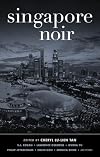
Picked this up at the Brooklyn Book Festival--why this was hanging out with all the kids' books, I have no idea. I've never read noir before, so I figured that short stories were a good way to cut my teeth, even if a couple people scoffed at the idea that noir stories could be set in a city as clean and outwardly respectable as Singapore. (I would argue that makes it an excellent setting.)
My chief complaint, I'm afraid, is probably traditional to the genre and can't be avoided in most cases: show more that's that, even though this collection did manage to include women writers (5 out of 14), there wasn't a single story with a female protagonist until Part III--though I actually had thought the first story was told from a woman's perspective until about two pages from the end, when another character cemented the lead's gender. Honestly, it would have been more interesting if left ambiguous. In any case, the lack of women or people of other genders was so pronounced that the first story with a female lead was jarring. There are only four stories with women narrators/over-the-shoulders (possibly three--"Spells" is a bit unclear, though I decided there were few enough women to put this in one in their camp).
You know what? Forget tradition. It's just plain lazy not to branch out in this day and age!
It was interesting to read these stories, so on the opposite side of what I saw from my reasonably sunny, short-sighted 5-to-8-year-old perspective. Obviously this is a side of Singapore that I was completely oblivious to, and probably not one that I'll see in a few weeks, since we'll probably stick to touristy areas and sites of nostalgia. But it was fun to read stories set in a place that I knew a long time ago and will be visiting again soon.
Favorite Stories:
"Kena Sai" - S.J. Rozan
Part social commentary, really--a young father falls in love with his son and Singapore just as he falls out of love with his restless, self-absorbed wife, and finds himself in a tight spot when she's ready to move on to the next thing--with child, but not ex-husband, in tow.
"Mei Kwei, I Love You" - Suchen Christine Lim
The first story featuring a woman main character, and a queer one at that. (Don't believe the character was specifically identified as a lesbian, so I'll leave it open.) I also loved the perspectives on religion and privilege--there was really a lot squeezed into this one story!
"Bedok Reservoir" - Dave Chua
A tad predictable, but I'd been waiting so long to get to a story told from a maid's perspective (and a second story clearly from the perspective of a woman) that this horrifying little revenge fantasy was like water in a desert.
"Murder on Orchard Road" - Nury Vittachi
I heartily approve of editor Tan's decision to end on a relatively lighthearted note, with this story
I liked "Reel" until the end--I saw the plot twit coming, but it wasn't explained at all (p94). The killer had no discernible motive, which was extremely strange given how heavily it was implied that they'd deliberately set out to do something heinous.
It seemed a bit as though Part I was stocked up with the heavy, truly dark stuff, with "Kena Sai" the first relative light in the tunnel. Part I was so heavy and adult that I worry sensitive readers might not make it to the lighter fare later on--I'm a voracious reader of fanfiction, but getting shoved into the brooding male sex fantasy of "Detective In a City with No Crime" was about as comfortable as a swim in the Arctic Ocean. Yes, yes, argue that it's par for the course all you want, but the aforementioned fanfiction seems to be making me a dark literature snob.
Quotes
35 - True, the state is a nanny and the bureaucracy does not know how to let a person live without rules, and so they reduce life to a schedule of permits and licenses to be applied and paid for. The have allowed seediness and confined it to certain quarters. The upper class are garrisoned with their respectability in other areas, all with rising real estate values.
Snerk. Perfect setting for a distopia. I'm waiting for the next round of distopian teen fiction set in a place where you start out on the sunny side--Hunger Games from the perspective of Capital City, or something. Not that that's related to noir, really, but I just really like this vision of "seediness confined to certain quarters."
66 - All white men looked the same to him.
I applaud this sentence for existing.
165 - I just found the end of this story very poignant. Here's Cha-Li trying to shoehorn the future she wanted into the present she was given, and it's definitely not going to work. She's still focused on her picture, not the big picture: defining what might happen in terms relative to herself rather than others.
212 - Like Natalia, she had wanted a better life. It was true that sometimes Natalia also considered suicide, but she knew she had to press on. If she died, her debts would simply be passed on to her family.
219 - I loved how the two main women in this story shared a kind of solidarity even though they'd never met.
237 - There was a certain Zen quality about the paradox that would give the race a uniquely Asian flavor.
Quoting the whole paragraph will spoil the ending, but I was delighted with the clever solution to an outlandish problem. show less
My chief complaint, I'm afraid, is probably traditional to the genre and can't be avoided in most cases: show more that's that, even though this collection did manage to include women writers (5 out of 14), there wasn't a single story with a female protagonist until Part III--though I actually had thought the first story was told from a woman's perspective until about two pages from the end, when another character cemented the lead's gender. Honestly, it would have been more interesting if left ambiguous. In any case, the lack of women or people of other genders was so pronounced that the first story with a female lead was jarring. There are only four stories with women narrators/over-the-shoulders (possibly three--"Spells" is a bit unclear, though I decided there were few enough women to put this in one in their camp).
You know what? Forget tradition. It's just plain lazy not to branch out in this day and age!
It was interesting to read these stories, so on the opposite side of what I saw from my reasonably sunny, short-sighted 5-to-8-year-old perspective. Obviously this is a side of Singapore that I was completely oblivious to, and probably not one that I'll see in a few weeks, since we'll probably stick to touristy areas and sites of nostalgia. But it was fun to read stories set in a place that I knew a long time ago and will be visiting again soon.
Favorite Stories:
"Kena Sai" - S.J. Rozan
Part social commentary, really--a young father falls in love with his son and Singapore just as he falls out of love with his restless, self-absorbed wife, and finds himself in a tight spot when she's ready to move on to the next thing--with child, but not ex-husband, in tow.
"Mei Kwei, I Love You" - Suchen Christine Lim
The first story featuring a woman main character, and a queer one at that. (Don't believe the character was specifically identified as a lesbian, so I'll leave it open.) I also loved the perspectives on religion and privilege--there was really a lot squeezed into this one story!
"Bedok Reservoir" - Dave Chua
A tad predictable, but I'd been waiting so long to get to a story told from a maid's perspective (and a second story clearly from the perspective of a woman) that this horrifying little revenge fantasy was like water in a desert.
"Murder on Orchard Road" - Nury Vittachi
I heartily approve of editor Tan's decision to end on a relatively lighthearted note, with this story
I liked "Reel" until the end--I saw the plot twit coming, but it wasn't explained at all (p94). The killer had no discernible motive, which was extremely strange given how heavily it was implied that they'd deliberately set out to do something heinous.
It seemed a bit as though Part I was stocked up with the heavy, truly dark stuff, with "Kena Sai" the first relative light in the tunnel. Part I was so heavy and adult that I worry sensitive readers might not make it to the lighter fare later on--I'm a voracious reader of fanfiction, but getting shoved into the brooding male sex fantasy of "Detective In a City with No Crime" was about as comfortable as a swim in the Arctic Ocean. Yes, yes, argue that it's par for the course all you want, but the aforementioned fanfiction seems to be making me a dark literature snob.
Quotes
35 - True, the state is a nanny and the bureaucracy does not know how to let a person live without rules, and so they reduce life to a schedule of permits and licenses to be applied and paid for. The have allowed seediness and confined it to certain quarters. The upper class are garrisoned with their respectability in other areas, all with rising real estate values.
Snerk. Perfect setting for a distopia. I'm waiting for the next round of distopian teen fiction set in a place where you start out on the sunny side--Hunger Games from the perspective of Capital City, or something. Not that that's related to noir, really, but I just really like this vision of "seediness confined to certain quarters."
66 - All white men looked the same to him.
I applaud this sentence for existing.
165 - I just found the end of this story very poignant. Here's Cha-Li trying to shoehorn the future she wanted into the present she was given, and it's definitely not going to work. She's still focused on her picture, not the big picture: defining what might happen in terms relative to herself rather than others.
212 - Like Natalia, she had wanted a better life. It was true that sometimes Natalia also considered suicide, but she knew she had to press on. If she died, her debts would simply be passed on to her family.
219 - I loved how the two main women in this story shared a kind of solidarity even though they'd never met.
237 - There was a certain Zen quality about the paradox that would give the race a uniquely Asian flavor.
Quoting the whole paragraph will spoil the ending, but I was delighted with the clever solution to an outlandish problem. show less
Lists
You May Also Like


Associated Authors
Statistics
- Works
- 4
- Members
- 485
- Popularity
- #50,912
- Rating
- 3.3
- Reviews
- 71
- ISBNs
- 29
