
Jean Favier (1932–2014)
Author of Gold & Spices: The Rise of Commerce in the Middle Ages
About the Author
Works by Jean Favier
Associated Works
The Carnavalet Museum: The illustrated history of Paris, a general survey of the collections (1986) — Foreword, some editions — 27 copies
Les Fastes du gothique : le siècle de Charles V : Galeries nationales du Grand Palais, 9 octobre 1981-1er février 1982 (1981) — Introduction — 16 copies
Tagged
Common Knowledge
- Canonical name
- Favier, Jean
- Legal name
- Favier, Jean
- Other names
- Sicard, Michel (Pseudonyme)
- Birthdate
- 1932-04-02
- Date of death
- 2014-08-12
- Gender
- male
- Education
- Université de la Sorbonne (Doctorat d'Etat ∙ Lettres ∙ [1378] ∙ [1966] ∙ 1967)
Agrégation d'histoire (1961)
Ecole française de Rome ( [1956, 1961])
Ecole des Chartes (Archiviste paléographe ∙ [1952, 1956])
Lycée Henri IV, Paris, France
Lycée Buffon - Occupations
- Historien (Moyen Age)
Médiéviste
Archiviste - Organizations
- Université de la Sorbonne (Professeur, 1969l1997)
Université de Rouen (Professeur, 1966l1969)
Ecole Pratique des Hautes Etudes, EPHE (Directeur d’études, 1965l1997)
Université de Brest (Maître de conférences, 1964l1966)
Centre Nationale de la Recherche Scientifique, CNRS (Attaché de Recherches, 1962l1964)
Lycée d’Orléans (Professeur, 1961l1962) (show all 19)
Bibliothèque Nationale de France, BNF (Président, 1994l1997)
Archives nationales de France (Conservateur, 1961 / Directeur, 1975l1994)
Académie des Inscriptions et Belles-Lettres (Membre, 1985 / Président, 1995)
Unesco (Pésident de la commission nationale française, 1997)
Société nationale des Antiquaires de France (Membre, Président, 1993)
Society of Antiquaries of London, Royaume-Uni
Comité des Travaux historiques et scientifiques (Membre)
Commission du Vieux-Paris (Membre)
Institut Francesco Datini de Prato (Membre du comité exécutif)
Ecole Normale Supérieure (Membre du conseil d’Administration (Membre du conseil d’Administration)
Mediaeval Academy of America, Cambridge, Massachusetts, USA (Membre)
Académie royale des Sciences, des Lettres et des Beaux-Arts de Belgique, Bruxelles (Membre)
Institut Grand-Ducal, Luxembourg (Membre) - Awards and honors
- Grand-Croix de l’Ordre national du Mérite
Grand-croix de la légion d'honneur
Commandeur de l'ordre des Arts et des Lettres
Commandeurs_des ordre_des_palmes_académiques
Commandeur de l'ordre de la couronne_(Belgique)
Officier de l’Ordre du Mérite de la République fédérale d’Allemagne (show all 7)
Commandeur de l’Ordre de la Couronne de Chêne, Luxembourg - Relationships
- Favier, Lucie (Epouse)
Bresc-Bautier, Geneviève (Eleve)
Kerhervé, Jean (Eleve) - Nationality
- France
- Birthplace
- 14e arrondissement, Paris, Île-de-France, France
- Place of death
- 15e arrondissement, Paris, Île-de-France, France
- Map Location
- France
- Associated Place (for map)
- France
Members
Reviews

How on earth do you retrace the life of Francois Villon (1431-?) when everything about him has been mostly lost and/ or the only sources that we have are meagrily scarce... to say the least!? Well, like Jean Favier does here: by relying on conjectures. A daring gamble? Not really.
Jean Favier, of course, was no average historian. One of the most eminent and brilliant specialists of the medieval era (e.g he directed the National Archives of France; taught at the Sorbonne; wrote countless books show more on the period and that embraced no less countless sub-specialised subjects etc.) the author clearly knows his stuff. His is a vast and deep knowledge upon which he fully relies, in fact, to try and sketch Villon's biography, no matter how skeletic. For instance, if we don't know anything about the chaplain who raised him as his son, we know, however, how chaplains used to live then, and so Jean Favier just draws on these other sources to attempt parallels. Sketchy it might be, but it nevertheless offers a wide picture of 15th century Paris which is as engrossing as it can be, from our vantage point, alien.
This, though, is not an history book about medieval Paris, but the biography of a poet living on the margin, a clerc who graduated in arts yet would be dragged down into a life of delinquency and petty criminality, a man who will be sent to jail numerous time, before disappearing from history following a death penalty (by hanging) which was commuted into banishment. What about it?
There is Villon the man. Jean Favier, here, is quick to remind us that, contrary to some later legends and other myths would suggest, he was far from being an hardened criminal or, as was suggested at times, part of the Coquillards, one of these most notorious and infamous gangs of the era. He surely was found guilty of murder at barely 26, and it's his involvement in another murder that would lead to his death penalty commuted into banishment in his later life (his accomplices weren't so lucky...). But, stabbing during fights and scuffles were not uncommon back then, as most people used to carry daggers to walk streets that were everything but entirely safe. Villon, a regular of shaddy taverns, merely got unlucky -so to speak.
There is, then and most importantly, Villon the poet. Jean Favier's passion, here, transpires at every page. If the topics that Villon dealt with (e.g. poverty, death, many unfortunate love, and ridiculing -in his case, virulent- of some contemporaries) and the imageries that he used (relying widely on the literature of the time) were everything but original, what demarcated Villon indeed was his language: the reliance on puns, innuendos, double-entendre, a constant and smart dancing between the 15th century French of the common people and the slang of the then underworld. This, of course, is what makes Villon still difficult 'to get', as most of his in-jokes can only fly past modern readers. Nevertheless, Favier offers some very enlightening explanations, clarifying otherwise obscure allusions when any.
Clocking at 500 pages, needless to say, this is not for the faint-hearted! Having said that, it being an engrossing portrait of medieval Paris as much as an inquisitive biography of a controversial poet, a man who had a life as mysterious and shadowy as the urban legends that will later tail his name, it's an absolute must read for anyone interested in Villon's work and, beyond, French medieval poetry. show less
Jean Favier, of course, was no average historian. One of the most eminent and brilliant specialists of the medieval era (e.g he directed the National Archives of France; taught at the Sorbonne; wrote countless books show more on the period and that embraced no less countless sub-specialised subjects etc.) the author clearly knows his stuff. His is a vast and deep knowledge upon which he fully relies, in fact, to try and sketch Villon's biography, no matter how skeletic. For instance, if we don't know anything about the chaplain who raised him as his son, we know, however, how chaplains used to live then, and so Jean Favier just draws on these other sources to attempt parallels. Sketchy it might be, but it nevertheless offers a wide picture of 15th century Paris which is as engrossing as it can be, from our vantage point, alien.
This, though, is not an history book about medieval Paris, but the biography of a poet living on the margin, a clerc who graduated in arts yet would be dragged down into a life of delinquency and petty criminality, a man who will be sent to jail numerous time, before disappearing from history following a death penalty (by hanging) which was commuted into banishment. What about it?
There is Villon the man. Jean Favier, here, is quick to remind us that, contrary to some later legends and other myths would suggest, he was far from being an hardened criminal or, as was suggested at times, part of the Coquillards, one of these most notorious and infamous gangs of the era. He surely was found guilty of murder at barely 26, and it's his involvement in another murder that would lead to his death penalty commuted into banishment in his later life (his accomplices weren't so lucky...). But, stabbing during fights and scuffles were not uncommon back then, as most people used to carry daggers to walk streets that were everything but entirely safe. Villon, a regular of shaddy taverns, merely got unlucky -so to speak.
There is, then and most importantly, Villon the poet. Jean Favier's passion, here, transpires at every page. If the topics that Villon dealt with (e.g. poverty, death, many unfortunate love, and ridiculing -in his case, virulent- of some contemporaries) and the imageries that he used (relying widely on the literature of the time) were everything but original, what demarcated Villon indeed was his language: the reliance on puns, innuendos, double-entendre, a constant and smart dancing between the 15th century French of the common people and the slang of the then underworld. This, of course, is what makes Villon still difficult 'to get', as most of his in-jokes can only fly past modern readers. Nevertheless, Favier offers some very enlightening explanations, clarifying otherwise obscure allusions when any.
Clocking at 500 pages, needless to say, this is not for the faint-hearted! Having said that, it being an engrossing portrait of medieval Paris as much as an inquisitive biography of a controversial poet, a man who had a life as mysterious and shadowy as the urban legends that will later tail his name, it's an absolute must read for anyone interested in Villon's work and, beyond, French medieval poetry. show less
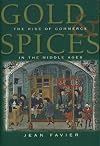
An excellent study of medieval commerce unfortunately ruined for English-speakers by a translation that strips out the footnotes of the original.

CHARLEMAGNE
Il y a le Charlemagne de l'histoire et celui de la légende, l'homme qu'il fut et le personnage construit au fil des siècles. L'homme et son oeuvre sont d'une diversité qui touche au paradoxe. L'empereur à la barbe fleurie fut un chef de guerre sans pitié, un défenseur de la foi, l'initiateur d'une renaissance intellectuelle, d'un système monétaire qui dura mille ans et l'organisateur d'un véritable Etat. Pas un domaine n'a échappé à son ardeur réformatrice que ses show more conquêtes ont étendue à un immense empire : tous les éléments d'une légende étaient réunis, le temps a fait le reste. show less
Il y a le Charlemagne de l'histoire et celui de la légende, l'homme qu'il fut et le personnage construit au fil des siècles. L'homme et son oeuvre sont d'une diversité qui touche au paradoxe. L'empereur à la barbe fleurie fut un chef de guerre sans pitié, un défenseur de la foi, l'initiateur d'une renaissance intellectuelle, d'un système monétaire qui dura mille ans et l'organisateur d'un véritable Etat. Pas un domaine n'a échappé à son ardeur réformatrice que ses show more conquêtes ont étendue à un immense empire : tous les éléments d'une légende étaient réunis, le temps a fait le reste. show less
Sep 1, 2024Spanish
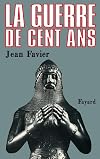
Ce livre est vraiment, vraiment bien. Je le recommande. Il est d'une grande richesse et nous apprend beaucoup sur cette période. J'en prévois une relecture, toujours accompagnée de l'arbre généalogique des rois de France et d'Angletterre.
May 3, 2009 (Edited)French
Awards


You May Also Like


Associated Authors
Statistics
- Works
- 40
- Also by
- 8
- Members
- 460
- Popularity
- #53,418
- Rating
- 3.8
- Reviews
- 4
- ISBNs
- 73
- Languages
- 8
