
John Dickie (1) (1963–)
Author of Cosa Nostra: A History of the Sicilian Mafia
For other authors named John Dickie, see the disambiguation page.
About the Author
John Dickie is Lecturer in Italian Studies at University College London.
Works by John Dickie
Tagged
Common Knowledge
- Birthdate
- 1963
- Gender
- male
- Education
- University of Oxford (Pembroke College)
University of Sussex (MA, PhD) - Occupations
- professor
historian - Organizations
- University College London
- Awards and honors
- Commendatore dell'Ordine della Stella della Solidarietà italiana
- Relationships
- Penny, Sarah (spouse)
- Nationality
- UK
- Birthplace
- Dundee, Scotland, UK
- Places of residence
- London, England, UK
- Associated Place (for map)
- UK
Members
Reviews
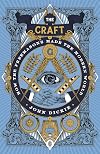
The subtitle of this book suggests we will learn how Freemasonry has impacted on our society today. Actually the book is more about how various governments, dictators, tyrannies and revolutionaries have used Freemasons as targets of hatred and abuse in order to further their own agendas.
The first part of the book describes the origins of Freemasonry in 18th century London, its spread to Scotland, Europe and the wider world, and something of the rituals and ceremonies employed. Like all show more secret societies, Freemasonry is mostly about improving self-worth through aggrandising ceremonies and mutual back-scratching. Here, the Craft comes across as a men-only mixture of a Hogwarts Appreciation Society and the WI.
As we move forwards in history the story becomes much darker, although, as Dickie shows, Freemasons have always been persecuted for their supposed powers. Power always needs a place to redirect popular opprobrium away from itself and towards a group that cannot fight back. Sometimes this is the Jews, sometimes it is Freemasonry, and sometimes it is both.
The book ends with a detailed indictment of the corruption of Freemasonry in Italy by the mafia and other criminal gangs and by self-serving elements of government. show less
The first part of the book describes the origins of Freemasonry in 18th century London, its spread to Scotland, Europe and the wider world, and something of the rituals and ceremonies employed. Like all show more secret societies, Freemasonry is mostly about improving self-worth through aggrandising ceremonies and mutual back-scratching. Here, the Craft comes across as a men-only mixture of a Hogwarts Appreciation Society and the WI.
As we move forwards in history the story becomes much darker, although, as Dickie shows, Freemasons have always been persecuted for their supposed powers. Power always needs a place to redirect popular opprobrium away from itself and towards a group that cannot fight back. Sometimes this is the Jews, sometimes it is Freemasonry, and sometimes it is both.
The book ends with a detailed indictment of the corruption of Freemasonry in Italy by the mafia and other criminal gangs and by self-serving elements of government. show less

Ho conosciuto gli studi storici sulle mafie all'esame di storia contemporanea, in particolare "Storia della mafia" di Salvatore Lupo. Un vero capolavoro, ma un po' datato, visto che è stato edito nel 1993. Questo testo mi ha incuriosito e l'ho trovato di ottima qualità. Ha tanti pregi: la chiarezza di esposizione che lo rende leggibile quasi fosse un testo "leggero"; il pregio di concentrarsi su tutte le mafie esistenti in Italia, e non solo su Cosa Nostra; il giudizio netto da spettatore show more estero sulle insufficienze della lotta alla mafia da parte di certi componenti dello Stato; il quadro aggiornato della potenza delle mafie, contrariamente a quanto può apparire al momento la mafia più pericolosa è la n'drangheta e non quella sicula e nemmeno la camorra. Le note bibliografiche indispensabili per lo storico sono riportate in fondo al volume, in modo che chi è interessato trova il compendio delle fonti senza per questo dover interrompere la lettura continuamente. L'autore è giornalista, saggista e professore di studi italiani a Londra, e ha potuto scrivere questo testo anche grazie ad una apposita borsa di studio. Chissà se in Italia sarebbe possibile una cosa del genere... Lo consiglio vivamente, è il miglior libro ad oggi di storia delle mafie italiane e non solo, perché la storia della mafia attraversa gran parte della storia italiana dall'800 ad oggi, compresi gli anni di piombo, la strategia della tensione, il fallito golpe Borghese, la stagione dei sequestri, il caso Tortora... Ormai, con qualche decennio di distanza, anche se fra tante lacune, si riesce bene o male a capire quali fossero gli scenari di guerra fredda che han portato l'Italia ad essere il paese più tormentato nella storia del dopoguerra europeo. show less
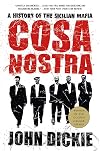
The word ‘mafia’ is known to everyone; and yet not many people have a very clear idea of what it is. Mention the mafia, and most people probably think of the American Mafia (though this is in fact an offshoot of a decidedly Sicilian tree), or a scene from The Godfather. The truth, as John Dickie shows in this excellent account, is both more interesting, and more complicated and harrowing, than fiction.
Nobody knows quite when or how the mafia came into being; even the origin of the name show more is now hopelessly lost and obscure. Mafiosi themselves tend to use the name ‘Cosa Nostra’ – ‘our thing’. The organisation owes much, perhaps, to Sicily’s unique history. This small island, situated in the middle of the Mediterranean, barely a stone’s throw from the Italian mainland and yet very different to the remainder of the peninsula, has been conquered by Greeks, Vandals, Byzantines, Arabs, Normans, and the French. Some of these colonial powers were more forbearing than others, but ordinary Sicilians rarely benefited from their rule. Distrust of the state, and the conviction that an honourable man sorts out his own problems and avenges insults and injuries on his own initiative, was and is widespread. Strange as it may sound, honour – albeit of the kind that few outsiders would recognise – is written into the mafia’s DNA.
The mafia seems always to have existed on two levels. On one level, it is hidden and mysterious, a sub-stratum that only its members know of or understand. Crime – fraud, drug-trafficking, money-laundering, protection rackets – is its raison d’être. On another level, however, it rises up into the mainstream and infiltrates politics, law enforcement, the judiciary, the Church. As the author says, Cosa Nostra ‘is a shadow state, a political body that sometimes opposes, sometimes subverts, and sometimes dwells within the body of the legal government.’ (Of course, and as it’s only fair to point out, there have also been politicians, policemen, judges and priests who have courageously taken a stand against the mafia, and have paid dearly for it.)
There have been many attempts to deal with the mafia, none of which have been entirely successful. Mussolini launched a war against Cosa Nostra, perhaps motivated by an incident that occurred when he visited Palermo and the mayor (a Mafioso) gestured at his bodyguards and said, ‘You are with me, you are under my protection. What do you need all these cops for?’ The implication was clear: here, the mafia were in control. The duce did not take kindly to such a statement, and under his regime the mafia seemed to be in retreat – only to advance again in the post-war era. In the 1980s, in the aftermath of the brutal Mafia Wars, a determined effort to overcome the mafia was launched by magistrates Giovanni Falcone and Paolo Borsellino, and led in time to the Maxi Trial, in which 342 mafiosi were convicted. The mafia response was swift and brutal: Falcone, Borsellino and many others were killed, which in turn led to a wave of public revulsion.
Which leads us neatly to the present situation, insofar as it can be understood. The Pax mafiosa, ironic as the name may sound, is in place, and the days of car bombs and public shootings seem to be over, at least for now. Brutality continues (‘I filled a cemetery all by myself,’ new capo Matteo Messina Denaro has reportedly claimed), but it does so in private and out of sight. The modern mafia have grasped one of the more elemental, and odd, rules of postmodern society: that which does not exist in the media can be said, in a certain sense, not to exist at all.
What of the future? This versatile organisation, deeply embedded in the structure of Sicilian society, probably isn’t going anywhere fast. It may change and adapt, but it will almost certainly continue – for the time being. ‘The mafia of Sicily pursues money and power by cultivating the art of killing people and getting away with it,’ Dickie states. That, at least – sadly – is unlikely to change any time soon. show less
Nobody knows quite when or how the mafia came into being; even the origin of the name show more is now hopelessly lost and obscure. Mafiosi themselves tend to use the name ‘Cosa Nostra’ – ‘our thing’. The organisation owes much, perhaps, to Sicily’s unique history. This small island, situated in the middle of the Mediterranean, barely a stone’s throw from the Italian mainland and yet very different to the remainder of the peninsula, has been conquered by Greeks, Vandals, Byzantines, Arabs, Normans, and the French. Some of these colonial powers were more forbearing than others, but ordinary Sicilians rarely benefited from their rule. Distrust of the state, and the conviction that an honourable man sorts out his own problems and avenges insults and injuries on his own initiative, was and is widespread. Strange as it may sound, honour – albeit of the kind that few outsiders would recognise – is written into the mafia’s DNA.
The mafia seems always to have existed on two levels. On one level, it is hidden and mysterious, a sub-stratum that only its members know of or understand. Crime – fraud, drug-trafficking, money-laundering, protection rackets – is its raison d’être. On another level, however, it rises up into the mainstream and infiltrates politics, law enforcement, the judiciary, the Church. As the author says, Cosa Nostra ‘is a shadow state, a political body that sometimes opposes, sometimes subverts, and sometimes dwells within the body of the legal government.’ (Of course, and as it’s only fair to point out, there have also been politicians, policemen, judges and priests who have courageously taken a stand against the mafia, and have paid dearly for it.)
There have been many attempts to deal with the mafia, none of which have been entirely successful. Mussolini launched a war against Cosa Nostra, perhaps motivated by an incident that occurred when he visited Palermo and the mayor (a Mafioso) gestured at his bodyguards and said, ‘You are with me, you are under my protection. What do you need all these cops for?’ The implication was clear: here, the mafia were in control. The duce did not take kindly to such a statement, and under his regime the mafia seemed to be in retreat – only to advance again in the post-war era. In the 1980s, in the aftermath of the brutal Mafia Wars, a determined effort to overcome the mafia was launched by magistrates Giovanni Falcone and Paolo Borsellino, and led in time to the Maxi Trial, in which 342 mafiosi were convicted. The mafia response was swift and brutal: Falcone, Borsellino and many others were killed, which in turn led to a wave of public revulsion.
Which leads us neatly to the present situation, insofar as it can be understood. The Pax mafiosa, ironic as the name may sound, is in place, and the days of car bombs and public shootings seem to be over, at least for now. Brutality continues (‘I filled a cemetery all by myself,’ new capo Matteo Messina Denaro has reportedly claimed), but it does so in private and out of sight. The modern mafia have grasped one of the more elemental, and odd, rules of postmodern society: that which does not exist in the media can be said, in a certain sense, not to exist at all.
What of the future? This versatile organisation, deeply embedded in the structure of Sicilian society, probably isn’t going anywhere fast. It may change and adapt, but it will almost certainly continue – for the time being. ‘The mafia of Sicily pursues money and power by cultivating the art of killing people and getting away with it,’ Dickie states. That, at least – sadly – is unlikely to change any time soon. show less
This is exactly what it purports to be - a history covering the Mafia from its origins in 19th Century Sicily to the present day.
Interesting for the way in which it explodes much of the Mafia myth - the Mafia are not an old Sicilian organisation, but emerged in the shadow of modern capitalism and its attendant citrus orchards in the late 19th century.
Ever since it has oscillated between higher and lower profile existence, and greater or lesser subversion of state power. Its most explicit show more challenge to the state came in the 1990s, and it was a challenge that almost broke it, and was in part a consequence of the huge amounts of drug money that poured into and through the organisation in the 1970s and 1980s, disrupting its traditional structure.
Now once again quiescent, on the political scene, the author suggests it is actually recuperating through the low profile protection rackets and intimidation which it had traditionally relied on.
Although it touches on the US, this is a book about the Italian Mafia, and a compelling story as well as a history. show less
Interesting for the way in which it explodes much of the Mafia myth - the Mafia are not an old Sicilian organisation, but emerged in the shadow of modern capitalism and its attendant citrus orchards in the late 19th century.
Ever since it has oscillated between higher and lower profile existence, and greater or lesser subversion of state power. Its most explicit show more challenge to the state came in the 1990s, and it was a challenge that almost broke it, and was in part a consequence of the huge amounts of drug money that poured into and through the organisation in the 1970s and 1980s, disrupting its traditional structure.
Now once again quiescent, on the political scene, the author suggests it is actually recuperating through the low profile protection rackets and intimidation which it had traditionally relied on.
Although it touches on the US, this is a book about the Italian Mafia, and a compelling story as well as a history. show less
Awards


You May Also Like


Associated Authors
Statistics
- Works
- 12
- Members
- 1,425
- Popularity
- #18,051
- Rating
- 3.8
- Reviews
- 23
- ISBNs
- 145
- Languages
- 15
- Favorited
- 1
