
J. G. Jones
Author of Final Crisis
J. G. Jones is J.G. Jones (1). For other authors named J.G. Jones, see the disambiguation page.
About the Author
Image credit: Comics artist J.G. Jones at the 2013 Wizard World New York Experience Comic Con, at Pier 36 in Manhatan, June 29, 2013. This photo was created by Luigi Novi. By Luigi Novi, CC BY 3.0, https://commons.wikimedia.org/w/index.php?curid=27173078
Series
Works by J. G. Jones
Before Watchmen: Comedian #1 (2012) — Illustrator; Cover artist, some editions — 15 copies, 2 reviews
Star Wars: Journey to Star Wars: the Last Jedi - The Legends of Luke Skywalker (Star Wars) 8 copies, 1 review
Black Widow [1999] #2 - The Itsy-Bitsy Spider: Ingenue — Illustrator — 3 copies
Dust To Dust #1 2 copies
Black Widow [1999] #3 - The Itsy-Bitsy Spider: I.D. — Illustrator — 2 copies
Doc Savage #14 1 copy
Doc Savage #16 1 copy
Doc Savage #17 1 copy
Dust To Dust #6 1 copy
Dust To Dust #5 1 copy
Dust to Dust #4 1 copy
Dust To Dust #3 1 copy
Dust To Dust #2 1 copy
Doc Savage #15 1 copy
Associated Works
Y: The Last Man Vol. 03: One Small Step (2004) — Cover artist, some editions — 2,214 copies, 39 reviews
Y: The Last Man #03 — Cover artist — 13 copies
Y: The Last Man #08 — Cover artist — 7 copies
Y: The Last Man #14 — Cover artist — 7 copies
Y: The Last Man #16 — Cover artist — 7 copies
Y: The Last Man #11 — Cover artist — 6 copies
Y: The Last Man #12 — Cover artist — 5 copies
Wonder Woman, Vol. 2 #219 — Cover artist — 4 copies
Catwoman (2002-2010) #16 — Cover artist — 3 copies
Wonder Woman, Vol. 2 #200 — Cover artist — 3 copies
Catwoman (2002-2010) #14 — Cover artist — 3 copies
Catwoman (2002-2010) #13 — Cover artist — 3 copies
Catwoman (2002-2010) #12 — Cover artist — 3 copies
Avengers Vol. 3 - 68 — Cover artist — 3 copies
Avengers #484 (Vol. 3 #69) — Cover artist — 3 copies
Avengers#70 (Vol. 3 #70) — Cover artist — 3 copies
Wonder Woman, Vol. 2 #221 — Cover artist — 3 copies
Catwoman (2002-2010) #15 — Cover artist — 3 copies
Wonder Woman, Vol. 2 #223 — Cover artist — 2 copies
Wonder Woman, Vol. 2 #220 — Cover artist — 2 copies
Wonder Woman, Vol. 2 #201 — Cover artist — 2 copies
Wonder Woman, Vol. 2 #203 — Cover artist — 2 copies
Wonder Woman, Vol. 2 #205 — Cover artist — 2 copies
Wonder Woman, Vol. 2 #208 — Cover artist — 1 copy
Wonder Woman, Vol. 2 #218 — Cover artist — 1 copy
Wonder Woman, Vol. 2 #209 — Cover artist — 1 copy
Wonder Woman, Vol. 2 #213 — Cover artist — 1 copy
Wonder Woman, Vol. 2 #222 — Cover artist — 1 copy
Wonder Woman, Vol. 2 #210 — Cover artist — 1 copy
Tagged
Common Knowledge
- Legal name
- Jones, Jeffrey Glen
- Birthdate
- 20th century
- Gender
- male
- Education
- Louisiana State University
SUNY Albany (MFA) - Nationality
- USA
- Birthplace
- Louisiana, USA
- Places of residence
- Philadelphia, Pennsylvania, USA
- Associated Place (for map)
- USA
Members
Reviews

I don't know why I even bought this in the first place, as I tend to have a low opinion of most of the big "events" in comic books, but Final Crisis managed to surpass any and all expectations I might have had for how terrible a graphic novel could actually be.
For one thing, the story is nearly incomprehensible. Perhaps, if I'd read all the dozen or so tie-in novels as well, the story would have made more sense, but if you're going to collect a story in a single book, you should at least show more have to collect a complete story. And, I suspect, even reading the other tie-ins wouldn't have helped with the artistic and narrative failures to be found within this one single volume.
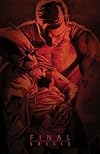
Frankly, the book doesn't even seem to understand itself. The death of Martian Manhunter, which should have been a pretty big deal, is passed over so quickly it could easily escape an inattentive reader's notice. Not only is Martian Manhunter a more important character to the DC universe than scores of minor characters who take up so much of the narrative, but the whole point of killing off a major character at the beginning of the story is to show just how high the stakes actually are. Instead, Morrison seems to kill him off with barely a shrug. The death of Batman, at least, gets a bit more attention, but is robbed of all its potential narrative power by the fact that it's so clearly advertised on the cover of the book.
On the other end of the spectrum, there's the resurrection of Barry Allen, who seems to have been brought back to life for no particularly good reason at all. Obviously, it goes beyond cliche to point out that death in comic books is as survivable a condition as the common cold, but it should still have some sort of value. If you're going to undo it, make it count for something. But Barry accomplishes nothing that couldn't have been accomplished by any of the other Flashes (a fact underscored by the fact that he basically spends the entire story with Wally, alternately chasing something or being chased by someone else), and the mystery of his return is all but ignored and plays no part in the narrative.
The art is mediocre at best, with the exception of some of the cover art. Wonder Woman's mask is a shocking image, but one that is never given the kind of focus it deserves. show less
For one thing, the story is nearly incomprehensible. Perhaps, if I'd read all the dozen or so tie-in novels as well, the story would have made more sense, but if you're going to collect a story in a single book, you should at least show more have to collect a complete story. And, I suspect, even reading the other tie-ins wouldn't have helped with the artistic and narrative failures to be found within this one single volume.
Frankly, the book doesn't even seem to understand itself. The death of Martian Manhunter, which should have been a pretty big deal, is passed over so quickly it could easily escape an inattentive reader's notice. Not only is Martian Manhunter a more important character to the DC universe than scores of minor characters who take up so much of the narrative, but the whole point of killing off a major character at the beginning of the story is to show just how high the stakes actually are. Instead, Morrison seems to kill him off with barely a shrug. The death of Batman, at least, gets a bit more attention, but is robbed of all its potential narrative power by the fact that it's so clearly advertised on the cover of the book.
On the other end of the spectrum, there's the resurrection of Barry Allen, who seems to have been brought back to life for no particularly good reason at all. Obviously, it goes beyond cliche to point out that death in comic books is as survivable a condition as the common cold, but it should still have some sort of value. If you're going to undo it, make it count for something. But Barry accomplishes nothing that couldn't have been accomplished by any of the other Flashes (a fact underscored by the fact that he basically spends the entire story with Wally, alternately chasing something or being chased by someone else), and the mystery of his return is all but ignored and plays no part in the narrative.
The art is mediocre at best, with the exception of some of the cover art. Wonder Woman's mask is a shocking image, but one that is never given the kind of focus it deserves. show less
Am I required to attempt to break down the plot of this? This doesn't have plot this has, I dunno, multiplots, living sentient narratives slugging it out on the pages and between the pages, it has a black hole hiding under the text distorting structure, it has secret chapters lying adjacent to the other chapters in meta-symbiotic relationships which basically means they're collected elsewhere and you're outta luck if they aren't handy. It's honestly hard to tell if bits of this are show more disjointed because of the mad flood of ideas from Morrison's brain or because of those missing chapters, probably both. I don't think this was designed to be a self-contained story with a beginning middle and end but that Morrison went with the fundamentally fragmented and incomplete nature of big mega-crossovers and wrote it as a river of stories in a moment of flash flood rushing past furiously, clogged with flotsam and jetsam and to read it is to swim or drown. Any other writer and this would be fanciful apologism, but with Morrison, you never know.
As far as I can tell, there's a plot by evil gods to take over the Earth by infecting and inhabiting human bodies, thereby concealing themselves from superhuman detection until it's too late. There's a murdered god and celestial Monitors watching over an orrery of creation being infected with the stories they're observing and a monster emerging and superhumans turned evil and Superman on a mission to Limbo and more superhumans from all over being collected to resist, prefiguring The Multiverse and trying to make coherent sense of it all is exhausting, it seems to consciously defy coherence, running on comic book physics and comic book narrative rules and comic book logic, distilled to their essence. Go with the flow, or find something a bit calmer to read. There is nothing remotely calm about any of this. show less
As far as I can tell, there's a plot by evil gods to take over the Earth by infecting and inhabiting human bodies, thereby concealing themselves from superhuman detection until it's too late. There's a murdered god and celestial Monitors watching over an orrery of creation being infected with the stories they're observing and a monster emerging and superhumans turned evil and Superman on a mission to Limbo and more superhumans from all over being collected to resist, prefiguring The Multiverse and trying to make coherent sense of it all is exhausting, it seems to consciously defy coherence, running on comic book physics and comic book narrative rules and comic book logic, distilled to their essence. Go with the flow, or find something a bit calmer to read. There is nothing remotely calm about any of this. show less

The turn-of-the-millennium short series collected in this volume is pretty standard Invisibles-type fare from Morrison: alienated, paranoid, psychedelic science fiction, with sex-fetishist costuming. It's put together in a neat package here, and tucked into a convenient corner of the "Marvel Universe." The shipwrecked starfaring (Kree) protagonist Noh-Varr has for his chief nemesis Doctor Midas, a sort of evil Gold Man who is basically a socio-moral inversion of Tony Stark (paternal rather show more than filial, covert rather than celebrity). I especially appreciated the clever insertion of the Mindless Ones of the Dark Dimension (of Doctor Strange lore) as a connection to the Marvel story continuity.
Morrison's professed objective in this book was to distill an adolescent power fantasy, and he seems to have realized it well enough. J.G. Jones provides excellent, highly cinematic artwork that does full justice to the story. Appended to this collection of issues 1-6, the book also includes alternate cover art, design sketches, and a Marvel superhero dossier page for Noh-Varr. show less
Morrison's professed objective in this book was to distill an adolescent power fantasy, and he seems to have realized it well enough. J.G. Jones provides excellent, highly cinematic artwork that does full justice to the story. Appended to this collection of issues 1-6, the book also includes alternate cover art, design sketches, and a Marvel superhero dossier page for Noh-Varr. show less
...what the &*(# was that?!?
I've enjoyed Grant Morrison's work in the past, but Final Crisis feels like an experiment gone wrong. It's incoherent and lacks even one memorable scene. Call me stupid (you won't be the first), but I couldn't make any real sense of it at all. Reading it felt like work, but there was no payoff. All it did was make me feel that the entire superhero genre is tired and outmoded.
Basically, Grant seemed to feel it necessary to try to amp up the tired old "heroes save show more the universe" plot into "HEROES save the MULTIVERSE!!!!!!", but ended up creating a confusing mess. Maybe it's time to stop trying to save the universe, and move towards a storyline a little less full of s---. Something that relates a bit more to the human condition.
I mean...it seems to me that Final Crisis is a good example of a real problem with the comics industry, or at least with the Big Two. The stories just don't have any connection to the real world any more. It's just the same old stuPENDOUS, tiTANIC WORLD-SAVING!!! And seriously who gives a f--- any more?
The fantastic is integral to superhero comics, just as sugar is integral to ice cream. But a comic book that consists of nothing BUT the fantastic, with the same old fantastic plot that has been done to death a million times over, is like ice cream made of nothing but sugar.
It'll rot your teeth. And the only people who'll like it are those with very simple tastes. Since TV serves the simple-tastes market cheaper and better than comics can*, this isn't an approach that bodes well for the future of comics. And frankly, Grant Morrison is capable of better.
If there's nothing that connects a story to the reader, if there's no actual human element in the story, only rabid fanboys with undiscriminating tastes will buy your books. And where's the future in that? That's not an audience that's going to grow. It's not like fanboys have a high reproduction rate! And I should know - I was one.
---------------
* See "Minimum Wage and the Prices of Comics" - http://www.vonallan.com/2011/08/minimum-wage-and-prices-of-comics.html show less
I've enjoyed Grant Morrison's work in the past, but Final Crisis feels like an experiment gone wrong. It's incoherent and lacks even one memorable scene. Call me stupid (you won't be the first), but I couldn't make any real sense of it at all. Reading it felt like work, but there was no payoff. All it did was make me feel that the entire superhero genre is tired and outmoded.
Basically, Grant seemed to feel it necessary to try to amp up the tired old "heroes save show more the universe" plot into "HEROES save the MULTIVERSE!!!!!!", but ended up creating a confusing mess. Maybe it's time to stop trying to save the universe, and move towards a storyline a little less full of s---. Something that relates a bit more to the human condition.
I mean...it seems to me that Final Crisis is a good example of a real problem with the comics industry, or at least with the Big Two. The stories just don't have any connection to the real world any more. It's just the same old stuPENDOUS, tiTANIC WORLD-SAVING!!! And seriously who gives a f--- any more?
The fantastic is integral to superhero comics, just as sugar is integral to ice cream. But a comic book that consists of nothing BUT the fantastic, with the same old fantastic plot that has been done to death a million times over, is like ice cream made of nothing but sugar.
It'll rot your teeth. And the only people who'll like it are those with very simple tastes. Since TV serves the simple-tastes market cheaper and better than comics can*, this isn't an approach that bodes well for the future of comics. And frankly, Grant Morrison is capable of better.
If there's nothing that connects a story to the reader, if there's no actual human element in the story, only rabid fanboys with undiscriminating tastes will buy your books. And where's the future in that? That's not an audience that's going to grow. It's not like fanboys have a high reproduction rate! And I should know - I was one.
---------------
* See "Minimum Wage and the Prices of Comics" - http://www.vonallan.com/2011/08/minimum-wage-and-prices-of-comics.html show less
Lists
You May Also Like


Associated Authors
Statistics
- Works
- 38
- Also by
- 92
- Members
- 1,690
- Popularity
- #15,204
- Rating
- 4.0
- Reviews
- 59
- ISBNs
- 73
- Languages
- 11