
Sue Reid
Author of Pompeii: A Roman Girl's Diary, AD 78-79
Works by Sue Reid
Tagged
Common Knowledge
Members
Reviews

This is a wonderful little series, giving young teens an in-depth introduction to both famous people and important historical events. In this book the reader follows the short, tragic life of Jane Grey from the age of ten when she is given a diary to write in. Her courage and bravery is apparent as she becomes an unwilling pawn in the hands of greedy, powerful men, and to the end she remains steadfast in her religious beliefs. An interesting read.
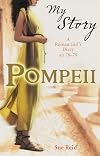
This book, based on Vesuvius’ eruption in Pompeii, is a brilliant Roman diary from an old-fashioned past. Featuring Claudia and her brothers and slaves, and her lovely dog Pollux, and lastly Briton barbarian boy Aengus, this a great historic quick-read. It holds you in a firm grasp with the characters, and with this book, you can always rely on a new, more exotic date of the Romans.
---
Claudia is a little Roman girl, who lives in Pompeii. She is constantly frightened at the great Vesuvius, show more the huge mountain that looms over the city. Is it just her that keeps on feeling those shaky tremors? Her father and mother take no notice, and her brothers Sextus and Marcus rely on what their old friend Gaius says, which is false. Nobody takes up any notice. Soon, Claudia gets so worried she begins to write a diary, where she can express her feelings to only the thin papyrus.
But then, half a year later, Vesuvius continues to shake. “Tremors in Pompeii are very common, Claudia, do not be so silly,” is all her father would say. Then the great mountain begins to spit little bits of solid rock, and great clouds issue from it. The little Roman girl is more and more scared.
Join her on her journey through the past as the gods decide what they shall do. show less
---
Claudia is a little Roman girl, who lives in Pompeii. She is constantly frightened at the great Vesuvius, show more the huge mountain that looms over the city. Is it just her that keeps on feeling those shaky tremors? Her father and mother take no notice, and her brothers Sextus and Marcus rely on what their old friend Gaius says, which is false. Nobody takes up any notice. Soon, Claudia gets so worried she begins to write a diary, where she can express her feelings to only the thin papyrus.
But then, half a year later, Vesuvius continues to shake. “Tremors in Pompeii are very common, Claudia, do not be so silly,” is all her father would say. Then the great mountain begins to spit little bits of solid rock, and great clouds issue from it. The little Roman girl is more and more scared.
Join her on her journey through the past as the gods decide what they shall do. show less

Isabelle begins her diary in the summer of 1792, when she is thirteen. Raised the privileged daughter of an aristocrat in a chateau outside of Paris, Isabelle is frightened and confused by all the changes brought about by the French Revolution. Because she cannot speak freely of her fears, she begins a diary where she can write down all her thoughts and true feelings as everything in her life changes. Because she was born into an aristocratic family, many of the revolutionaries hate Isabelle show more and her family simply for who they are.
The news from Paris grows worse every day. The royal family are imprisoned and the king is executed. Many of her friends, neighbors, and relatives have fled to the countryside or left France to seek safety in other countries. Isabelle and her own family eventually leave their home, hoping to find refuge in their old chateau in the countryside, but even there they are not safe forever, and are eventually imprisoned. Throughout this difficult time Isabella keeps writing in her diary, hoping that someday the Revolution will be over, she will be free again, and have her diary as a record of all she went through, to show her own children someday in the future.
The Fall of the Blade is enjoyable addition to the My Story series, and I am glad to see the series branching out recently and featuring books set in places other than England. The French Revolution has always been a time in history I found interesting so I really enjoyed reading Isabelle’s story. I do wish the book had been a bit longer and that the ending had been more detailed as I wanted to know what happened to some of the other characters. But overall this was an enjoyable book that I would recommend to readers who enjoyed other My Story books or books from other similar series such as the Dear America or Royal Diaries series. show less
The news from Paris grows worse every day. The royal family are imprisoned and the king is executed. Many of her friends, neighbors, and relatives have fled to the countryside or left France to seek safety in other countries. Isabelle and her own family eventually leave their home, hoping to find refuge in their old chateau in the countryside, but even there they are not safe forever, and are eventually imprisoned. Throughout this difficult time Isabella keeps writing in her diary, hoping that someday the Revolution will be over, she will be free again, and have her diary as a record of all she went through, to show her own children someday in the future.
The Fall of the Blade is enjoyable addition to the My Story series, and I am glad to see the series branching out recently and featuring books set in places other than England. The French Revolution has always been a time in history I found interesting so I really enjoyed reading Isabelle’s story. I do wish the book had been a bit longer and that the ending had been more detailed as I wanted to know what happened to some of the other characters. But overall this was an enjoyable book that I would recommend to readers who enjoyed other My Story books or books from other similar series such as the Dear America or Royal Diaries series. show less
Thirteen-year-old Claudia is more fortunate than many of the people living in the Roman city of Pompeii in the year AD 78. Her father is a successful businessman who owns a bakery. As a result, the family is able to own their own home and have slaves to help them out. But Claudia is often not content with her life. She would much rather write in her diary then learn about the duties of a Roman housewife from her mother.
Besides her unhappiness at learning household tasks, Claudia also has show more more serious worries. The city experiences several small earthquakes, and there are omens and prophecies of doom. Claudia fears something stirs in Mount Vesuvius, which looms over Pompeii. And all she can do is wait and wonder what is to become of herself, her family and friends, and the city she has lived in her entire life.
Written in the form of Claudia's diary, this book brings to life the final year before Pompeii's destruction during the eruption of Mount Vesuvius. Although at times the language seemed a bit modern for a diary written by a girl in ancient times, the book still does a good job at accurately describing both the everyday life of a middle class girl in ancient Rome and the events leading up the disaster. Readers who enjoyed other books in the My Story series are sure to enjoy this fascinating look into a place and time long gone but not forgotten. show less
Besides her unhappiness at learning household tasks, Claudia also has show more more serious worries. The city experiences several small earthquakes, and there are omens and prophecies of doom. Claudia fears something stirs in Mount Vesuvius, which looms over Pompeii. And all she can do is wait and wonder what is to become of herself, her family and friends, and the city she has lived in her entire life.
Written in the form of Claudia's diary, this book brings to life the final year before Pompeii's destruction during the eruption of Mount Vesuvius. Although at times the language seemed a bit modern for a diary written by a girl in ancient times, the book still does a good job at accurately describing both the everyday life of a middle class girl in ancient Rome and the events leading up the disaster. Readers who enjoyed other books in the My Story series are sure to enjoy this fascinating look into a place and time long gone but not forgotten. show less
Lists
Awards

You May Also Like


Statistics
- Works
- 20
- Members
- 635
- Popularity
- #39,693
- Rating
- 3.6
- Reviews
- 12
- ISBNs
- 40
- Languages
- 1
- Favorited
- 3