

Deborah Moggach
Author of Tulip Fever
About the Author
Deborah Moggach lives in London. (Bowker Author Biography)
Series
Works by Deborah Moggach
Associated Works
Passions and Reflections 1: A Collection of 20th Century Women's Fiction (1991) — Introduction — 22 copies
Passions and Reflections II: A Collection of 20th Century Women's Fiction (1991) — Introduction — 11 copies
Tagged
Common Knowledge
- Canonical name
- Moggach, Deborah
- Legal name
- Hough, Deborah (birth name)
- Birthdate
- 1948-06-28
- Gender
- female
- Education
- Bristol University
Camden School for Girls
Queen's College, London - Occupations
- writer
- Organizations
- Oxford University Press
Society of Authors - Awards and honors
- Honorary Doctor of Letters (University of Bristol)
Royal Society of Literature (Fellow) - Relationships
- Hough, Richard (father)
Hough, Charlotte (mother)
Calman, Mel (partner)
Pasztor, Csaba (partner)
Moggach, Lottie (daughter)
Atkins, Chris (daughter's ex-partner, grandson's father) - Nationality
- UK
- Birthplace
- England, UK
- Places of residence
- Hertfordshire, England, UK
Hampstead, London, England, UK
Pakistan
USA - Map Location
- England, UK
Members
Discussions
Found: Historical fiction about tulips bulbs fetching huge prices in Name that Book (January 2023)
the new pride and prejudice movie in I Love Jane Austen (February 2015)
Reviews

“Everything will be alright in the end, so if it is not alright it is not the end.”
This is one of those rare occasions where I preferred the film, although the film is only loosely based on the book. This book is very racist and reeks of colonisation. The British characters were either outright, unapologetically racist, or pretended not to be racist, whilst looking down on the Indian characters. So why did they move to India if they had such negative views of the country and its people? show more To stretch out their meagre pensions of course! Not too dissimilar to the ex-pat Brits who voted to leave the EU yet demanded the right to live in their European villas claiming the best of both worlds.
I get that this was meant to be comical, 'carry-on' comical perhaps. I also see this very negative nature reflected in many elderly people around me in the UK, so I get that it is a reflection of the real world, but that doesn't make it ok or acceptable. It left a bad taste in my mouth. show less
This is one of those rare occasions where I preferred the film, although the film is only loosely based on the book. This book is very racist and reeks of colonisation. The British characters were either outright, unapologetically racist, or pretended not to be racist, whilst looking down on the Indian characters. So why did they move to India if they had such negative views of the country and its people? show more To stretch out their meagre pensions of course! Not too dissimilar to the ex-pat Brits who voted to leave the EU yet demanded the right to live in their European villas claiming the best of both worlds.
I get that this was meant to be comical, 'carry-on' comical perhaps. I also see this very negative nature reflected in many elderly people around me in the UK, so I get that it is a reflection of the real world, but that doesn't make it ok or acceptable. It left a bad taste in my mouth. show less

In Final Demand, Deborah Moggach’s gritty novel of intrigue and suspense, a young woman solves her money woes with a cheque-cashing scam that, to her brash, egocentric way of thinking, is okay because it’s a “victimless crime.” In her early thirties, Natalie Bingham is smart, attractive, and working a boring, dead-end job in the accounts department of NuLine Telecommunications. Chronically dissatisfied, she bitterly resents NuLine and feels the job is beneath her, but she needs the show more money, desperately. Natalie loves money. She loves material comforts. She loves to buy things and go clubbing. But since Natalie’s slacker boyfriend doesn’t earn very much and her own salary is insufficient to cover expenses, the pressure of living beyond her means is starting to become unbearable. Then a casual remark by a co-worker twigs her to an opportunity staring her in the face. The more she thinks about it, obsesses over it, the clearer it becomes that the plan is perfect. It might be against the law, but if she’s careful the risk will be minimal, no one will get hurt, and she’ll get her revenge on NuLine. When her boyfriend suddenly moves out, Natalie, realizing she’s on the brink of financial ruin, decides to set her plan in motion. But Natalie’s big problem, besides being selfish and shamelessly unprincipled, is that she’s not careful, and it turns out people do get hurt. Moggach spends most of this gripping, swiftly paced novel with Natalie: we witness the scheming, the conniving, and get the excuses and justifications from her twisted young entitled woman’s perspective. But Moggach also shares the stories of Natalie’s victims, people who suffer the misfortune of crossing her path, who fall prey to her scam and suffer life-altering consequences just for being trusting or easily duped, or simply unlucky. In Final Demand Moggach creates numerous indelible characters whose fates matter in the process of telling a sordid tale of irresponsible and callous greed. The book is compelling and memorable if deeply unsettling; despite our repugnance at Natalie’s attitude and actions, we’re drawn into her unscrupulous, self-centred perspective, all the way to the unexpected ending. show less
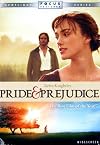
I absolutely love this film. Not only because Keira Knightley perfectly encaptures Elizabeth's skepticism of the rules in her society and society at large with facial expressions, tone, and the ease with which she moves from wit to wrath with timely and always appropriate perfection, but MM carries Mr. Darcy's lack of social grace with weight and brooding and empathetic shyness, and watching his self-awareness grow is exciting and gorgeous. His walk. His voice, his eyes, his yearning - so so show more epic and heartbreaking. It is not the lengthy deep-dive into the psychology of two very different people, but I feel like it was not necessary as the scenes between these two actors were so well done, and the intensity of their personalities were so at the ready for battle, the words they spoke were far fewer than the BBC version, so every word spoken was important, brilliant and soul-rendering and ALL SO VERY AUSTEN. This is the movie I have watched more than any other (except Jackson's LoTR trilogy LOL) and one that I return to many times throughout the year. Lastly and almost if not probably as important - the music by composer Dario Marinelli is by far one of the greatest accomplishments in movie history. In it's very own right, beside the likes of Howard Shore and James Newton Howard, this soundtrack opens this film and you are already swept away in 18th century England. It is .absolutely brilliant. The fact that I am the BIGGEST fan of Colin Firth will never sway me from saying that beautiful, invested, keen, sharp-witted, brilliant British woman, Keira Knightley IS Elizabeth Bennet and Matthew MacFadyen IS Mr. Darcy. Bravo to Joe Wright. The most sensible, yet phenomenally beautiful, romantic movie ever. show less
I struggled to decide what I finally thought of this book. Initially I didn't like it very much at all: the characters seemed stereotypes and their situations didn't seem altogether believable, and at the beginning the book jumped around introducing one character after another at some depth so that I seemed to lose track of the earlier ones. However, it did grow on me halfway through. I listened to this as an audiobook and I think it would have been better read: I'd have probably read it show more more quickly and enjoyed it more.
Ravi's father-in-law Norman is the bane of his life: blacklisted at all the local care homes for his lecherous attention to the female staff, he is once more living with Ravi and his wife Pauline in London. After he accidentally sets fire to their kitchen, Ravi pours out his troubles to his cousin Suni, a businessman on a visit from his home in India, who comes up with a solution to Ravi's problem and a idea for a new money spinning venture at the same time. Why not outsource the old people of England to India: Indian prices would be so much cheaper that their retirement savings would pay for a much better standard of living. The perfect venue is found: The Exotic Marigold Hotel, a slightly run- down establishment which is reminiscent of the last days of the British Raj. The old people are collected: Norman himself; Evelyn a self-effacing woman lost in the modern world without her husband; Dorothy, an ex BBC producer who was respected but not much liked in her profession life; Muriel, a working class woman from Peckham who lives for her son Keith; and several more. All are transplanted to India, where as seems usual in this sort of book about India, they undergo various transformations as they find their true selves in the community of the hotel. And that's one of the reasons that the book falls down for me: I'm not a great believer in a change of country being a huge life-transforming experience - the people themselves are still the same. Those who make a success of retiring abroad always seem the ones who were reasonably happy in the UK anyway - unhappy people generally take their unhappiness with them. Certainly with the film of the same name I get the impression that you were supposed to come away with a lovely fuzzy warm feeling, which I didn't get from the book. show less
Ravi's father-in-law Norman is the bane of his life: blacklisted at all the local care homes for his lecherous attention to the female staff, he is once more living with Ravi and his wife Pauline in London. After he accidentally sets fire to their kitchen, Ravi pours out his troubles to his cousin Suni, a businessman on a visit from his home in India, who comes up with a solution to Ravi's problem and a idea for a new money spinning venture at the same time. Why not outsource the old people of England to India: Indian prices would be so much cheaper that their retirement savings would pay for a much better standard of living. The perfect venue is found: The Exotic Marigold Hotel, a slightly run- down establishment which is reminiscent of the last days of the British Raj. The old people are collected: Norman himself; Evelyn a self-effacing woman lost in the modern world without her husband; Dorothy, an ex BBC producer who was respected but not much liked in her profession life; Muriel, a working class woman from Peckham who lives for her son Keith; and several more. All are transplanted to India, where as seems usual in this sort of book about India, they undergo various transformations as they find their true selves in the community of the hotel. And that's one of the reasons that the book falls down for me: I'm not a great believer in a change of country being a huge life-transforming experience - the people themselves are still the same. Those who make a success of retiring abroad always seem the ones who were reasonably happy in the UK anyway - unhappy people generally take their unhappiness with them. Certainly with the film of the same name I get the impression that you were supposed to come away with a lovely fuzzy warm feeling, which I didn't get from the book. show less
Lists
Awards


You May Also Like


Associated Authors
Statistics
- Works
- 29
- Also by
- 9
- Members
- 4,813
- Popularity
- #5,216
- Rating
- 3.5
- Reviews
- 199
- ISBNs
- 348
- Languages
- 14
- Favorited
- 5