
Anthony Quinn (2) (1964–)
Author of Curtain Call
For other authors named Anthony Quinn, see the disambiguation page.
About the Author
Image credit: anthonyquinndesign.com
Series
Works by Anthony Quinn
The Millionaire Waltz 1 copy
Associated Works
Tagged
Common Knowledge
- Other names
- Quinn, Anthony
- Birthdate
- 1964
- Gender
- male
- Occupations
- film critic
novelist - Organizations
- The Independent
- Relationships
- Cooke, Rachel (wife)
- Short biography
- Anthony Quinn was born in 1964 in Liverpool and was educated at St Francis Xavier's College, a Catholic Grammar School, and at Pembroke College, Oxford, where he read Classics. He worked as a journalist, starting by reviewing books in the Independent, and has written 9 historical novels, mostly set in the 20th century.
- Nationality
- England
UK - Birthplace
- Liverpool, Merseyside, England, UK
- Associated Place (for map)
- England, UK
Members
Reviews
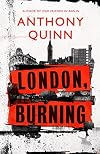
I have clear (if not universally fond) memories of 1978. I was fifteen and living in what I now recognise was considerable opulence, in a hamlet in the close hinterland of a small provincial town in North Leicestershire. Like many teenagers, I lived in a fairly solipsistic manner, with most of what I needed fairly readily to hand, and living my life in a daze of books and progressive rock.
In Britain at large there was far less of a sense of satisfaction with life. The British economy was show more struggling, and the Labour government was sinking into crippling inertia. Over the four years since it had secured a parliamentary majority in the second election of 1974, the government had seen its leader resign for health reasons, and, through a series of by-election defeats, its majority had been eroded. As always in any period of economic and political strife, extremist groups had briefly flourished, and the hard right National Front, forerunners of the British National Party, held frequent rallies, which would provoke passionate counterdemonstrations from far left organisations, which inevitably descended into pitched battles in which the police generally came off worse than either faction. Meanwhile, the troubles in Northern Ireland were going through one of their most virulent phases, with bombings … or at least bomb scares … on the mainland becoming increasingly frequent. It is not surprising that such conditions should have seen the meteoric rise of punk rock, with groups like The Clash and The Sex Pistols catching and distilling the zeitgeist of youth disaffection.
Stuck in my bucolic retreat, access to punk music was limited, but I certainly loved what little I could find, and while I never went as far as sporting safety pin earrings or a Mohawk, I spent many hours imagining my self as a committed acolyte of the counterculture. Whenever I look back at those times, it is the punk rock that I recall first. This is deceptive, however – this was also the golden period of disco [I apologise - I realise I shouldn’t conjure such grim thoughts without some sort of warning for the faint of heart], and Abba were at the ghastly peak of their success,
Anthony Quinn captures that atmosphere marvellously in this novel, in which several seemingly discrete threads are effortlessly woven together into a striking tapestry. His characters are compelling: Callum Conlan is an Irish academic from Newry, who has relocated to London where he lectures at London University in early twentieth century literature; Vicky Tress is an ambitious young police constable who, as the book opens, contributes significantly to the arrest of the Notting Dale rapist who has been terrorising women in West London; Freddie Selves is Director of the National Music Hall, and lives high on the hog on his seemingly unlimited expense account: and Hannah Strode is a successful journalist with her own masthead photo above her regular column. Quinn weaves links between their very different lives, while also portraying the gloominess of the times as immediately recognisable news stories unfold in the background.
There are several intricate plotlines that are all brought together deftly, and the story is engaging and very satisfying. show less
In Britain at large there was far less of a sense of satisfaction with life. The British economy was show more struggling, and the Labour government was sinking into crippling inertia. Over the four years since it had secured a parliamentary majority in the second election of 1974, the government had seen its leader resign for health reasons, and, through a series of by-election defeats, its majority had been eroded. As always in any period of economic and political strife, extremist groups had briefly flourished, and the hard right National Front, forerunners of the British National Party, held frequent rallies, which would provoke passionate counterdemonstrations from far left organisations, which inevitably descended into pitched battles in which the police generally came off worse than either faction. Meanwhile, the troubles in Northern Ireland were going through one of their most virulent phases, with bombings … or at least bomb scares … on the mainland becoming increasingly frequent. It is not surprising that such conditions should have seen the meteoric rise of punk rock, with groups like The Clash and The Sex Pistols catching and distilling the zeitgeist of youth disaffection.
Stuck in my bucolic retreat, access to punk music was limited, but I certainly loved what little I could find, and while I never went as far as sporting safety pin earrings or a Mohawk, I spent many hours imagining my self as a committed acolyte of the counterculture. Whenever I look back at those times, it is the punk rock that I recall first. This is deceptive, however – this was also the golden period of disco [I apologise - I realise I shouldn’t conjure such grim thoughts without some sort of warning for the faint of heart], and Abba were at the ghastly peak of their success,
Anthony Quinn captures that atmosphere marvellously in this novel, in which several seemingly discrete threads are effortlessly woven together into a striking tapestry. His characters are compelling: Callum Conlan is an Irish academic from Newry, who has relocated to London where he lectures at London University in early twentieth century literature; Vicky Tress is an ambitious young police constable who, as the book opens, contributes significantly to the arrest of the Notting Dale rapist who has been terrorising women in West London; Freddie Selves is Director of the National Music Hall, and lives high on the hog on his seemingly unlimited expense account: and Hannah Strode is a successful journalist with her own masthead photo above her regular column. Quinn weaves links between their very different lives, while also portraying the gloominess of the times as immediately recognisable news stories unfold in the background.
There are several intricate plotlines that are all brought together deftly, and the story is engaging and very satisfying. show less
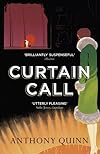
This came tantalisingly close to being a splendid novel. The characters were very well developed, the historical context finely drawn and the plot was engaging and convincing.
The story is set in London in the 1930s, against the backdrop of constitutional uncertainty as the King's relationship with Mrs Wallis Simpson became more widely known. When not stirring public outrage about the King's dalliance, the tabloid papers are full of prurient coverage of a series of murders perpetrated by a show more villain dubbed 'The Tiepin Killer'.
Stephen Wyley is a successful painter who has been establishing himself as a society portrait artist. He is having a secret affair with up and coming stage actress Nina Land who is currently starring in 'The Second Arrangement' at the Strand Theatre. While leaving after having enjoyed an illicit liaison in a hotel in Russell Square, Nina hears screams coming from a room on the lower floor. Her knock on the door seems to interrupt a vicious attack, and a woman manages to escape from the room and run away. Nina realises that she may have disturbed the Tiepin Killer.
Meanwhile ageing theatre critic Jimmy Erskine is living beyond his means, caught up in a cycle of decadence reminiscent of his great hero, Oscar Wilde. The vignettes of his grotesque entertainments are hilarious, though they also leave Erskine exposed to danger as he darts between the higher echelons of society down to the darkest back alleys. His secretary and majordomo is Tom Tunner, a shy epileptic who has been trying for years to disentangle himself from Erskine, although somehow, he never quite manages to escape. As the story develops Tom meets and falls in love with Madeleine Farewell, who turns out to be the victim saved by Nina Land's fortuitous intervention. Like everyone else in this novel, Madeleine has a closely-guarded a secret.
The plot moves forward very deftly, and the story is strewn with vignettes of historical people such Oswald Mosley and William Joyce (who would later become infamous as Lord HawHaw). Quinn weaves a very effective story, and has a fine ear for history. show less
The story is set in London in the 1930s, against the backdrop of constitutional uncertainty as the King's relationship with Mrs Wallis Simpson became more widely known. When not stirring public outrage about the King's dalliance, the tabloid papers are full of prurient coverage of a series of murders perpetrated by a show more villain dubbed 'The Tiepin Killer'.
Stephen Wyley is a successful painter who has been establishing himself as a society portrait artist. He is having a secret affair with up and coming stage actress Nina Land who is currently starring in 'The Second Arrangement' at the Strand Theatre. While leaving after having enjoyed an illicit liaison in a hotel in Russell Square, Nina hears screams coming from a room on the lower floor. Her knock on the door seems to interrupt a vicious attack, and a woman manages to escape from the room and run away. Nina realises that she may have disturbed the Tiepin Killer.
Meanwhile ageing theatre critic Jimmy Erskine is living beyond his means, caught up in a cycle of decadence reminiscent of his great hero, Oscar Wilde. The vignettes of his grotesque entertainments are hilarious, though they also leave Erskine exposed to danger as he darts between the higher echelons of society down to the darkest back alleys. His secretary and majordomo is Tom Tunner, a shy epileptic who has been trying for years to disentangle himself from Erskine, although somehow, he never quite manages to escape. As the story develops Tom meets and falls in love with Madeleine Farewell, who turns out to be the victim saved by Nina Land's fortuitous intervention. Like everyone else in this novel, Madeleine has a closely-guarded a secret.
The plot moves forward very deftly, and the story is strewn with vignettes of historical people such Oswald Mosley and William Joyce (who would later become infamous as Lord HawHaw). Quinn weaves a very effective story, and has a fine ear for history. show less
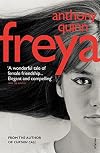
Another excellent library selection. I wasn't sure, starting out, what type of novel this was going to be, or whether I would ever warm to Freya, but then either a shared love for Austen with the author or my fevered imagination picked out a connection with Emma and I was hooked. Like reading a twentieth century 'update' of my favourite novel, Freya became Emma Woodhouse, naturally, her friend Nancy was suddenly Harriet Smith, Robert, their shared love interest, was a horrid blend of Robert show more Martin and Mr Elton, and in Freya's dashing but doomed love interest Alex there was a new twist on Frank Churchill. That leaves Nat Fane as Mr Knightley (or Nancy, doubling roles), but no theory is perfect! However, an interesting line from the end of the book then seemed to confirm my interpretation: 'Though I'd prefer Emma Woodhouse or even Emma Bovary. It's funny how some characters, mere figments on the page, never really die in our heads, or hearts'.
Anyway! I did warm to Freya, who was initially too frightfully middle class ('Darling!') and 'a right good chap', or a male author's ideal woman (swears like a trooper and isn't looking to be tied down), to really appeal to me. And then I wondered if there was going to be any kind of plot, ambling from the end of the Second World War and onto the 'dreaming spires' of Oxford, before skipping ahead to London in the 50s and early 60s, but I was pleasantly surprised - and captivated - there too. After leaving university without a degree, Freya becomes a journalist, chasing interesting people and topics (like homosexuality, still considered a crime in the 50s) and constantly getting passed over in favour of her male colleagues, like the odious Robert Cosway. She also suffers various personal upheavals, including parting with 'best friend' Nancy, but her chance acquaintance with Twiggy-esque model Chrissie throws her heart and her head into conflict.
Like Emma Woodhouse, I think that Freya will stay with me for a little longer after closing the book. Quinn effortlessly captures the social more and injustices of the forties to the sixties, and his heroine leaps off the page, whether the reader is supportive or despairing of her words and deeds (I'm uncomfortably in the former camp). A worthy take on Austen's 'heroine whom no one but myself will much like', if that's what Quinn actually intended! show less
Anyway! I did warm to Freya, who was initially too frightfully middle class ('Darling!') and 'a right good chap', or a male author's ideal woman (swears like a trooper and isn't looking to be tied down), to really appeal to me. And then I wondered if there was going to be any kind of plot, ambling from the end of the Second World War and onto the 'dreaming spires' of Oxford, before skipping ahead to London in the 50s and early 60s, but I was pleasantly surprised - and captivated - there too. After leaving university without a degree, Freya becomes a journalist, chasing interesting people and topics (like homosexuality, still considered a crime in the 50s) and constantly getting passed over in favour of her male colleagues, like the odious Robert Cosway. She also suffers various personal upheavals, including parting with 'best friend' Nancy, but her chance acquaintance with Twiggy-esque model Chrissie throws her heart and her head into conflict.
Like Emma Woodhouse, I think that Freya will stay with me for a little longer after closing the book. Quinn effortlessly captures the social more and injustices of the forties to the sixties, and his heroine leaps off the page, whether the reader is supportive or despairing of her words and deeds (I'm uncomfortably in the former camp). A worthy take on Austen's 'heroine whom no one but myself will much like', if that's what Quinn actually intended! show less

"Our Friends In Berlin", set in London in 1941, is a well-written atmospheric novel with a unique point of view that captures the period well and has a couple of original plot twists but which I found a little too bloodless to be satisfying.
The story focuses on three main characters: Jack Hoste, an Englishman running a network of "Fifth Columnists", English Nazi sympathisers and ex-members of the British Union of Fascists, to gather intelligence for Berlin; Marita Pardoe, wife of an show more interned leader of the British Fascist Union, now in hiding but still plotting against the British state and Amy Strallen a young English woman, partner in an at-the-time-innovative marriage bureau and former friend of Marita Pardo.
At the start of the novel, I found myself quite disoriented (in a good way) by the idea of a spy novel set in London during the Blitz where the German spies are the heroes. I didn't know where it was going but I enjoyed the way the ever-so-English almost "Mrs Minerva" atmosphere was made oxymoronic when applied to descriptions of "Little England" fifth columnists meeting discuss how to accelerate Hitler's liberation of Europe.
There's a strong plot here, some genuinely tense action scenes and an authentic (for an age I have no direct experience of) period feel. I rather liked the way in which Jacks' colleagues were brought to life and I loved the descriptions of the workings of the Marriage Bureau.
So why aren't I gushing with enthusiasm?
Partly it's because Jack Hoste shows so much sang-froid he eventually comes across as either emotionally crippled or so fatalistic that he's just going through the motions of living. This may be authentic but I found it hard to engage with.
I also struggled with the way the novel told Amy Strallen's story. The episodes describing her pre-war relationship with Marita were important to the plot and to character exposition but they felt dumped into the narrative, disrupting the flow rather than adding to the momentum. Focusing the final chapter on Amy felt like a last-ditch attempt for broader significance that didn't quite make it. show less
The story focuses on three main characters: Jack Hoste, an Englishman running a network of "Fifth Columnists", English Nazi sympathisers and ex-members of the British Union of Fascists, to gather intelligence for Berlin; Marita Pardoe, wife of an show more interned leader of the British Fascist Union, now in hiding but still plotting against the British state and Amy Strallen a young English woman, partner in an at-the-time-innovative marriage bureau and former friend of Marita Pardo.
At the start of the novel, I found myself quite disoriented (in a good way) by the idea of a spy novel set in London during the Blitz where the German spies are the heroes. I didn't know where it was going but I enjoyed the way the ever-so-English almost "Mrs Minerva" atmosphere was made oxymoronic when applied to descriptions of "Little England" fifth columnists meeting discuss how to accelerate Hitler's liberation of Europe.
There's a strong plot here, some genuinely tense action scenes and an authentic (for an age I have no direct experience of) period feel. I rather liked the way in which Jacks' colleagues were brought to life and I loved the descriptions of the workings of the Marriage Bureau.
So why aren't I gushing with enthusiasm?
Partly it's because Jack Hoste shows so much sang-froid he eventually comes across as either emotionally crippled or so fatalistic that he's just going through the motions of living. This may be authentic but I found it hard to engage with.
I also struggled with the way the novel told Amy Strallen's story. The episodes describing her pre-war relationship with Marita were important to the plot and to character exposition but they felt dumped into the narrative, disrupting the flow rather than adding to the momentum. Focusing the final chapter on Amy felt like a last-ditch attempt for broader significance that didn't quite make it. show less
Lists
Netgalley Reads (6)
To Read (1)
Awards


You May Also Like


Associated Authors
Statistics
- Works
- 13
- Also by
- 5
- Members
- 694
- Popularity
- #36,475
- Rating
- 4.0
- Reviews
- 36
- ISBNs
- 171
- Languages
- 9
- Favorited
- 2
