
Paul Trynka
Author of David Bowie: Starman
About the Author
Image credit: Paul Trynka
Works by Paul Trynka
Sympathy for the Devil: the birth of the Rolling Stones and the death of Brian Jones (2014) 25 copies, 1 review
Mojo Magazine Limited Edition The Beatles 1000 Days Of Beatlemania - The Early Years (2002) 4 copies, 1 review
Mojo: The Music Magazine Issue 104 [David Bowie Special Edition] — Editor — 3 copies
Mojo - The Music Magazine, December 2000 (85) — Editor — 1 copy
Mojo - The Music Magazine, August 2000 (81) — Editor — 1 copy
Mojo - The Music Magazine, September 2001 (94) — Editor — 1 copy
Tagged
Common Knowledge
- Canonical name
- Trynka, Paul
- Gender
- male
- Occupations
- editor
music historian
writer
biographer
guitarist - Organizations
- Mojo Magazine
Q Magazine
International Musician Magazine
The Guitar Magazine
Nyam Nyam - Nationality
- UK
- Places of residence
- Greenwich, London, England, UK
- Associated Place (for map)
- England, UK
Members
Reviews
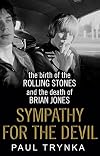
I don't really know very much about the Stones, apart from the obvious - Mick Jagger and his inexplicable appeal for beautiful women, Keith Richards the immortal inspiration for Captain Jack Sparrow, and some of their biggest hits - so I don't know why I wanted to read about the life and death of their founding member, Brian Jones. And then I started reading and realised - Brian is another pop underdog like Janis Joplin, an innately talented and original musician who burned brightly for a show more few years during the 60s, then crashed and burned out completely. (Both Brian and Janis are also members - Brian once again arguably the founder member - of the 27 Club.) And I'm a sucker for underdogs.
Born to a middle class family in Cheltenham, blonde-haired Brian is hardly the archetypal rock god, yet it was his instinctive understanding and adaptation of the blues that not only created the Rolling Stones but lead the way for the whole sound and style of the 60s, bringing 'black music' to young listeners. He mastered every instrument he picked up, from the guitar to the marimba, and he was passionate to the point of perfectionism about music, yet somehow he ended his life face down in his swimming pool, a physical and mental wreck destroyed by drugs and alcohol, with six children he had nothing to do with but no friends. Granted, according to Paul Trynka's account, he was a problematic fave, 'highly sensitive' but with low self-esteem and an addictive personality, who was no doubt difficult to live with, but like George Harrison said of Brian after his death, 'There was nothing the matter with him that a little extra love wouldn't have cured'. Instead, Mick and Keef and their creepy manager tormented then isolated him before finally jettisoning Brian's broken spirit from his own band, and barely mention him today. THAT is why I wanted to read about Brian Jones.
From my novice perspective, Paul Trynka tells Brian's story fairly, interviewing with caution those who knew him, while picking through biographies by his former bandmates and manager for conflicting accounts of key events. He isn't afraid to suggest what most readers will be thinking throughout - 'For f**k's sake, Brian, sort yourself out and take control!' - but he also apportions blame to the actions - and inaction - of others. To me, Brian Jones was responsible for his own life and death, but he might have lived and earned the success he tasted in the early days if only a few people around him had been more supportive. He turned to drugs because he had nothing else, I think. So frustrating to think what this man who was friends with the Beatles and Jimi Hendrix might have done with his talent otherwise. A fair biography of a frustrating man. show less
Born to a middle class family in Cheltenham, blonde-haired Brian is hardly the archetypal rock god, yet it was his instinctive understanding and adaptation of the blues that not only created the Rolling Stones but lead the way for the whole sound and style of the 60s, bringing 'black music' to young listeners. He mastered every instrument he picked up, from the guitar to the marimba, and he was passionate to the point of perfectionism about music, yet somehow he ended his life face down in his swimming pool, a physical and mental wreck destroyed by drugs and alcohol, with six children he had nothing to do with but no friends. Granted, according to Paul Trynka's account, he was a problematic fave, 'highly sensitive' but with low self-esteem and an addictive personality, who was no doubt difficult to live with, but like George Harrison said of Brian after his death, 'There was nothing the matter with him that a little extra love wouldn't have cured'. Instead, Mick and Keef and their creepy manager tormented then isolated him before finally jettisoning Brian's broken spirit from his own band, and barely mention him today. THAT is why I wanted to read about Brian Jones.
From my novice perspective, Paul Trynka tells Brian's story fairly, interviewing with caution those who knew him, while picking through biographies by his former bandmates and manager for conflicting accounts of key events. He isn't afraid to suggest what most readers will be thinking throughout - 'For f**k's sake, Brian, sort yourself out and take control!' - but he also apportions blame to the actions - and inaction - of others. To me, Brian Jones was responsible for his own life and death, but he might have lived and earned the success he tasted in the early days if only a few people around him had been more supportive. He turned to drugs because he had nothing else, I think. So frustrating to think what this man who was friends with the Beatles and Jimi Hendrix might have done with his talent otherwise. A fair biography of a frustrating man. show less
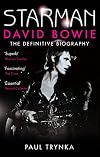
Paul Trynka’s biography of Bowie was published in 2011 and updated following Bowie’s death in 2016. This is a solid account with more than the odd flash of genuine insight. Trynka argues, convincingly in my view, that the young Bowie, while never lacking in stage presence, possessed more ambition and confidence than discernible talent. He eventually transformed himself into an original songwriter through sheer application.
Bowie started in the sixties, a decade when the group dominated show more pop music, but he was always essentially a solo performer. His determination to succeed left little room for loyalty to colleagues. By the time of his first solo album he had belonged to and abandoned no less than five groups. Curiously enough, at the end of the eighties, having exhausted his repertoire of characters and, temporarily at least, his inspiration, Bowie attempted to reinvent himself as a band - Tin Machine. It was not a success. He was simply too large a performer to fit comfortably within a group format.
Bowie’s late sixties manger Ken Pitt, traditionally derided by Bowieologists as the man who wanted to turn Ziggy Stardust into Tommy Steele, but not by Trynka, realised what he was dealing with - a highly charismatic star performer who had the ability to transcend mere rock ‘n’ roll. This is very much how Bowie developed. In an entirely modern sense of an old fashioned term he was an all-round entertainer. The sheer range of his work is quite staggering. I can’t think of many artists who have been global pop stars, made groundbreaking experimental music, acted with Jim Henson puppets and in an Bertolt Brecht play, collaborated with Bing Crosby and Iggy Pop and… well, I could go on.
The book contains a discography of Bowie’s albums with overviews of each one. These struck me as at once scrupulously fair-minded and perceptive. What emerged from them, and indeed the book in general, is that Bowie produced his best work when he surrounded himself with equally talented collaborators - Tony Visconti, Mick Ronson, Carlos Alomar, Brian Eno, Nile Rodgers. They brought the best out of him and vice versa. When he chose to work with lesser lights, or took complete control, the results tended towards the unexceptional.
Entirely sympathetic, yet mercifully free of the hagiographic tone that has infected discussion of Bowie since his death, Trynka’s book is an illuminating guide to one of the most charismatic performers who has ever lived. Bowie emerges as a highly unusual combination of showman, businessman and shaman. A true original indeed. show less
Bowie started in the sixties, a decade when the group dominated show more pop music, but he was always essentially a solo performer. His determination to succeed left little room for loyalty to colleagues. By the time of his first solo album he had belonged to and abandoned no less than five groups. Curiously enough, at the end of the eighties, having exhausted his repertoire of characters and, temporarily at least, his inspiration, Bowie attempted to reinvent himself as a band - Tin Machine. It was not a success. He was simply too large a performer to fit comfortably within a group format.
Bowie’s late sixties manger Ken Pitt, traditionally derided by Bowieologists as the man who wanted to turn Ziggy Stardust into Tommy Steele, but not by Trynka, realised what he was dealing with - a highly charismatic star performer who had the ability to transcend mere rock ‘n’ roll. This is very much how Bowie developed. In an entirely modern sense of an old fashioned term he was an all-round entertainer. The sheer range of his work is quite staggering. I can’t think of many artists who have been global pop stars, made groundbreaking experimental music, acted with Jim Henson puppets and in an Bertolt Brecht play, collaborated with Bing Crosby and Iggy Pop and… well, I could go on.
The book contains a discography of Bowie’s albums with overviews of each one. These struck me as at once scrupulously fair-minded and perceptive. What emerged from them, and indeed the book in general, is that Bowie produced his best work when he surrounded himself with equally talented collaborators - Tony Visconti, Mick Ronson, Carlos Alomar, Brian Eno, Nile Rodgers. They brought the best out of him and vice versa. When he chose to work with lesser lights, or took complete control, the results tended towards the unexceptional.
Entirely sympathetic, yet mercifully free of the hagiographic tone that has infected discussion of Bowie since his death, Trynka’s book is an illuminating guide to one of the most charismatic performers who has ever lived. Bowie emerges as a highly unusual combination of showman, businessman and shaman. A true original indeed. show less
Paul Trynka's depiction of the untouchable Starman is the most compelling so far - behind the glamourous, chameleon-like visage was an insatiable music fan with a thirst for culture and art.
Trynka also succeeds in painting a poignantly human portrait, while not glossing over him as people would usually do, as he casually reminds us of Bowie's forgettable musical output during the early 60s and the late 80s to the 90s. He also brings his equally fanboy knowledge of Bowie to the forefront in show more discussing Bowie's interesting relationships with his session musicians and his sprawling body of work. This is a must-read for the serious fans, be it Bowie's or music, and also for anyone starting out with Bowie's music which can be tough to work through due to his rabbit-hopping through different genres of music (the last part of the book contains very useful reviews of his entire discography). show less
Trynka also succeeds in painting a poignantly human portrait, while not glossing over him as people would usually do, as he casually reminds us of Bowie's forgettable musical output during the early 60s and the late 80s to the 90s. He also brings his equally fanboy knowledge of Bowie to the forefront in show more discussing Bowie's interesting relationships with his session musicians and his sprawling body of work. This is a must-read for the serious fans, be it Bowie's or music, and also for anyone starting out with Bowie's music which can be tough to work through due to his rabbit-hopping through different genres of music (the last part of the book contains very useful reviews of his entire discography). show less
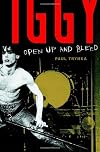
A real fun read covering Iggy from pre-Stooges to the 21st Century Stooges reunion tour and recording. I was particularly fascinated with the pre-Stooges forays he had as a pick-up blues drummer and how much the pre-album Stooges were challenging damaged art noise experiences presaging Velvet Underground. Talk about foreshadowing, Iggy more foreshadowed GG Allin than I realized. The complication relationship with Bowie and the the self-destructive excess as well as zombie assault in Haiti show more completed this tome Iggy compleat. show less
Awards

You May Also Like


Associated Authors
Statistics
- Works
- 53
- Members
- 793
- Popularity
- #32,131
- Rating
- 3.8
- Reviews
- 23
- ISBNs
- 58
- Languages
- 8